오세라 (Oh Sera)
Horang Art Festa
Horanggasy Art Polygon
Gwangju
July 31—Aug. 2, 2026
Jisu Sheen recently moved from New Haven to Gwangju, South Korea, where she’s covering local arts and culture for the New Haven Independent and Midbrow.)
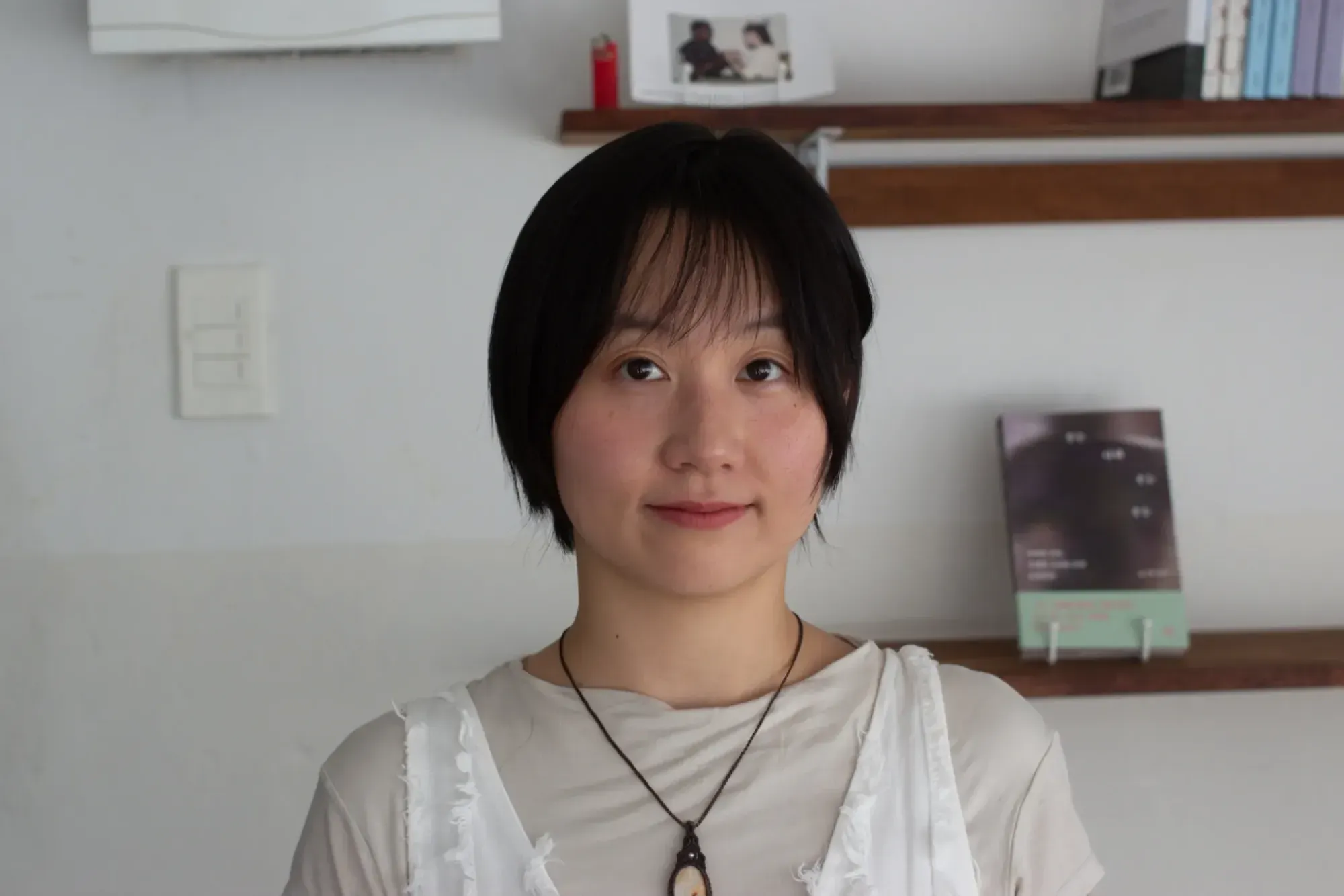
Oh Sera doesn’t cry over spilled wine. For the Seoul-based artist, it’s all part of the plan.
She uses the liquid, along with lemon juice and “anything in my kitchen” to destroy the surface of the film she uses in her photographic works, she told me at the opening of the 41-artist Horanggasy Art Festa Friday night.
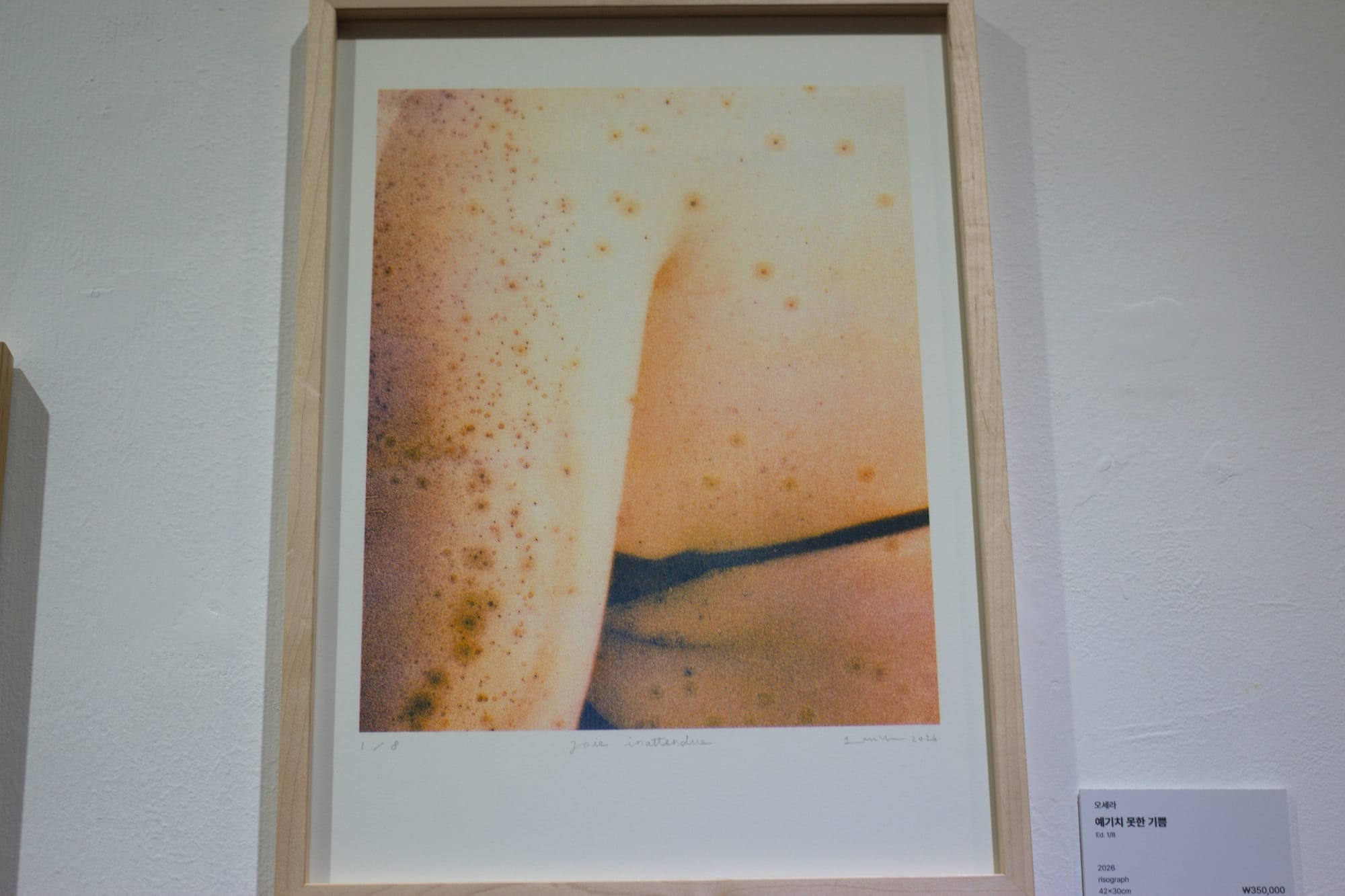
Out of those 41 artists’ pieces, a tender print by Oh was what caught my eye when I walked in. I returned to it throughout the night, jumping in and out of conversations with artists and fans.
The print is personal and emotional, spoken in the fuzzy language of surface grain. It is of the crease between a person’s arm and the side of their body, the slight curves resting in a hazy glow.
It’s a risograph, a printmaking method that started as a low-cost technique in Japan in the ’80s and is now enjoying a resurgence among contemporary artists with analog tastes. Using translucent layers of color that may or may not line up just right, it’s a medium that makes itself known in the end product.
In Oh’s piece, the risograph technique brings its subject’s texture into rough focus. Each edge contains small infinities, only letting itself be defined by approximations—like how you can’t really measure a coastline. At a certain point you have to accept that conventional understandings of geometry fall short of the wisdom of nature.
For Horang Festa attendee 이준호 (Junho Lee), some works in the show had a familiar touch. As I walked around the gallery with Lee, he pointed out works by 윤준영 (Junyeong Yoon) and 윤상하 (Sangha Yoon), whose art he first noticed at shows earlier this year. He described the motifs that characterized each style—the neat, flat houses and rocks in Junyeong Yoon’s art and Sangha Yoon’s thick brushstrokes.
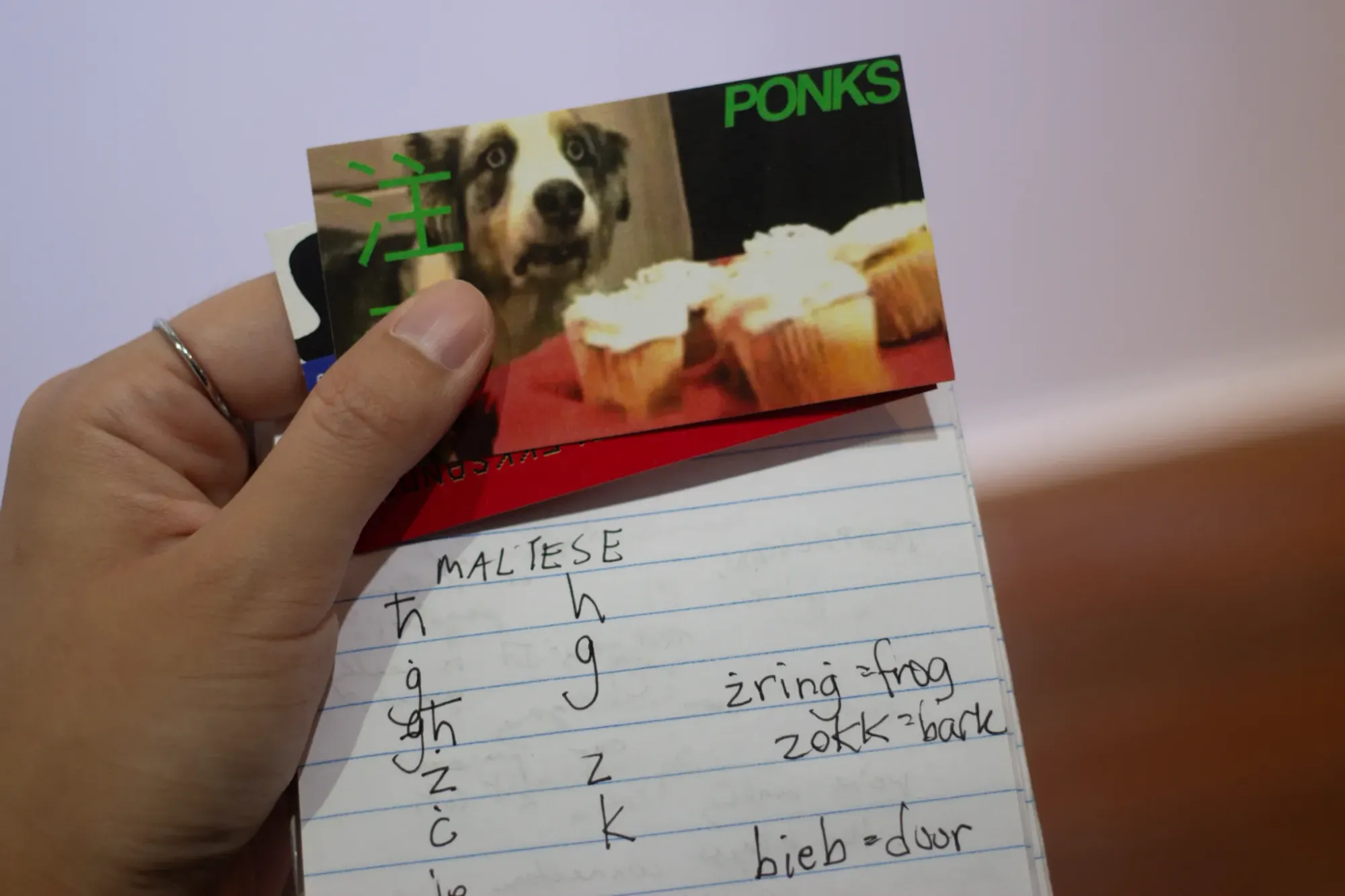
Next to the opening night refreshments (quickly depleted by the massive crowd, though a co-farmer I met through a 100-citizen-farmers project did snag me a cup of watermelon), I met two PONKS—the collective name of Sam Aleksandra and Julien Vinet, an artist duo from Malta. Right now, the two are putting together a “rope poetry temple” for Horanggasy’s Glass Polygon, one of the exhibition spaces on the grounds.
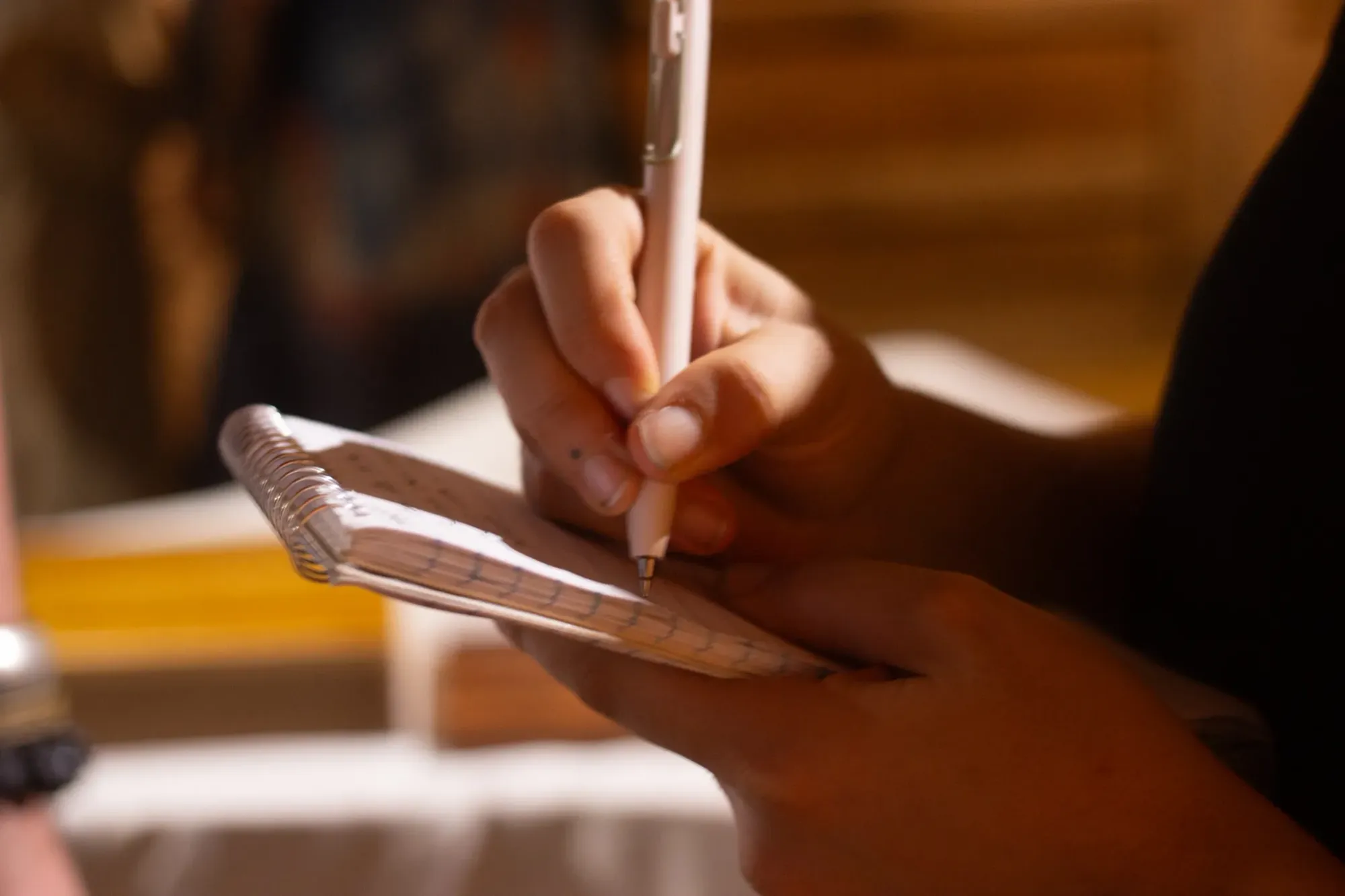
Aleksandra is hand-writing poems by Maltese and Korean poets for the project. I asked how it’s been going writing in Korean.
“I’ve been practicing,” she said. “I think true devotion is the way this is going to come to life.”
As the crowd dissipated at the end of the night, I struck up one last conversation with the person next to me. As fate would have it, it was Oh Sera.
She had arrived in Gwangju’s Yangrim neighborhood just the day before, as a new artist in residence at Horanggasy Creative Studio. She’ll stay until December.
Oh told me her method lets her “find the trace or the dust of a faraway time.” Echoing the nostalgia of an old photo, her pieces have undergone their own process of oblivion.
The intentional interruptions in the film development mean its happy accidents only come into view at the end of Oh’s process. She described the feeling of waiting to see what surprises greet her; she named the series joie inattendue, “unexpected delights” in French.
Oh studied fine art in Marseilles, France after getting a degree in history and cinema in Korea. Before, during, and after her fine art education, she worked part-time jobs “in everything”—from food service to wedding hall work to photography. Up until last year, she was working at a textile company introducing and selling fabrics from abroad.
Now that Oh is in residence at Horanggasy Creative Studio, along with artists from around the world (like the PONKS), she’ll be making unexpected delights for months to come right here in Gwangju.
Oh said she sees herself an archaeologist, uncovering not fossils but time itself. I have to agree. I’ve only just gotten to know her work, but it already held me long enough to meet its maker.
Sign up here to get Gwangju Midbrow email updates delivered straight to your inbox.