사이와 사이, 일곱 개의 별 (In Between, Seven Stars): Gwangju "아트날라리" ("Art Nallari ") Arts Education Festival 2026
빛고을시민문화관 일원 (Bitgoeul Citizens' Cultural Center Area)
Gwangju
Oct. 31, 2026
(Jisu Sheen recently moved from New Haven to Gwangju, South Korea, where she’s covering local arts and culture for the New Haven Independent and Midbrow.)
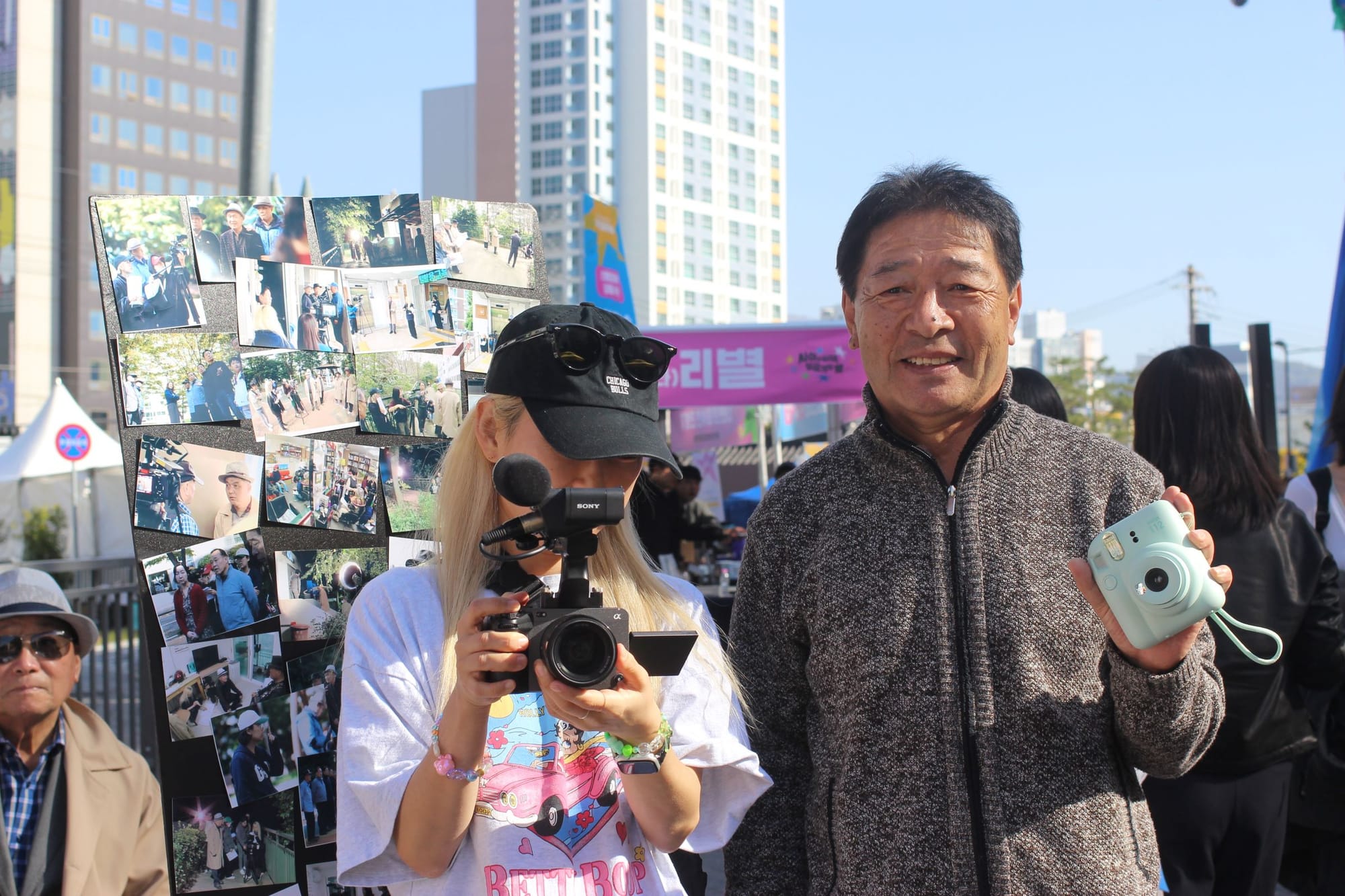
Three cameras faced off in the center of this year's Gwangju "아트날라리" ("Art Nallari") Arts Education Festival by the water of the Gwangju Stream.
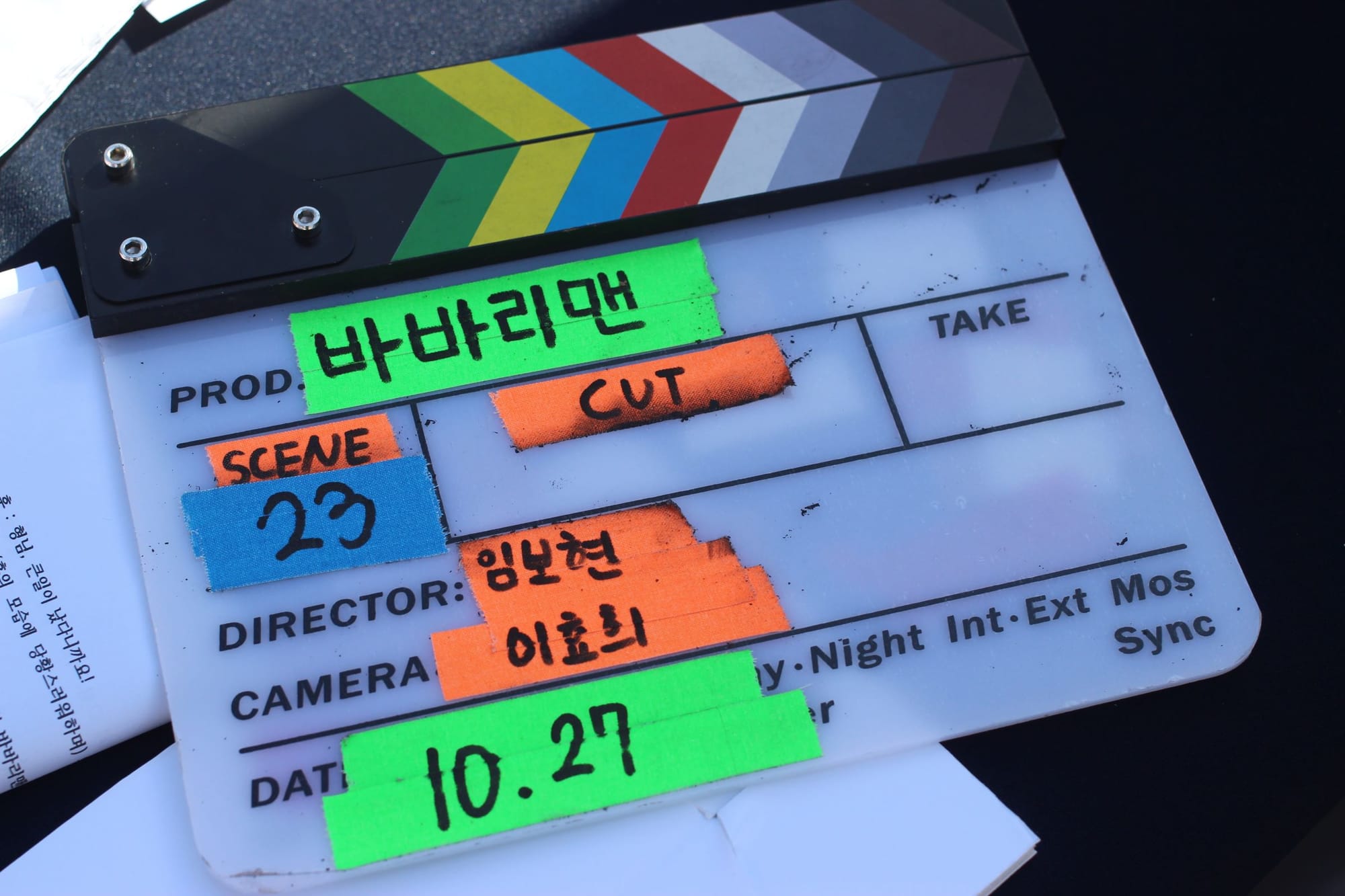
One camera was my own. Another was a light blue instant film camera, capturing snapshots of the day's festivalgoers in front of a special backdrop. The third was a moviemaking camera, fresh off the taping of a new film, Barbary Man.
The movie is set to premiere in two weeks. It's part of a cinema-based program from a multi-organization cultural healing project for middle-aged men at risk of alcohol dependency in the 두암 3-동 (Duam 3) neighborhood of Gwangju's North District. Group members worked together to create a script, set up scenes, and take on new roles, on screen and in real life.
The program, 블루아저씨 리플레이 (Blue Ajeossi Re:play) is more than just a catchy name. It's, as one of the actors, 최승국 (Choi Seung-kuk) explained, a description of men who look back on their lives and realize they want a redo. The word ajeossi is Korean for something like "man," but more like uncle, in the way tío in Spanish can be a neighborhood guy.
Along with acting, Choi is also part of the film crew. He showed me a photo where he's using the slate to start a take.
This movie, project manager 임보현 (Lim Bo-Hyun) told me, is a comedy. Lim is also the film's director. She explained that the group brainstormed and came up with the idea together.
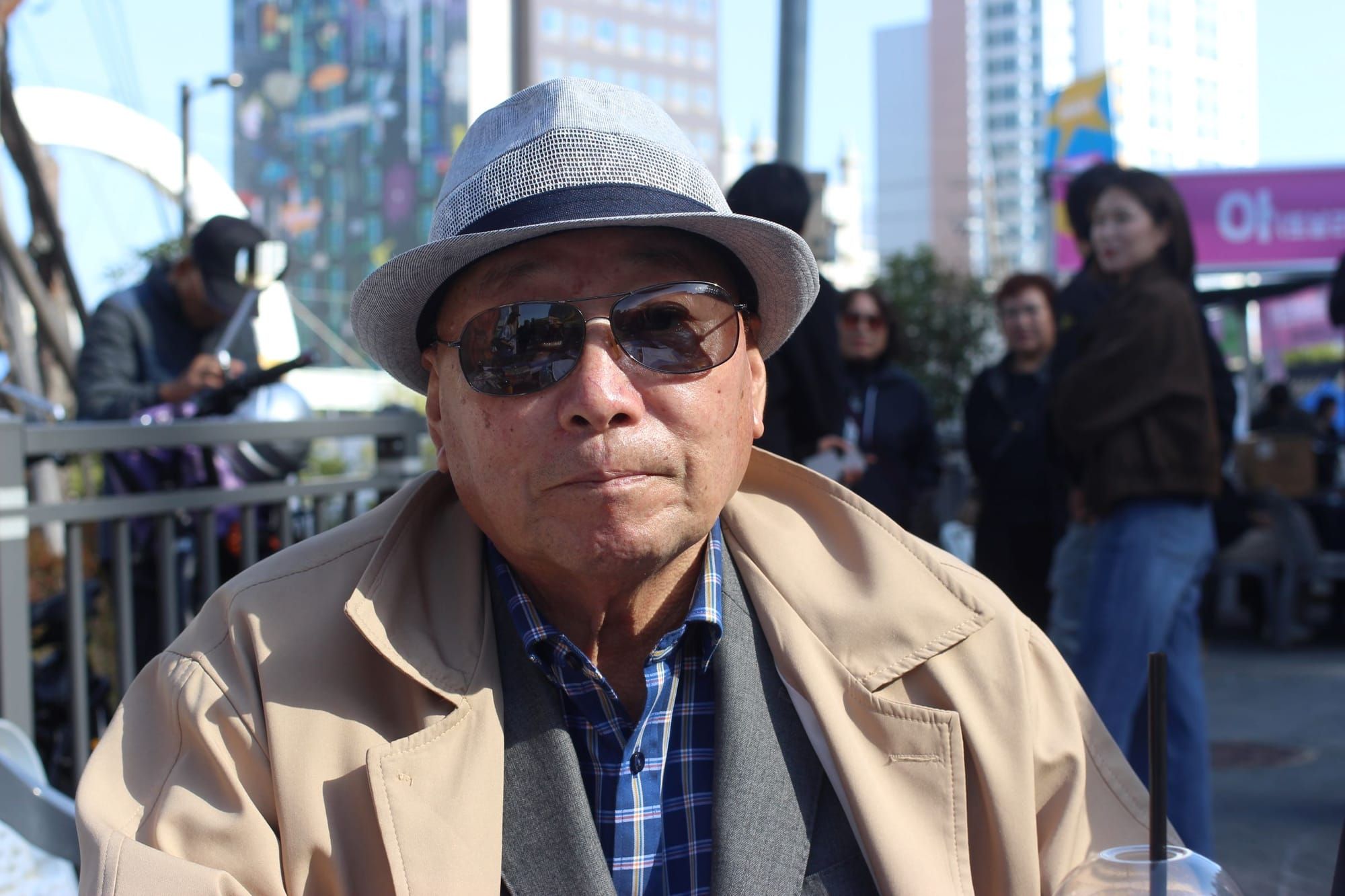
설동수 (Seol Dong-Soo), the film's star — playing the titular Barbary Man — posed for pictures in sunglasses, a fashionable hat, and a tan trench coat. At the photo zone next to him, visitors to the festival could take instant film pictures holding a vase of bright flowers.
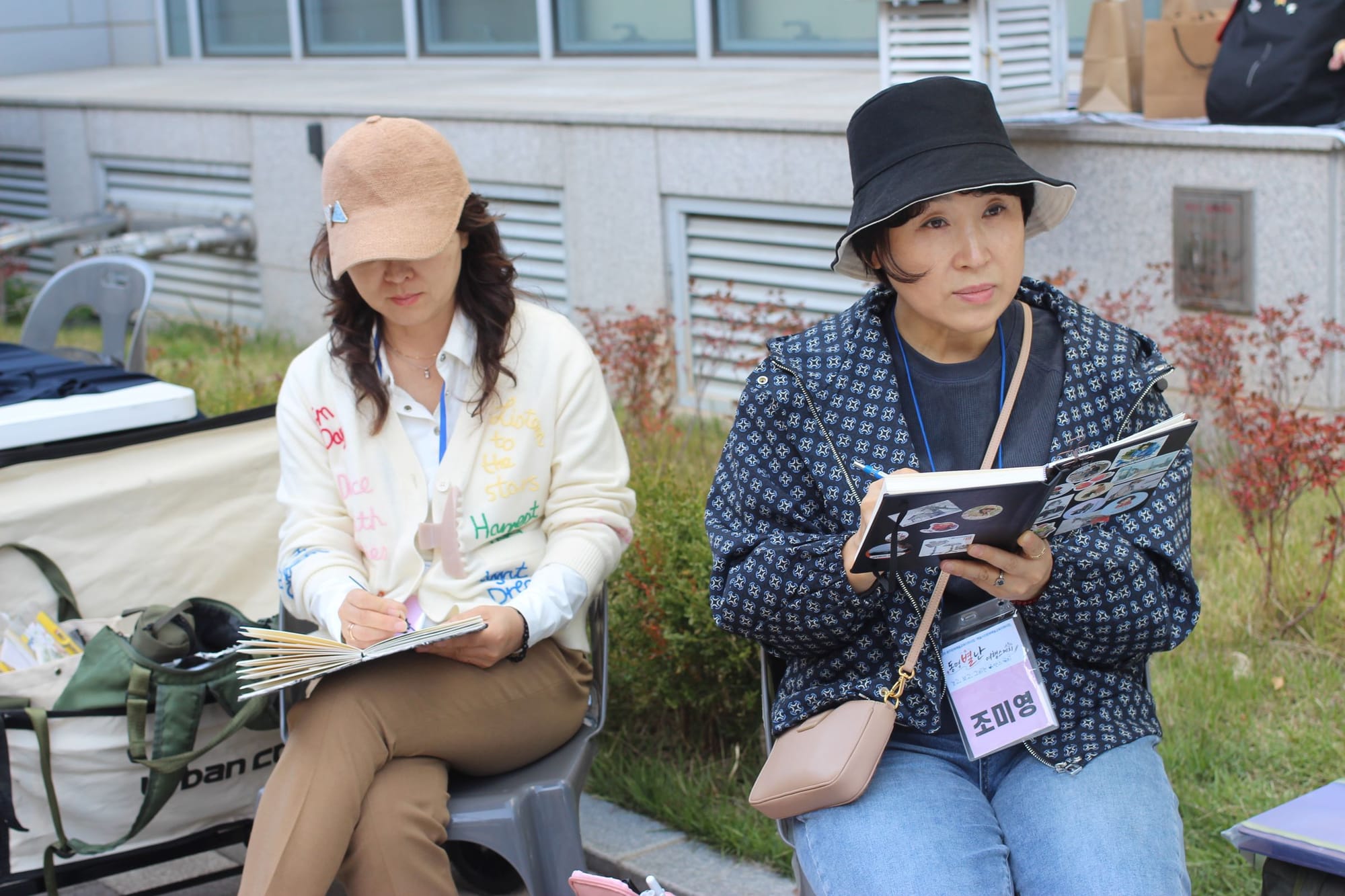
Further down the line of tents, a group of urban sketchers sat in chairs on the sidewalk, capturing scenes of yellow parasols on paper. Sketcher 오송희 (Oh Song-Hee), who had been drawing with the group for over a year and a half, told me about the joy of making art on-site.
"If you just take a picture and draw it at home, you don't get that same feeling," she said in Korean. By drawing the scene in the present moment, she gets to create "my life's records."
Among the dozens of festival booths with crafting activities and pop-up art exhibits was a large TV screen on the side of a truck, where kids were reporting on news and weather. I learned from the people running it that the newscasters were speaking live, from a studio inside the truck.
And it wasn't just for kids! (They do make exceptionally cute newscasters.) The truck was from the 광주시청자미디어센터 (Gwangju Community Media Center), a public space where people can rent equipment, get media support, and learn broadcasting skills. I sat by the screen to watch a woman in a traditional Korean performance outfit try some live truck-side reporting. Then it was my turn.
I read from a card, reporting the day's temperatures, the autumn foliage, and the Art Nallari festivities in front of a green screen. A two-person camera crew cued me in and cut to an animated transition at the end. I lost track of whether I was being fake serious, playing with the newscaster impression, or real serious, trying to get the words right. All I knew was it felt freeing to inhabit a new persona for a few minutes. I was no longer at work, trying to understand my surroundings so the resulting article would make sense. I was at fake-work as a Very Important Newscaster, explaining things I Definitely Knew For Sure. I broke character only at the end, when I smiled and waved to the camera.
It was my small taste of the feeling I imagine the Blue Ajeossi Re:play program's cast and crew may have had as they stopped and started their scenes. Defined roles and scripted lines can be a relief in an otherwise scriptless existence. Playing a role is just that: playing. Stakes can get higher and higher, and then—cut!—you're out of the scene, which was just for fun anyway.
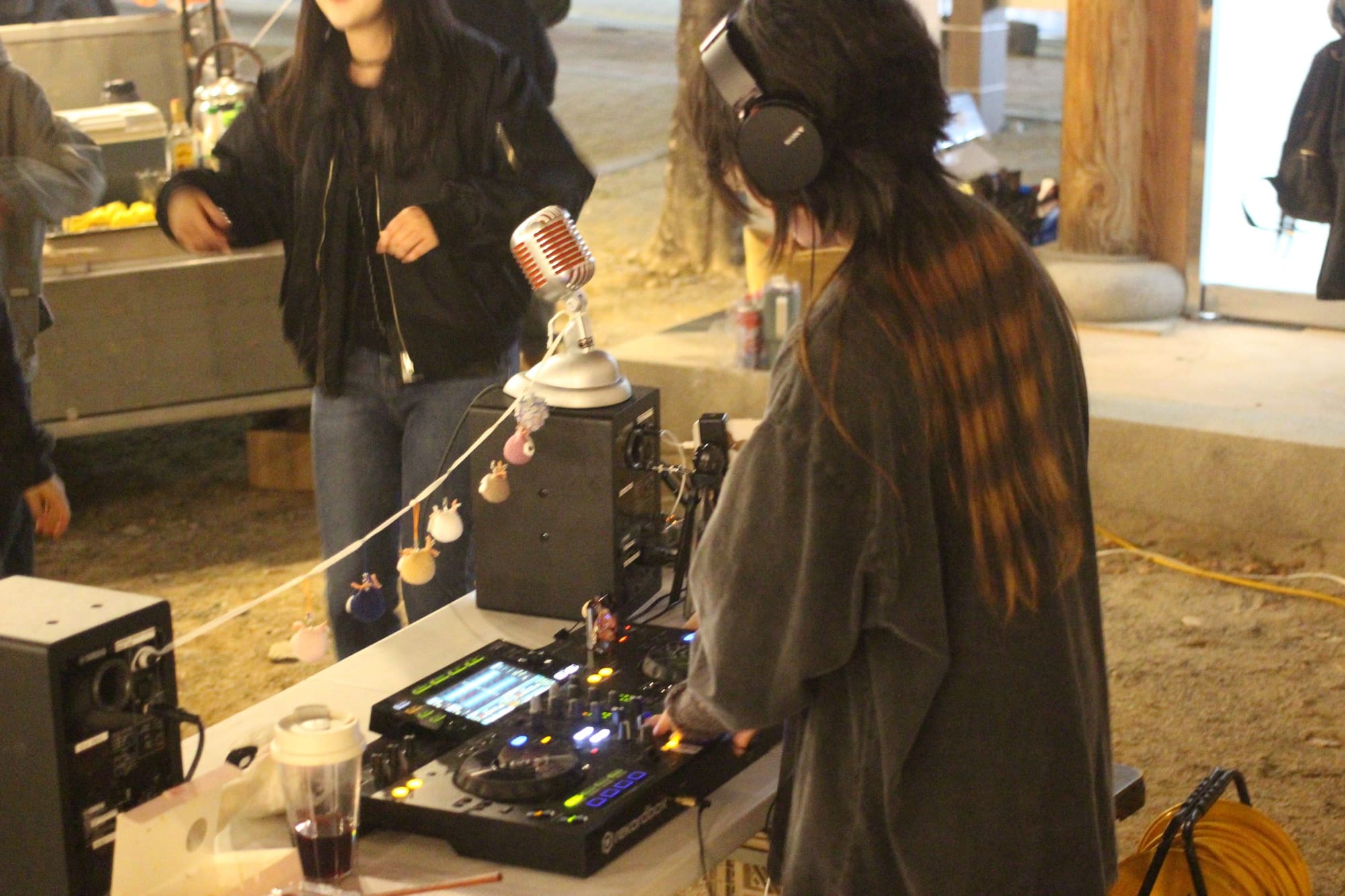
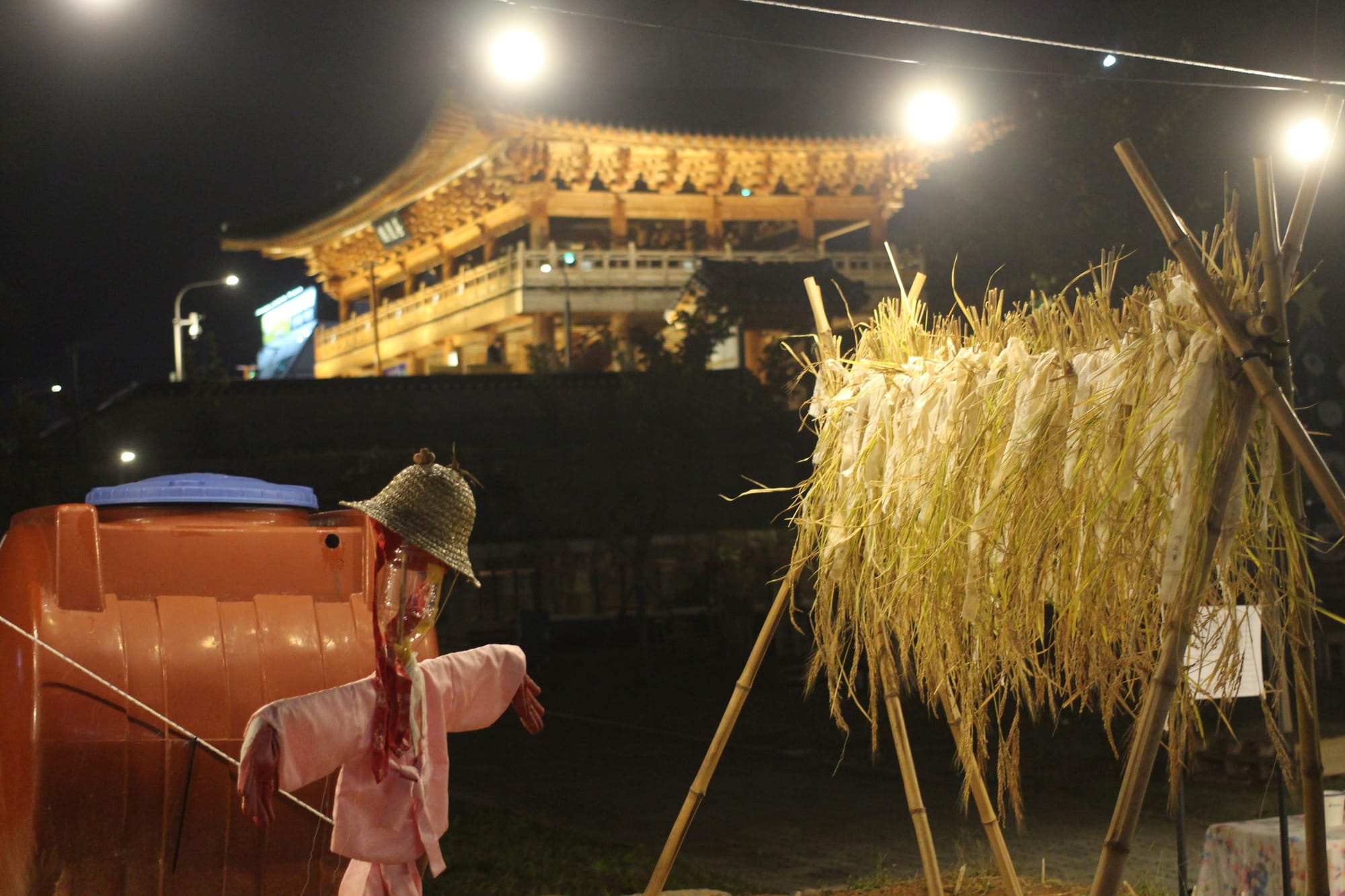
I ended the night a few steps away, at a stone rice paddy by a traditional Korean pavilion. There, an urban rice farming group I am in called 굳이백배미 (Gujibaekbaemi) was finally harvesting the 100 varieties of native rice we had planted together back in June. One of our members DJed while we cut the rice stalks with a sickle and hung them to dry on a bamboo rack.
It was only at the very end of the night, walking past the downtown streets to the subway station, that I saw a tiny Luigi (from Nintendo, not Mangione). A kid was, for no reason I could think of, dressed up as the Italian plumber.
It took me a sec, but then I got it. It was Oct. 31 —Halloween. A perfect day to be someone else, at least for a little while, on the way to becoming the next version of yourself.