5th Gwangju Queer Culture Festival
Geumnam Street
Gwangju
Oct. 24, 2026
(Jisu Sheen recently moved from New Haven to Gwangju, South Korea, where she’s covering local arts and culture for the New Haven Independent and Midbrow.)
How do you plan a wedding in a country when your marriage isn't legally recognized? What's queer menopause like? And does anyone want this dog?
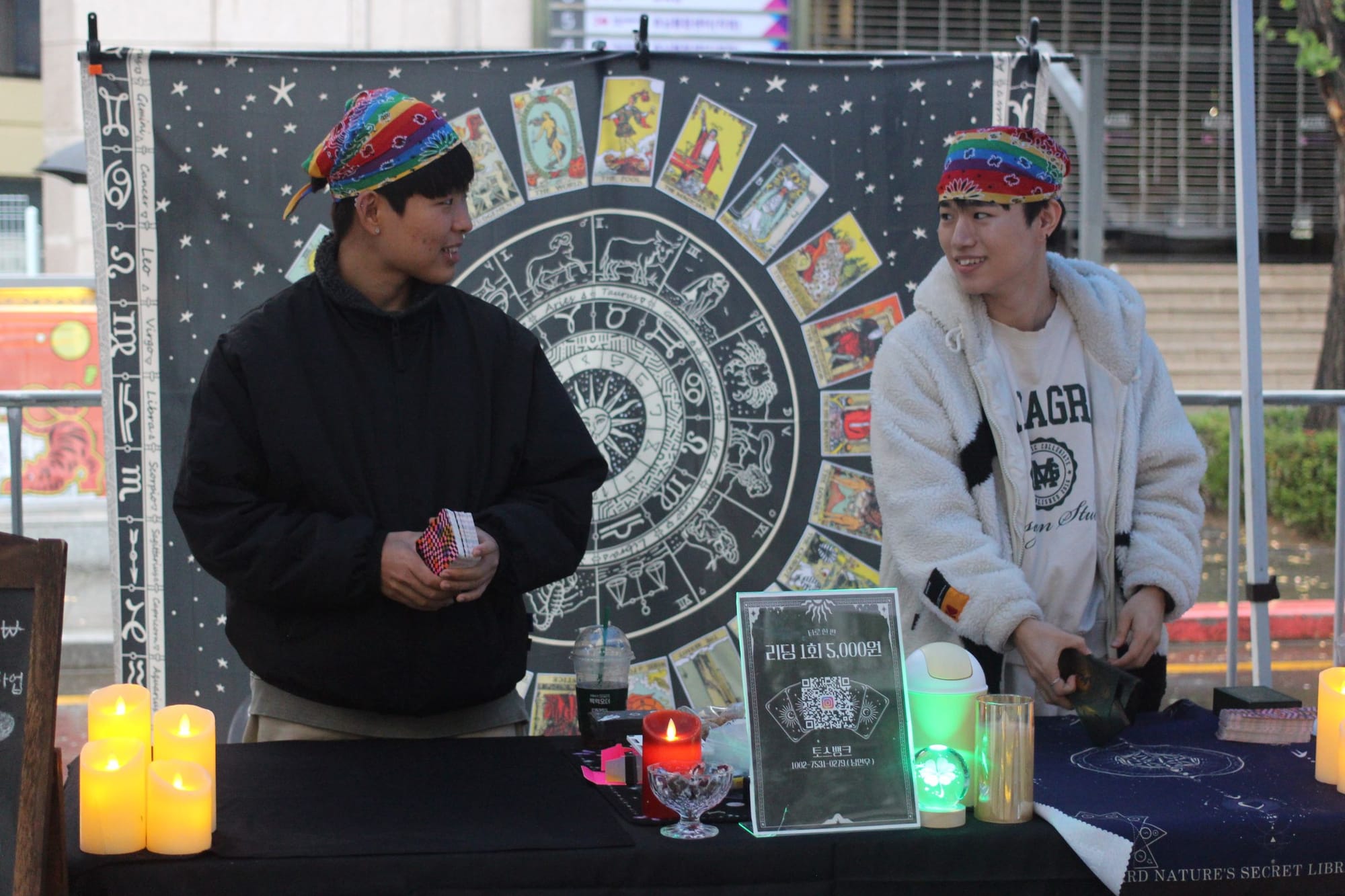
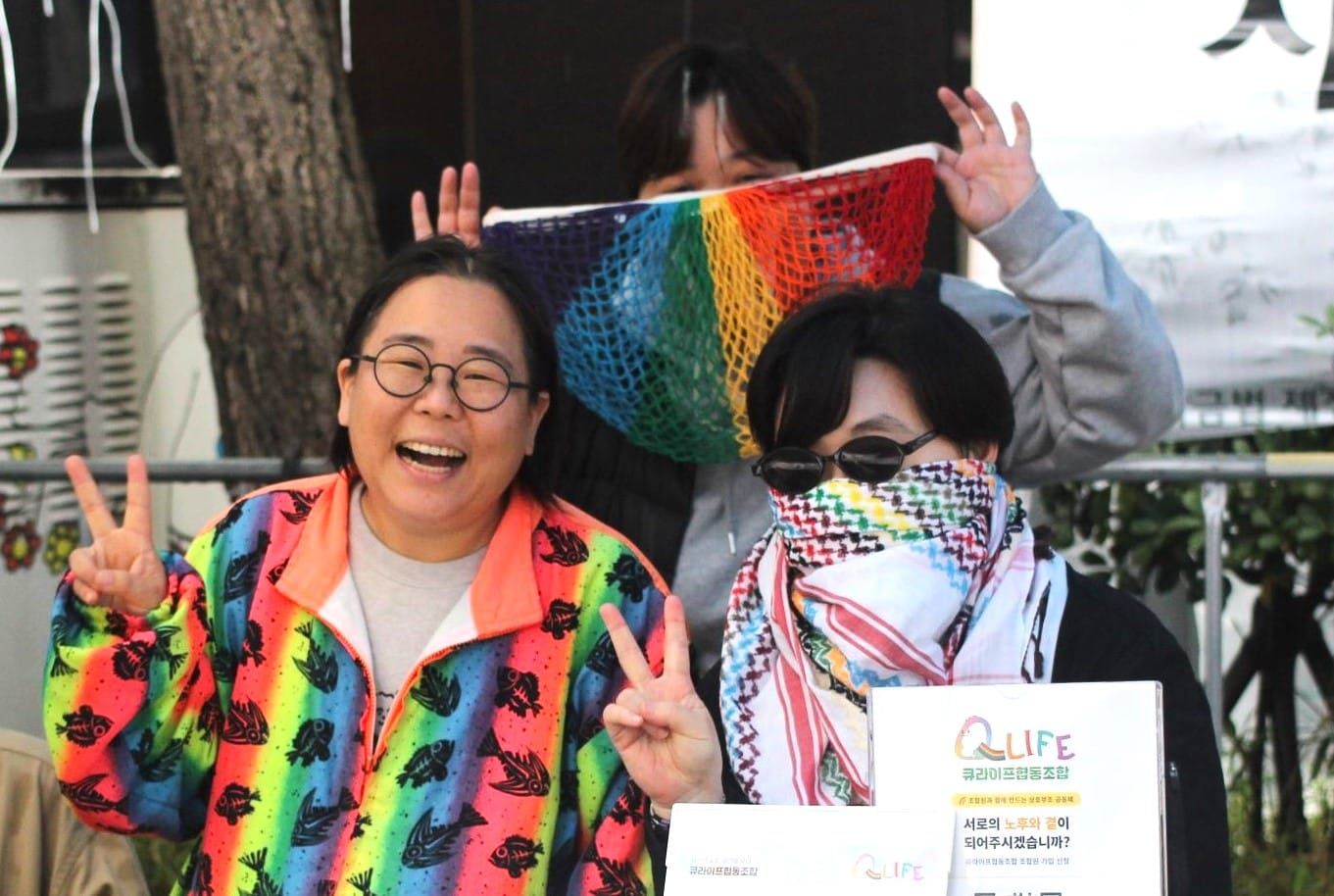
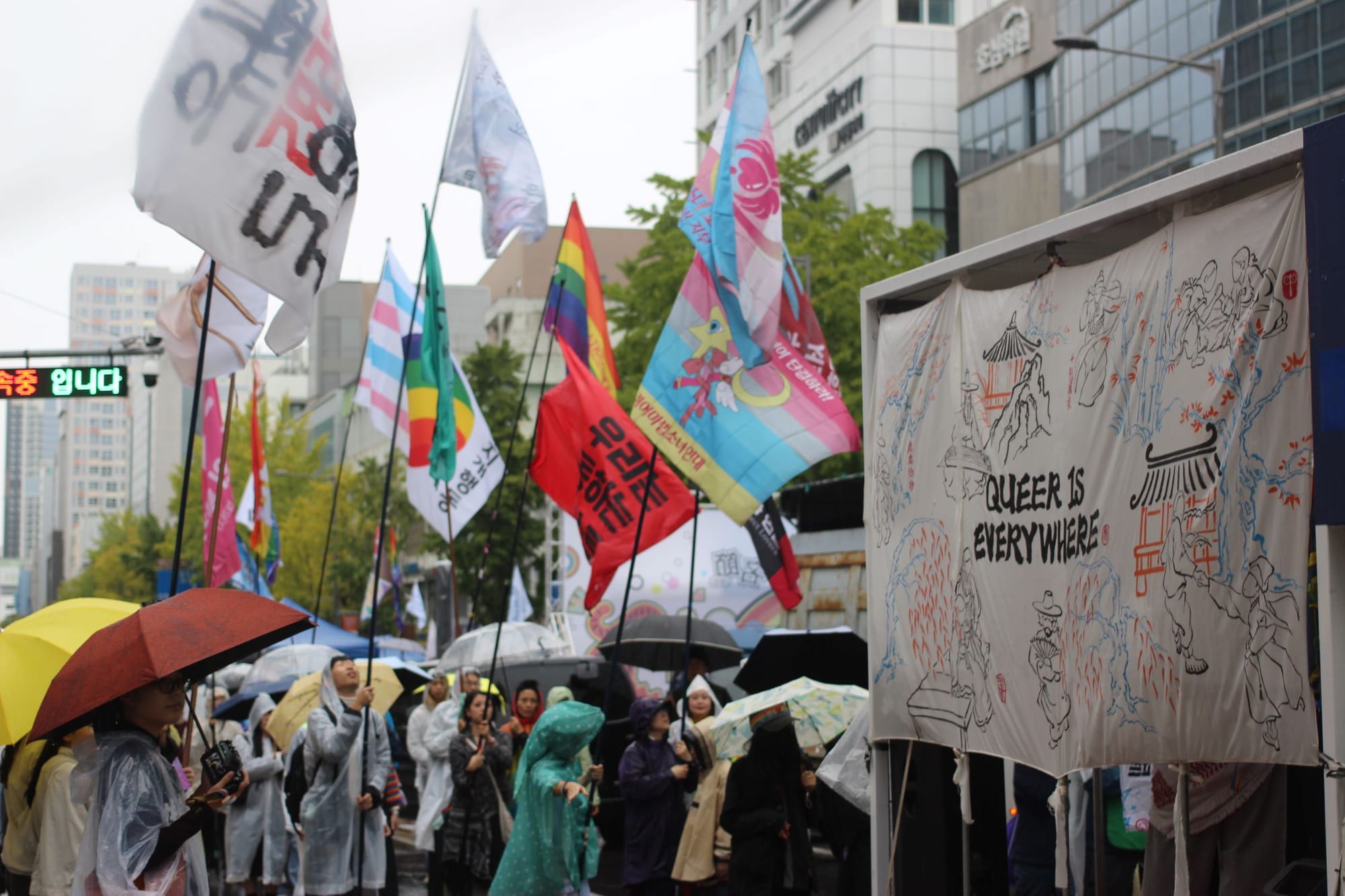
These are just a few of the questions Q-Life, a queer cooperative in Korea, hopes to answer. I met them at the fifth Gwangju Queer Culture Festival on Saturday, in a section of the city's downtown Geumnam Street that was blocked off to cars for the day. In two rows on either side of the street, booths displayed information about LGBTQ+ organizations and sold crafts with pride flags of all kinds.
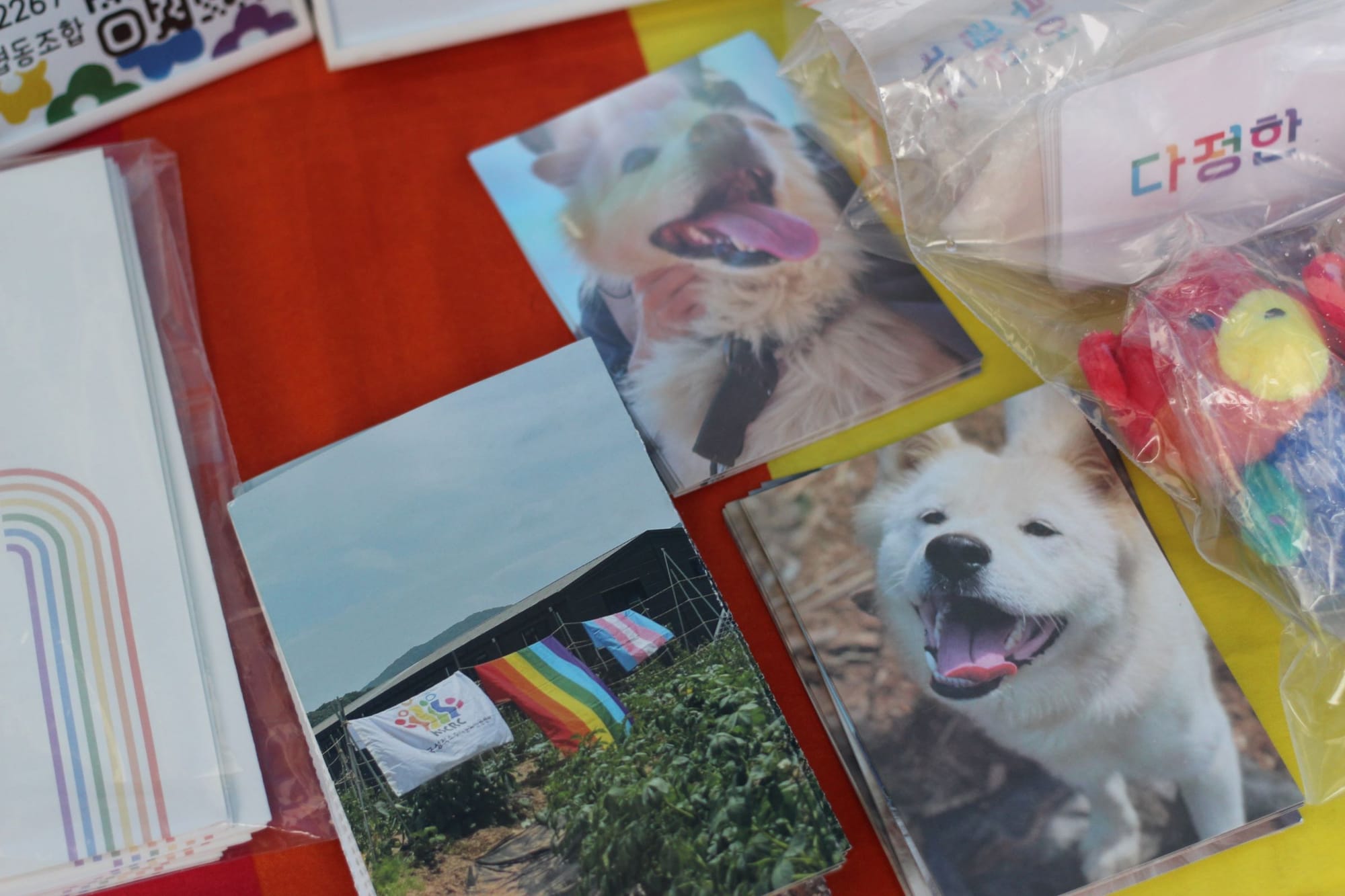
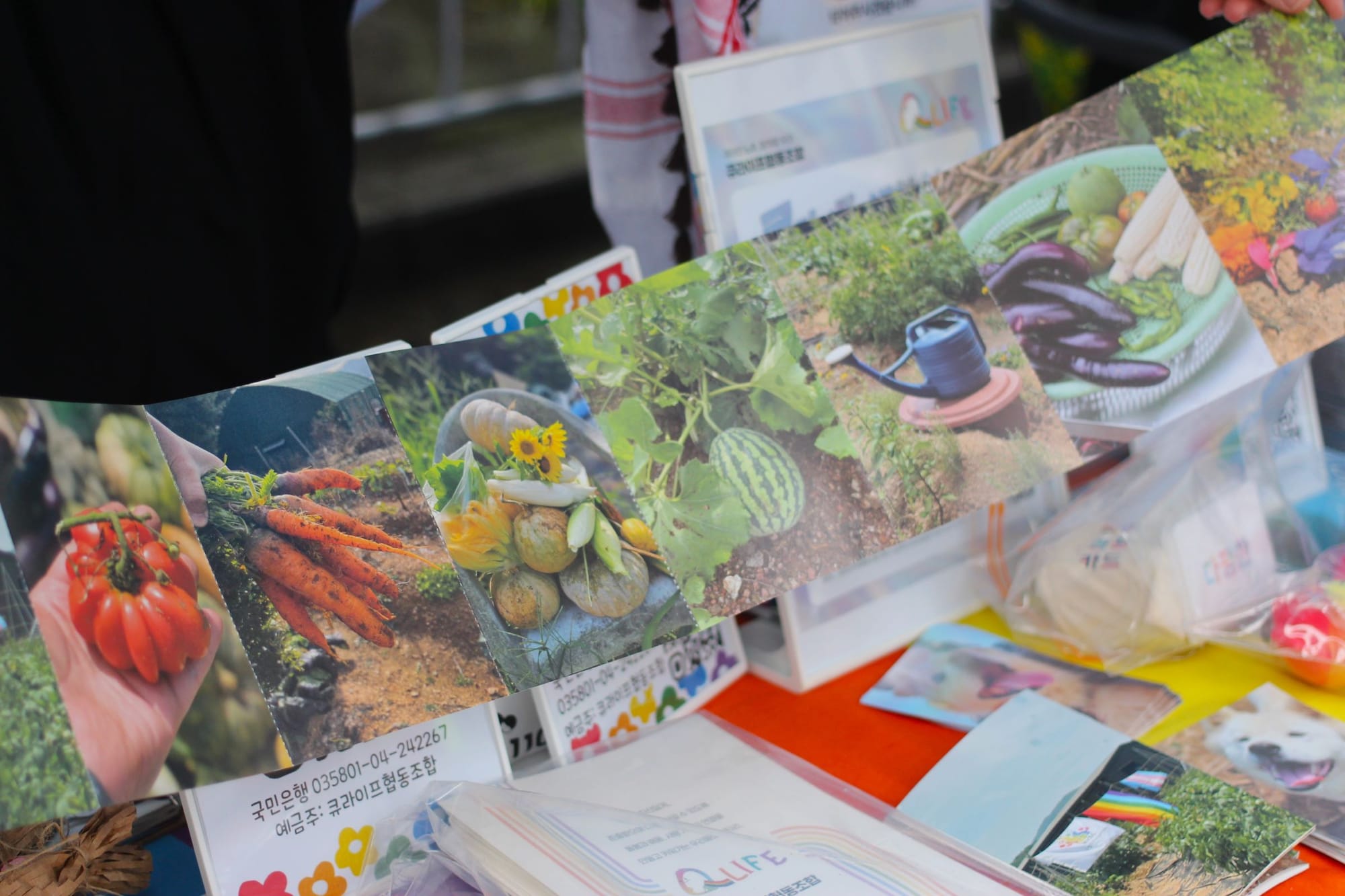
Q-Life member Eunzi told me about a vegetable garden the group tends to in the city of Paju in Gyeonggi Province.
On their display table was a postcard set with images of vegetables in the garden. They were arranged in the colors of the rainbow, from red bell peppers and orange carrots all the way to purple eggplant.
Next to the vegetable photos were stacks of cards with information about two white countryside dogs. Eunzi explained that the dogs are from their garden and are in need a home. It was nice to see the queer tendency to care for vulnerable animals was a cross-cultural one.
On stage, the day's performers included two musical acts from Gwangju's rock enthusiast group, HoRockHoRock: their first subgroup band, eHang, and a singer-songwriter who goes by 데이 (Day).
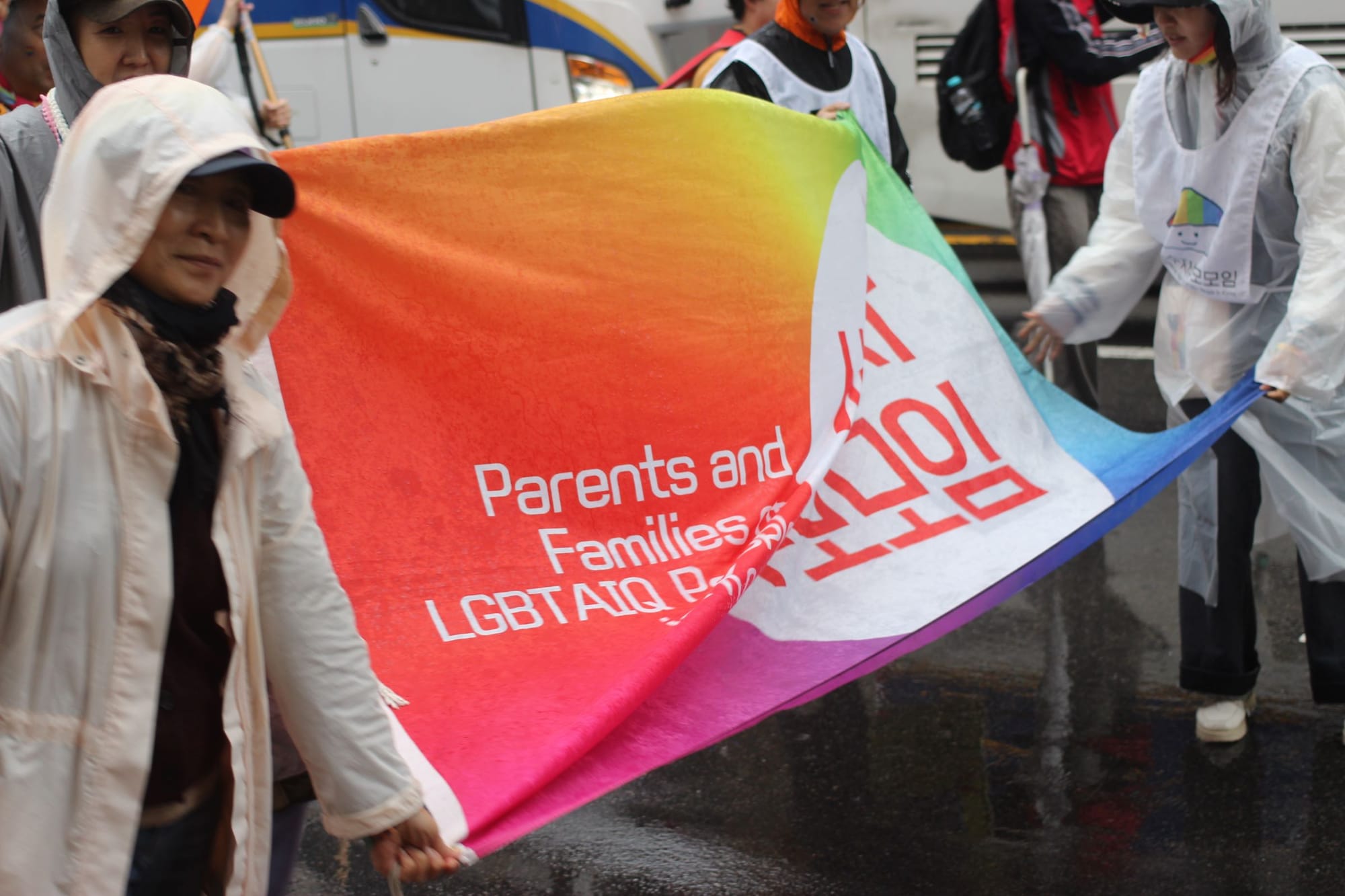
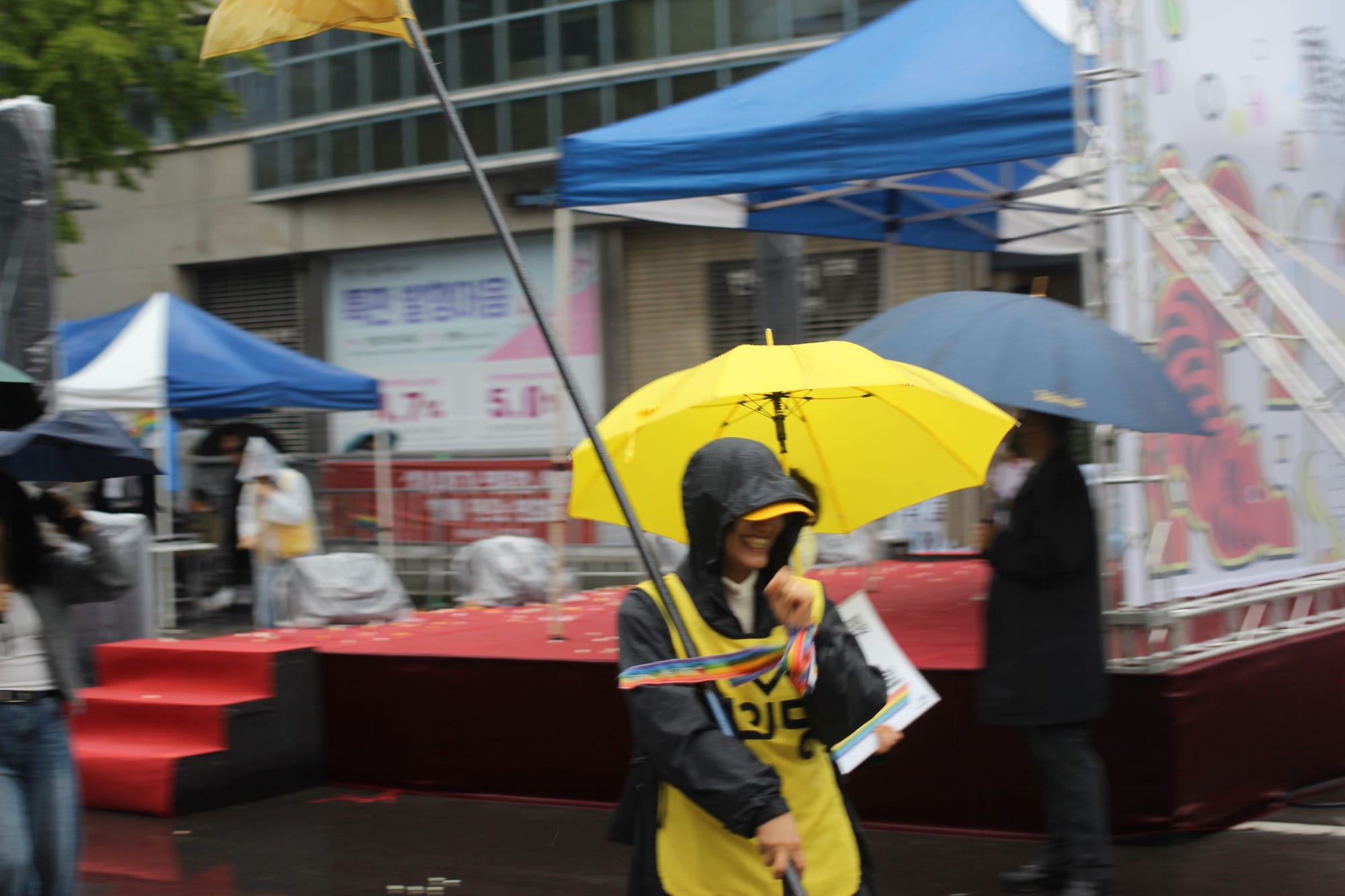
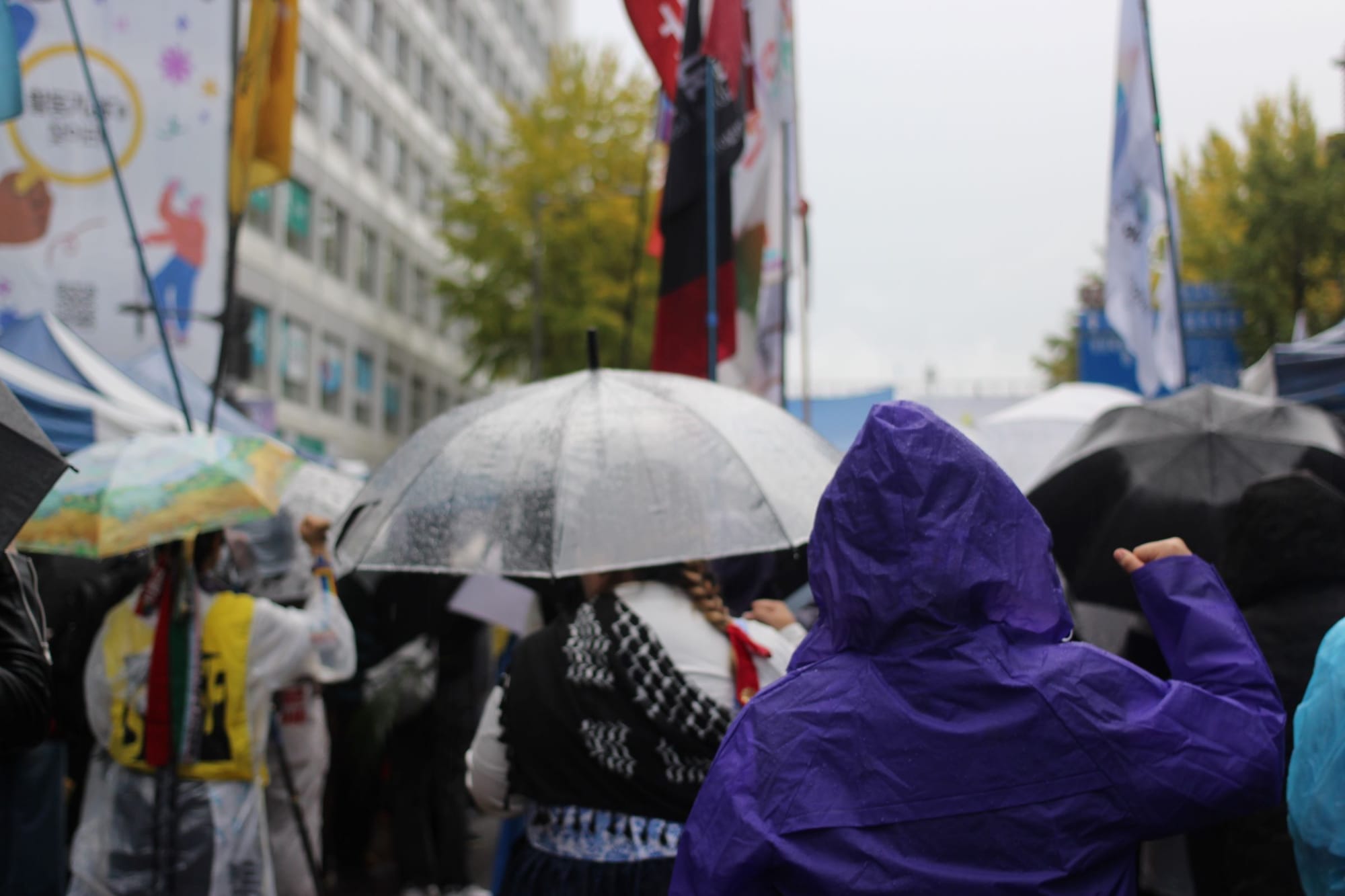
A few hours in, the Gwangju Queer Culture Festival turned into a march through the city's downtown. Flags, flying high atop long sticks, felt like familiar friends; they were the same ones I had seen at this year's May 18th activities remembering Gwangju's 1980 Civilian Uprising.
Q-Life, Eunzi told me, got their start through the Korean Sexual-Minority Culture and Rights Center. They formed a cooperative business structure this year to raise money and start their 생활학교, or Q-Life School.
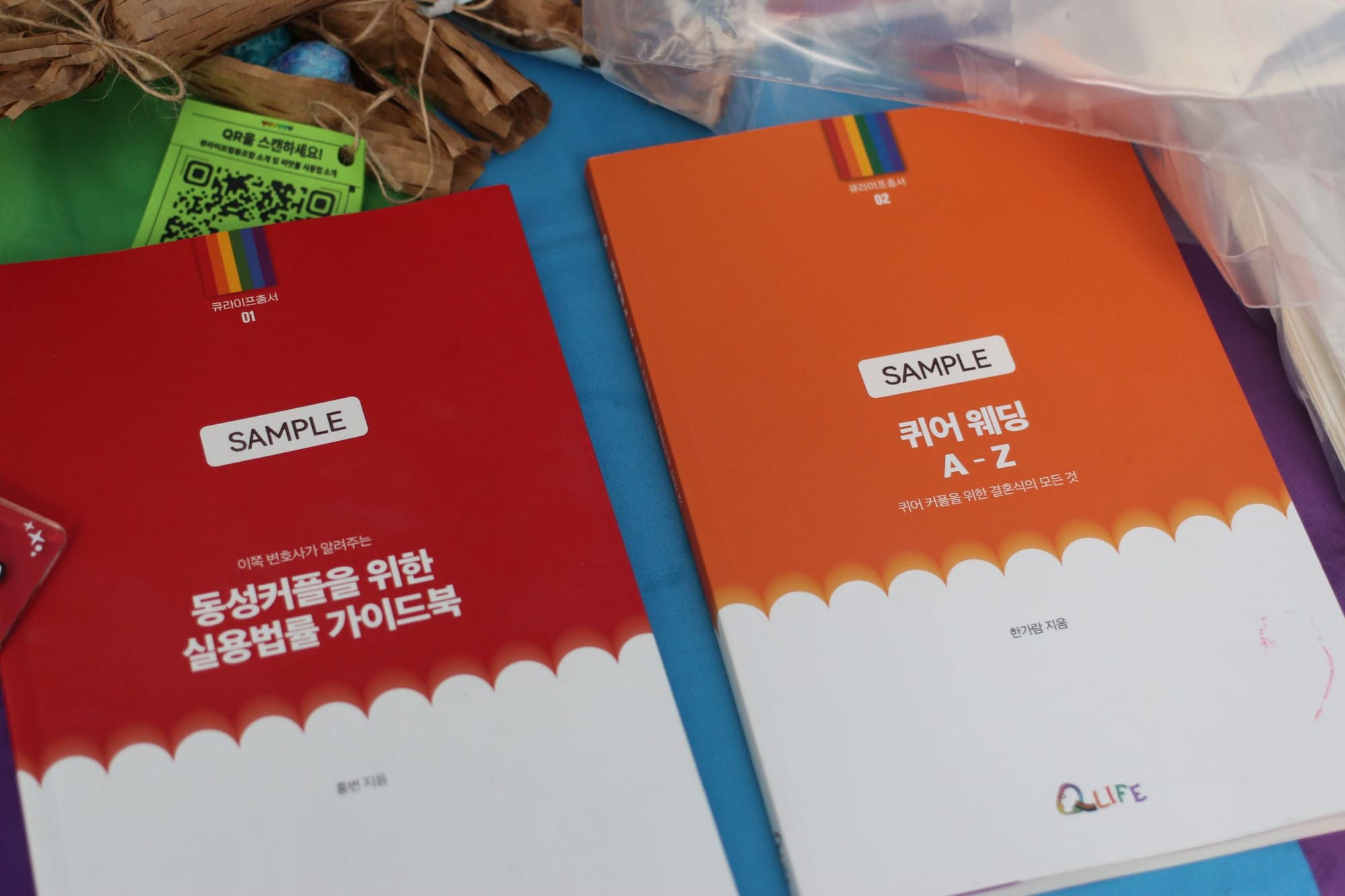
Finding queer elders to talk to is not always easy, Eunzi said. So Q-Life members make their own guides as they go. Their "life school" sessions, which members can join offline in Seoul or online from anywhere, touch on big-picture moments like queer male menopause and legal contracts for sharing finances, a home and children.
Eunzi told me about queer weddings in Korea, where same-sex marriage is not recognized by the state. Because the lack of legal benefits can pose difficulties later in life, many of queer weddings include a legal component, like the signing of a will.
Q-Life member 캔디 (Candy), who got married two years ago, skipped the typical wedding hall in favor of a Mexican restaurant.
"It had a great atmosphere," Candy explained in Korean. "My wedding was fun," she added in English. Her mother and younger sibling came, along with her partner's family — as well as chosen family numbering in the hundreds. It was a celebration not just of Candy's relationship but of queer relationships in Korea.
In Candy's previous relationship, her partner at the time was diagnosed with and eventually passed away from cancer. Without legal spousal rights, Candy had to go through years of hospital visits with a certain level of precarity.
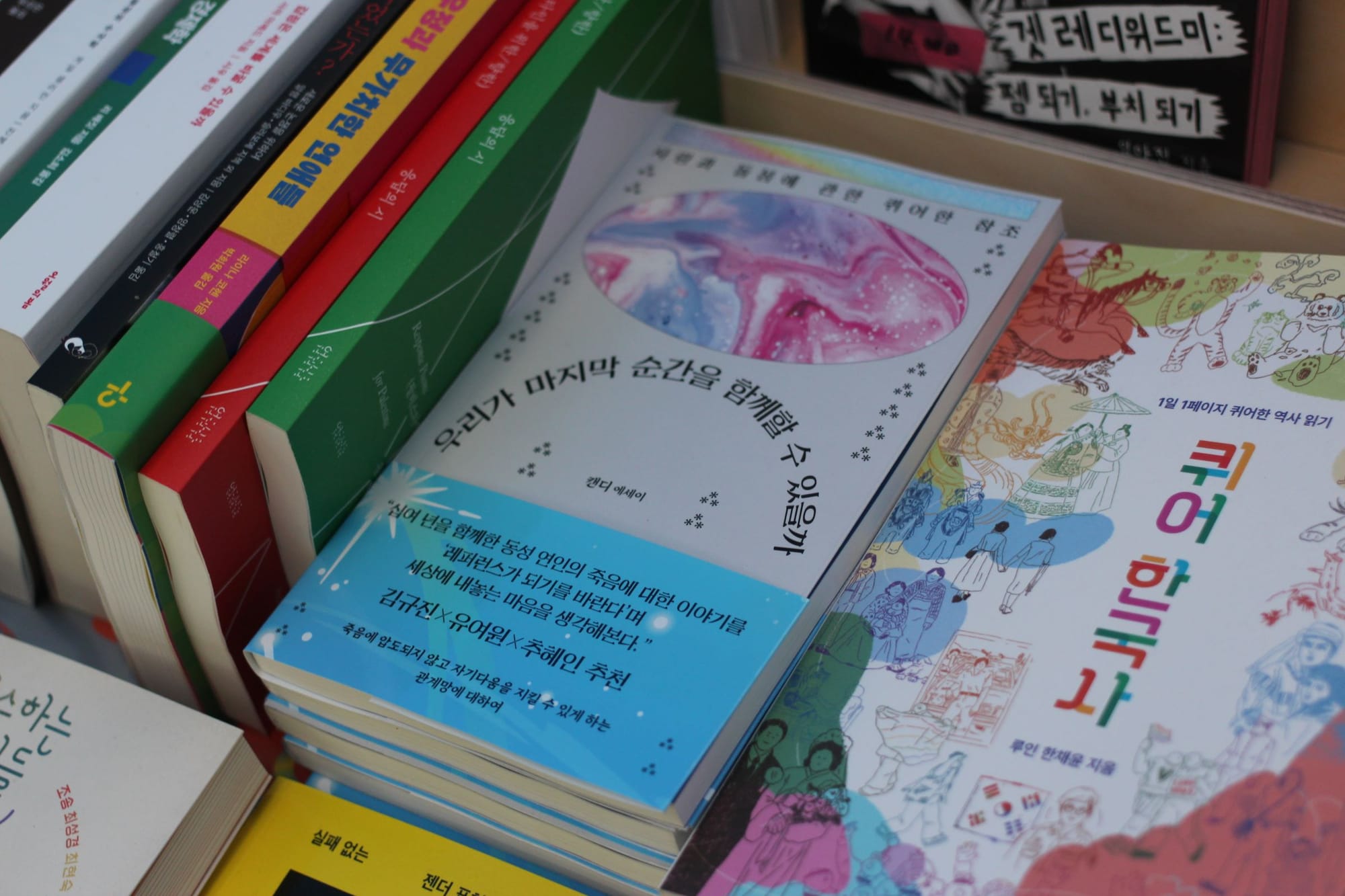
She details the story in a book called 우리가 마지막 순간을 함께할 수 있을까 (Will We Be Able to Be Together in the Last Moment?). I crossed the temporarily car-less street to 소년의서 (girlsbookshop)'s booth to pick up a copy. It was nestled among books on femme and butch style, translations of international queer theory essays and records of queer Korean history.
As Candy goes through life, she documents the path behind her for the next generation. For queer people in Korea, getting older means being able to write the guides they wished they'd had.
Like at the May 18 commemorations, the Gwangju Queer Culture Festival crowd sang a rendition of human rights anthem "임을 위한 행진곡" ("Marching For Our Beloved"). They raised their fists together as they sang, fighting for a future with broader rights and making creative provisions for the time being.
Sign up here to get Gwangju Midbrow email updates delivered straight to your inbox.