Urban Farmer's Market and Rice Harvesting
한새봉 (Hansaebong) Ecological Park
Hansaebong Ecological Park Dure
Oct. 17, 2026
(Jisu Sheen recently moved from New Haven to Gwangju, South Korea, where she’s covering local arts and culture for the New Haven Independent and Midbrow.)
All I knew was that I was going to a park.
On a visit to fill up on laundry detergent at a zero-waste cafe (actually not even the one I wrote about), one of the owners told me about an upcoming event at Hansaebong Ecological Park. I took a picture of the flyer, and a few days later, arrived at the entrance in the Ilgok-dong neighborhood of Gwangju's North District.
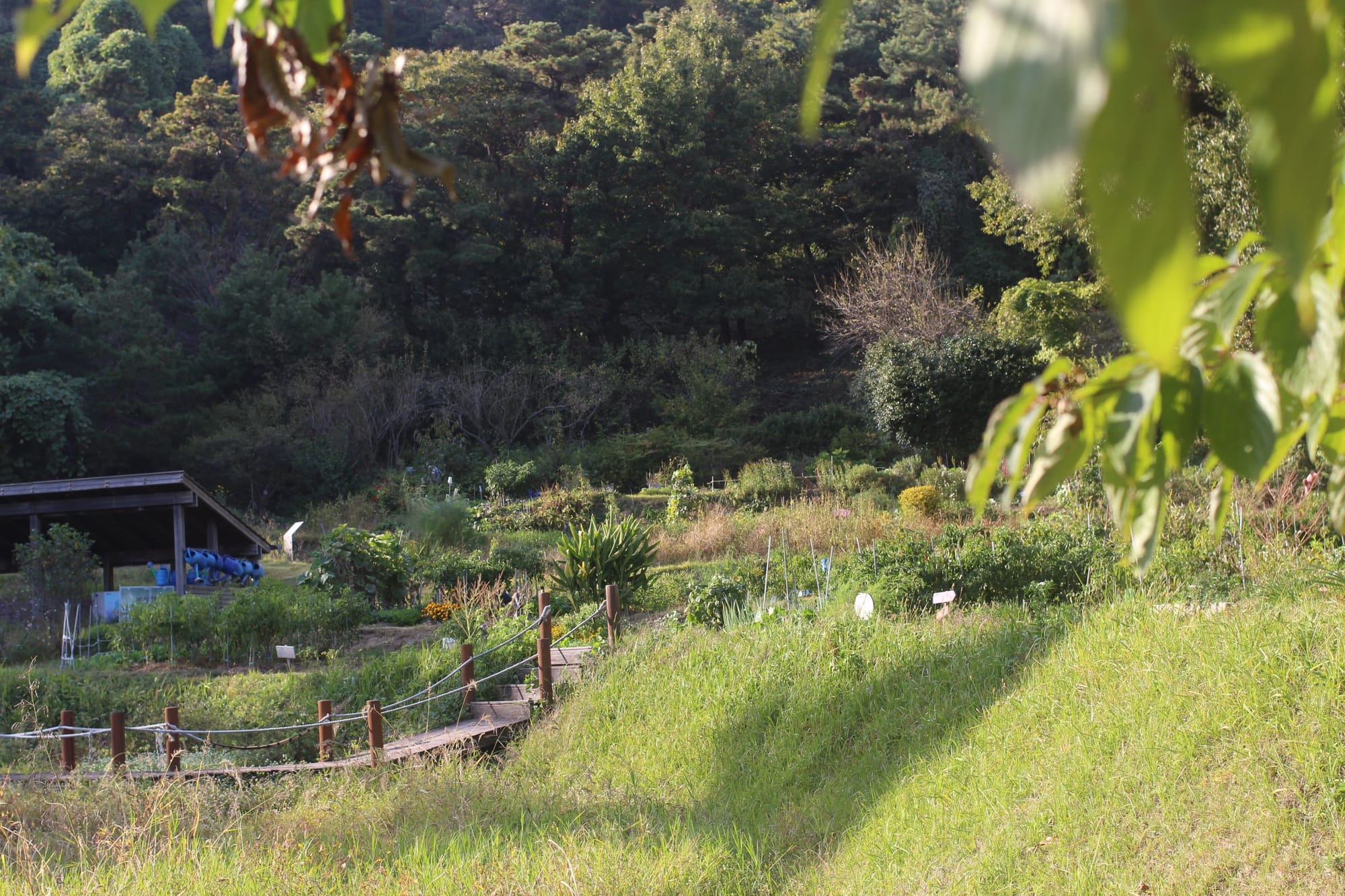
I thought I'd see some grass and blankets. Instead, I stumbled into a small paradise.
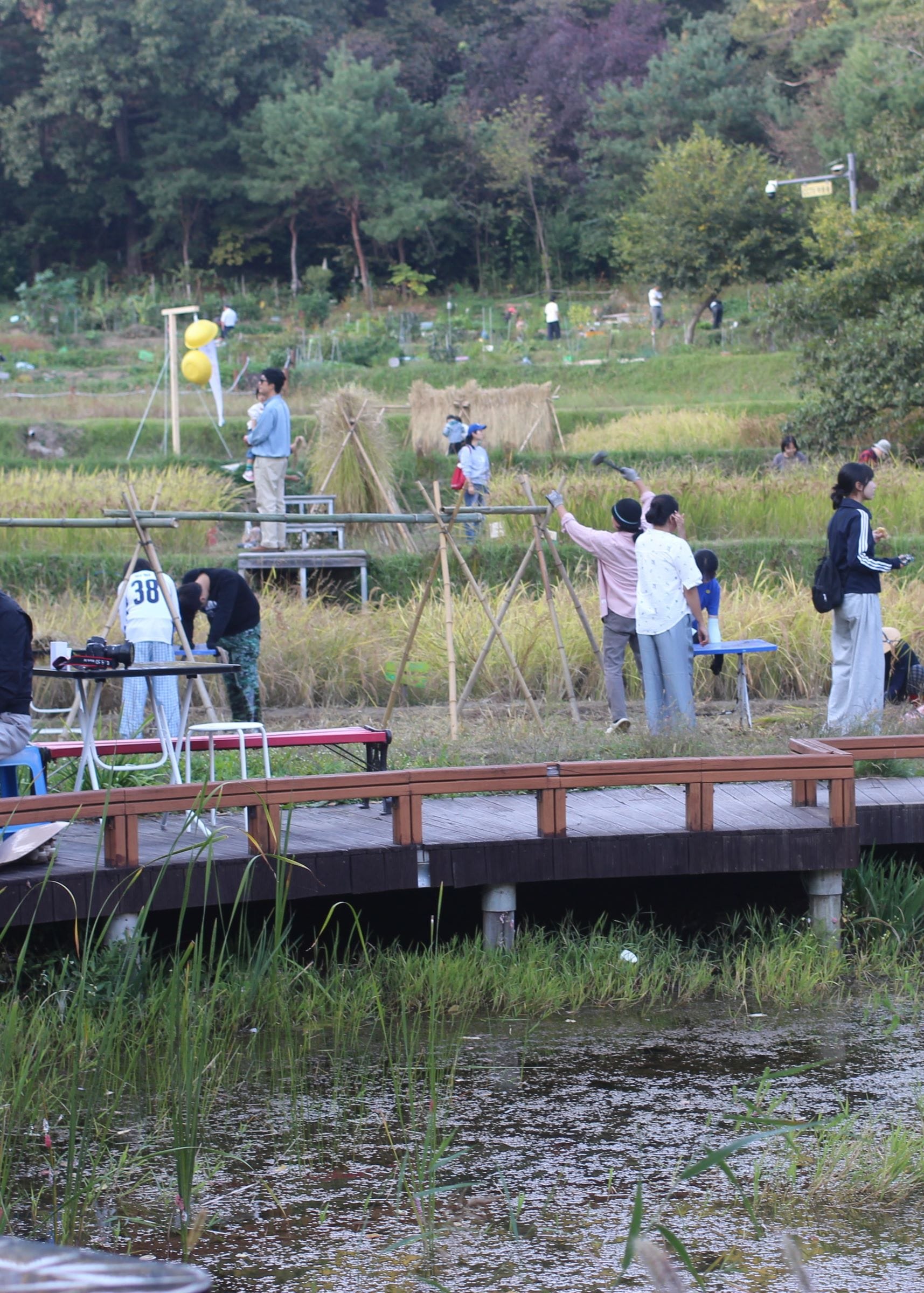
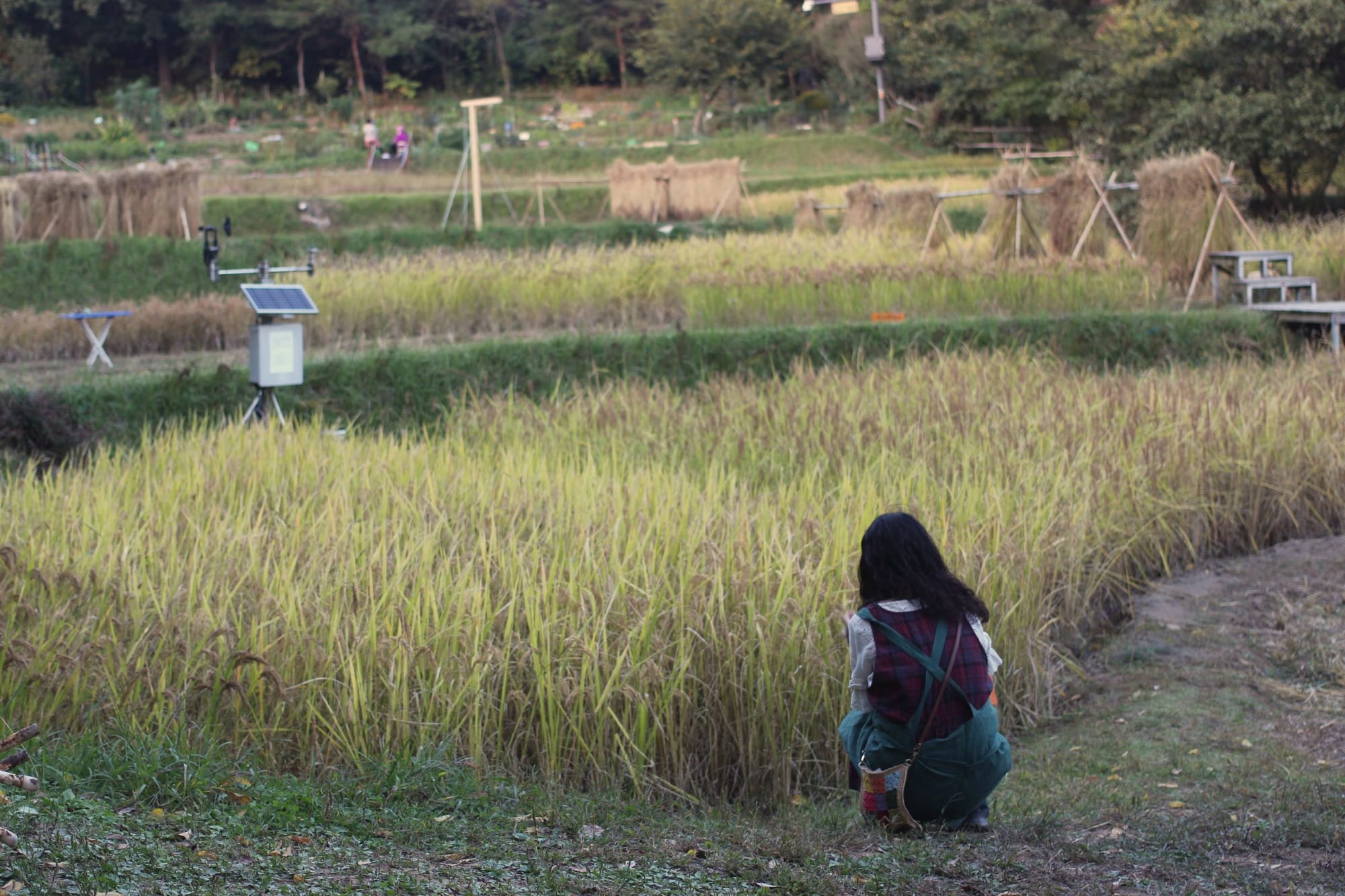
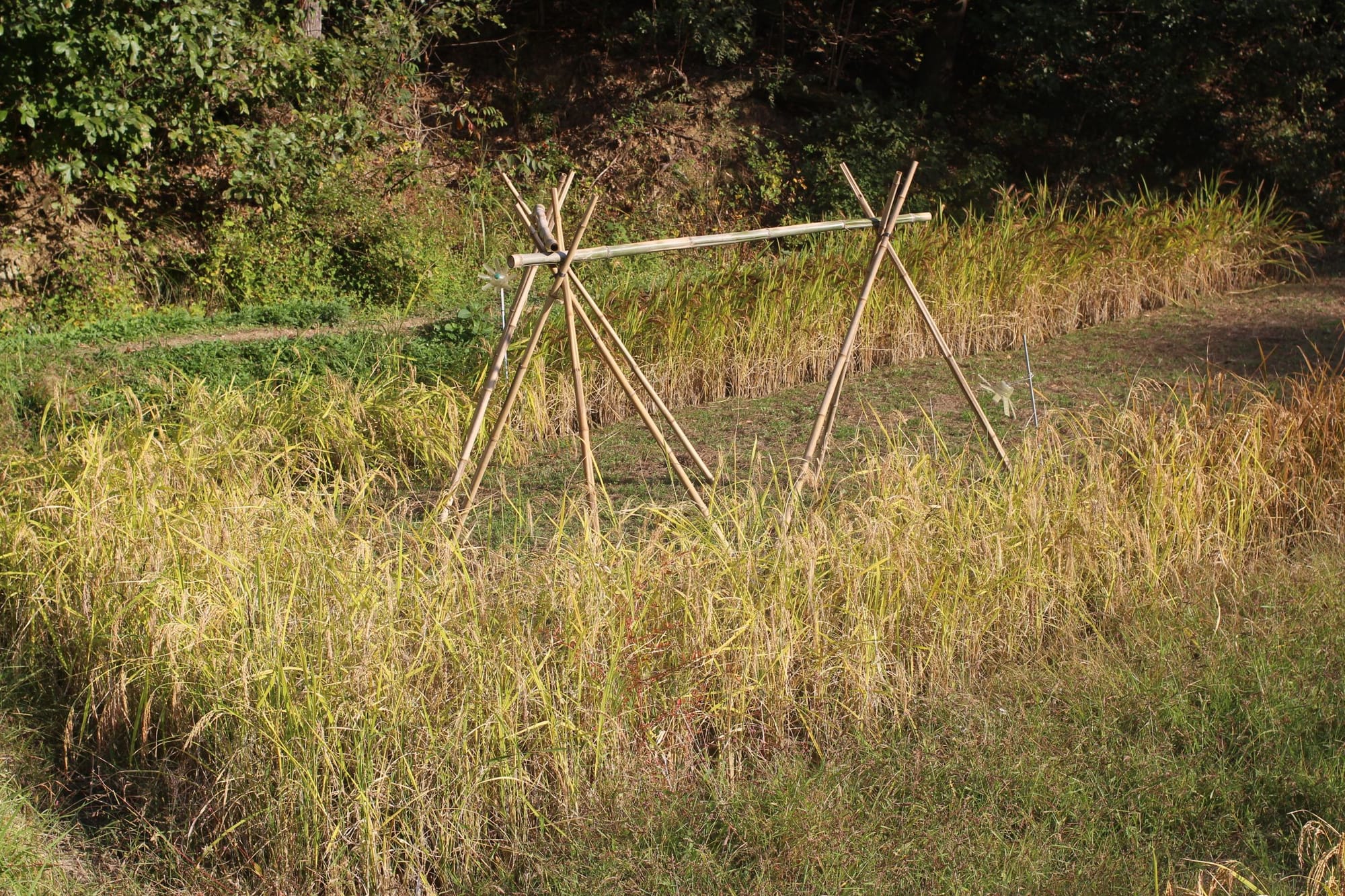
Hansaebong Ecological Park centers around a four-tiered agricultural terrace where the local community cultivates 18 varieties of native Korean rice in a revival of a traditional cooperative labor system called 두레 (dure).
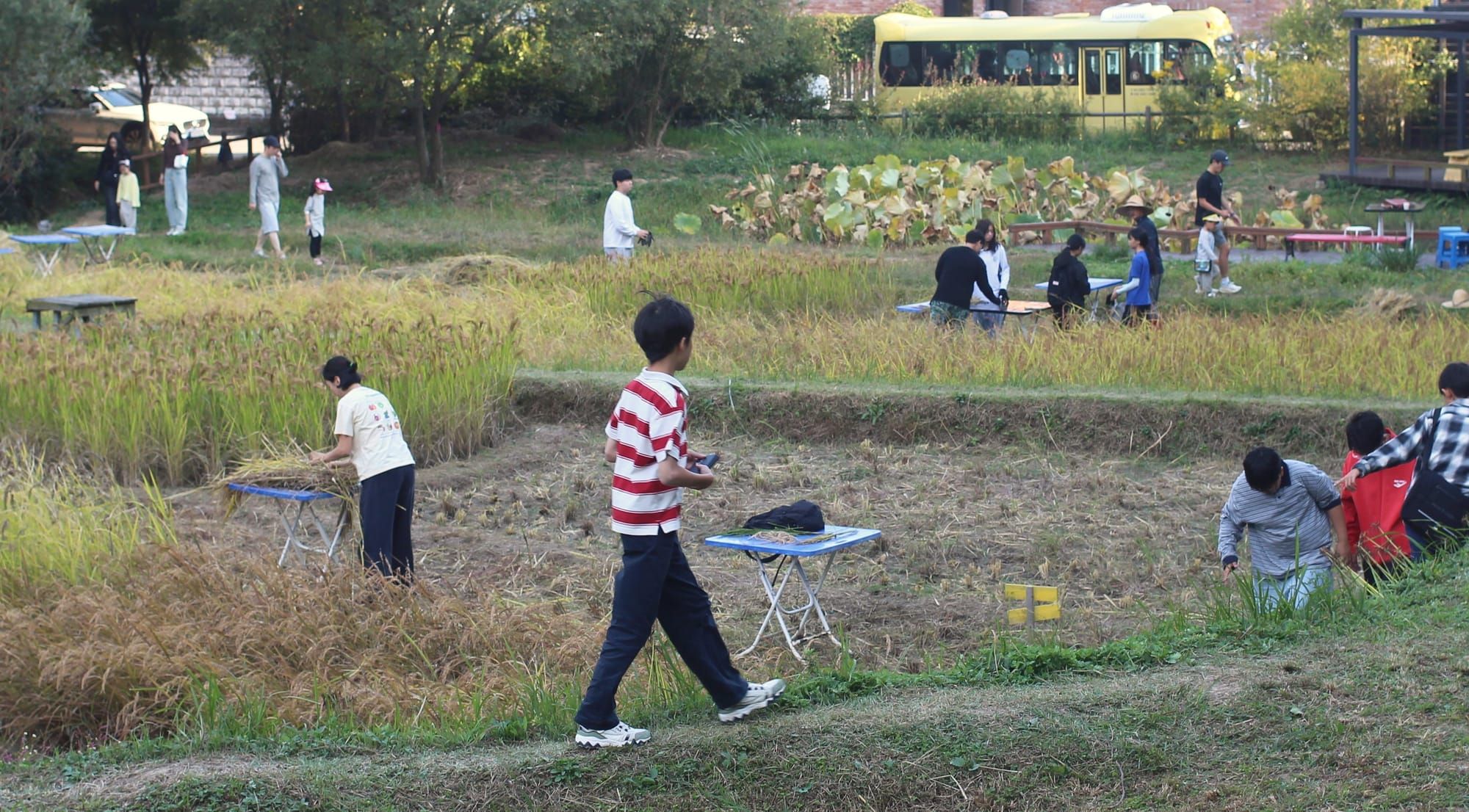
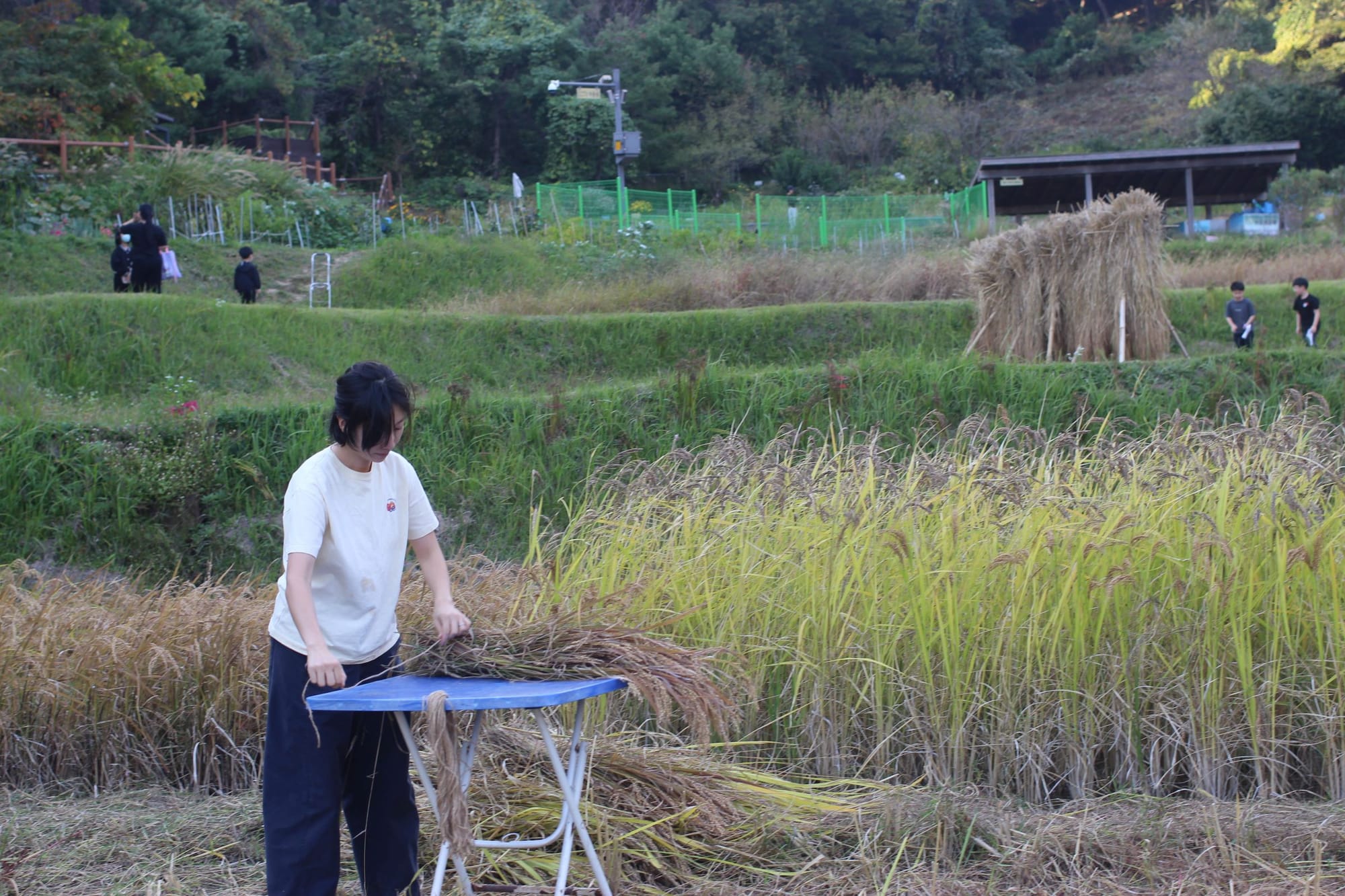
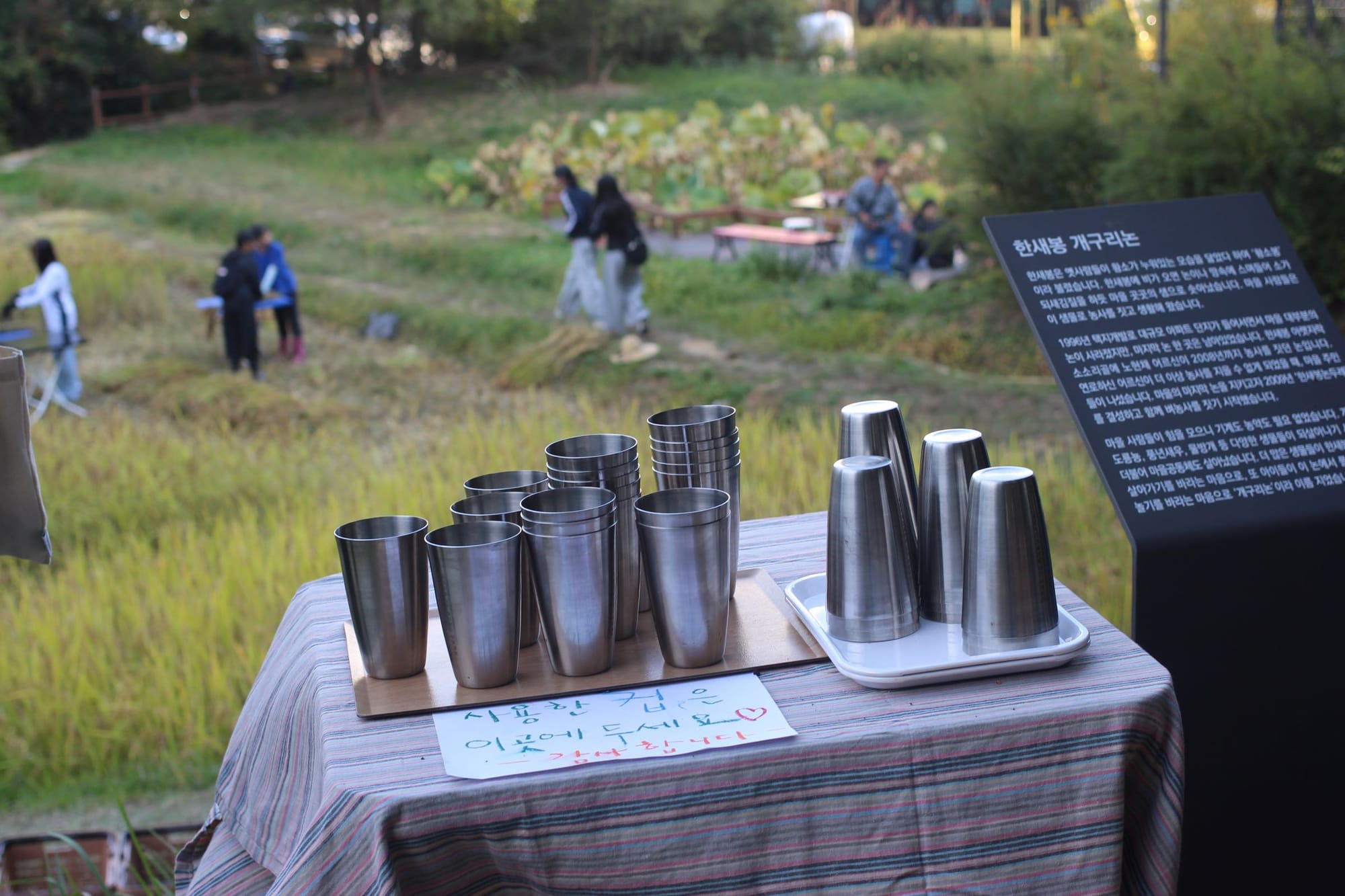
I had come on harvest day; heads poked out from tall vegetation as farmers of all ages and experience levels harvested rice by hand to dry on bamboo structures. Every so often, people disappeared among the autumn leaves, climbing up stairways into the wooded mountainside.
Vendors sold food and art along the side of the terrace, and a ukulele band prepared to play. I heard the ring of bells as kids traipsed down the entrance path with good-luck charms in hand.
According to 정은실 (Jung Eunsil), member of the steering committee for Hansaebong Dure (the organization managing the park's farming activities) as well as an instrumentalist in the ukulele band, the neighborhood used to be full of terraced rice paddies like this one. With the arrival of new developments and high-rise apartments, they all but disappeared.
Hansaebong is the last one left. The elderly couple who owned it eventually struggled to keep up with the paddy's management, so they turned it over to the community almost 20 years ago.
Now, Hansaebong Ecological Park Dure, which formed officially in 2018, holds neighborhood events to plant rice in the spring and harvest in the fall. Up next is a day of threshing, which Jung told me will happen in November.
I walked along a thin pathway between terrace levels to speak with a woman harvesting rice, 이푸른솔 (Lee Pureunsol).
Lee started farming at the ecological park in the spring. At home, she has a garden where she plants vegetables like radish and cabbage.
"This is way more difficult," she said in Korean about water-based rice farming. Still, she finds catharsis in the rigor, saying it's good stress relief.
"If it was just me, I wouldn't have thought to come," she said. She has a seven-year-old kid, and the experience of motherhood has made her interested in teaching her child where food comes from.
I circled the far end of the rice terrace, under the wings of magpies and past a sign about the local salamanders. Forests and farmland, I realized, make an ideal setting for a community event. The layers of plants quieted the hubbub of the day; as I walked, the present moment felt encapsulated by a physical bubble of sound around me.
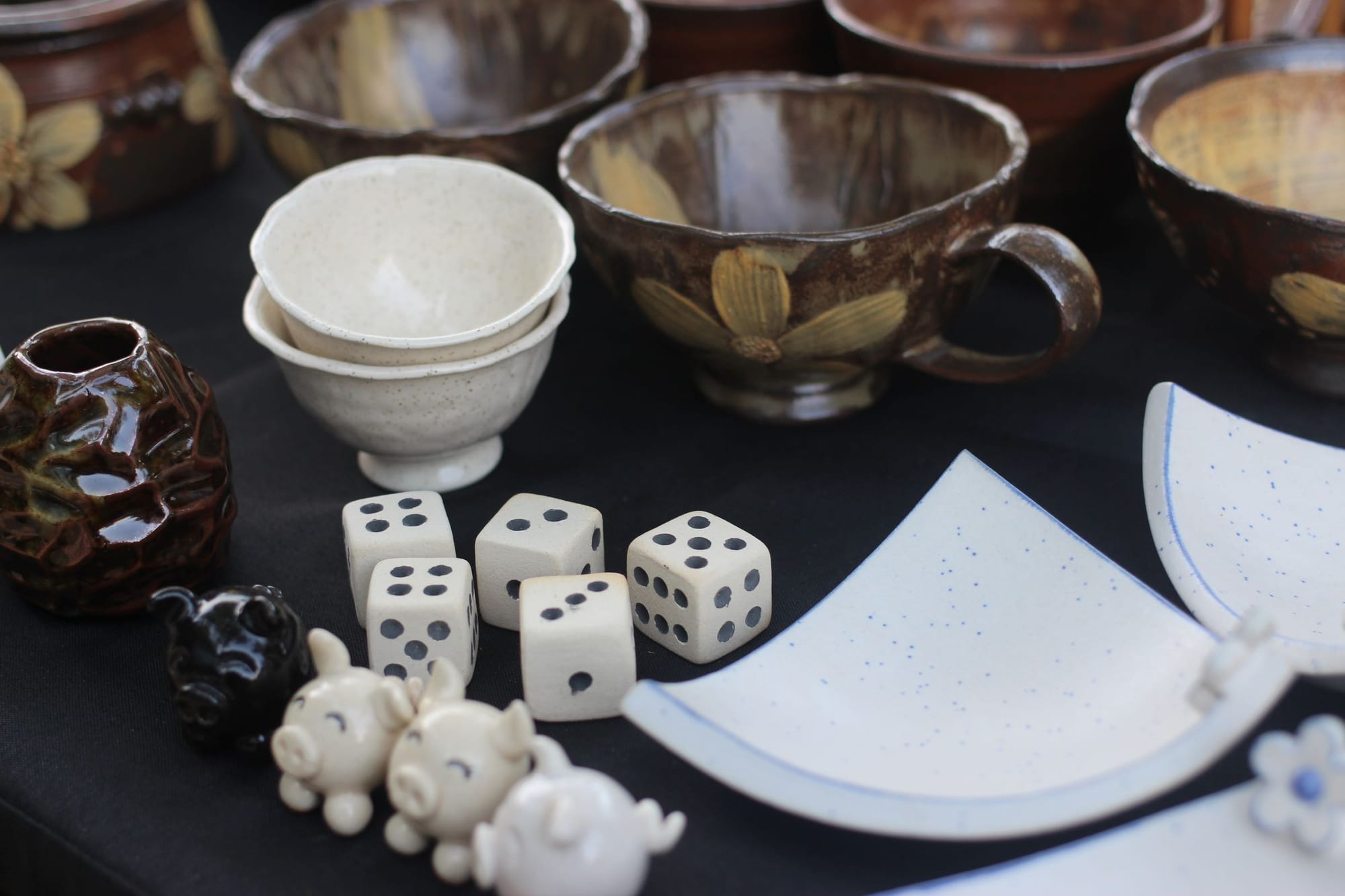
I returned to the park's entrance, where I found two sculptors selling their wares. One, I learned, was once the other's student.
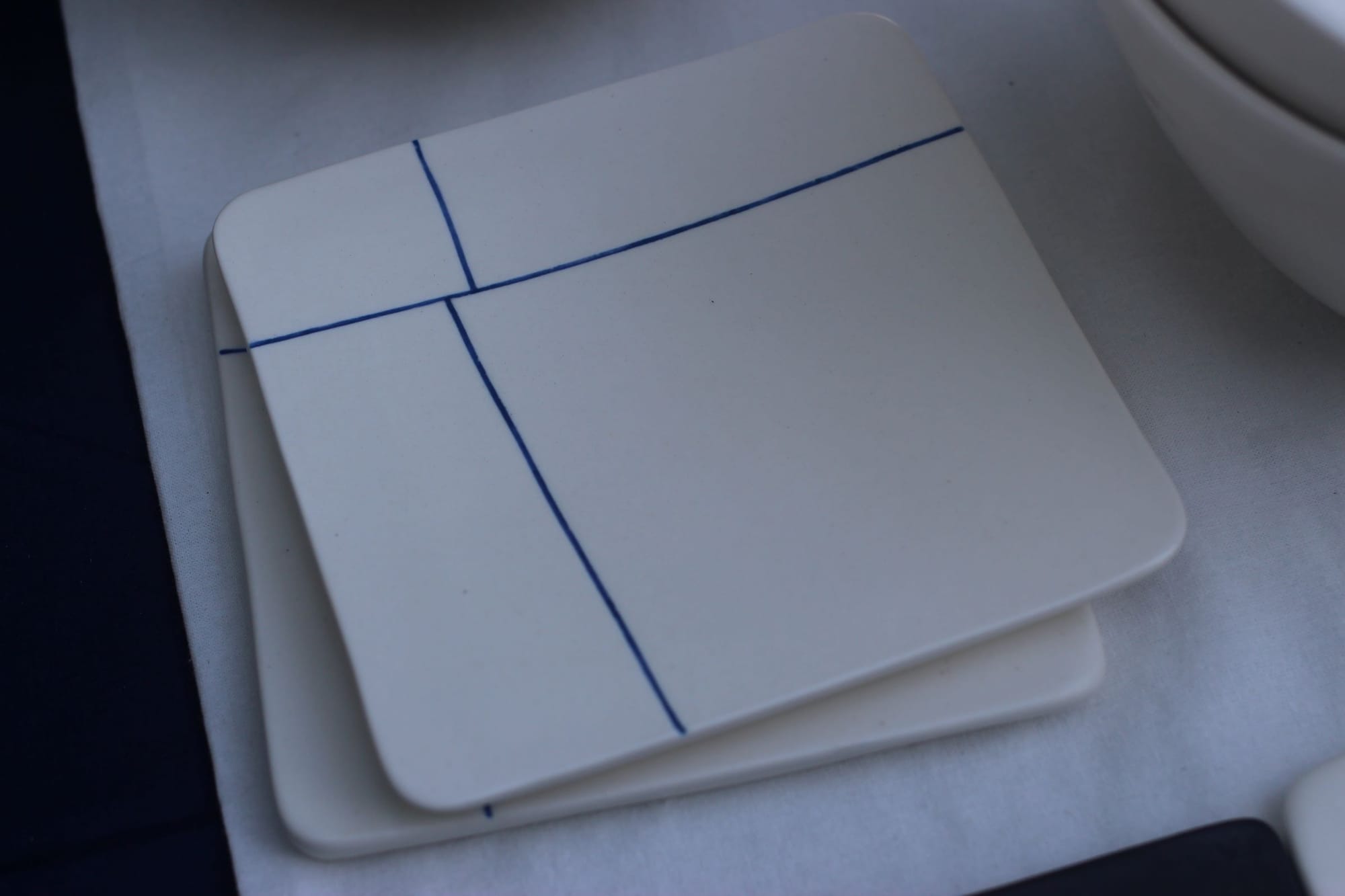
박은경 (Park Eunkyung), who runs a pottery studio in the nearby city of Damyang, makes ceramics inspired by jogakbo, traditional Korean fabric patchwork.
"Some lines are at perfect angles, but many are not," she said in Korean. Because jogakbo was borne out of necessity from leftover scraps, the art is not in getting right angles but in finding the perfect fit. Park has fun deciding which off-kilter angles to carve into her pieces.
Park, who started her journey in ceramics as a hobbyist, gained confidence from teachers like 최순옥 (Choi Soonok), whose booth was right next to hers.
Choi lives and teaches pottery in Gwangju. Like Park, her passion started as a hobby, which she refined through training and 28 years of experience. Now, she says, she's found her style. She recounted a time she won 3,000,000 won (about $2,255) in a first-place prize in a sculpture contest.
I admired Choi's collection of ceramic dice, which she said won't break unless you throw them straight down, hard. She told me about the process of making them. Unlike other art pieces, it was very important that each side of these objects was exactly equal—not an easy task for a material that contracts in the kiln. She had to tap the clay over and over on each side until each die was sufficiently dense.
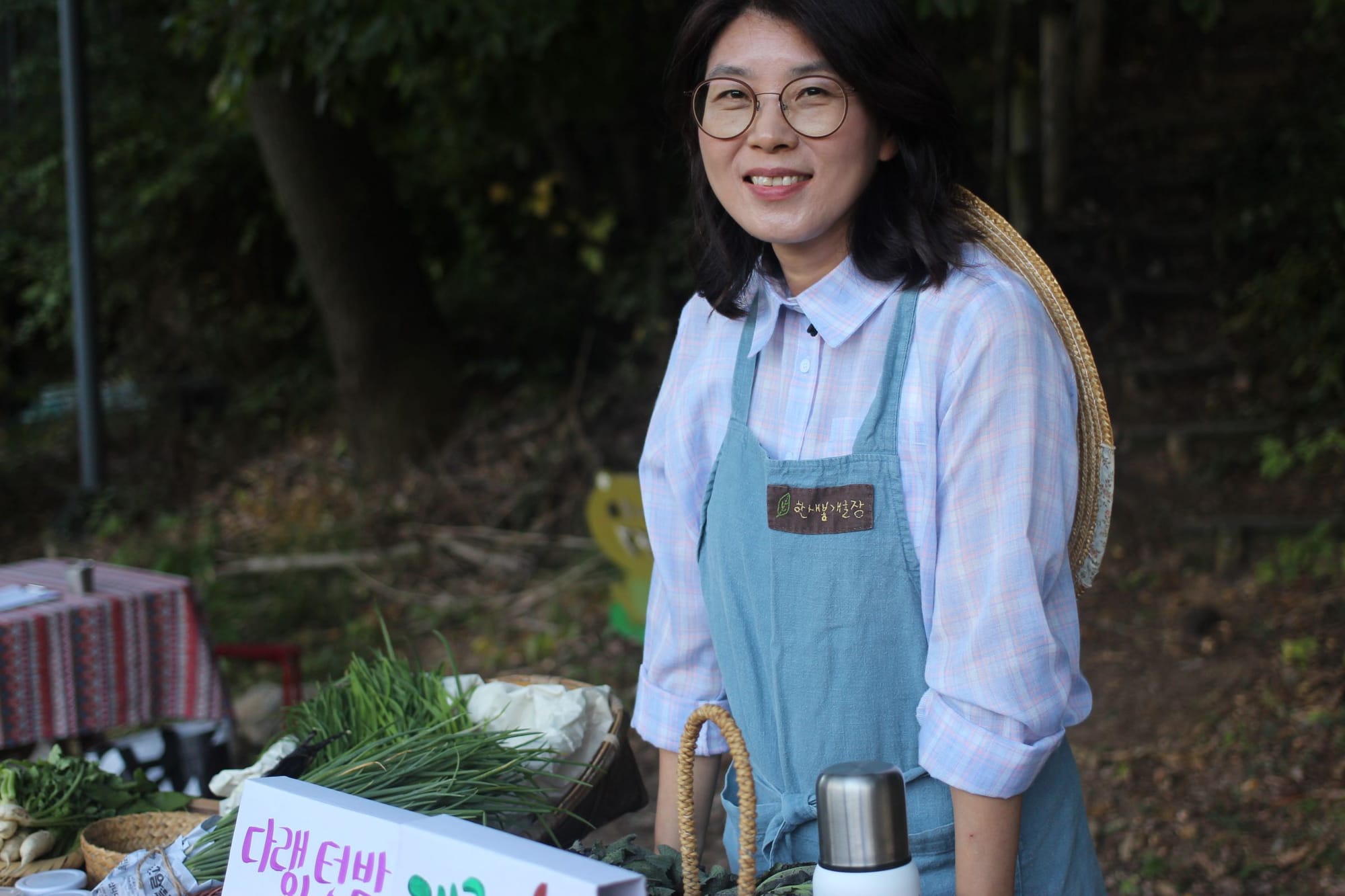
Before I left, I talked to 김선임 (Kim Seonim), another member of the ukulele group, at a table of locally-grown vegetables. She told me how Koreans used to make cosmetics from these plants back in the day. It turned out she was one of the community artists celebrated in an event I'd gone to the day before: the unveiling of two hand-painted movie signs at Gwangju Theater.
In that project, Kim had made art about her childhood in Gwangju's South District, illustrating her dreams for a future that compels Gwangju's citizens to stay. Here in her current community in the North District, she was helping preserve a healthy ecosystem for generations to come.
When Kim wrapped up her conversation with me, her daughter came by and offered me a hand-painted glass bell. It let out a chime with every step as I walked out of Hansaebong Ecological Park. I'd become one small part of the day's chorus.
Sign up here to get Gwangju Midbrow email updates delivered straight to your inbox.