"Home Theater"
Thais Suguiyama, Santiago Colombo Migliorero, Oh Sera
Horanggasy Creative Studio
Gwangju
Nov. 27, 2026
(Jisu Sheen recently moved from New Haven to Gwangju, South Korea, where she’s covering local arts and culture for the New Haven Independent and Midbrow.)
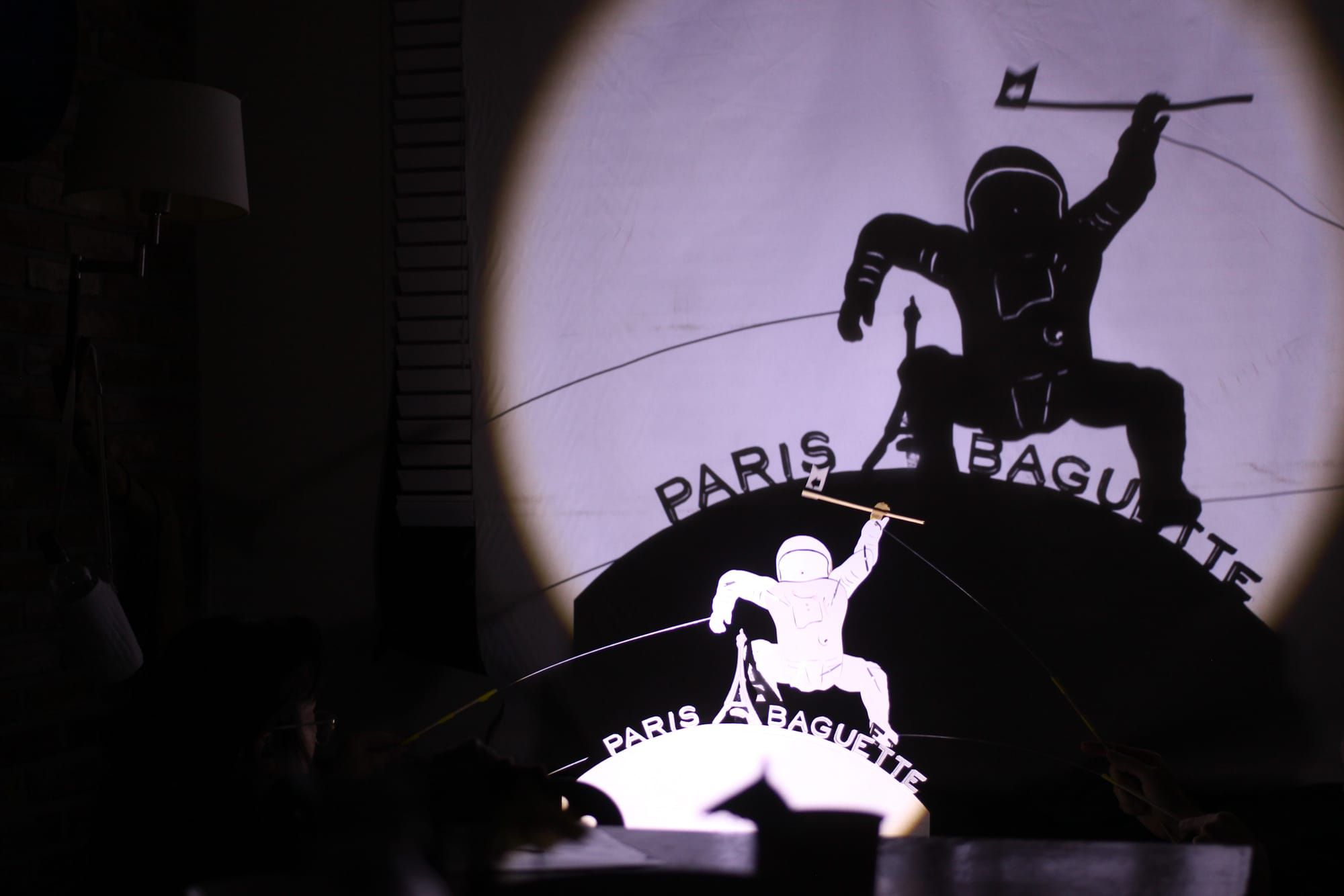
First, there was nothing. Then, there was a circle of light with beautiful yellow edges. Its glow would soon be home to an astronaut, a pooping man, a flying bug and a motley crew of friends and enemies.
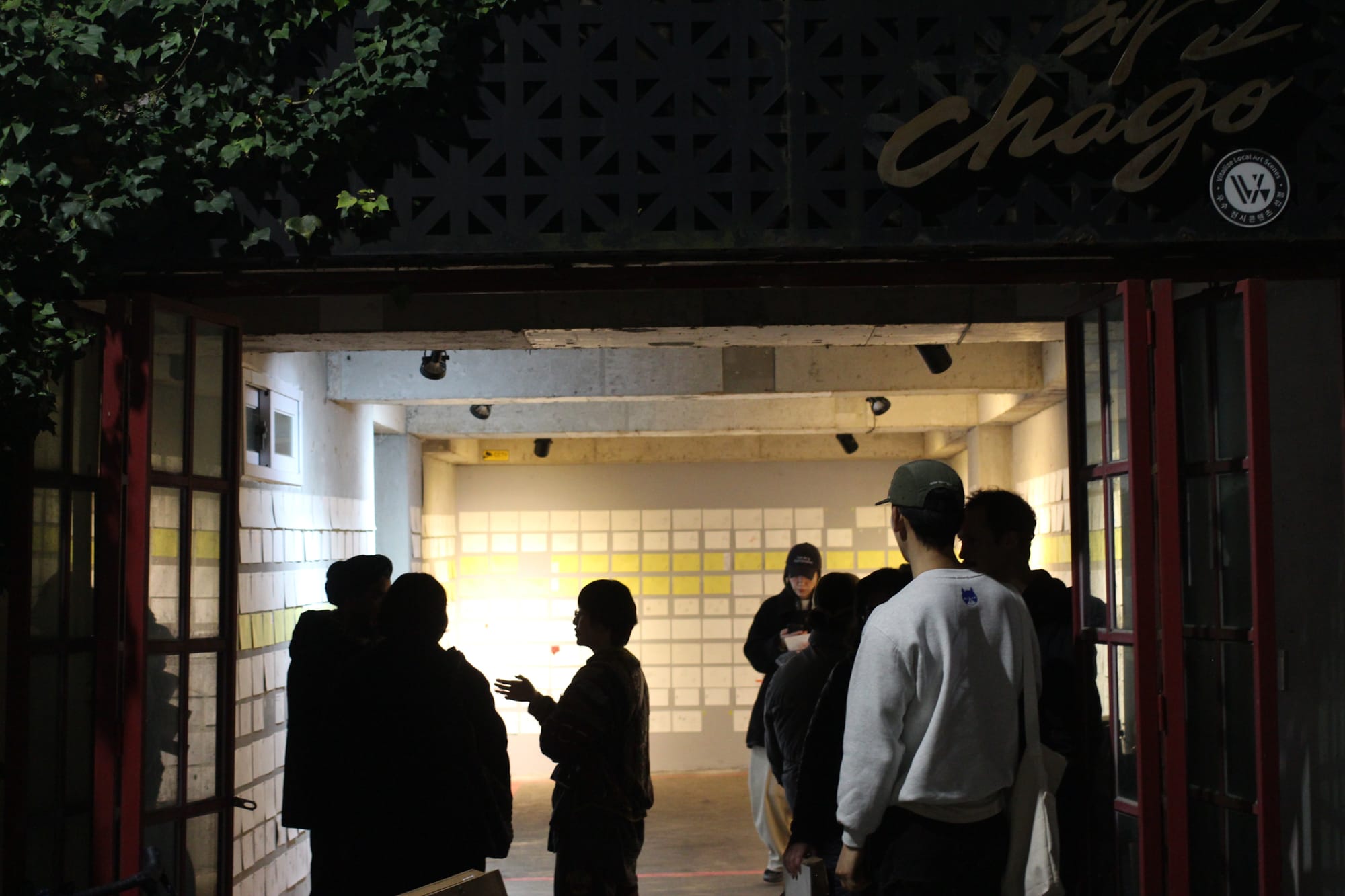
I saw that vision at Horanggasy Creative Studio in Gwangju's Yangnim neighborhood while watching a shadow performance called Home Theater by three of Horanggasy's artists-in-residence. It was a sentimental, at times bizarre experiment in handmade wonder that left me thinking: wait, there are gems we forgot in the analog age—techniques we didn't just abandon, but left unfinished.
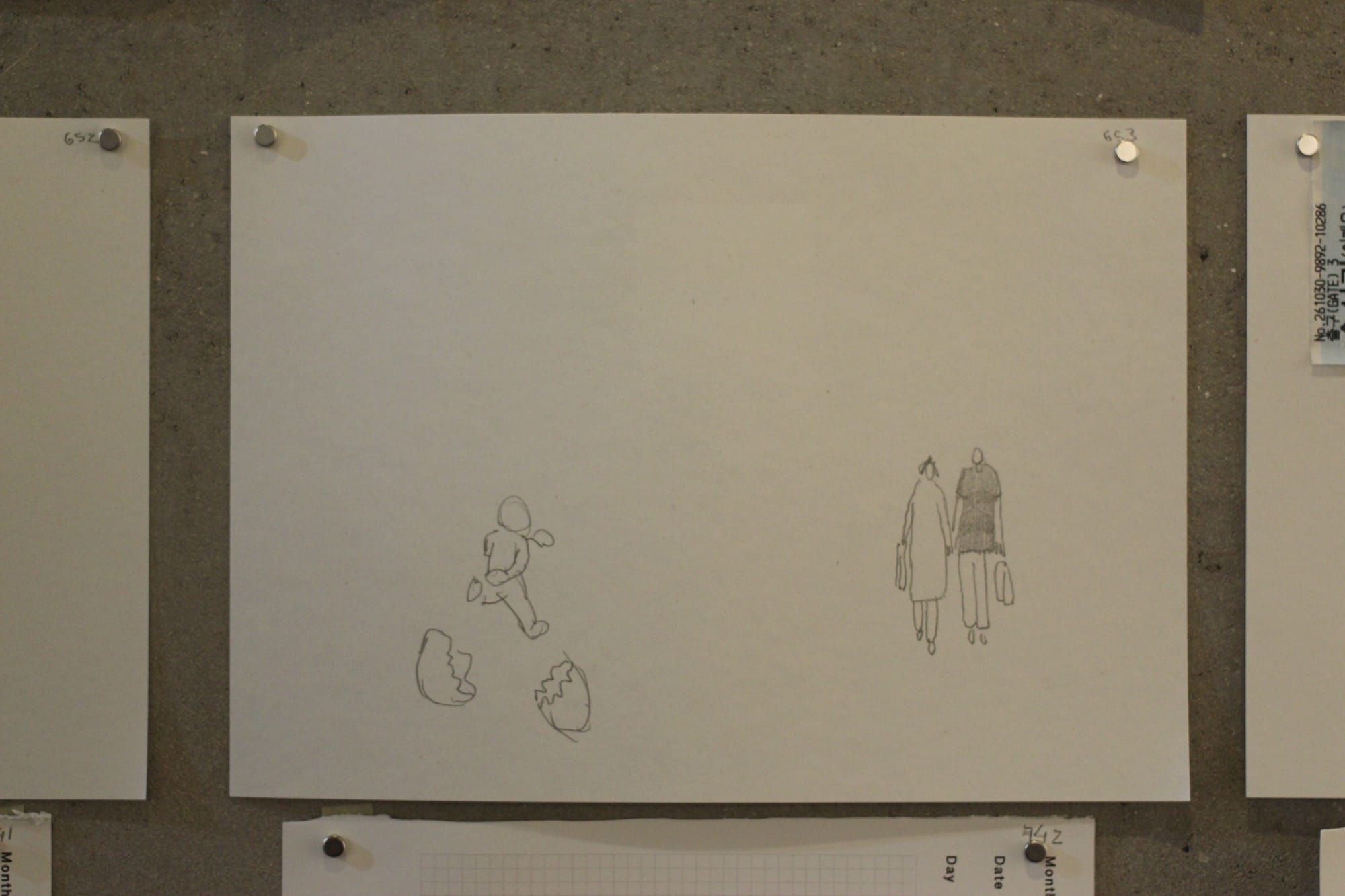
I met Thais Suguiyama and Santiago Colombo Migliorero, the performers in the shadow play, a few hours before at the nearby opening of an exhibit of Colombo Migliorero's drawings. The artist, who is from Argentina and now living in Spain when he's not doing residencies, invited attendees to each take one of the exhibit's 895 drawings and use a QR code on the back to view a secret video.
The drawings, it turns out, are frames of an animation. Colombo Migliorero told me about a philosophical paradox that seeks to disprove the possibility of motion. To get to any point, you must first get to the middle of the distance between there and where you are. But to get there, you must first get to the middle of that half-distance. And so on, for infinite halves; how are you ever going to get anywhere?
No worries. "In reality, things move," Santiago said in Spanish.
His drawings spill from plain paper onto ephemera from everyday life (receipts, calendar pages, train tickets to the sea, a yellow gingko leaf). The stationery may be stationary, but fortunately for the art of animation, life is not made up of a series of rigid connections from Point A to Point B. It's fluid.
In Colombo Migliorero's secret video, which is the full animation, people walk hand in hand. A shrimp floats around the page, which is actually many pages. A kid hatches from an egg and runs off. I fast-walked around the exhibition in circles, trying to see the animation in the still pictures.
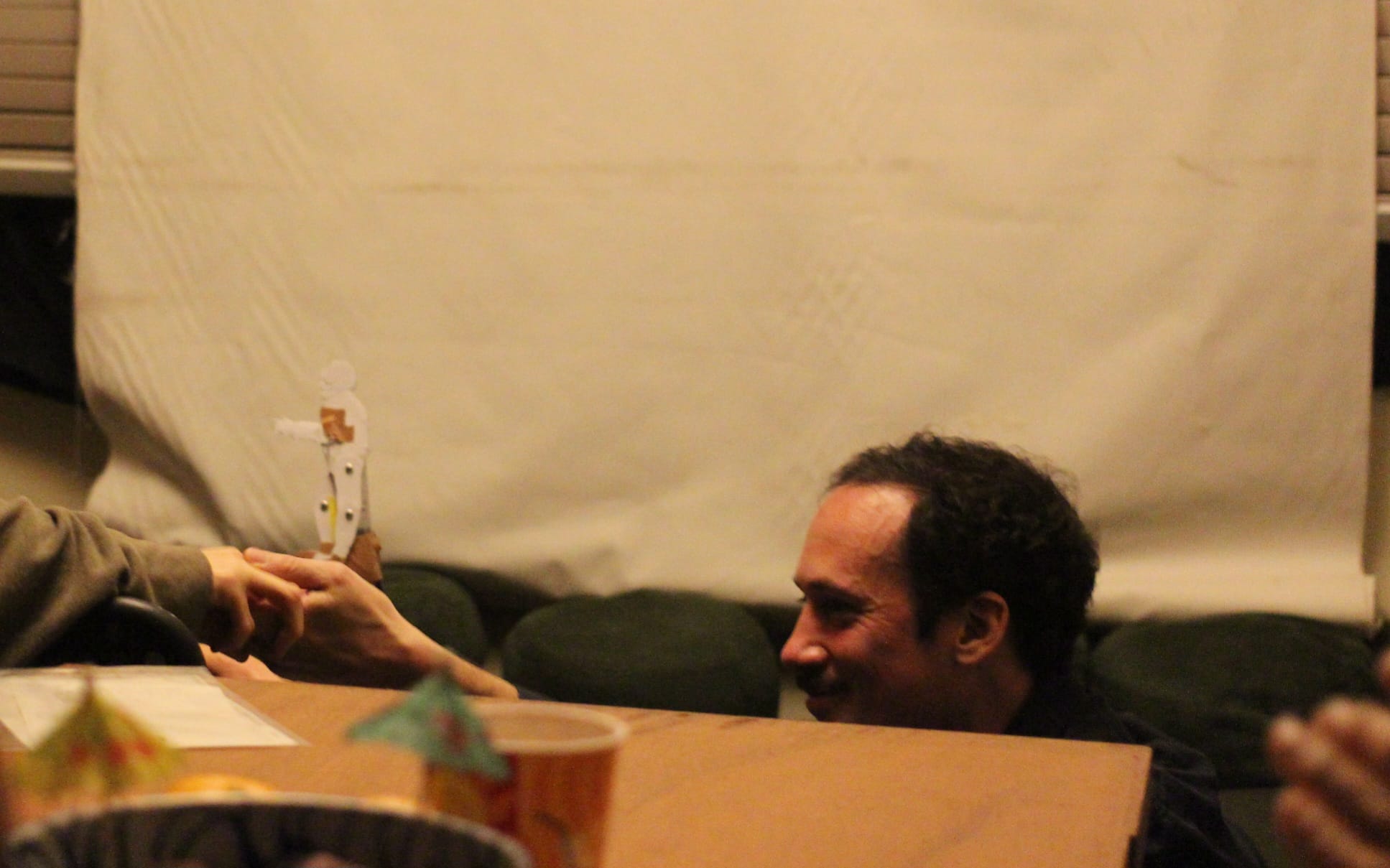
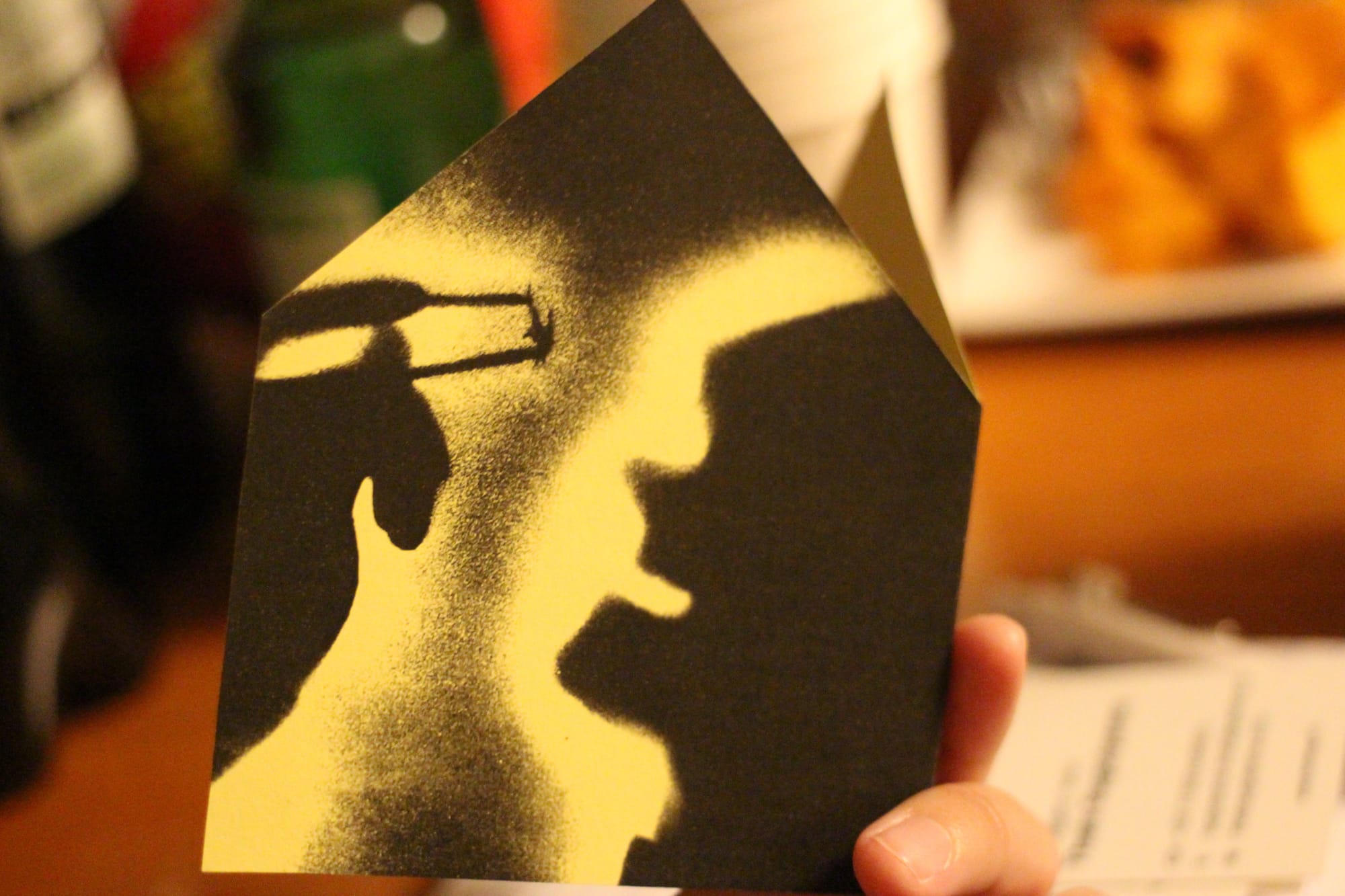
In the performance later that evening, characters moved across dimensions I forgot we even have access to. Shadows made of shapes cut from discarded packages, sometimes suspended from strings or pushed with wires, not only defied gravity but grew hazier or more defined as they traveled the distance between the wall and the light.
Suguiyama, who created the concept behind "Home Theater" in addition to co-starring in it, has a background in screenprinting, graphic techniques, and motion design. When I noted how real the shadows' movements felt — an extended scene of a man straining to poop on a cut-out toilet and then typing away furiously at a computer, for example, had the perfect neck movements for both — Suguiyama explained that her other mediums played a part. "In animation," she said, "there is the same principle of building articulation in the body."
That's not to say shadow art requires special experience. "No, really, anybody can do it," Suguiyama said. By just playing with your hands in the light, "it already creates an image."
Suguiyama is from São Paulo, Brazil, and has spent the last month collecting materials from life in Gwangju for the shadow play. The storyline came together in the days leading up to the performance, with the performers and sound artist Oh Sera rehearsing just a few times.
Improvisation filled in the gaps. The artists looked at each other throughout the performance, matching sound and action in real time.
Between the deconstructed animation exhibit and the shadow performance, I walked up a hill connecting the two spaces, an almost-empty bottle of wine in one hand and a bottle of soju in the other. They were from the snack table at the opening. I didn't quite know where I was taking them, just that they would end up where they needed to be.
Behind me were the sounds of artists cleaning up. Ahead were the warm orange lights of the next phase of the night. A drizzle of rain misted the pavement, probably getting into the wine.
The Home Theater performance took place, as the name implied, at home — the cozy quarters where the artists-in-residence had been living. Oh played an old organ. Lantern light streamed through a constructed house of colored cellophane. Suguiyama and Colombo Migliorero made shadows with the toys that lived within the translucent walls.
I asked Colombo Migliorero afterward if his role felt more like playing or performing. Playing, he said.
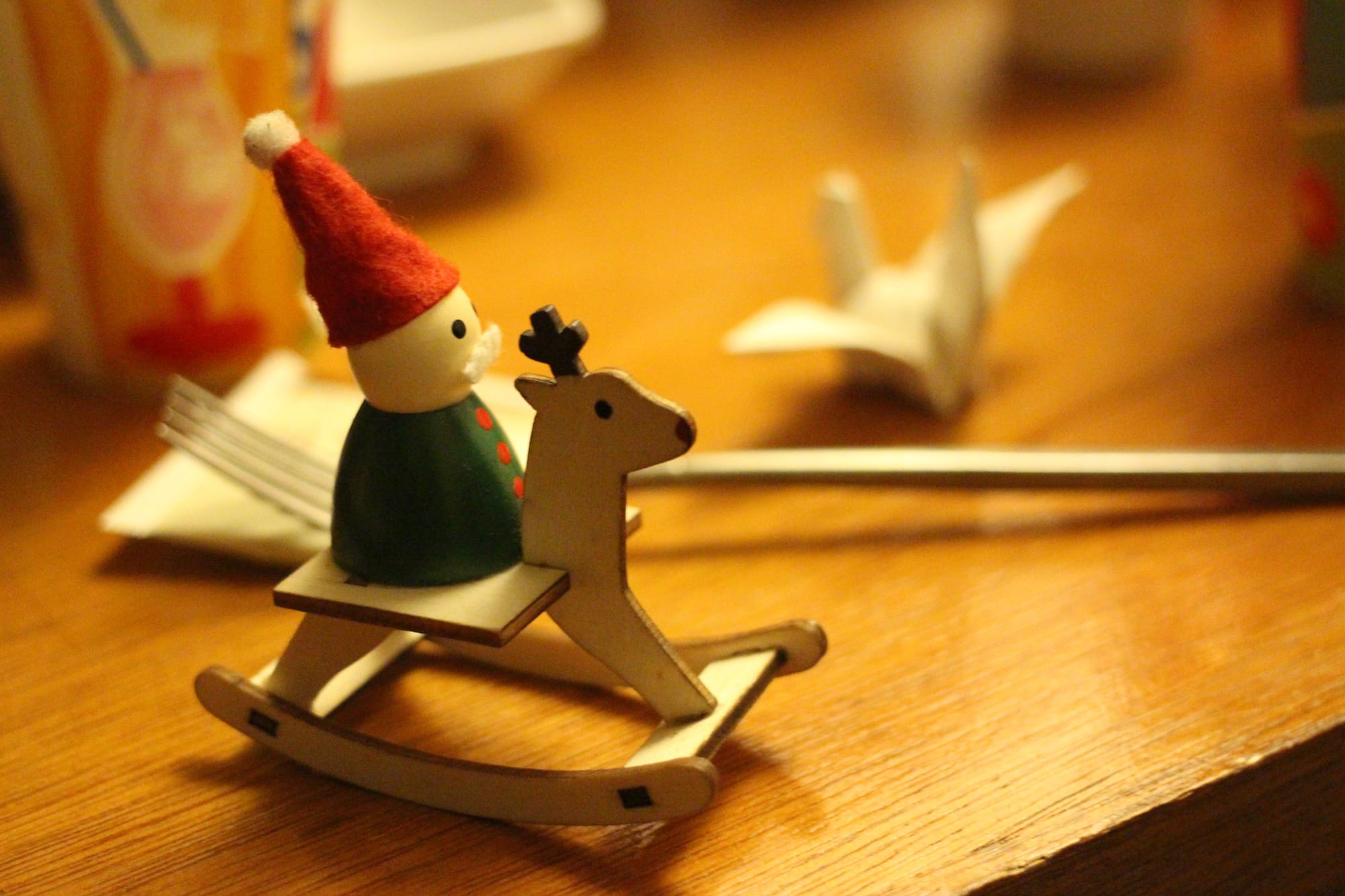
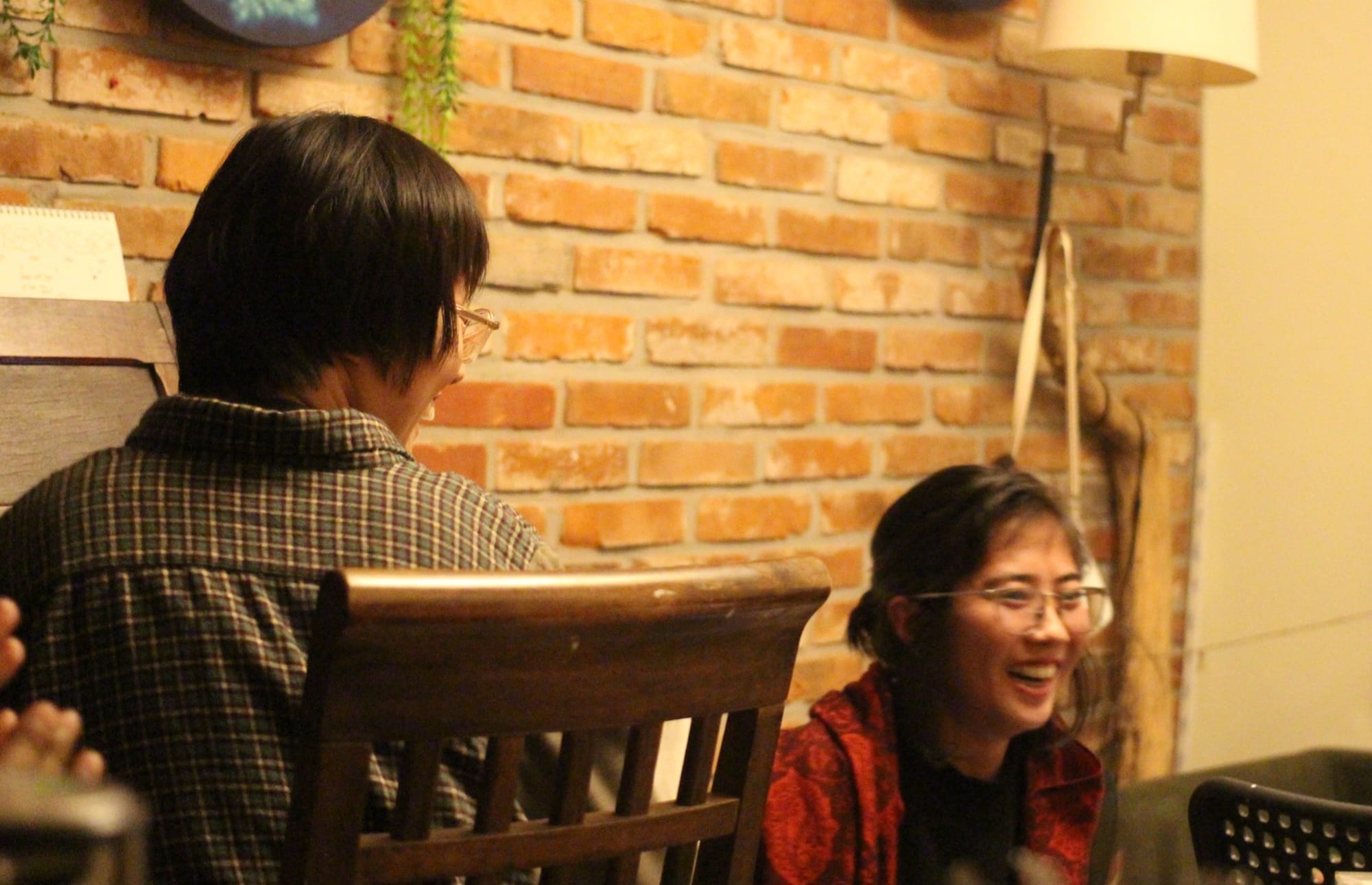
We shared persimmons, roll cake, wine and stories as the night drew on. At some point, I noticed we were joined by stars from the show. A tiny wooden Santa on a rocking horse. A toy boxer, ready for the ring. A paper crane. Only a light and some imagination away from coming to life once again.
Sign up here to get Gwangju Midbrow email updates delivered straight to your inbox.