
MooWoo
Gwangju International Street Arts Festival
May 18 Democracy Plaza
Gwangju
Nov. 14, 2026
Frogs, freshwater turtles and the roundness of the full moon; these are all topics important enough for the people of Gwangju to have sung about centuries ago, and all sights we still lay eyes on today.
Korean folk electronic musical group MooWoo called these concepts to the stage Saturday night in a performance utilizing age-old dramatic techniques and downright nasty beats.
They were playing at the Gwangju International Street Arts Festival, which was known as the Gwangju Fringe Festival from its establishment in 2016 until a name change last year. The three-day downtown showcase of circus acts, performance art and music faced a bit of bad luck in the skies this time around. Rain fell throughout the weekend, resulting in location changes and a slew of cancellations. It's a street arts festival; many of the acts didn't have an indoor equivalent.
For MooWoo's set, rain was just another layer of the performance. It was the last act of the night at Gwangju's May 18 Democracy Plaza, where there was enough space to hop around, umbrellas and all.
The basis of MooWoo's repertoire, pansori, is a traditional Korean singing style incorporating storytelling and spirituality. MooWoo's second piece, "강강술래" ("Ganggangsullae"), references the legacy of the Jeollanam region and Gwangju in particular. The song, originating from Korea's southwestern side, traditionally accompanies a dance performed by circles of women on Chuseok (the harvest festival) and the first full moon of the lunar new year.
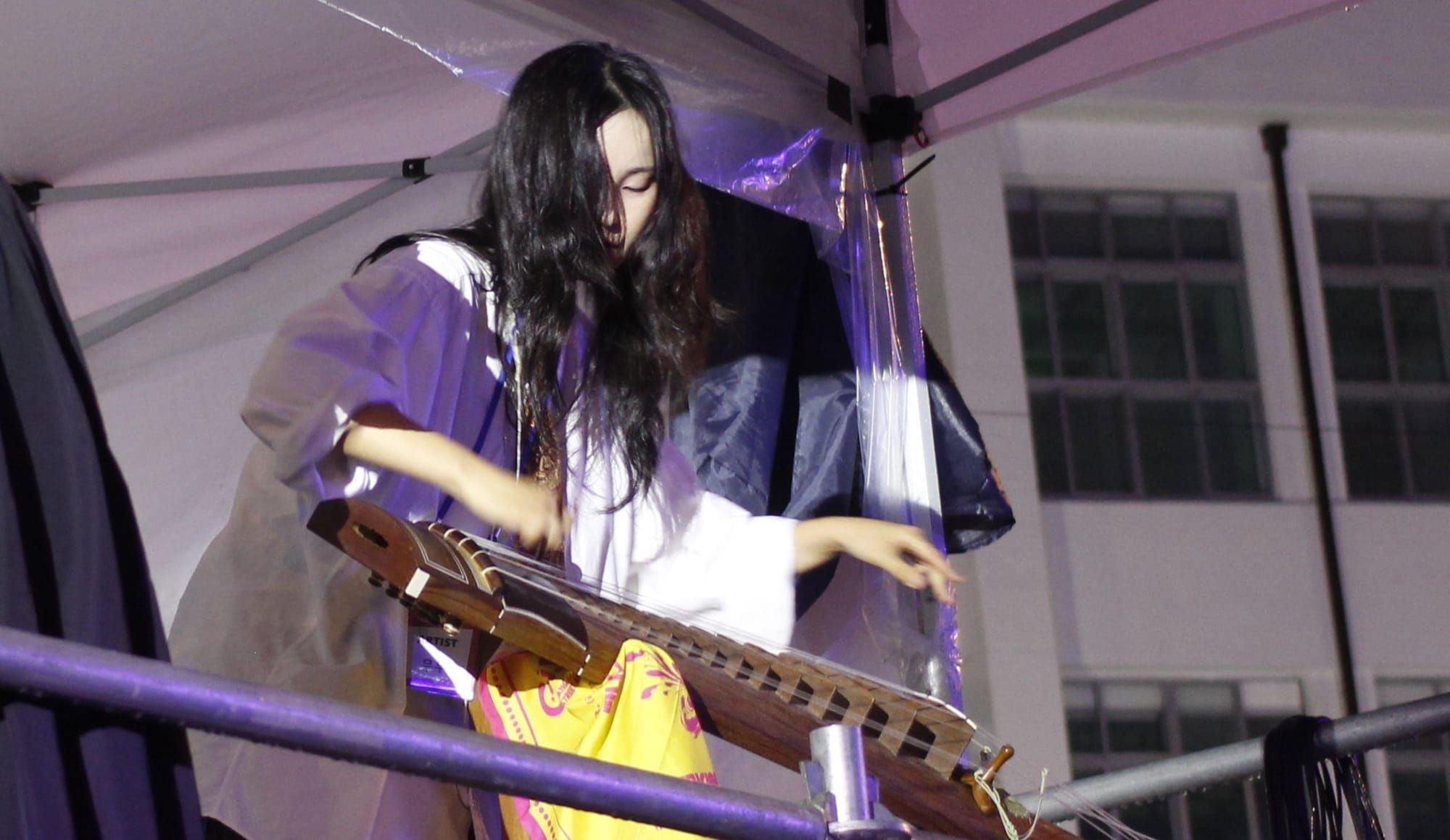
The crowd cheered for 성유미 (Seong Yumy)'s twanged solos on the geomungo, a Korean zither-type instrument often played flat on the floor. Seong played it on a wooden stand, plucking strings with a flourish like a DJ dropping a beat.
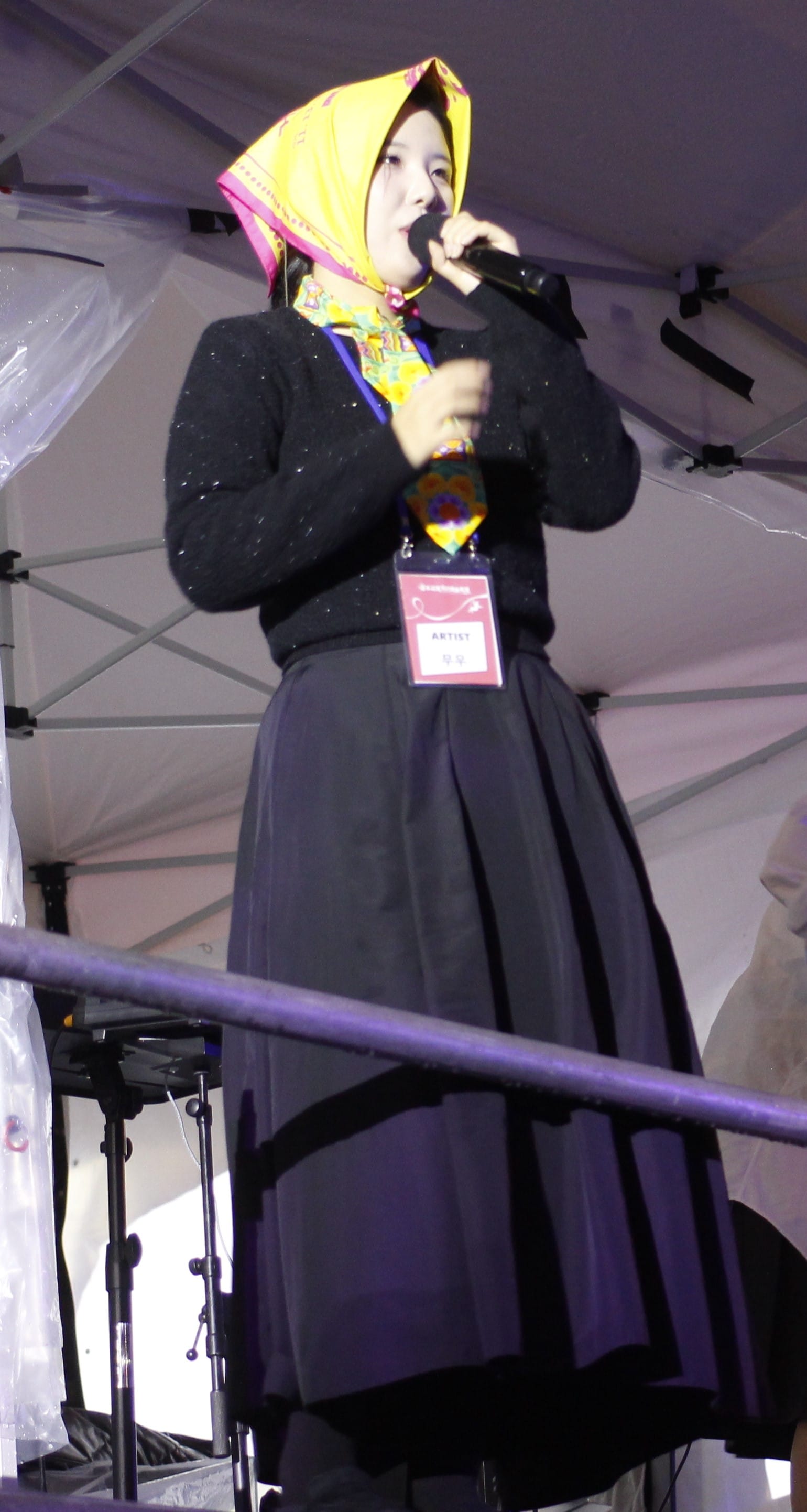
Call-and-response mixed with electronic rhythms as MooWoo singer 정은효 (Jeong Eun Hyo) and the crowd sang the title phrase, "gang-gang-sul-lae," back and forth to each other.
Then the group dove into variations, shifting seamlessly into double time in classic folk fashion. Their first switch-up was to a verse about finding a frog in a pond of minari (water parsley, or that artsy Steven Yeun movie). A call of "eo-eung, eo-eung" at the end of the section highlighted Jung's vocal control.
The next part started with a line about a freshwater turtle, and the final variation before the last refrain was about handclaps (and footclaps). The audience clapped along.
MooWoo's pansori sensibilities lent an arc to their music mirroring the movements of nature — a delicate balance of vibrato in elongated sections, repetitions that ramped up. Elements that are difficult to notate, in other words, but that are familiar to anyone who's seen a downpour pick up speed.
The pitter-patter of rain in front of MooWoo's stage was no match for Jung's voice; pansori singers have been known to train under waterfalls in order to hone their strong vocals.
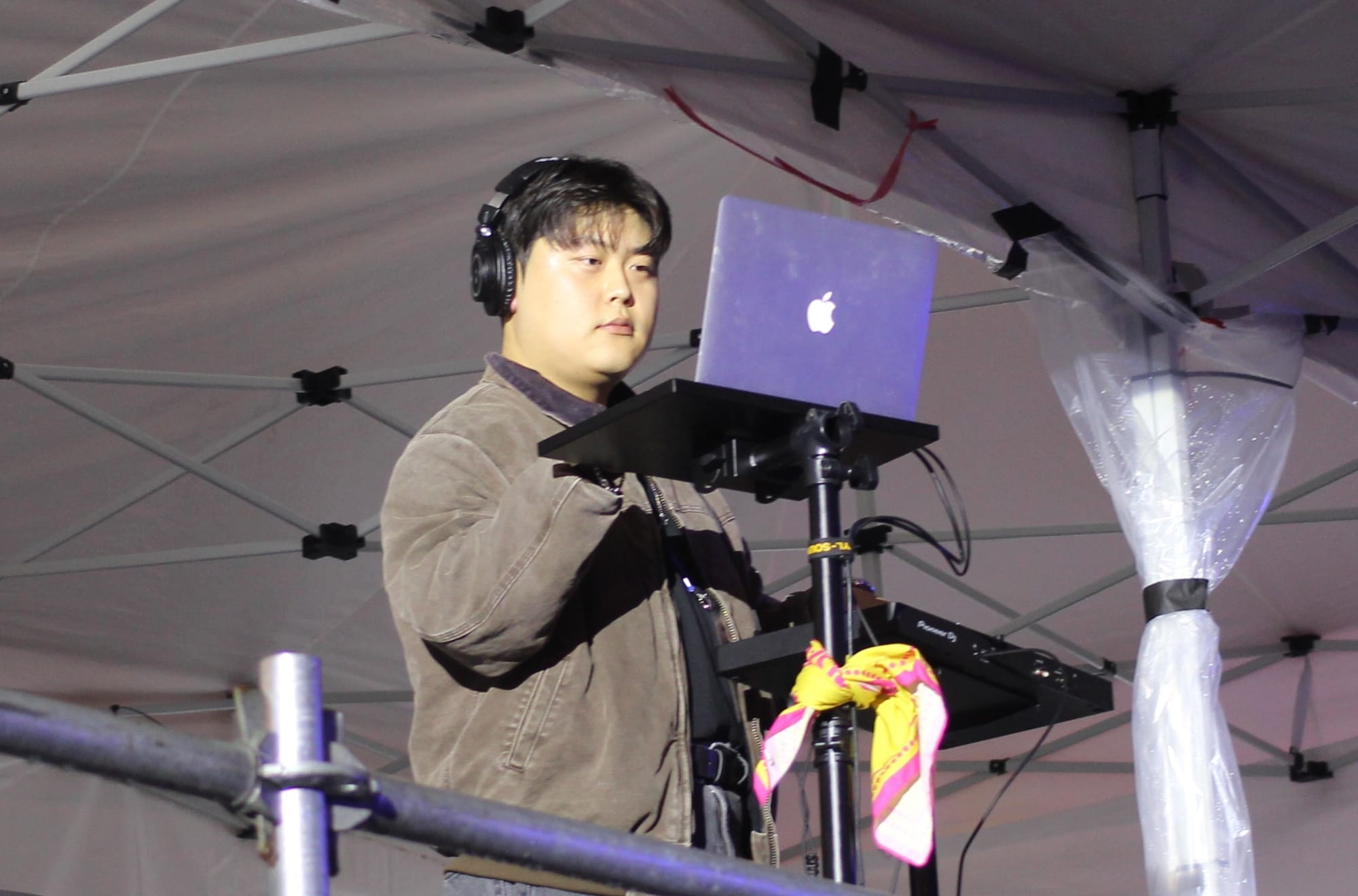
장민석 (Minseok Jang), with a simple laptop setup, served up house rhythms that fit nicely in the pocket of pansori's own intrinsic rhythm play—like, for example, a multi-beat triplet (à la LMFAO ft. Lil Jon's 2009 "Shots") that surfaced in intense moments.
Before MooWoo's set, I was tired and gloomy from the rain, nodding off in the library nearby. The band's energy not only woke me up; it stayed with me the whole subway ride home and into the night. I began to understand why people would believe pansori has mystical powers.
The next morning, a friend driving me to our weekly farming sessions in Naju told me pansori is best experienced live. "Like opera," she said.
For the time being, live audiences seem to be MooWoo's largest fan contingent. At the time of writing this, the group has just 40 subscribers on YouTube and 51 followers on Instagram (a fact that shocked me to my core when I searched it up). The way their starpower shines, I don't expect it to stay this way for long.
The band continues a style of music that stands the test of time. It's a welcome encounter for me as I've become more and more disillusioned with signs that we've reached "the future." Flying cars and leisure trips to space — are they even half as cool as we thought they'd be?
Pansori, meanwhile, retains its undeniable power to move hearts. The same drama, emotions, and virtuosic human extremes that drew crowds back in the day still work on us. Setting the rich vocals to an electronic beat feels like a continuation of keeping music in the hands of the people.
Maybe in the grand scheme of things, we're still in the era of pansori — an art subject to evolution through the changing landscape of materials at hand.
Sign up here to get Gwangju Midbrow email updates delivered straight to your inbox.
The non-electronic version of "Ganggangsullae."


