Asia Culture Week: Asia on the Table
National Asian Culture Center
Gwangju
Oct. 11, 2026
(Jisu Sheen recently moved from New Haven to Gwangju, South Korea, where she’s covering local arts and culture for the New Haven Independent and Midbrow.)
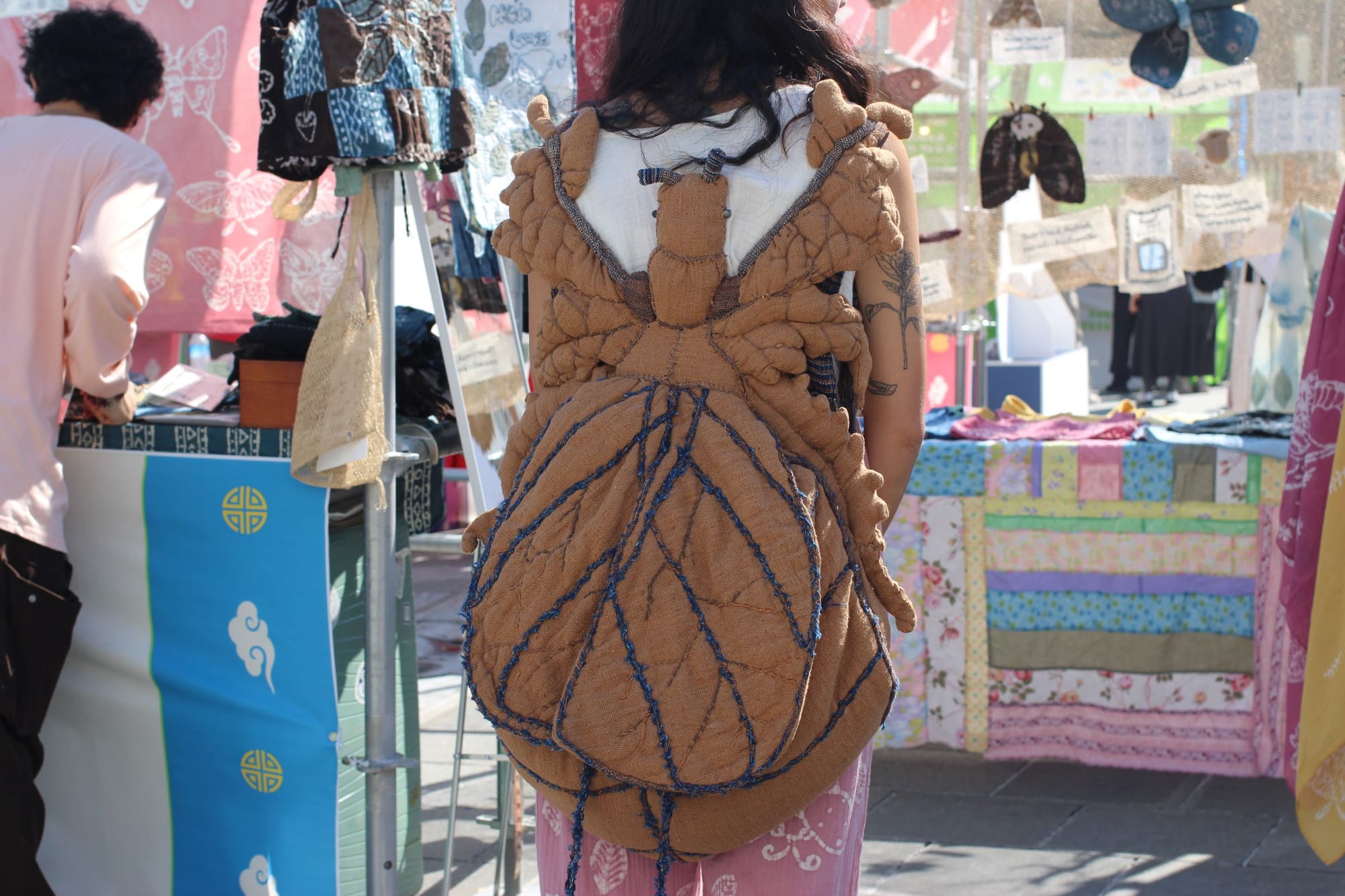
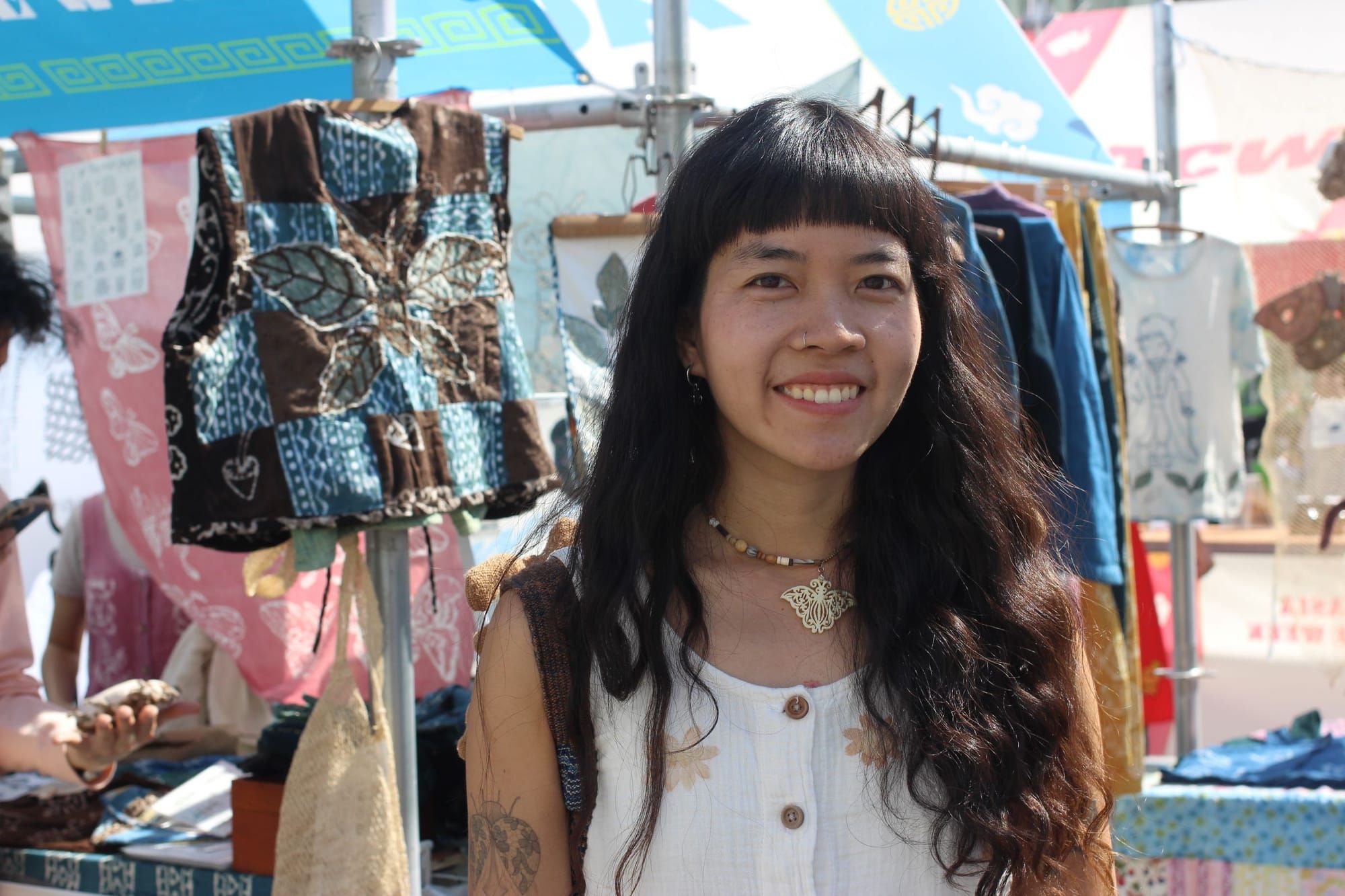
Thai artist Kamonchanok Seansopha, also known as Gookkik, has been interested in bugs ever since she was a kid. To her, they are "a little tiny hero for our world."
I met Seansopha at her stall, Kamon Indigo, at the annual Asia Culture Week at Gwangju's National Asian Culture Center this weekend. She had traveled from her city Phrae in northern Thailand to share her art and the spread the word about the little heroes she admires. Her stickers, temporary tattoos, articles of clothing, and fabric objects depict scientifically accurate species of insects doing their part to uphold local ecosystems.
Seansopha's stall was one of several featuring goods from countries around Asia. Alongside local Gwangju artisans were artists and vendors from Thailand, Taiwan, and Uzbekistan.
For Kittikhun, an artisan from Chiang Mai, Thailand, the trip to Korea was a familiar one. He had been visiting on an island in Busan, a port city in the south of Korea, when the COVID-19 pandemic hit. Stuck on the island longer than expected, he spent the time visiting empty beaches and collecting chicken eggs to share with the local community. He didn't know how to care for chickens beforehand, but "to survive, I have to learn."
Now, Kittikhun is living in Thailand, but he still visits Korea once or twice a year to see friends.
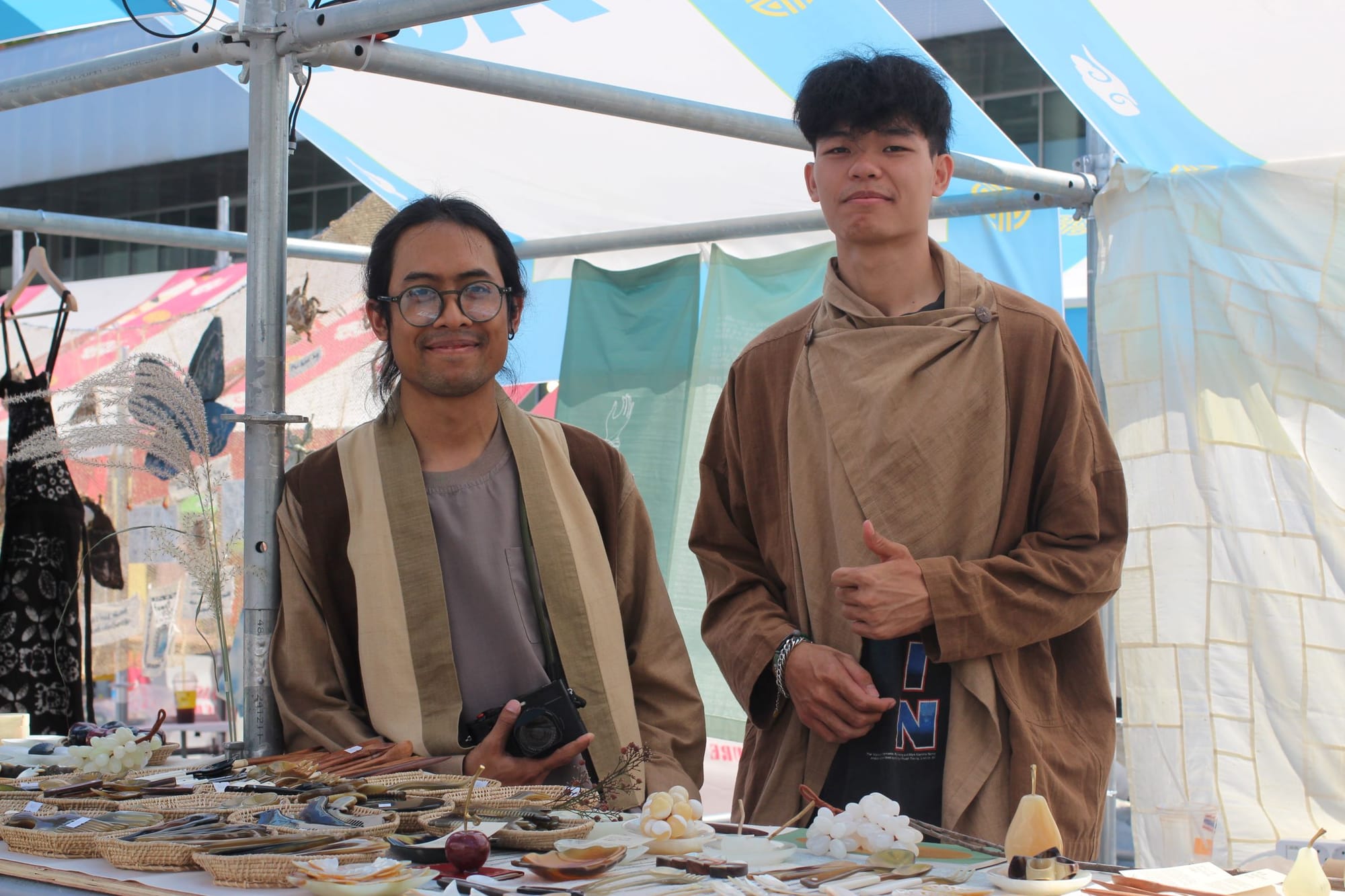
"Our concept is no plastic," Kittikhun said of the combs, buttons, and jewelery at his stall Fimue, a collaboration of Korean and Thai artisans. "Everything is natural."
Kamon's art was likewise centered on materials from nature. She explained that she uses an indigo plant native to Northern Thailand, called hom, to make blue dyes for her textile art. For greens, she mixes in other plant materials, like mango leaves. For brown, she uses the ebony tree.
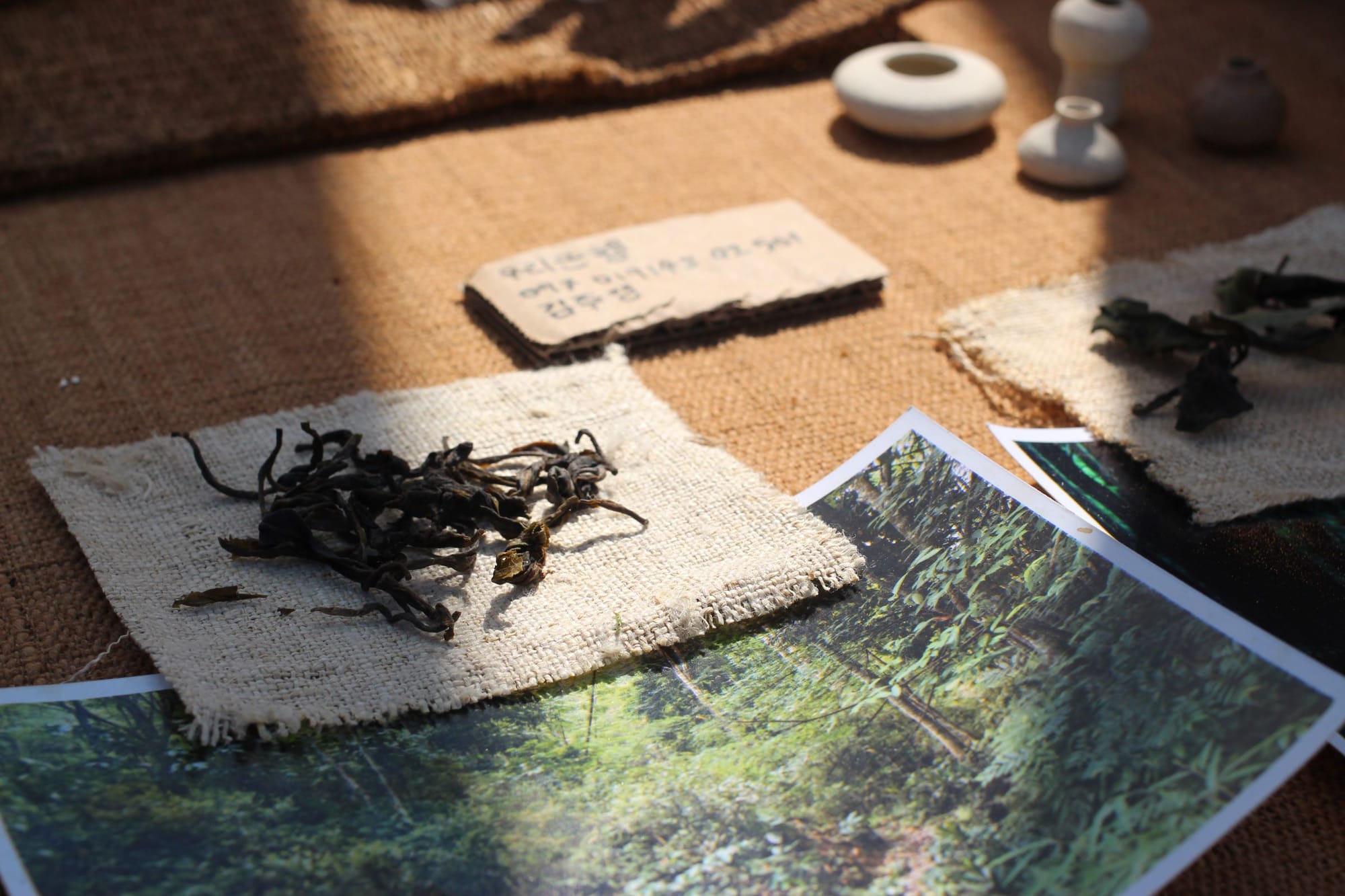
Gawin T, also from Thailand, introduced me to the concept of wild tea at his tea stall, miang craft. (Miang, he told me, is the northern Thai name for the tea tree.)
In Thailand, Gawin explained, the tea tree is a native plant. It grows wild in national parks without human intervention, and tea-makers like Gawin and his team are permitted to harvest small amounts once or twice a year.
"When you harvest more, the flavor is weaker," Gawin said. "So the best is to harvest as little as possible."
He poured a cup of tea for a vendor at the booth next to him, Celia Su.
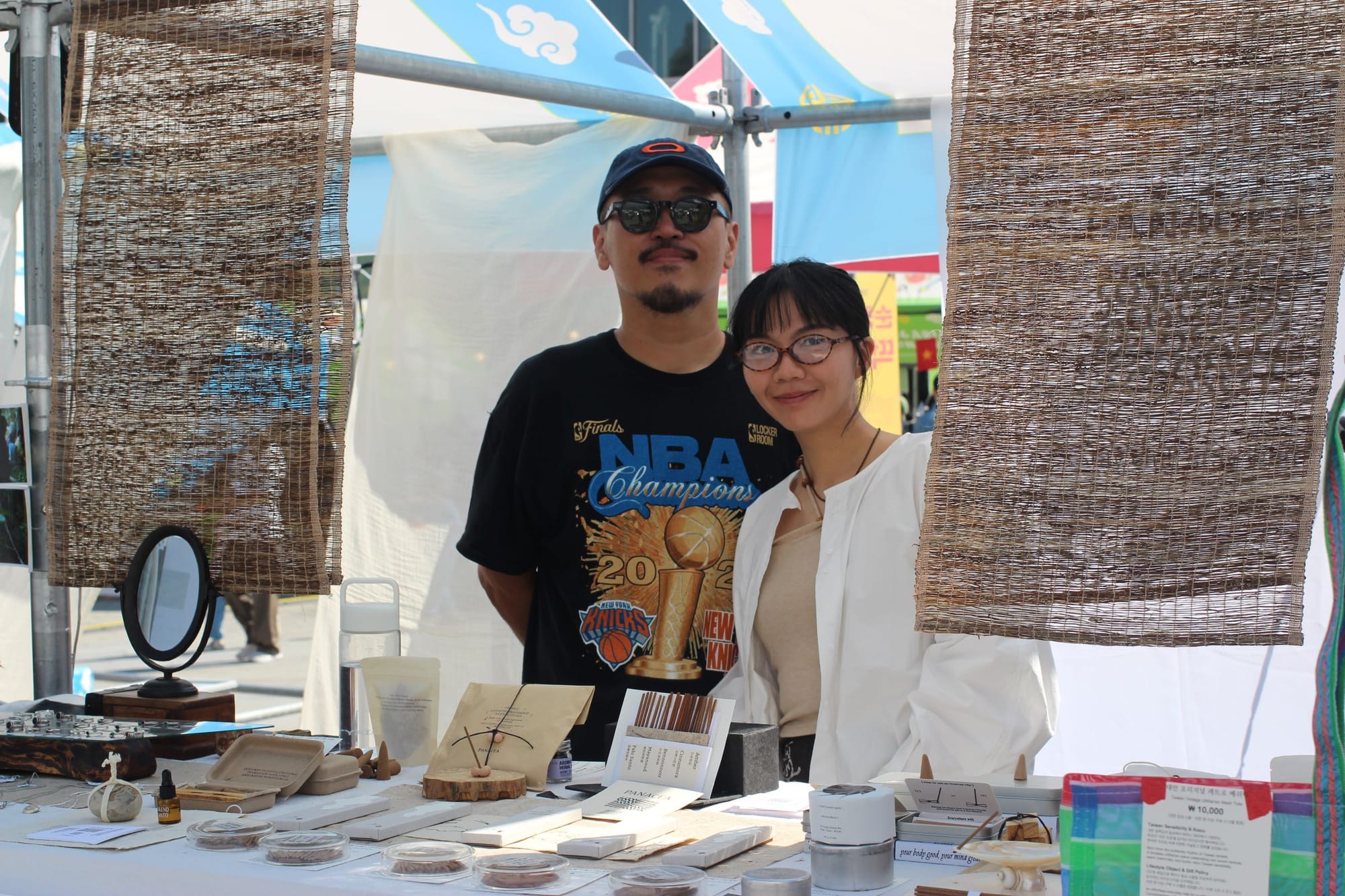
Su and her vending partner Cannon Lee, both from Taiwan, were running an incense stall called Panacea. They told me a bit about the significance of coming to Gwangju.
"Gwangju is very important to Taiwan," Lee said, describing his appreciation of the city's civilian uprising in 1980. "If there is no Gwangju, there is no democracy in Korea." The two told me about upcoming November elections in Taiwan and the need for democracy in the face of suppression.
Lee and Su said they had visited the Taiwan Pavilion exhibition of the Gwangju Biennale just a few steps away, where Taiwanese artists fought for the ability to use their country's name in official materials. The Panacea team shared their visit on social media, to reactions of excitement from their friends back home. "Everyone is really proud about that," Lee said.
Like the insects Seansopha admires, the vendors themselves seemed like heroes for the world we live in. Within their commitment to their own sections of the universe was a path toward living a more responsible and beautiful life.
Sign up here to get Gwangju Midbrow email updates delivered straight to your inbox.