Mudeung Art Festival
Mudeung Gallery
Gwangju
Through Oct. 12, 2026
(Jisu Sheen recently moved from New Haven to Gwangju, South Korea, where she’s covering local arts and culture for the New Haven Independent and Midbrow.)
It took me three visits to Mudeung Art Festival in downtown Gwangju to realize just how fast the works were moving.
It's a group show made up of paintings, drawings, sculpture, textile, and furniture by 115 artists. The art is for sale, with most pieces at the same price of 400,000 won (about 300 USD).
The first time I visited, I was on a stroll through Art Street — a section of street featuring galleries, studios, and my new favorite art supply shop — to check out shows to write about. According to the sign at Mudeung Gallery, their art festival would open the next day. People were already wandering through the open door. I asked an attendant if I could enter; they said yes.
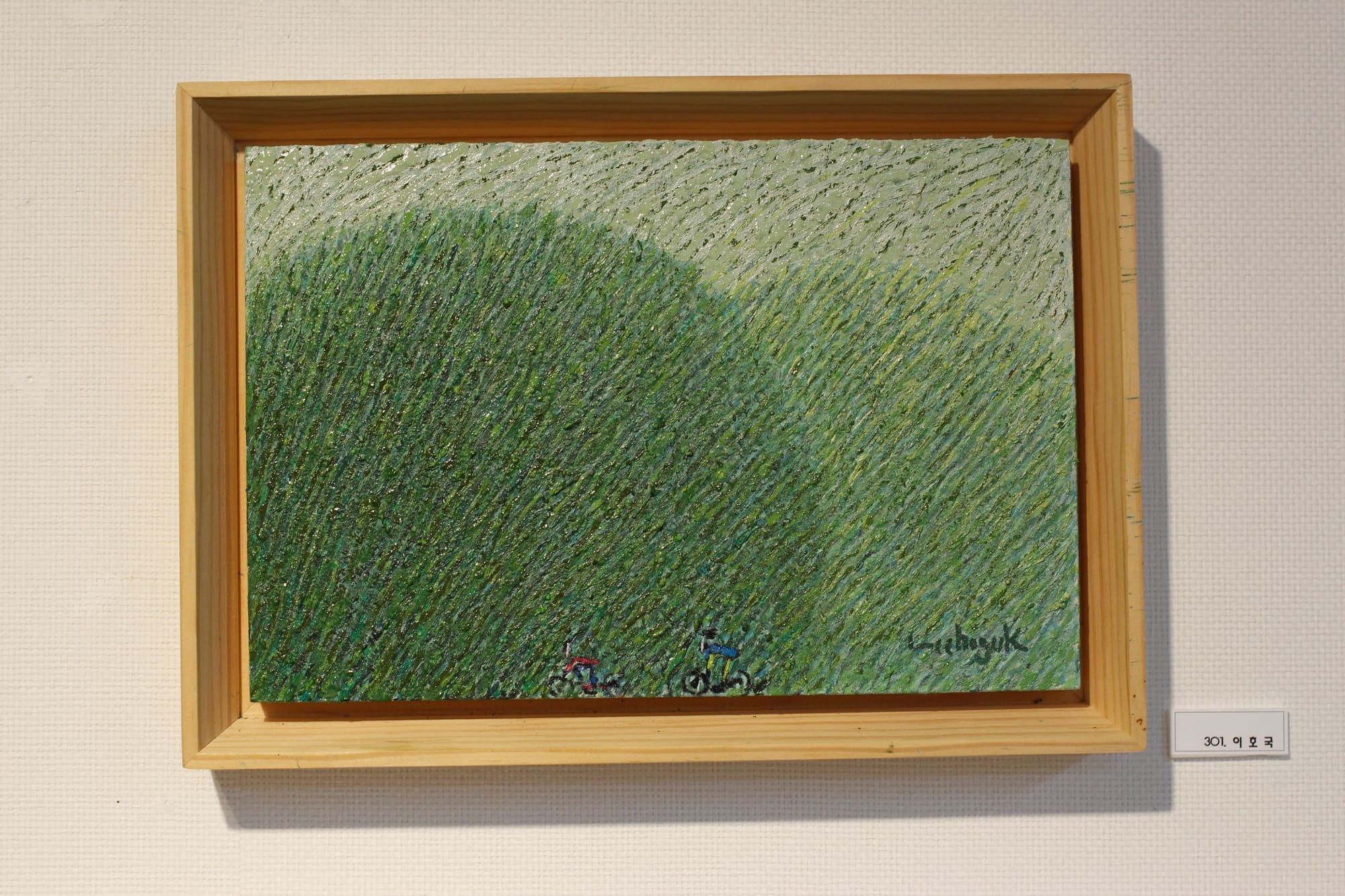
The pieces I was fondest of were the ones that played with texture. In 이호국 (Lee Ho Guk)'s paintings, the shape of the brushstrokes partially obscured the outlines of the figures in the painting, creating a cozy static over scenes of bike rides and walks past a green hillside.
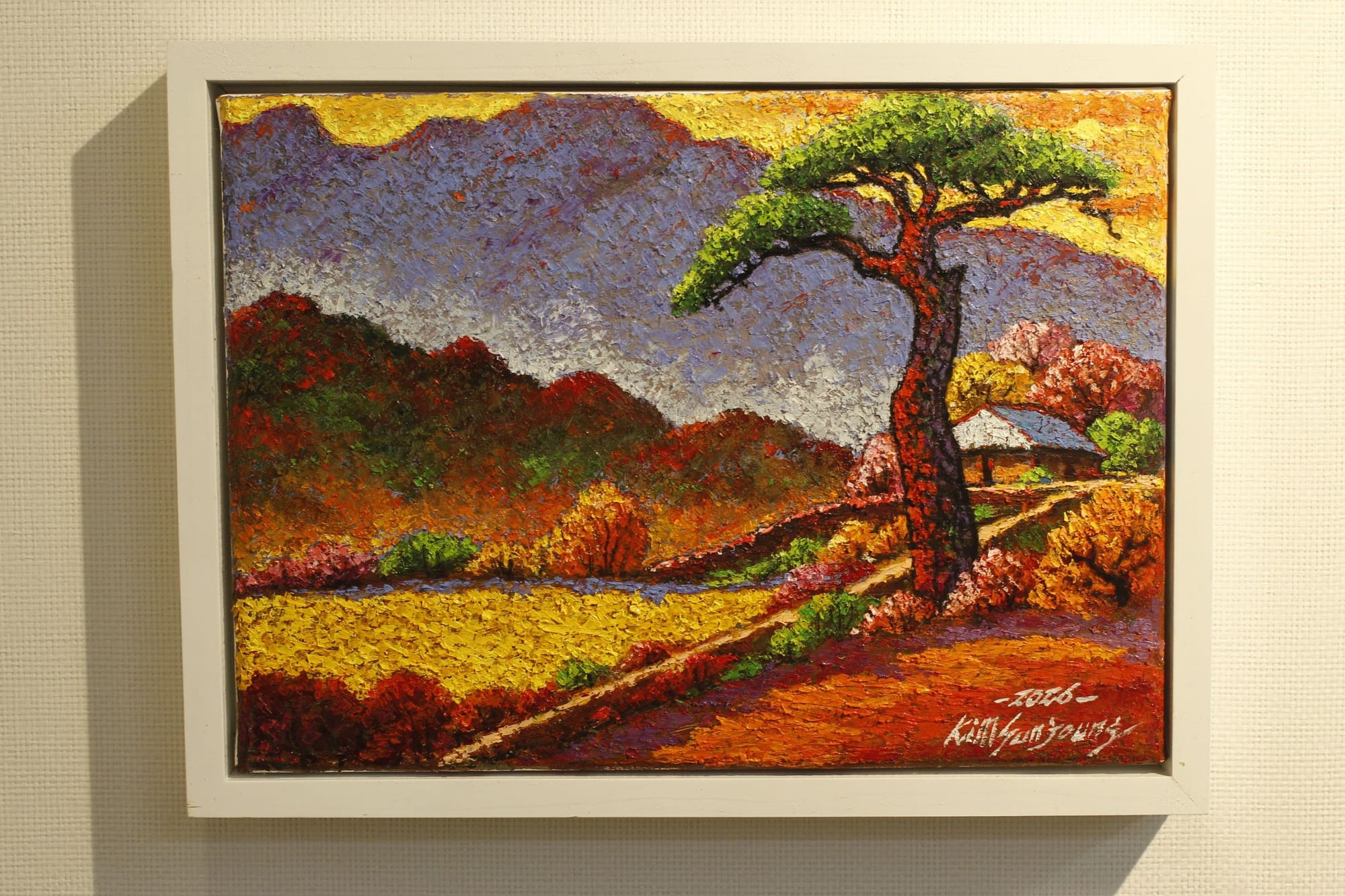
Thick layers with stunning red highlights in 김선종 (Kim Sun Joung)'s landscape paintings reminded me of Van Gogh. Vegetation like the twisty Korean pine situated the works in local soil.
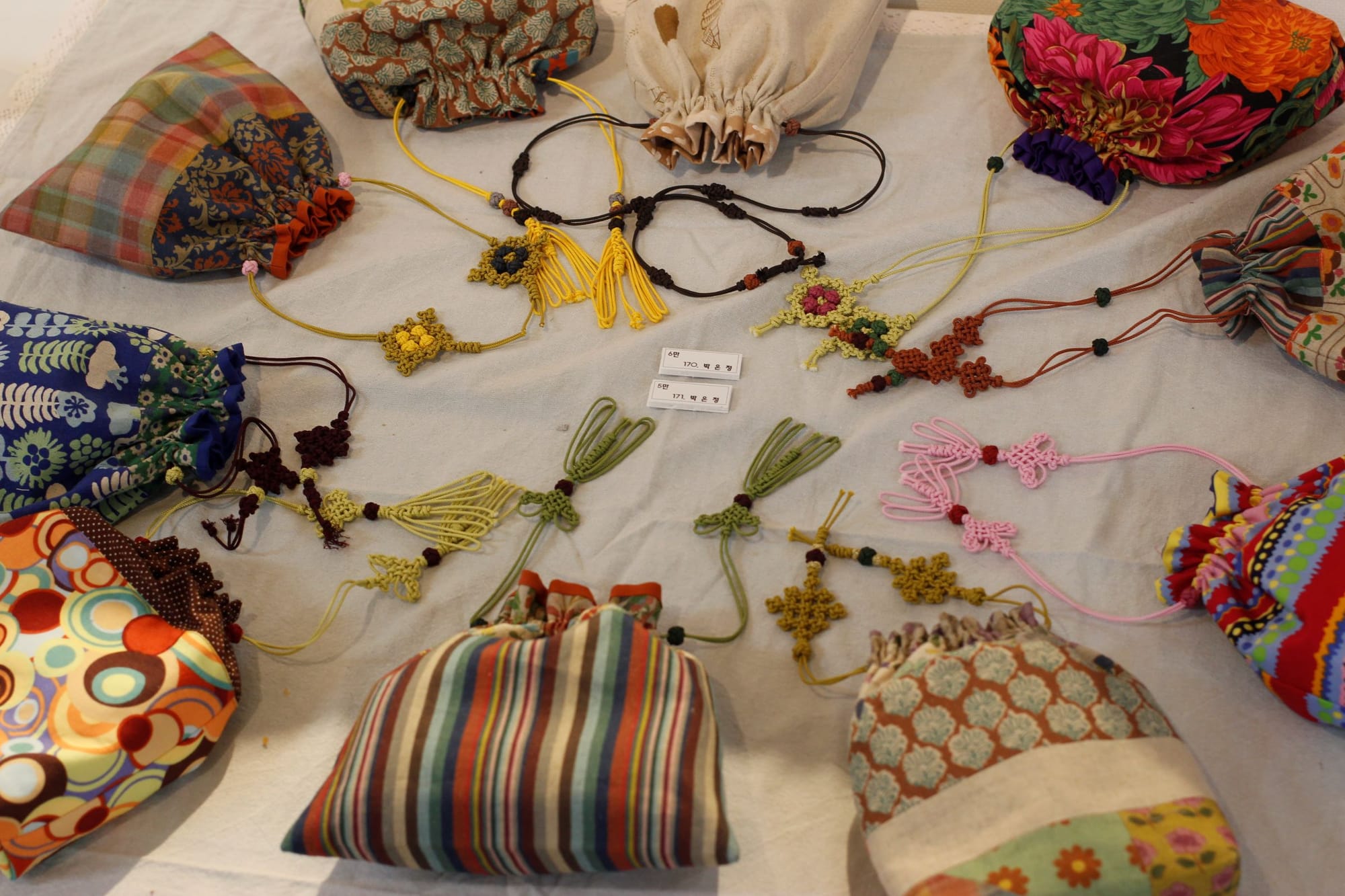
Linen and cotton pouches meant to bring good luck to the wearer, made by 박은정 (Park Eun Jeong), featured traditional knotwork known as maedeup at the closures. Displayed in a circle with the threads at the center, Park's work showed off Korea's unique knot styles, from blocky systems of squares to loops evoking dragonfly wings.
I came back the next day for the show's official opening. I had woken up at 4 that morning and gone to the stream near my apartment to watch the sun rise (very outside of my usual schedule; I sometimes fall asleep at 4 a.m.), so my sense of reality was already subject to interrogation. When I entered Mudeung Gallery and noticed some pieces were in different places, I had to double check: Was I remembering wrong? No, there had definitely been some reorganization. I figured there had been some last-minute curatorial decisions before the big opening.
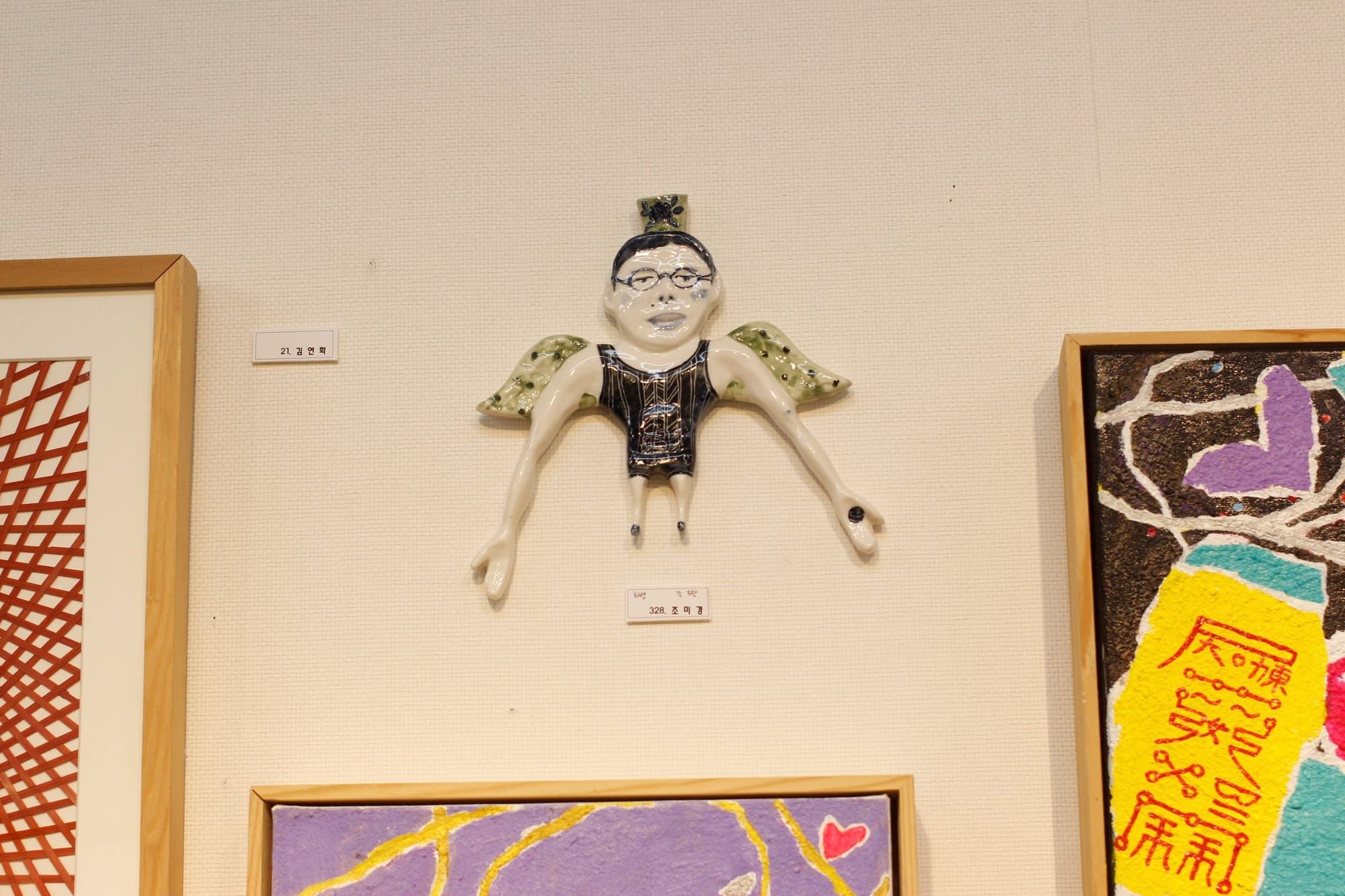
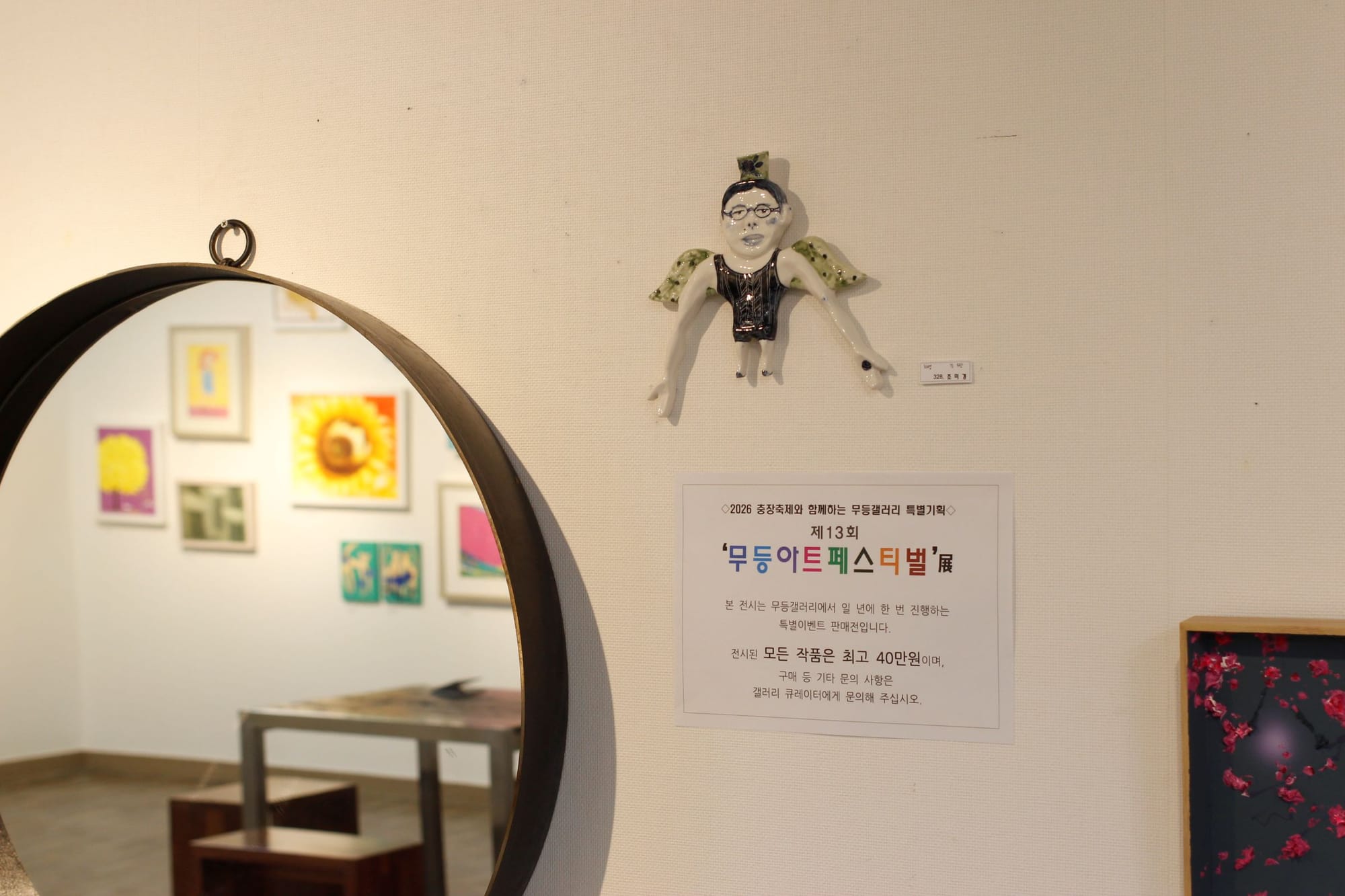
Small works of blue and white ceramic by an artist named 조미경 (Cho Mikyung) that I'd admired at pre-opening day were now joined by eccentric siblings; human figures with wings and wonky proportions, also made by Cho, carried little mugs or plant pots on their heads. The ones with plant pots featured real plant cuttings in vibrant greens.
When I came back again two days later, I noticed more changes. One of Cho's ceramic figures — this one with glasses and a cup on his head — was now on a different wall. On a back wall of the gallery were abstract drawings I hadn't seen before.
On the floor were several paintings sitting together, bubble-wrapped. One of the floral-painted furniture items I'd seen on opening day was similarly wrapped and set aside. Mudeung Gallery curator 김잔디 (Kim Jan Di) told me that in this show, as soon as the artworks are sold, they are taken off the wall. The gallery then asks the artists to bring more works in.
In just the time since my last visit, the show had sold about 60 pieces. Though the evidence was at my feet, I had to check again to make sure I heard Kim right. I'm used to hearing about shows selling a couple of works at most (and often none—with the hope that the exhibit will at least help forge connections with collectors). Kim said Mudeung Art Festival's goal is to sell 100 pieces by the end of the show on Monday.
The show did hit its goal last year. From its start in 2013, the Mudeung Gallery Festival has been planned to coincide with the bustling Chungjang Street Festival of Recollection in downtown Gwangju to share in the festivities and bring in people.
"The more well-known artists have sold particularly well," Kim said. This is another reason the exhibit keeps changing. The team mixes in works by more famous and lesser-known artists to give everyone a chance to catch the eye of a visitor. They note which pieces sell and cycle out the prime spots; they end up changing the show every day.
I had one lingering question. The day before, a friend was telling me about the system of galleries and working artists in Korea. She told me galleries sometimes take 60% commission from the works that sell. In general, she said the profits are split about half and half.
It made me wonder if part of the excitement around selling so many pieces was a fundraiser concept for the gallery.
Nope. Kim told me 100% of the proceeds go to the artists themselves.
I looked at Cho's ceramic figures once more before heading out. They had floated around the gallery, ending up with new neighbors every day. It might not be long before they, like the dozens of other pieces around them, fly right out the gallery doors.
Sign up here to get Gwangju Midbrow email updates delivered straight to your inbox.