
Art in Flight: Reinventing Postmodernism
Virtual
Simsbury Public Library
Oct. 8, 2026
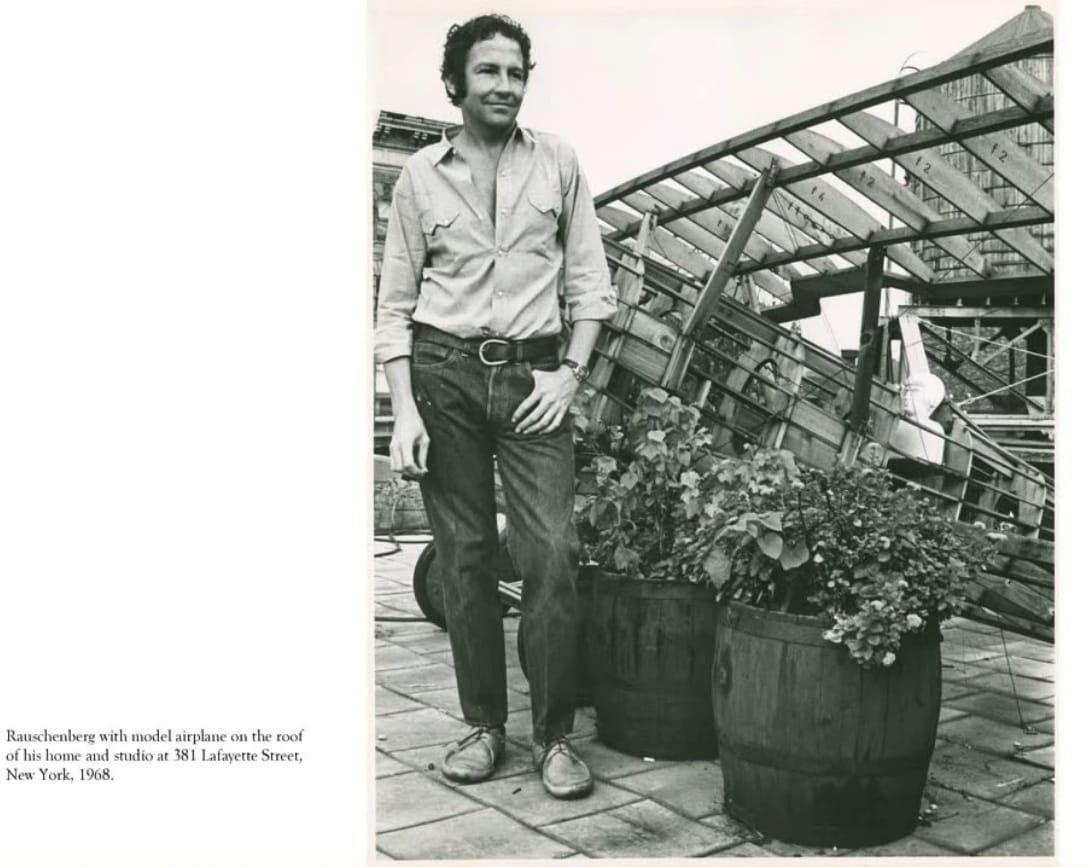
Human beings can fly. It’s crazy how mundane the once-impossible has become to us, so much so that we spend more time complaining about the modern miracle of flight than awing at it. That wasn’t true for Robert Rauschenberg, a 20th century artist whose fascination with flight informed his personal and professional artwork.
Author, artist and curator of the art and trophy collection at the Smithsonian Institute’s National Air and Space Museum Carolyn Russo details Rauschenberg’s connections to aviation in her new book The Ascent of Rauschenberg. She joined a virtual audience hosted by the Simsbury Public Library to discuss the book and Rauschenberg’s impact.
Although he was born more than 20 years after the historic first flight of the Wright brothers, that moment in history was profoundly influential on him. Russo quotes Rauschenberg from a 1996 interview when asked which artist’s work he wishes he could have created: "I would have liked to have been around to help the Wright brothers work on their concept of flying bicycles."
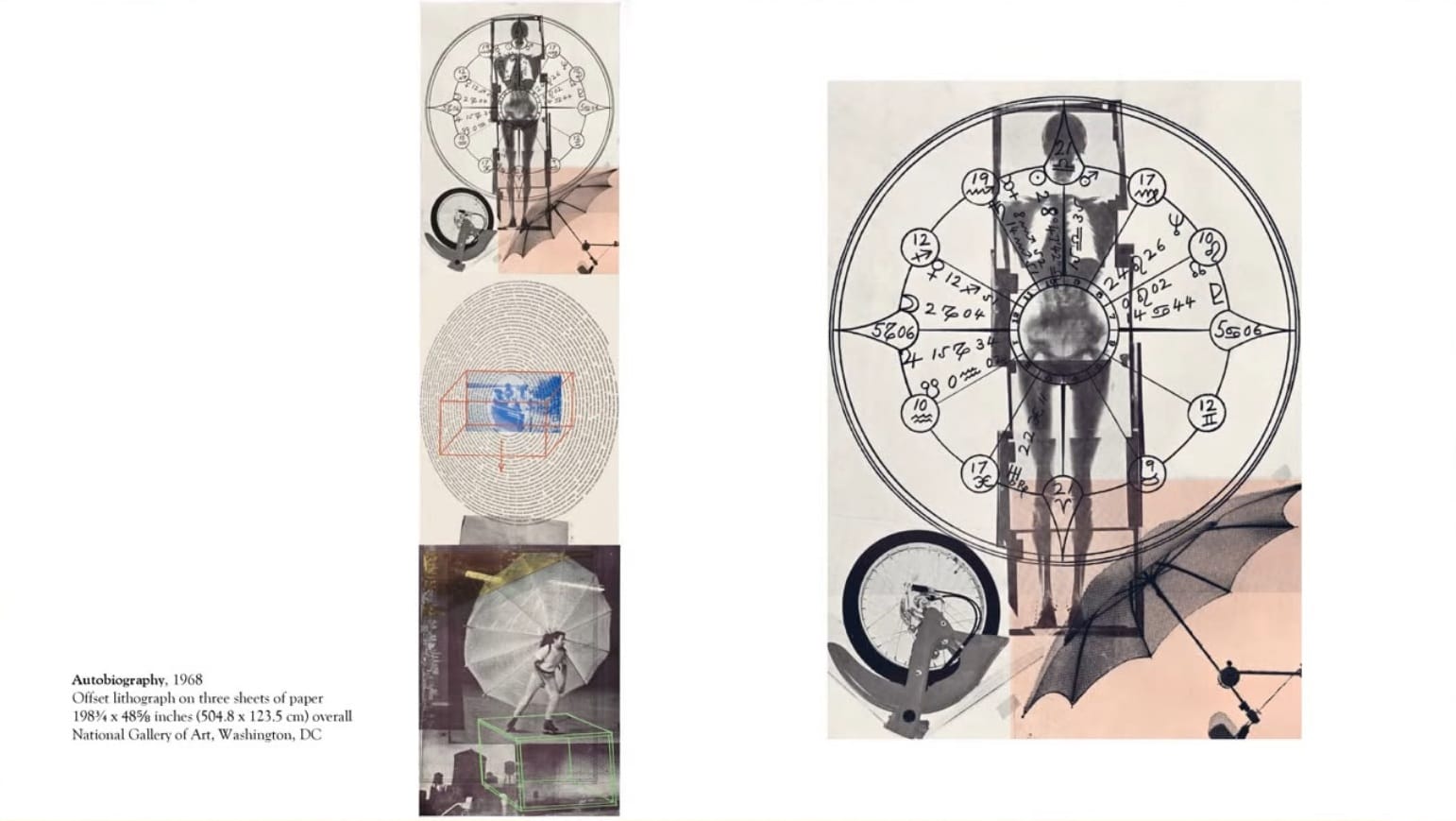
Rauschenberg himself laid out his love of flight in a work appropriately named Autobiography. It’s a three-part series (known as a triptych) which features an x-ray image of his own body with his astrological chart laid over it; and an image of himself wearing a parachute.
Russo explained that for Rauschenberg, flight was core to his person because it was about so much more than leaving the ground.
“For Rauschenberg, flight was never simply about airplanes,” she said. “It was about curiosity, invention, imagination, movement, and possibility, the possibility of seeing the world differently.”
In the most literal sense, the Wright brothers made the impossible possible. Wingless, featherless creatures taking to the sky. Rauschenberg celebrated their accomplishment and what it meant as often as he could.
Flying through the air eventually led to flying through space, and Rauschenberg was just as interested in the final frontier. His artwork, which included painting, drawing, live performance and more, eventually led NASA to invite him to witness the launch of Apollo 11, the mission which landed humanity on the moon.
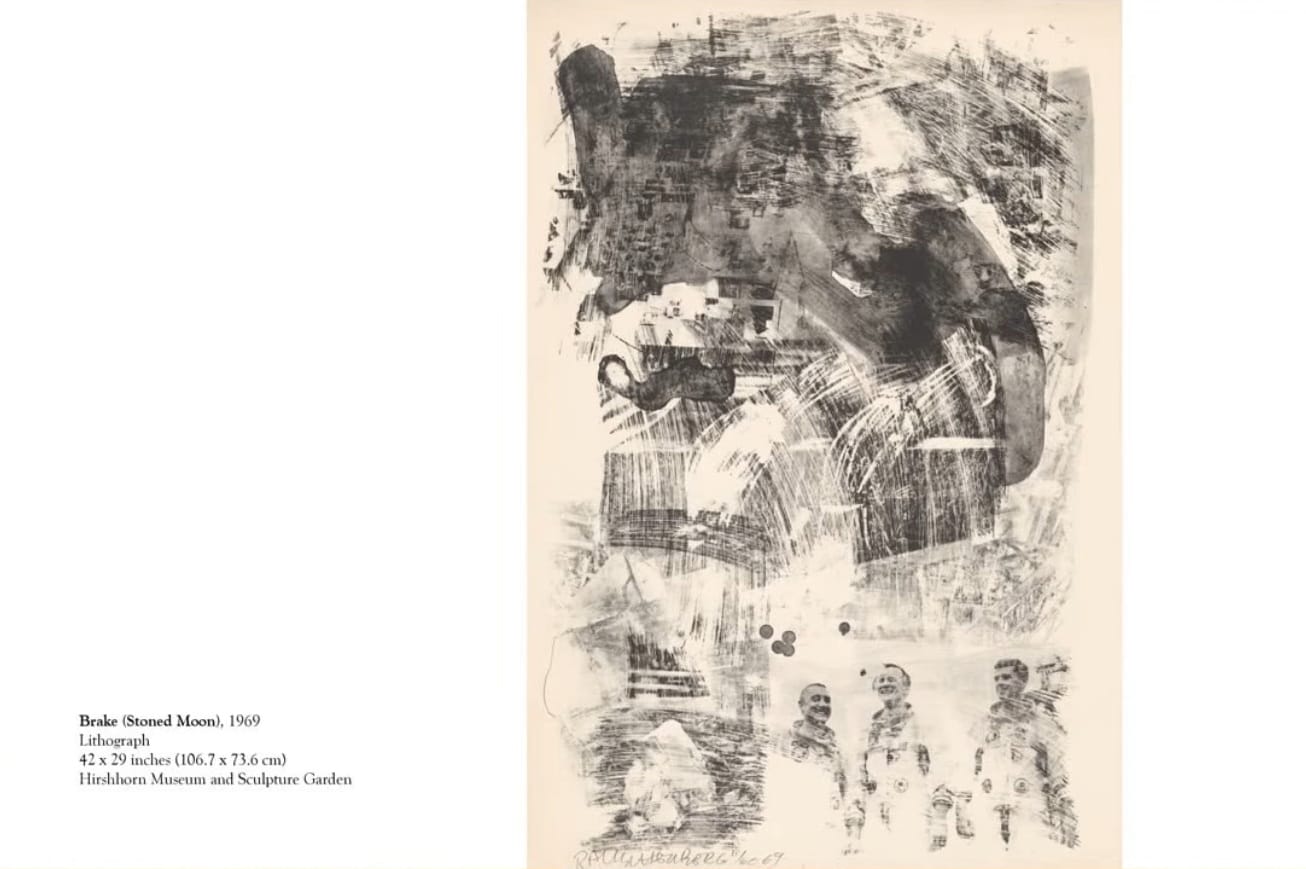
Of course, the history of flight has not only been a story of triumph and progress, especially when it comes to space flight. Viewing the launch of Apollo 11 inspired Rauschenberg to create his Stone Moon series of lithographs. One of Rauschenberg’s more somber works is Brake (Stone Moon), which commemorates the Apollo 1 disaster where the three astronauts pictured in the lower righthand corner– Gus Grissom, Ed White, and Roger Chaffee– died during a training accident. Russo describes the piece as serving as “abstraction, document and memorial.”
Russo’s presentation was dense but lively. She has an authoritative command of the facts of Rauschenberg’s life, and her own artistic interpretation of his works was fascinating and insightful. That was the main point she ended her lecture on, repeating Rauschenberg’s desire that people approach his work with their own experiences and make their own interpretations.
Rauschenberg’s work is currently on display at the National Air and Space Museum in Washington, DC. And if you can’t make it there, be sure to check out Russo’s book on the artistic master. His art celebrates the pursuit of the impossible, proving that in the end, the things we seek may be possible after all.
NEXT
Jamil goes back to the Old State House for a noontime concert.


