
Teenage Sex and Death at Camp Miasma
Best Video
Hamden, CT
Oct. 30, 2026
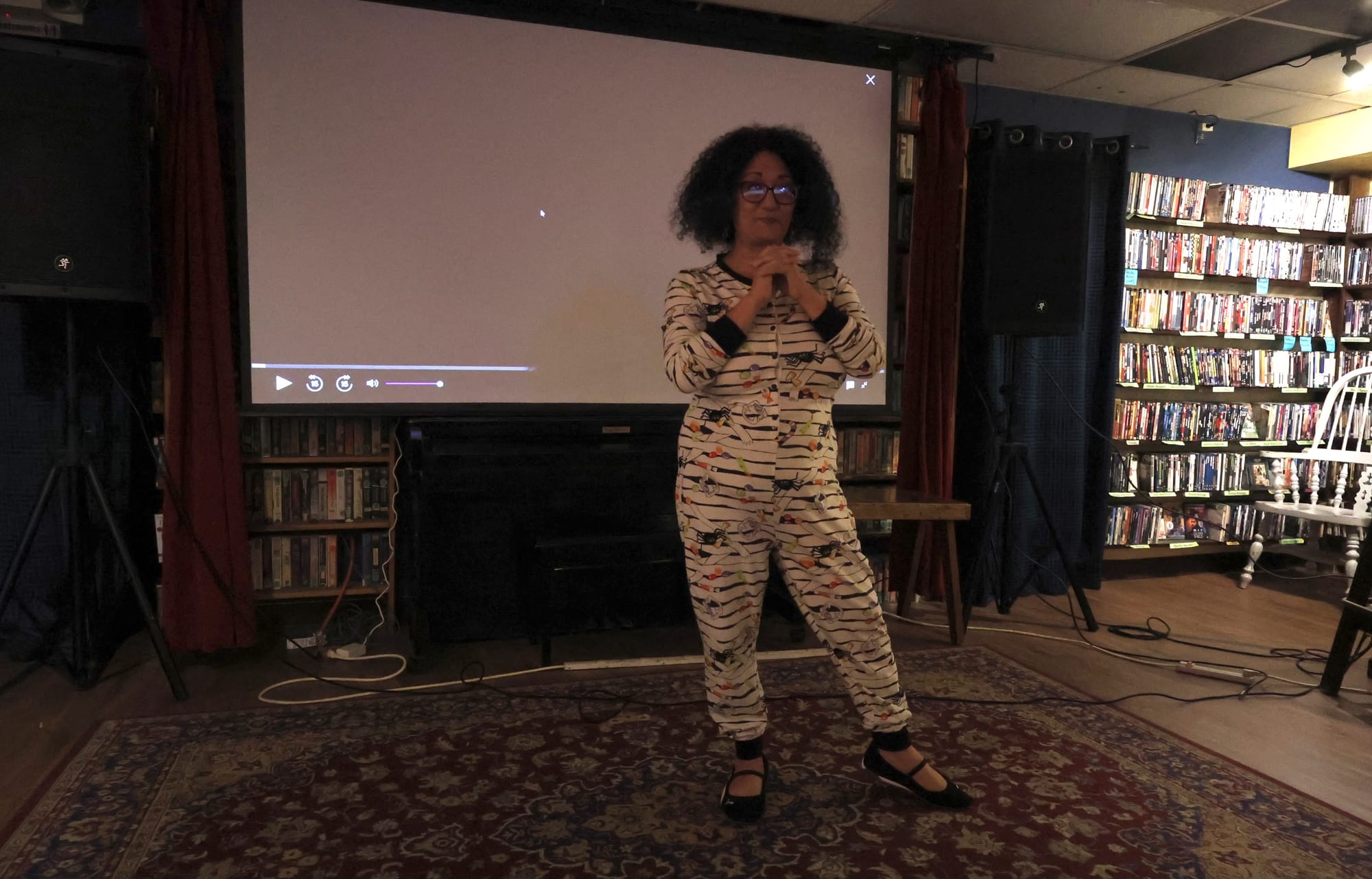
Best Video board member (and New Haven Independent and Midbrow contributor) Karen Ponzio stood before a crowded house at Best Video in Hamden on Friday evening, beaming. She was there to introduce the meta slasher comedy Teenage Sex and Death at Camp Miasma, the most recent feature from acclaimed queer filmmaker Jane Schoenbrun. Best Video, one of the last surviving video stores in the country, was one of the final stops on the movie's nationwide VHS tour, featuring screenings of the film on VHS. Ponzio was beaming, having already sat through the first, sold-out screening of the movie. As she looked out at the robust crowd for the second screening, she explained how the movie managed to do many things at once. "It is funny, it is bloody, and it is horny," she said.
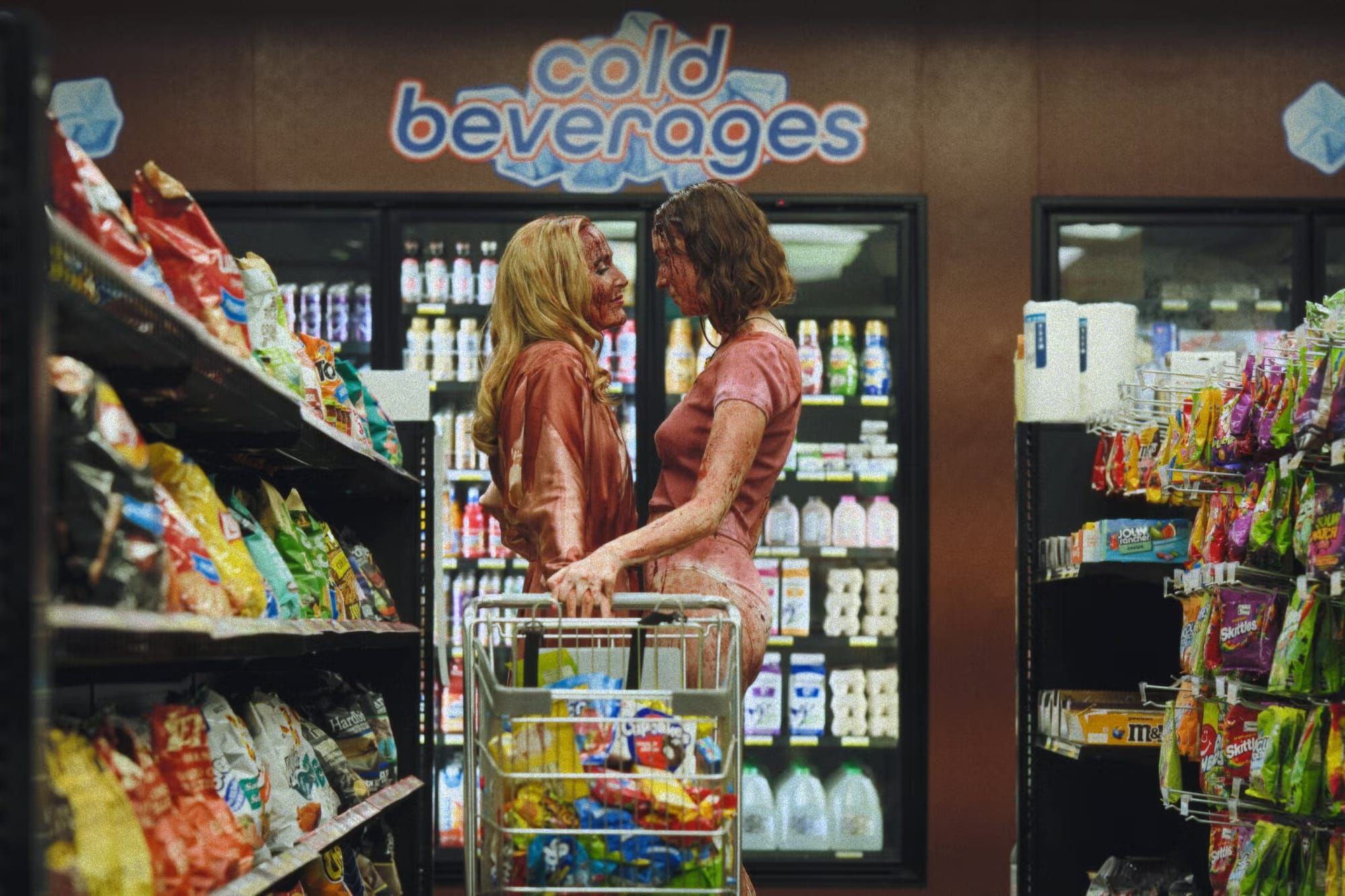
Teenage Sex and Death at Camp Miasma, written and directed by Jane Schoenbrun, follows Kris Williams (Hannah Einbinder), a queer filmmaker whose success with her first film has led to an offer from a major studio to reboot a moribund (fictional) franchise, Camp Miasma, a slasher-film series along the lines of Friday the 13th and Nightmare on Elm Street that had strong first movies and got more ridiculous with each additional sequel. Williams takes the job because she has been haunted since she was an adolescent by the star of the first Camp Miasma film, Billy Presley (Gillian Anderson), who dropped out of the series after the first movie. Williams tracks down Presley in hopes of convincing Presley to appear in the movie she hopes to make. It turns out Presley lives in the otherwise abandoned summer camp where Camp Miasma was filmed. The two women, a generation apart, connect fast. But the connection gets complicated and intense. Queerness, sex, power, violence, gender politics, and trauma tangle together as the two women grow closer. And the answer to some of their most difficult questions just might involve confronting — though not at all in the way that you might think — the antihero of the Camp Miasma franchise, Little Death, who kills his victims with a two-headed spear while wearing a translucent full-body hazmat suit and a square ceiling vent for a helmet.
Schoenbrun came to Teenage Sex and Death having made I Saw the TV Glow, a movie already regarded as a new classic of trans cinema that can be understood as an arty version of body horror. That movie deployed an eerie mix of camp and dread to depict a person unable to come to terms with their own transness. The movie works because the camp disarms, allowing the more serious stuff to head straight for the heart.
Schoenbrun's gift for hitting hard by mucking around in the messy, cheap parts of pop culture is on even fuller display in Teenage Sex and Death. Many of the sets are so obviously soundstages that they look as if talented high schoolers might have put them together. And some of the funniest conversations between Williams and Presley are arguments about how to understand the slasher movies both are obsessed with. Williams understands them by pushing them through the filter of academic criticism and gender theory. Presley has no patience for any of that, insisting that the highbrow thinking misses the mark; the movies, Presley says, were really just about two things: "flesh and fluids."
As the movie unfolds, this conversation, first played for laughs, reveals much deeper emotions. Presley is right that Williams uses her eggheadedness to compartmentalize and distance herself from coming to terms with her messy and fractious relationship with sex. But Williams is also right that Presley's embrace of sensuality is wrapped up in a deep, old wound from her past. Each of them also senses that the other can help them — and in turn, make a new kind of slasher film, which Teenage Sex and Death itself manages, by the end, to become.
The movie's meta-ness made the choice to do VHS screenings nationwide in places like Best Video all the more apt. Teenage Sex and Death isn't a nostalgia trip; it's a reminder of the enduring power of the seamier end of pop culture to rip the Band-Aid off of potent questions in ways that higher-brow culture is too polite to do. The best horror, science fiction, and fantasy forces us to face discomfort head-on, moving fast, breaking things, and sometimes then showing us how we can use the pieces to make something new, and better. Places like Best Video remind us just how much of that stuff that is, and how we lose touch with it at our peril. Sometimes it's just what we need to help us wrestle with our own horrors and fantasies, as we look toward a future that looks harder and harder to predict.


