

Grounded
Wábi Gallery
New Haven, CT
Through Nov. 20.
Nona Faustine appears almost as though dropped there from the sky, or if she's Photoshopped in, but she isn't. The moving taxi in the background and her nudity suggest the danger the subject is in, her vulnerability. The block she's standing on is the first clue as to why she's taking the risk. The spire of Trinity Church in the background lets you know where she is, at the intersection of Wall Street and Water Street in Lower Manhattan: in other words, where New York's slave market once stood, from 1711 to 1762. The site is part of the city's parks department, which offers information about it if you know to look. You can learn then that "slavery was introduced to Manhattan in 1626," and that "by the mid-18th century approximately one in five people living in New York City was enslaved and almost half of Manhattan households included at least one slave." You can learn that slaves cleared the forest to build Broadway, and helped build the wall in Wall Street, as well as the first Trinity Church. You can learn that "New York's first slave uprising occurred a few blocks away on Maiden Lane, led by enslaved people from the Coromantee and Pawpaw peoples of Ghana," and that complete abolition didn't happen in New York until 1841.
But Faustine's photo shows how that information isn't easy to come by, that many people don't know to look; that many don't know slavery existed in the northern colonies at all. Knowing that is important. It complicates the easy narrative we can have about the North as a place of freedom and the South of servitude before the Civil War. It makes the edge of morality sharper to understand why it's convenient, even now, for northern states to keep that history relatively hidden. Faustine's work reminds us that she has not forgotten the history. In her work, she shows us how that history continues to echo.
From Her Body Sprang the Greatest Wealth is part of Grounded, the inaugural exhibition of Wábi Gallery on Court Street. The show, as an accompanying note states, "features the works of Nona Faustine, Inkpa Mani, and Yves François Wilson, whose practices consider the relationship between land, memory, migration, and history. Across photography, painting, sculpture, assemblage, and found objects, the exhibition looks at how connections to land remain even when Indigenous people and those forced into enslavement, along with their histories, are pushed out of view. At a time when efforts to sanitize and narrow the history of this country are being emboldened, Grounded turns toward artists who refuse that erasure." The show also functions as a statement of intent for Wábi owner Kim Weston as she presents the gallery's first full-fledged show to the public.
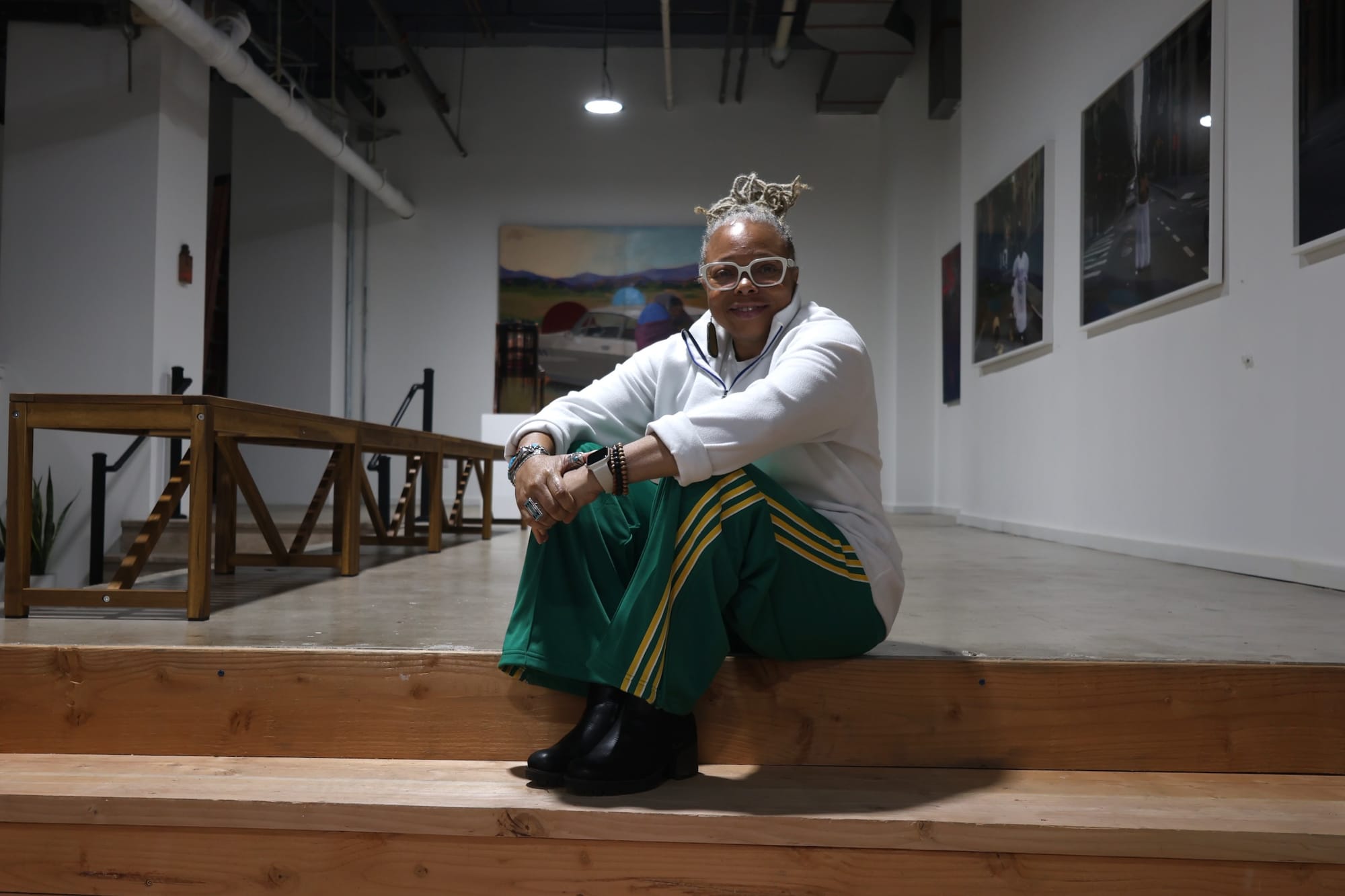
Weston and Faustine met when both were photography students in Bard's MFA program. "We found out that we were cousins." Faustine's star began to rise with a series of 40 images she took of herself at former slave auction sites. When Weston bought her Court Street space, she asked Faustine if she could have some of her work in the gallery when it was done. Faustine agreed, but then said, "I'll only show at your gallery if I'm part of your first exhibition." Weston and Faustine made a pact. Brooklyn Museum did a retrospective of Faustine's work in 2024. Faustine died of cancer in 2025. "Her sister made sure that I was able to still keep that pact with her," Weston said. "Nona was a force to be reckoned with, a beautiful soul and spirit, and she felt this work was vital."
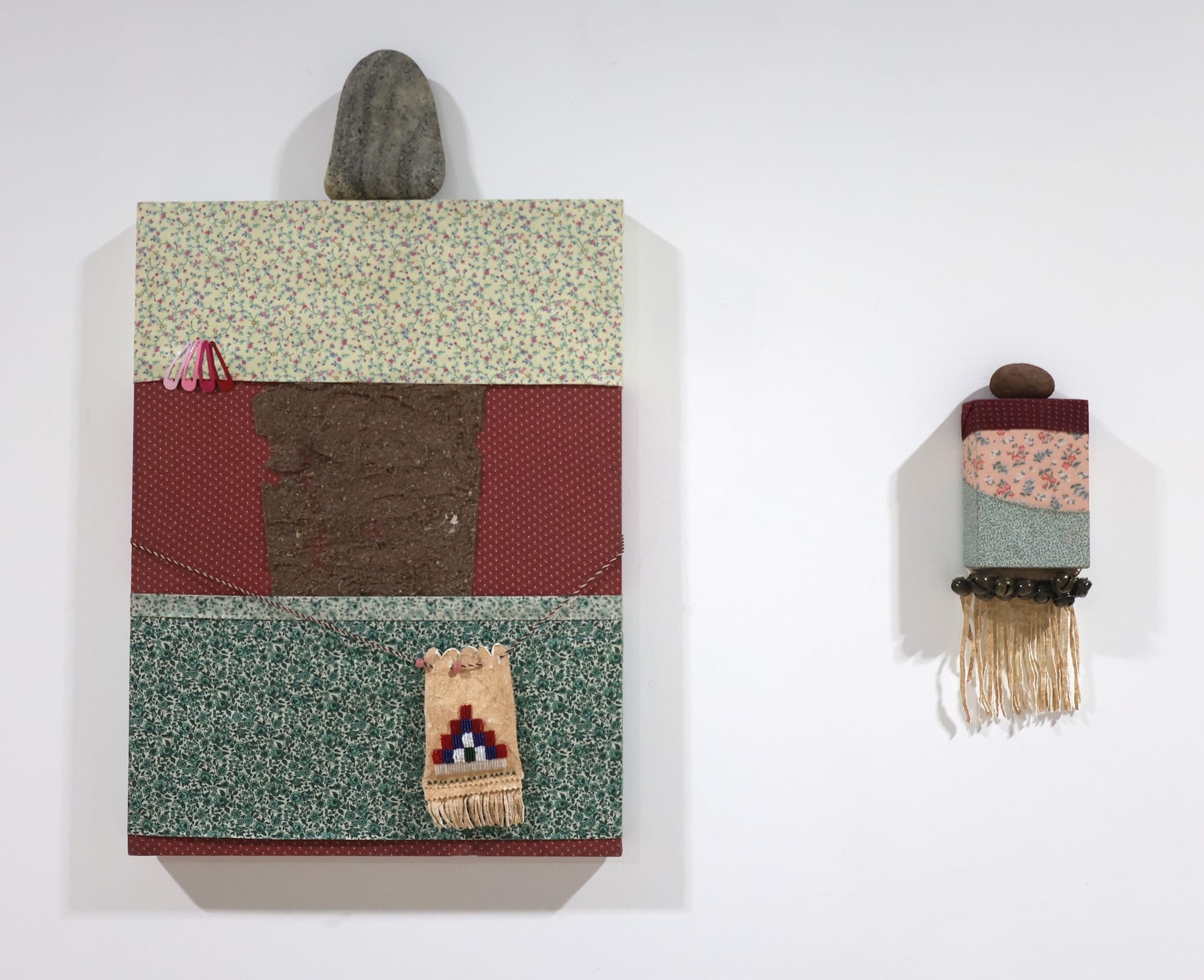
Wilson, who is Haitian, is from Bridgeport, where his family had a small tobacco farm. His cigarette boxes are "reconstructed and reformed into a new commodity," Weston said, just as "tobacco was transformed into this commodity for us to purchase." Wilson's art tries to confront the aggressive branding of cigarettes and change it into something else. In doing so, Wilson evokes traditional arts from peoples who were here before Columbus — a reminder of the important place tobacco had, and continues to have, in those cultures.
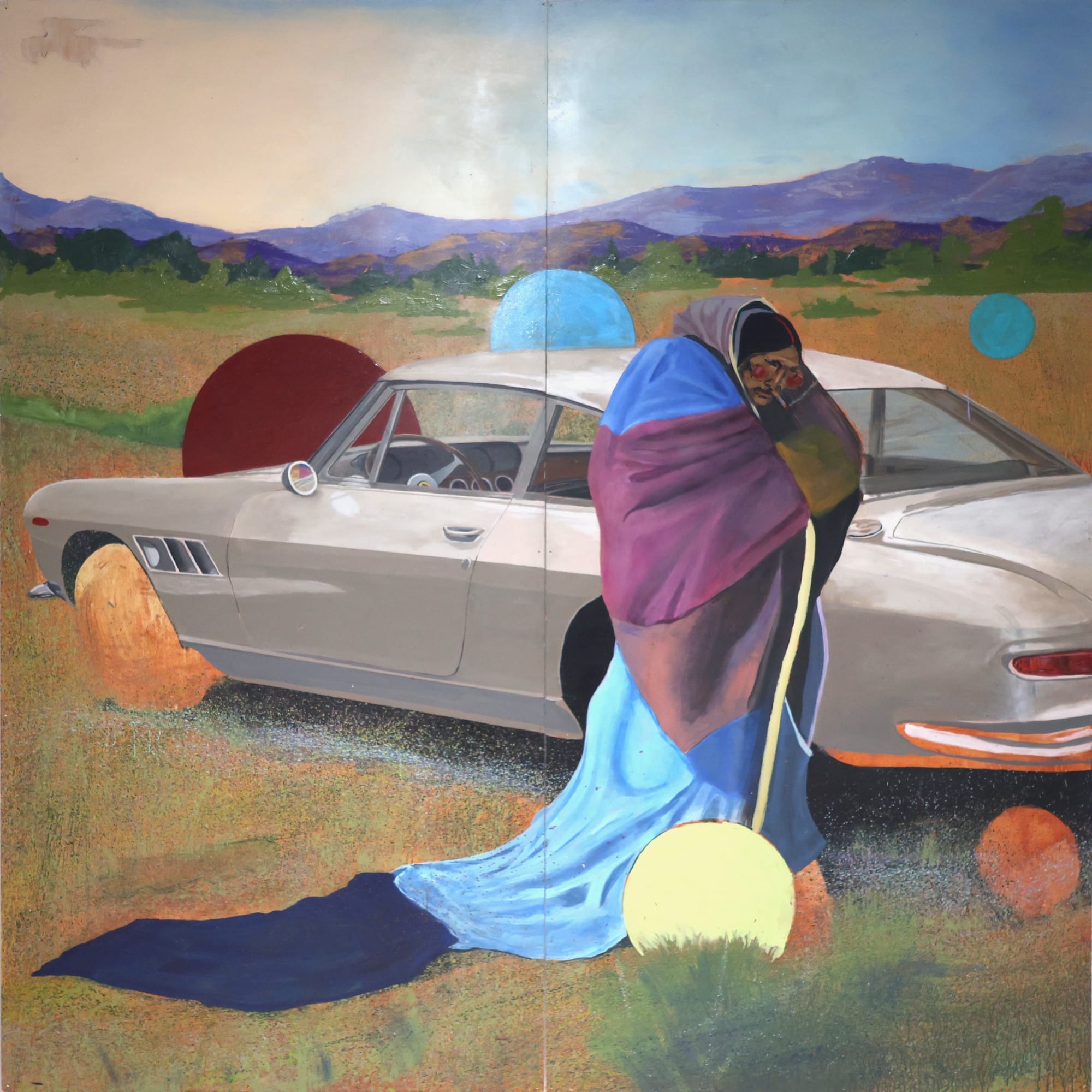
Inkpa Mani just graduated from Yale's MFA program last year. His work "talks about migration, the land, the power of women," Weston said. Mani's blend of tones makes the work complicated. The Spirit of Migration may seem pensive, but there's nothing pensive about the Mustang, which Mani renders with love. Against the backdrop of a wide Western landscape, the orbs lend an element of surrealism. The story of Native American migration is often told as a tragedy, and justifiably. Mani's work asks us, perhaps, to acknowledge that tragedy and then look beyond it, toward something more complexly human, to arrive somewhere that makes a place for strength, possibility, and even humor.
Together the work of the three artists in the show — which Weston co-curated with Moshopefoluwa Olagunju — creates a statement about what Weston is up to with Wábi Gallery. "I love artists, and we can learn a lot from each other," she said. "But having a space like this to be able to focus on the importance and significance of what artists of color are doing is really vital right now." Wábi joins NXTHVN in Dixwell and SOURCE/MATERIAL in Westville as galleries with a similar focus, in addition to joining the constellation of galleries, from City Gallery on Upper State Street, Kehler Liddell in Westville, Color Local in Fair Haven, and threeiota in Cedar Hill, showcasing regional artists. It's telling that all those spaces are artist-run. Some may wait for a nonprofit, or the state, to step in and create spaces for artists to show artwork around New Haven. Meanwhile, artists are already making those spaces for themselves, in conversation with one another.


