
Outrunning Time
Civic Orchestra of New Haven
Battell Chapel
Nov. 14, 2026
Time marches on, but art endures: That was the message presented by the Civic Orchestra of New Haven for the second concert of their 2026-2027 season. "Outrunning Time" featured special guest the New Haven Chorale at Battell Chapel this past Saturday night in celebration of two composers, Lili Boulanger and Vassili Kalinnikov, who left this life much too early and whose creations have carried on their legacy.
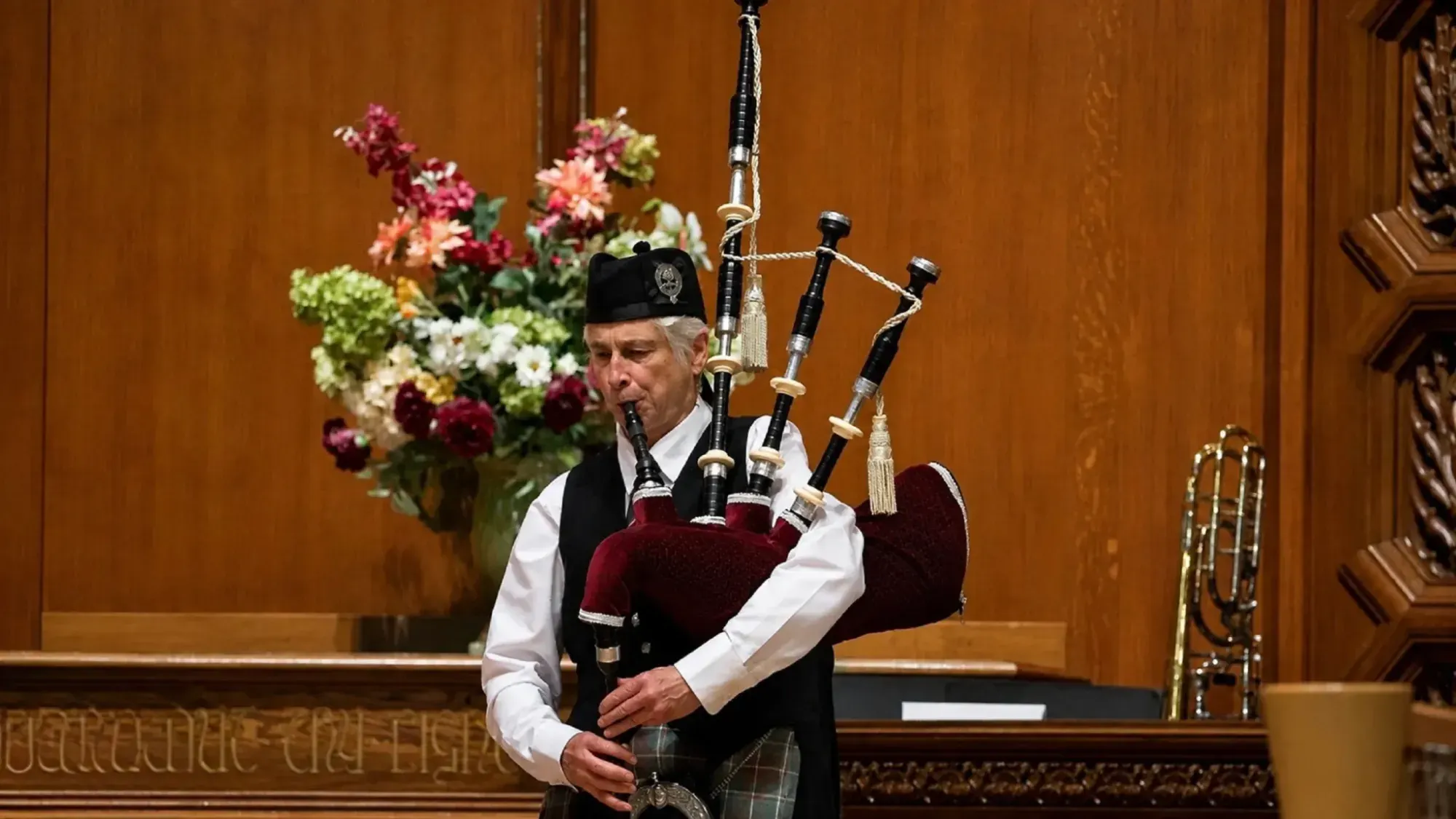
The program opened with the work of another composer, Gordon Duncan, called “Sleeping Tune” -- a piece described in the program as a “slow air, a genre in Irish folk music that draws from the sean-nós unaccompanied solo singing tradition that spins seemingly endless melodic lines and purposefully neglects strict meter and structure.” Performed by Jerry Anne Dickel on bagpipes and Stephen Gamboa-Diaz on organ, this rousing and regal piece expanded until it filled every corner of the chapel with its richness and delight. One does not necessarily associate bagpipes with an orchestral performance, but once you experience it you will wonder why it is not included more often. This reporter was not the only one teary eyed when it was over.
The New Haven Chorale's next piece, “Tshela Moya/Ke nna yo Morena," arranged by Michael Barrett, was presented as one combined South African gospel selection. The two songs together offer an ever-building rhythm as the vocalists proceed through. The chorale members filled both sides of the chapel and even spilled into some of the aisles and front rows, hands raising over heads as they began the piece, repeating the phrases in praise, percussion added in as the song swelled and soared. Afterwards Chorale conductor Reagan Paras mentioned that the song was from South Africa and that the next pieces would be from Russia and France, adding that no matter where you are from, music is “something found across the globe.”
The Chorale performed "Bogoroditse Devo" by Sergei Rachmaninov, a more traditional piece that hit a spiritual high, after which Nadya Potemkina, music director of the Civic Orchestra, spoke, thanking everyone and highlighting Dickel -- who not only played the bagpipes but is also a violinist in the orchestra -- as “brave and generous, sharing her gift with us.” Potemkina also noted that this season’s series would be featuring soloists in all kinds of ways.
“Vieille prière bouddhique” by Lili Boulanger saw the chorale and orchestra join to present this delicate yet bold piece of music. Translating to “Old Buddhist Prayer,” according to the program, it sets Suzanne Karpeles’s French translation of the Metta Sutta, the most widely chanted discourse in Buddhism. The English translation was included in the program, but even without the translation, and with a solo by tenor Omar Jabril Sandakly, the coming together of voice, brass, strings, woodwinds, percussion, all of it melded and created a universality that made the only time and place that mattered the here and now, a blessing of absolute presence.
After intermission the Orchestra came back to offer the final piece of the program, Vassili Kalinnikov’s “Symphony No. 1 in G Minor.” The four movements built upon one another: melodic, moving, magical throughout. The third and fourth movement were the stand outs for this reporter. Playful, gripping, sweepingly lively and epic, invigorating enough to make one want to grab a partner and dance across a room. Obviously, one cannot do that in a chapel, but it was enough to add an extra pep in my step as I made my way back onto the city streets through the dark, early evening chill.
There was also much to ponder during the show and afterwards regarding the idea of the outrunning of time, the confrontation of one’s mortality, and how art plays a role in adding to the lives we live while we are here and carries on the artist's life and love beyond their time here. Institutions like the Civic Orchestra and the New Haven Chorale continue to bring community together to do just that, keeping the traditions of music alive and creating new ones, fostering community and a love of music with the sharing of it all. Our bodies may not be able to outrun time, but our art, and therefore our spirit, can.
Please visit the Civic Orchestra of New Haven’s website for more information about their 2026-2027 season offerings.


