
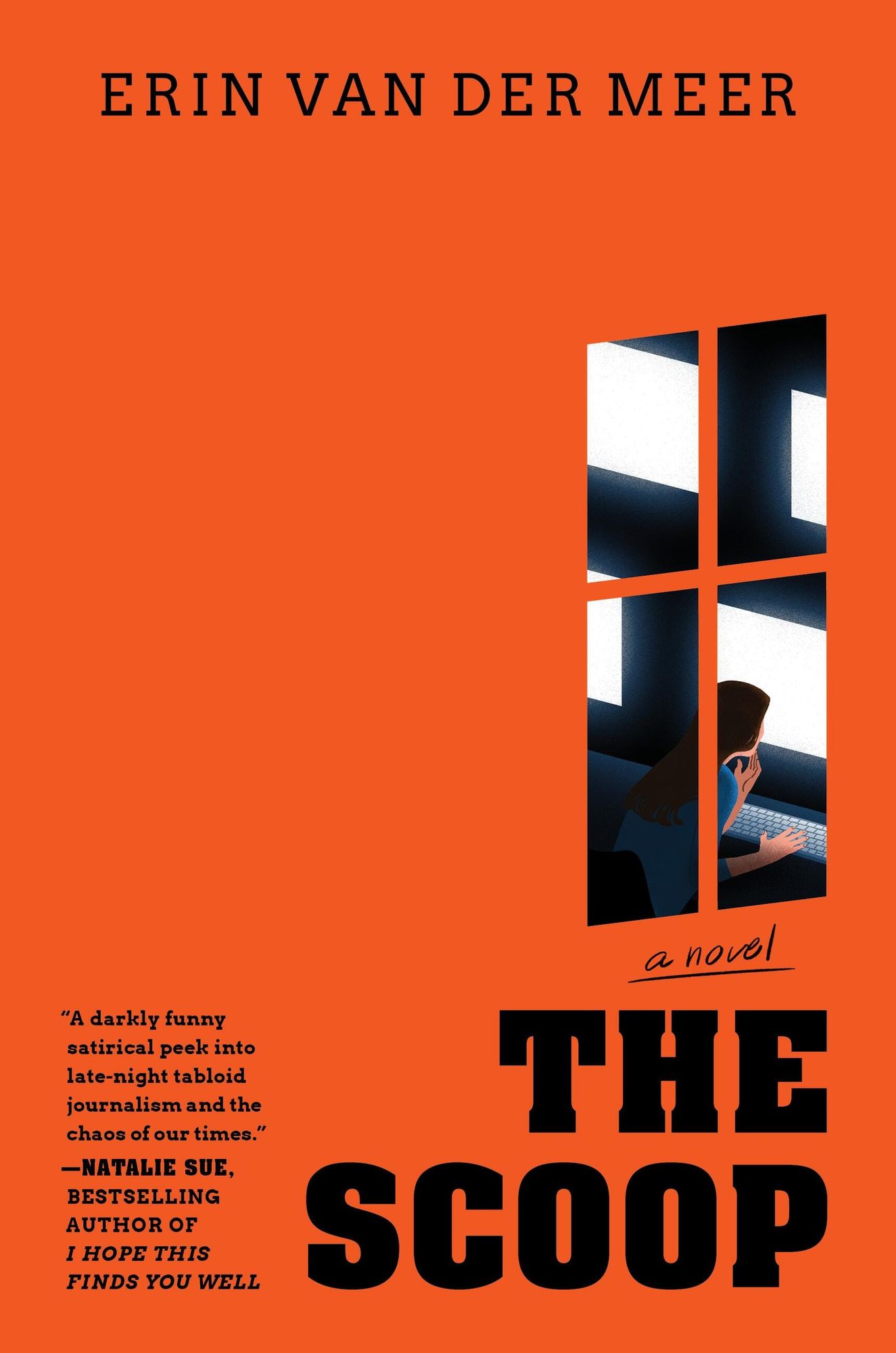
The Scoop
By Erin Van Der Meer
Grand Central Publishing
If you’re a young person starting a journalism career in 2026, you should brace yourself for a lot of older people telling you not to.
“Journalism is dying,” they’ll say. “Digital/vertical video/AI/public relations (take your choice) is the future. Only do journalism if you can’t do anything else.”
Of course, that’s what they said to the graduating class before them and to me and the class before that all the way to the early aughts. Despite all this — despite countless layoffs and newsroom restructurings, bad bosses, traumatic experiences — journalists persist. In former journalist Erin Van Der Meer’s debut novel, “The Scoop,” protagonist Frankie Miller is one of these journalists … or trying to be. She was laid off from her dream job three months ago and has yet to land something new. The SuperYacht Times went with “someone with more boating-industry experience.” Her friends and contacts are out for the summer or just starting new jobs of their own. But her overdue bills aren’t going to pay themselves, so when a job as an editor at a tabloid, The Scoop, presents itself, she takes it.
The satirical novel follows Frankie’s descent into the dark underbelly of tabloid news first as a night shift editor and then as a writer willing to get her own hands dirty. The story follows familiar beats: desperate, unemployed girlie compromises morals and ethics to get ahead, the media attention forces a beloved but reclusive pop star back into the limelight more than ever before, former star spirals, tragedy strikes, and our protagonist has to make big life decisions about how to move forward. This kind of story has been told before, but under Van Der Meer’s careful hand, “The Scoop” is so more than a cautionary tale about celebrity gossip and the media. It’s an exploration of the absurd situation many journalists find themselves in.
Journalism demands ethical purity for the people who write it. It’s a purity that’s only truly accessible if publications have money and are willing to spend it, if publications have the trust of the public and are willing to lose some clicks to keep it, and if reporters know editors and newsroom leadership have their back when things go wrong. In other words, it’s a kind of purity not available in reality. If only journalists didn’t have bias or relationships or bills to pay or natural compassion for the people they interact with and talk to every day, they would be optimized for this kind of unbiased, straightforward reporting of the facts people imagine to be ideal. But then, they wouldn’t be human.
Frankie’s story is hyperbolic. She can’t stomach freelancing or pivoting into a different career so she takes a job at a tabloid owned by a hyperconservative news empire. Her acceptance of the situation and of playing dirty comes comically fast. But none of her journalism friends are clean either. Her best friend betrays confidences and does something flagrantly unethical in order to impress her boss at The New York Times. Look far enough and there’s something cancelable about most big companies.
It is not anyone’s fault that people would rather read a funny meme written from the POV of a bottle of ranch than an in0depth feature about a bombing in Mogadishu, but we do look at the people just trying their best to make it a certain kind of way. “The Scoop” is set in 2014, which frees it from being bogged down by the specifics of our current political discourse. The problems it highlights have only intensified. AI-generated images and news articles have made the news environment and job market worse than 12 years ago. Journalists are faced with a whole new kind of ethical dilemma with what kinds of jobs and work they’ll accept. Oftentimes, they have no choice.
“The Scoop” is a smartly written reminder that work will never love us back, and that tabloids are more important than one might think.


