
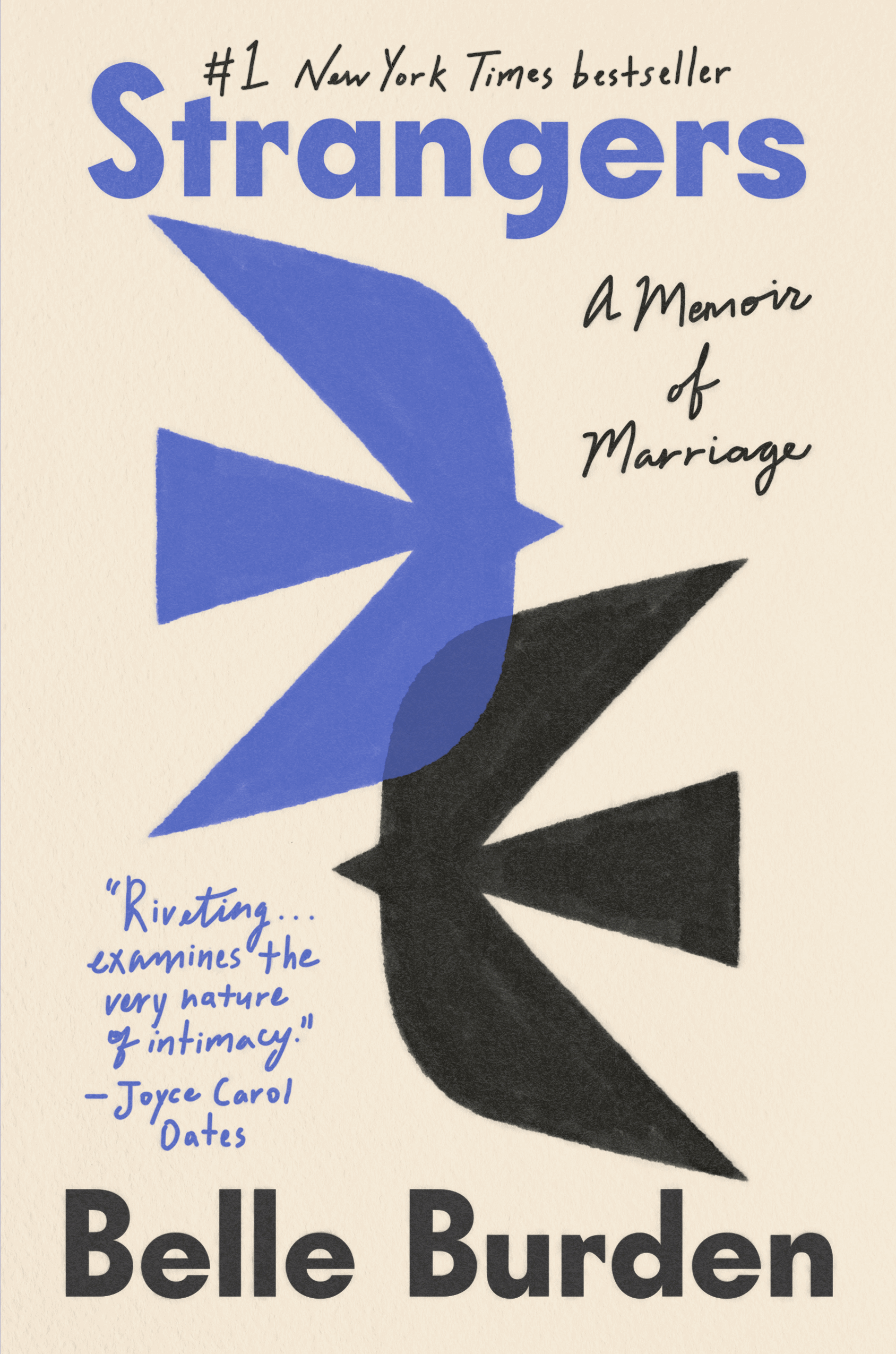
Strangers
by Belle Burden
The Dial Press
Too often, when there’s a lot of hype surrounding a book, it ends up disappointing me. Maybe it’s good but can’t live up to its reviews; or it’s cloyingly sentimental, or poorly written; or it’s just not my kind of book.
Belle Burden’s much-anticipated memoir Strangers, though, more than delivered on its promise to unpack the author’s raw tale of a sudden, baffling, high society marital breakup that took place in the earliest days of the pandemic.
As a starting point, I’ll say that if reading about the lives of the ultra-rich makes you crazy (as is true for one fierce single mom in my book group), you may want to take a pass on Strangers. But if that’s not a dealbreaker, I highly recommend it –and this comes from a Midwesterner who, before reading this book, didn’t know the geographic difference between the Hamptons and Cape Cod.
Why has the book struck such a profound chord with readers? Because it’s foundational question gets at a shocking, unsettling truth: even after many, many years of marriage, we’ll likely never know everything about our partner.
In mid-March 2020, when Burden’s family decamps from New York City to their summer home on Martha’s Vineyard, she gets a call from an unrecognized number: it’s a man who tells Burden that her husband James (not his real name, which is so easily Google-able) has been having an affair with his wife, who has just tried to kill herself. Burden assumes there’s been a mistake, but when James confirms it, checking in with the woman to make sure she’ll survive, Burden writes, “My sympathy, my worry, shifted to astonishment. She had taken the pills the moment I – James’ wife of two decades – had learned about her? Wasn’t I the one who was supposed to fall apart? Wasn’t he supposed to be worried about me? She had captured my husband’s attention, his care, when I needed it most.”
But oh, that’s just the start. Though James immediately tells Burden the affair’s over and means nothing, he sleeps in his son’s bed while his wife hysterically cries and hides from two of their three teenagers (the third is isolating with friends on Long Island). In the morning, James coldly announces he’s leaving Burden (age 50) and the kids, saying, “You’ll be fine. You’re still young.” (This passage marks the first time of many I wanted to punch this man in the face.)
Understandably, Burden frantically calls and texts him throughout the day, urging him to try doing couples Zoom therapy, and then he stops answering, texting at one point, “I’ll answer what I want, when I want. I’ll speak when I want. I’ll decide when I want.”
Apparently, the man who would make Burden a drink without her asking and cook complex family dinners became a child again while sleeping in his son’s bed. Or so it seemed. Because as Burden reflects back on the couple’s courtship, wedding (with a signed pre-nup, which is important), and years raising a son and two daughters, James comes to narrow his scope to the adult concern of money and getting what he considers “his,” wife and kids' welfare be damned.
Burden can be a maddening narrator at times – as James tells the kids about the divorce, he pauses to ask her to make him a sandwich, and she does it! – but I kept reminding myself that with no explanations or lead-up clues, she’s in shock in this moment. And when she delivers the damned turkey sandwich, she finds him not with his daughters, but in the basement, searching for a hard copy of their pre-nup. (Sorry, ladies – he’s available!)
You might wonder how Burden, born of a maternal line that includes grandmother Babe Paley (of “Capote’s Women” fame), and a father who’s a descendent of the Vanderbilt dynasty, could possibly be worried about money while divorcing. Well, the answer goes like this: both James and Belle were successful attorneys when they married, and the pre-nup said that should the marriage end, they would each take away what is in their name alone, as well as what they each earn. When Burden uses money held for her in trust to buy their place in New York City and their house on Cape Cod, she puts James’ name on the deed, too, as a demonstration of love and “this is ours, not mine.” So her generosity is weaponized; and because she stopped practicing law to raise the kids, while James went to work for a hedge fund (and will soon to be a partner, which means he’ll earn millions each year), Burden faces being unable to buy out James’ share in these homes while also possibly not getting child support.
So even seemingly rich women can be screwed by the system (and their men). But what makes Strangers so riveting to read is not only Burden’s candid storytelling, but her vulnerability. For instance, at their son’s high school graduation, near the book’s end, she writes, “When I looked down, I could see James’s hand resting on his thigh. My whole body yearned to move closer to him, to press my thigh against his, to thread my fingers through his, as I had so many times before. It was like my body still had not received the message, that this man was no longer mine, that he was someone else.”
This confession feels all too real, as does the misogyny that meets Burden at every turn. When she writes about the breakup in an essay that runs in The New York Times, she gets grateful messages from many women who have gone through similar experiences; but she also earns scolding whispers from many Cape Codders who feel she’s exposed her dirty laundry at the expense of her kids – which is way worse than being the guy who just leaves his family, I guess?
But the true measure of Burden’s accomplishment with Strangers comes when she looks at James’ childhood photos, remembering that he had been part of a family that once had wealth and then lost it – an experience that shaped the man he became. She writes, “I felt a rush of something – not quite tenderness, but an understanding. James’s need to protect himself existed long before he had met me, long before I walked into his office with my Oscar ballot. If what happened in our divorce was vengeance, it was an existential vengeance, not a personal one. It had very little to do with me.”
If Burden can extend that much generosity to the husband who, without warning, detonated her (and their kids') life with a weird, Mr. Spock-like remove, than count me in Burden’s camp. Team Belle all the way.


