
26th 보자기장 (bojagi-jang) Farmer's Market
광주청소년삶디자인센터 "삶디," Gwangju Youth Creative Hub
Organized with광주전남귀농운동분부 Gwangju-Jeonnam Return to Farming Movement Headquarters and 광주지속가능발전협의회 Gwangju Council for Sustainable Development
Gwangju
April 25, 2026
(Jisu Sheen recently moved from New Haven to Gwangju, South Korea, where she’s covering local arts and culture for the New Haven Independent and Midbrow.)
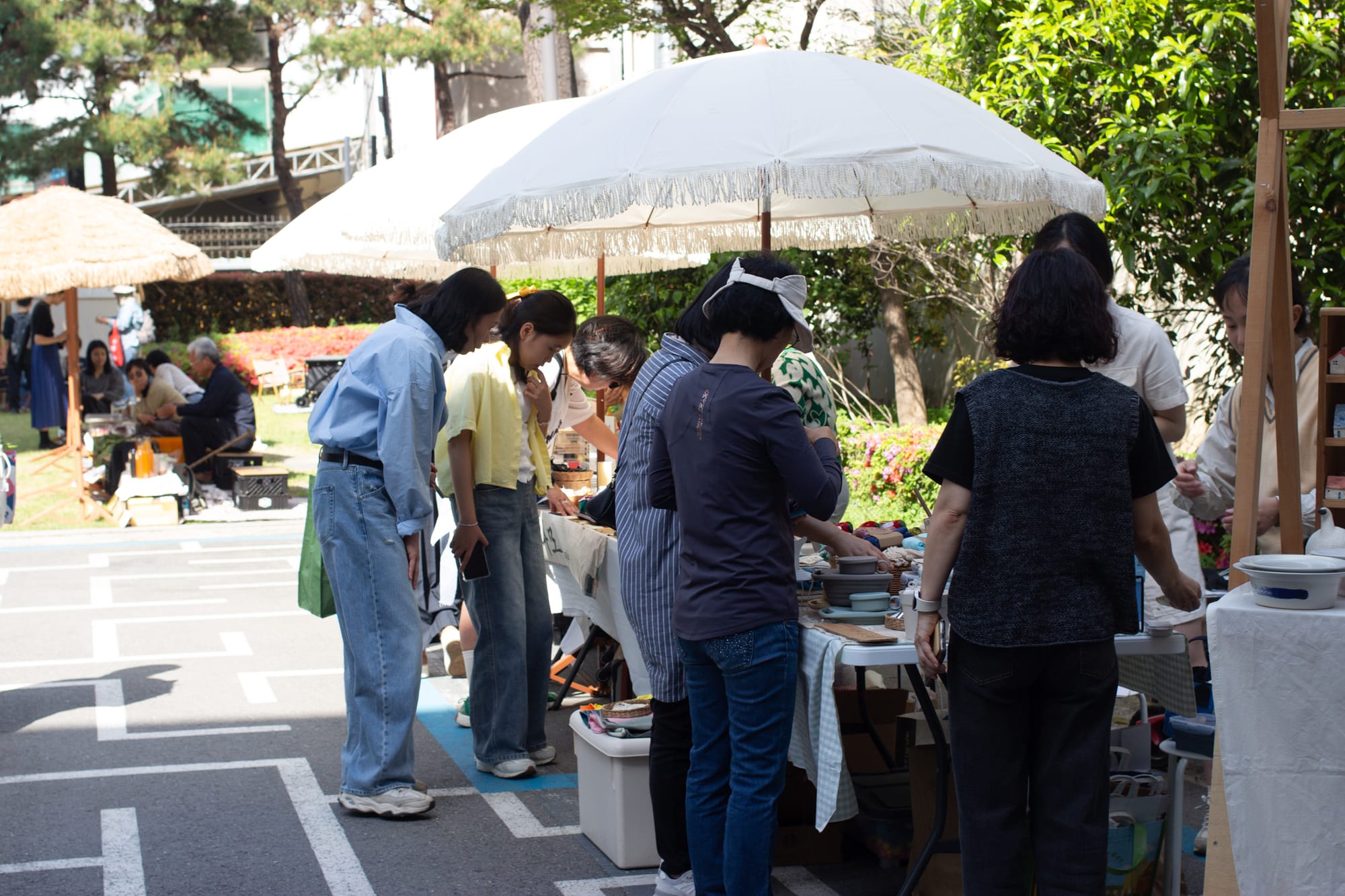
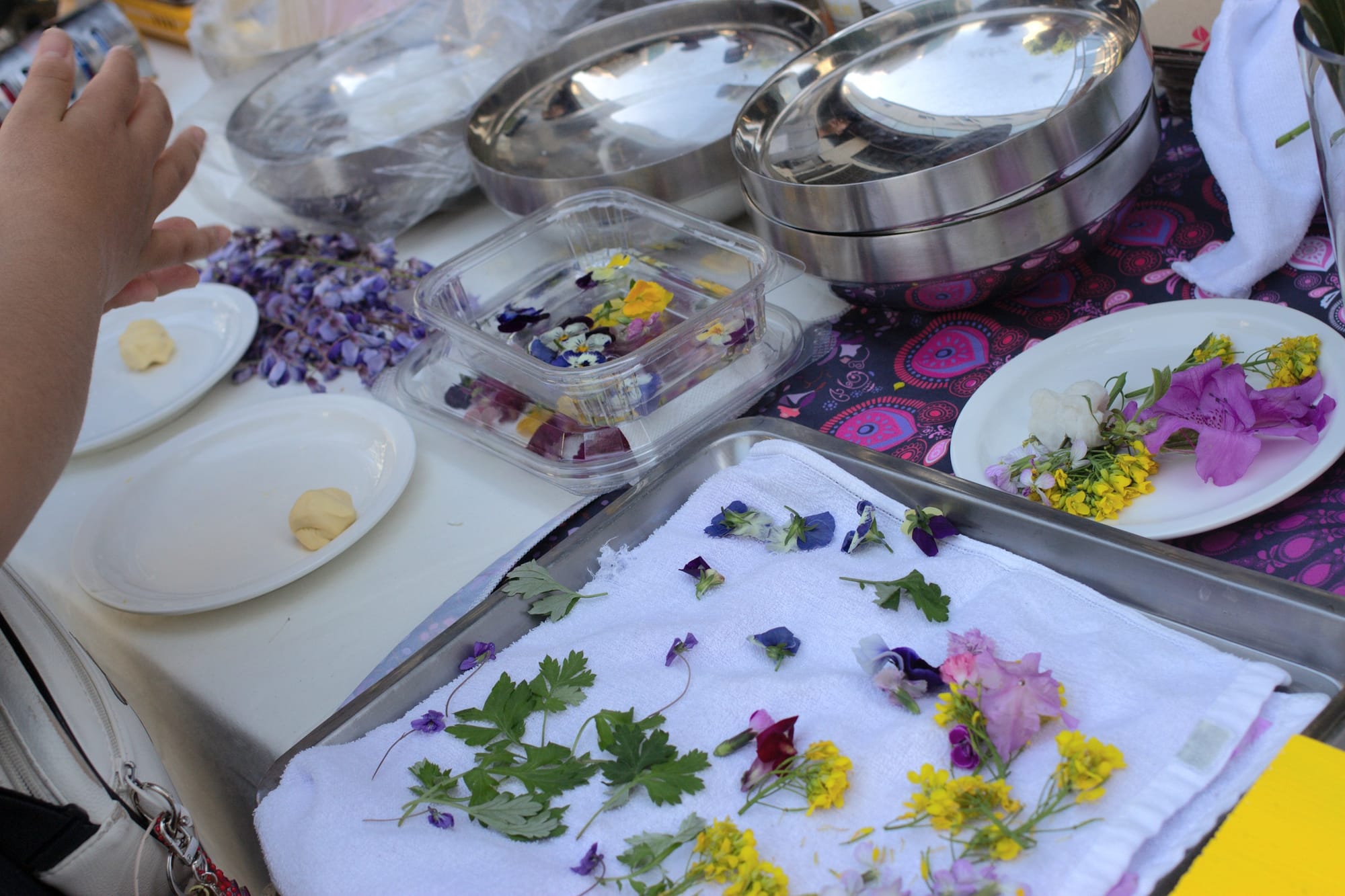
On Saturday afternoon, I rounded the corners of downtown Gwangju's bustling side streets to see what I could find at the farmer's market in front of the Gwangju Youth Creative Hub (광주청소년삶디자인센터), otherwise known as 삶디 (salm-di). The event was a collaboration between the center and the Gwangju-Jeonnam Return to Farming Movement Headquarters as well as the Gwangju Council for Sustainable Development.
Here's what I found: photographs, homemade jam, plastic-alternative housewares, roasted sweet potatoes, and a whale.
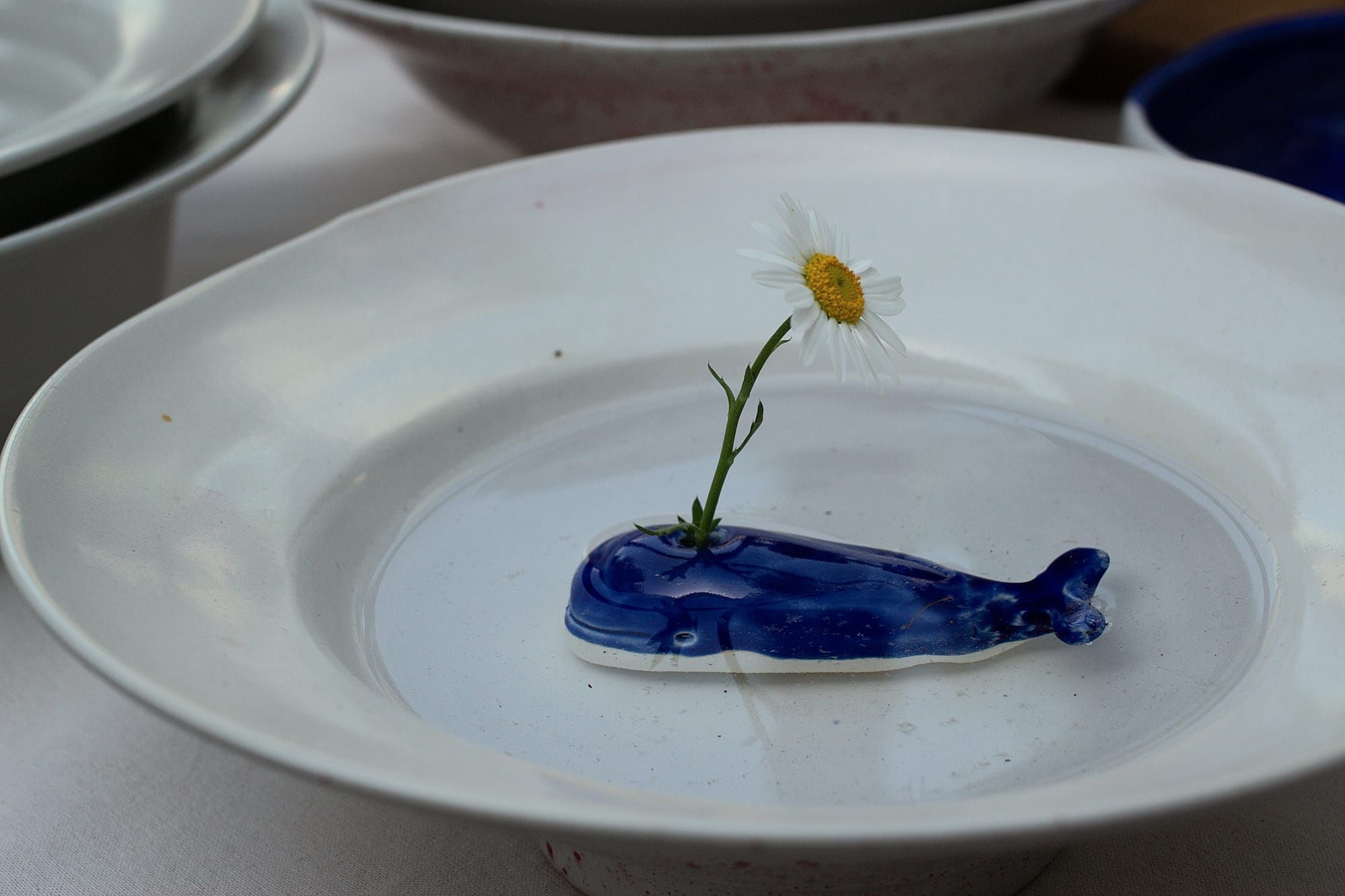
She was blue, stout, and tiny enough to swim inside a ceramic bowl. She carried a flower whose head broke through the water's surface.
Genius, I thought. A way to display a single stem while keeping it hydrated and upright.
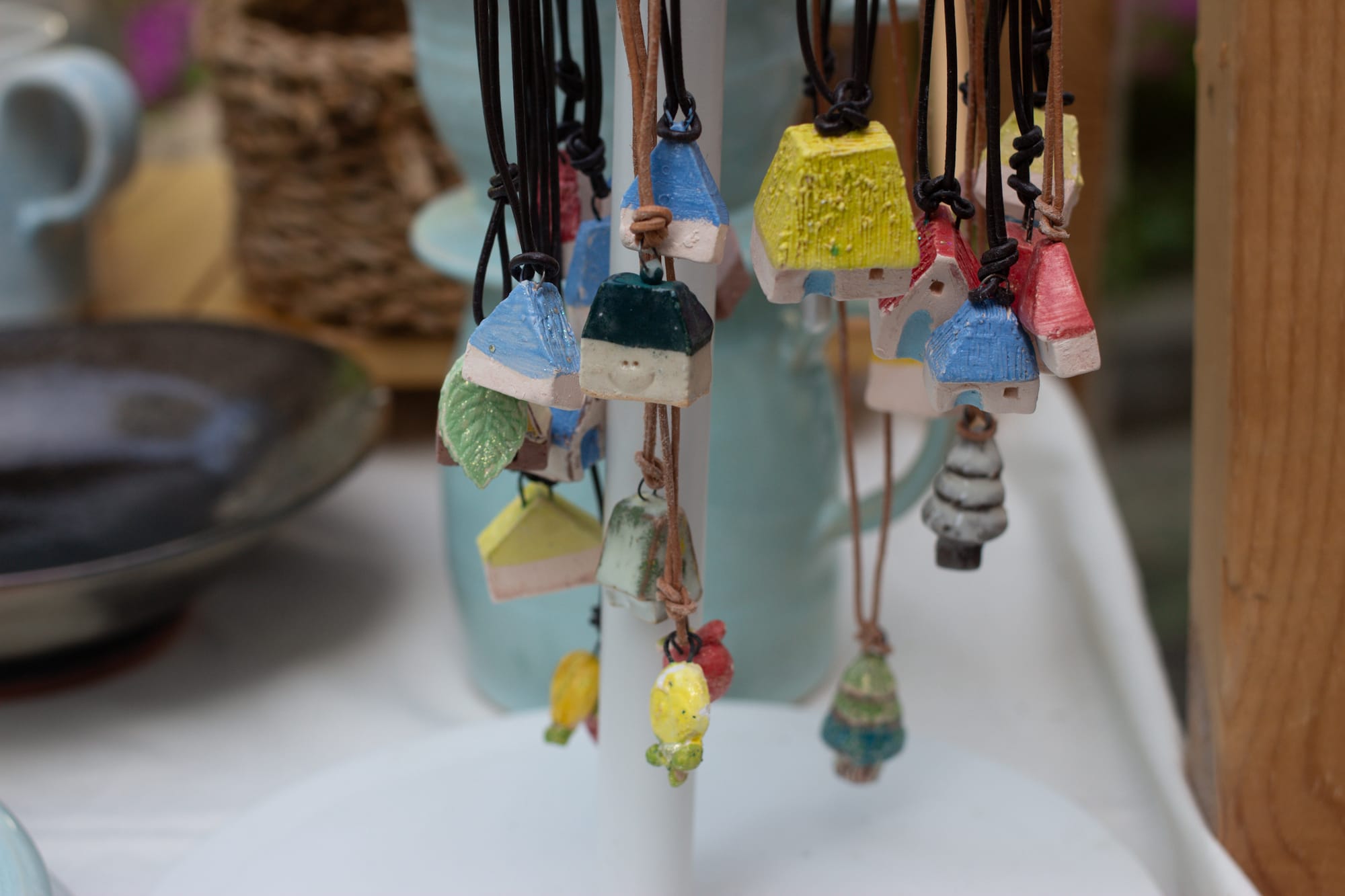
The whale, like the container she lived in, was ceramic. Behind her flower was an array of cups and bowls with strong compositions and the texture of a human touch. To the side were other sculpted creatures in the forms of magnets, necklaces, and more flower holders (or incense holders, depending on your fancy).
박미정 (Park Mi Jung), the artist who made the whale, said although ceramic is like a stone, "It's not dead. It's alive."
Her husband, 김락겸 (Kim Rak Gyeom), shares her love for the life-giving material. He's the artist behind the dishware on display, including the bowl that held the whale's mini ocean.
"I don't like to cook, so I don't think about dishes," Park explained. She leaves that to her husband, whose style over the years, she noticed, has leaned toward warm and simple fundamentals.
This tendency, she told me, is written into her husband's name. The meaning of 락 (rak), the first syllable of Kim's name, is happiness and enjoyment. The second syllable, 겸 (gyeom), means sincerity. And he's really like that, Park said.
The two artists sculpt and fire clay at home in Damyang, a county in South Jeolla Province known for its bamboo forests. The coziness comes through in the work, with many of Park's pieces depicting a house of some sort, often with a touch of magic.
Some of the houses have short walls and tall roofs. Others have faces. Describing a rabbit character in her art, Park talked about the rabbit from Alice's Adventures in Wonderland.
The mood of the day was sunny and relaxed, with a focus on participation. You could sign up to swap clothes in an effort to reduce consumption or buy a native seedling for less than a dollar. In fact, you could make that same money back by cutting apart a paper carton for reuse. If you were convinced enough by one of the stands, you could even "Go Vegan!" I noticed certain types of foods, herbs, and grains seemed to carry a sense not just of sustainability but of rootedness in Korea's (and possibly the region, Jeolla's) farming legacy.
I was happy to be an outsider, slowly understanding the goings-on of the day as my language skills caught up to my interests. For a Korean who's never lived in Korea before, trying to be Korean, efforts to be genuine can be tricky. Sometimes an obsession with authenticity is a dead giveaway for its opposite.
With my as-yet limited understanding of the culture, "what it means to be Korean" is something I've decided I can't quite grasp with the tools I have at hand. So it was nice to be in a place where people were trying to make life better for each other, trading in nuances far above my current capacity.
At the markets, Park doesn't hold her art too close.
"Please disappear very fast," she tells her pieces. "I want to make more, to make something different."
Selling the work means the houses, whales, and rabbits get the chance for a new stage in life, inside someone else's home. Park said customers reach out with updates, like:
I've used this cup for ten years.
I use this every day.
It's different from other cups. Coffee is tastier in it.
I watched as a pair of customers spread out a collection of printed cloths on Park's table, gasping over the cuteness of each new one they saw. Park explained that they were drawings by her friend---and that the cheerful, goofy girl in the art looks like the friend herself.
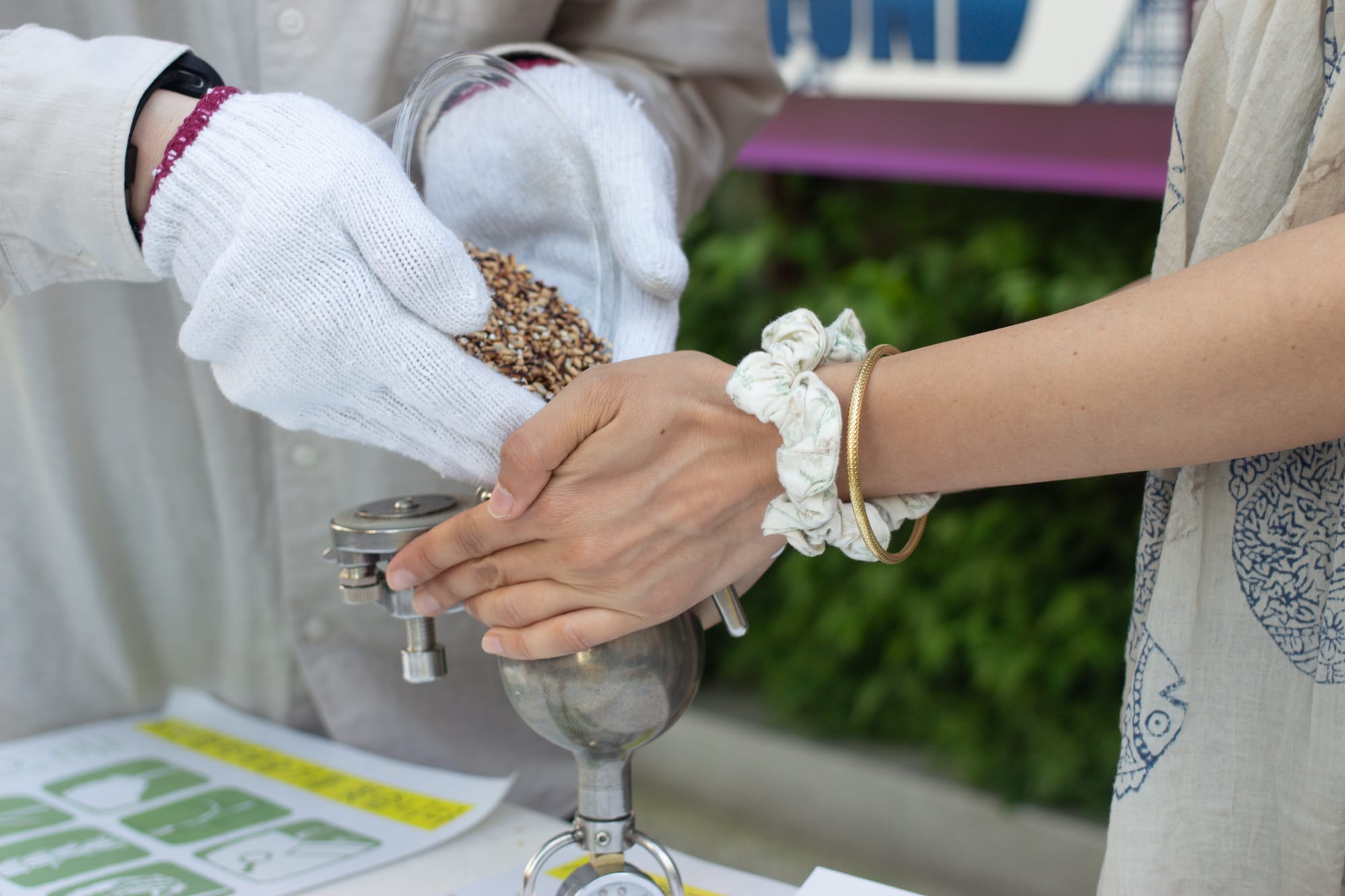
I thought about Park, Kim, and their friend as I sat a nearby table shelling native Korean rice to be popped on the spot in a hand-cranked metal cooker. The farmer-artists leading the activity told me about their upcoming project, where 100 people will care for one rice plant each, to share in the harvest several months later.
At a rice paddy by the Huigyeonglu pavilion in Gwangju Park, the crew will skip the efficiency of machines. Instead, they'll do it all by hand. 다와 (Dawa), one of the artists, said the group started with a focus on stories, later gravitating toward farm projects and togetherness. Part of the concept behind their 100 rice plants effort is the knowledge that each plant will come out differently.
Like Park, these artists were interested not just in the products but in the hands behind them. They were thoughtful and practical, valuing the human experience.
Park's whale remained submerged in her bowl throughout the day's festivities, with only her flower to tell her what might be going on outside. I could relate; walking around a new city, I know I'm only getting bits and pieces of the full picture. But the conduit is something beautiful, and that is enough to sustain me for now.
For ceramics inquiries, you can contact 김락겸 (Kim Rak Gyeom) at potter1968@naver.com.
Sign up here to get Gwangju Midbrow email updates delivered straight to your inbox.


