
Museum of Public Art
1102 Eddie Robinson Sr Dr.
Baton Rouge
June 5, 2026
Driving down the Old South Baton Rouge, a historically Black neighborhood that connects downtown and Louisiana State University, there’s one building, or at least the shell of one that stands out among the otherwise residential neighborhood. There’s no roof on the building, but it’s got mural art on both sides of every wall, and the doors are open, as if inviting people in.
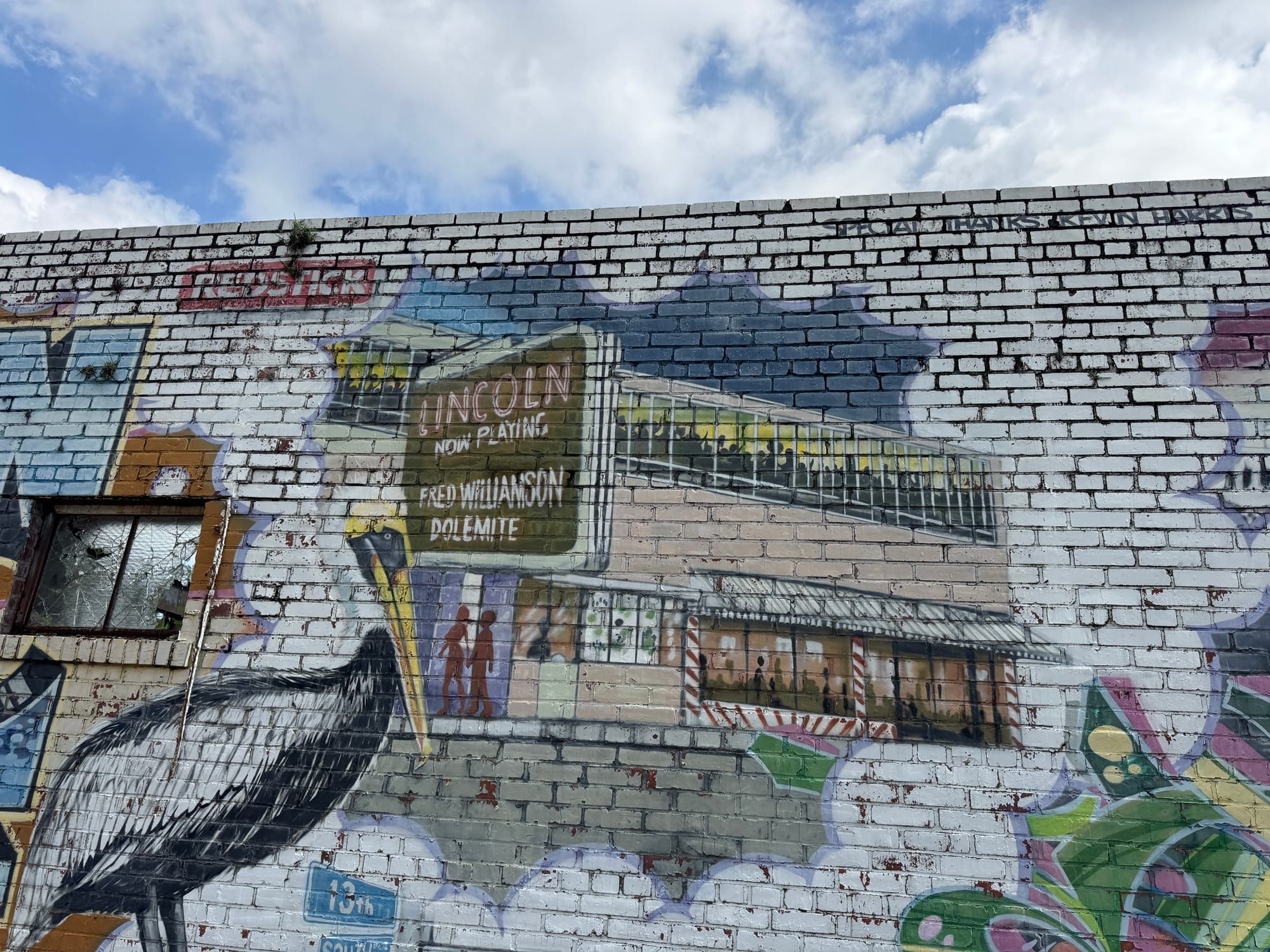
This is the Museum of Public Art. The space, spearheaded by director Dr. Kevin Harris, features work from artists created throughout the mid 2010s. Some of the pieces evoke specific neighborhood or city icons like the Lincoln Theater, a historic Black theater currently under restoration that will hopefully will be opening to the public soon. Others are more abstract or depict famous figures like actor/comedian Richard Pryor and Mohammed Ali.
“The benefit that public art has isn’t necessarily conscious or literal,” Harris said in a video featured on the museum’s website from 2014.
“It raises the energy,” he continued. “And the energy of a community is related to how people feel about themselves and how they feel about the place and whether they want to stay there and whether they relate to it.”
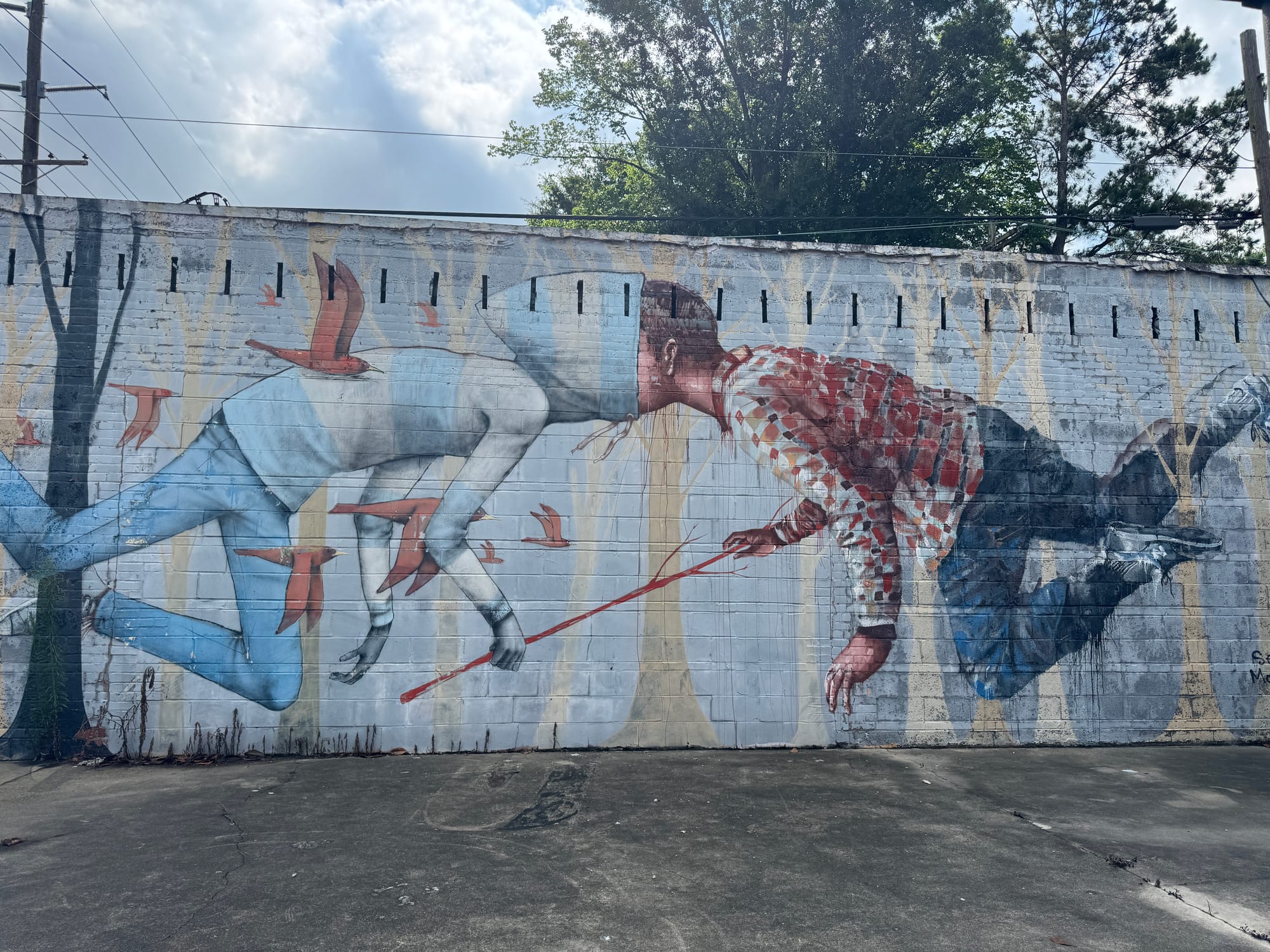
It’s not something one would necessarily seek to cultivate or look for in their neighborhood, he explained, but it impacts them. The art hasn’t just stayed in the building either — it’s spread to different buildings in the neighborhood.
You wouldn’t know this history just from walking around the space. There are no signs letting you know what it is or who put it there, but the Museum of Public Art is no secret. You can find it on Google Maps, and they even have a website. But when one stumbles upon the museum, it feels like finding a treasure trove that someone left behind.
On one wall facing the parking lot are the words "Baton Rouge," printed in big bold font alongside crawfish, a pelican, and other Louisiana iconography. The paintings are faded now. The once vibrant colors have been baked by the Louisiana heat into a pastel color palette, yet the museum is surprisingly undisturbed by graffiti or random tags. Passersby may not know who put the art there or even who some of the people are, but it’s spaces like this that give cities their character.
Old South Baton Rouge used to be a hub of business and culture. Public art says someone cared enough to make even the abandoned buildings in the neighborhood beautiful, but the promise of revitalization hasn't been realized yet. Mural art isn’t meant to last forever. It’s like an ongoing dialogue between artists and the community. Maybe it’s time for the next turn in conversation.


