
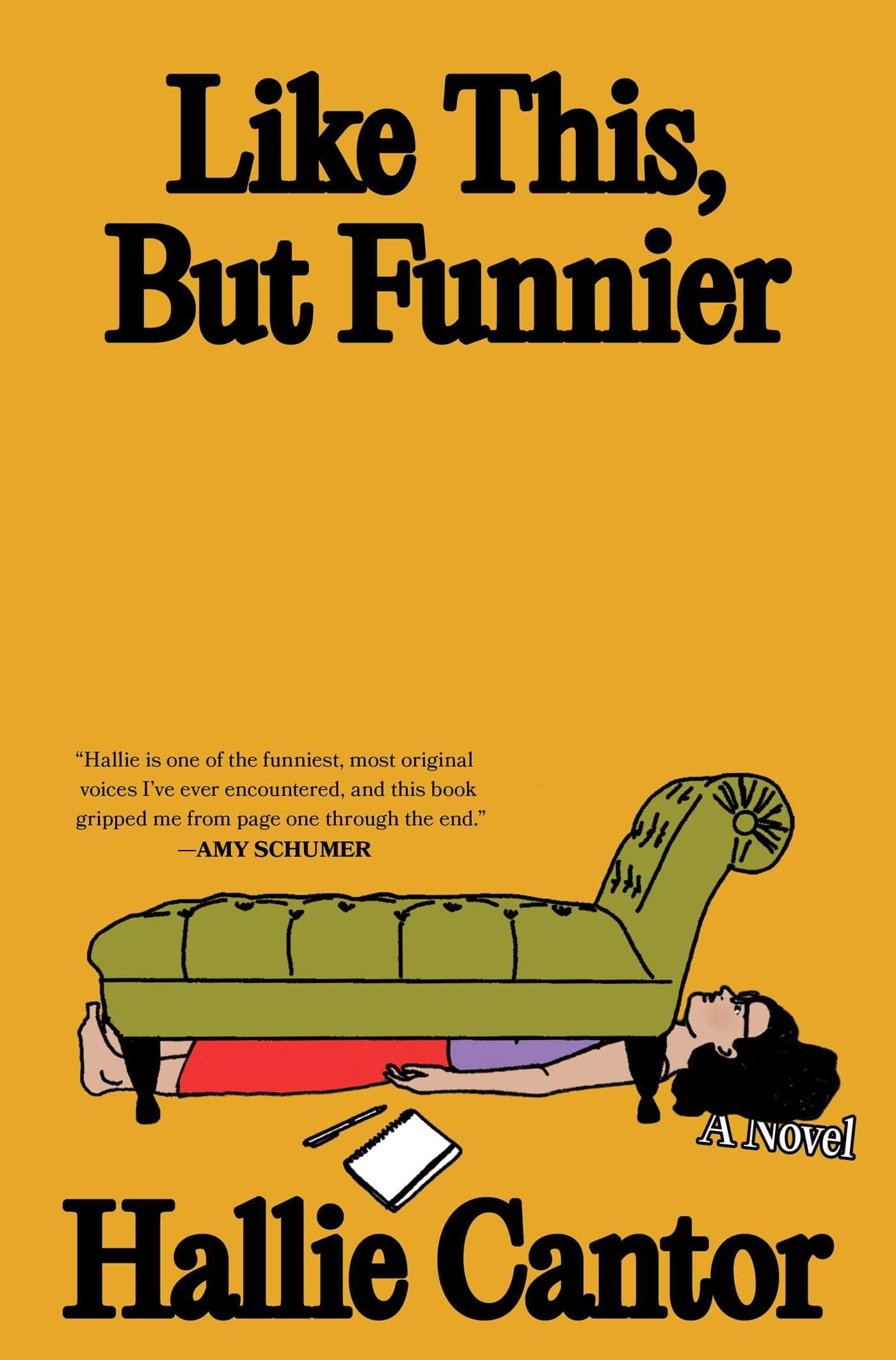
Like this but Funnier
Hallie Cantor
Simon & Schuster
The life of a freelancer is all about waiting. Waiting for someone to like your ideas. Waiting for people to fill out paperwork, give your notes, edits or the like. Waiting for the next paycheck to hit your account.
In Like this but Funnier, Caroline, a languishing television writer, is waiting for her next script to sell, but it’s not going well. Her attempts at networking are falling flat, she’s only sent the worst things to develop into scripts, and it’s been too long since her last paycheck. Meanwhile, her therapist (technically clinical psychologist, but people know what therapists are) husband is charging people $250 an hour for his time. But everything changes after she snoops in her husband’s notes about a long time client they’ve nicknamed "The Teacher," and inadvertently uses some of the contents in a pitch. This project is somehow the one that sails straight past all the usual roadblocks and gets greenlit, creating a whole slew of problems.
This is the kind of story that’s becoming a trope. Desperation, fraud, a one-in-a-million kind of deal, exposure, conclusion. Desperate times may call for desperate measures, but it’s curious that those measures all seem to entail the same thing: theft of something intangible like an idea or a story. This is the essential arc of the non-fiction viral New York Times article, “Who is Bad Art Friend,” R.F. Kuang’s Yellowface, Jean Hanff Korelitz’s The Plot and many more. We ask ourselves who owns a story, how much of it one can borrow before it is stealing and what recourse there is after.
People eat it up, but if one is going to retread this ground, they have to add something new to the discussion. In Caroline’s case, what she’s stealing is the actual details of someone’s life – not someone she knows but someone she’s not supposed to know about at all. Her and her husband have been talking about The Teacher in vague and anonymous terms for a long time (technically not a HIPAA violation), but she crosses a line in peeking at his notes to learn more — and then engineers a way to meet her. She follows The Teacher after a session and then approaches her under false pretenses to become friends.
It’s all kinds of chaos, but it feels like there were some missed opportunities. Caroline’s old crush starts dating The Teacher. They go to the same party as Caroline and her husband, but nothing really comes of it except that the crush finds out retroactively that Caroline has lied to her about being new to the city. He doesn’t know what she’s working on.
Caroline’s ongoing struggle throughout her work is that she wants to write comedy, but the project has a drama/thriller plot line, and it mirrors the book itself. This story is begging for drama and stakes. Caroline’s character is dark and does some truly unhinged things, but it seems the writer wants it to be a comedy and is constantly reigning her in to the detriment of the book.
Cantor is a TV writer by trade, and it shows. She writes with authority on both the industry and the way that people talk to each other within it, but the plot gets an ending much like an episode of a 22 minute sit-com: short, with no lasting effect on the character’s lives. She simply blocks The Teacher before the climax. Ninety percent of the way through the book, no one knows what she’s done, and once they do, there’s barely any fallout. Her marriage doesn’t end; she never sees The Teacher again.
“Like this but Funnier” is a story we’ve seen before, and it may be funnier (the main character somehow clogs not one but three toilets in the book), but humor involves risks, and Cantor didn’t take the one she’d need to to give the story the ending it deserved.


