Sign Unveiling Ceremony
Gwangju Theater's 91 Anniversary Film Festival
Gwangju Theater
Oct. 16, 2026
(Jisu Sheen recently moved from New Haven to Gwangju, South Korea, where she’s covering local arts and culture for the New Haven Independent and Midbrow.)
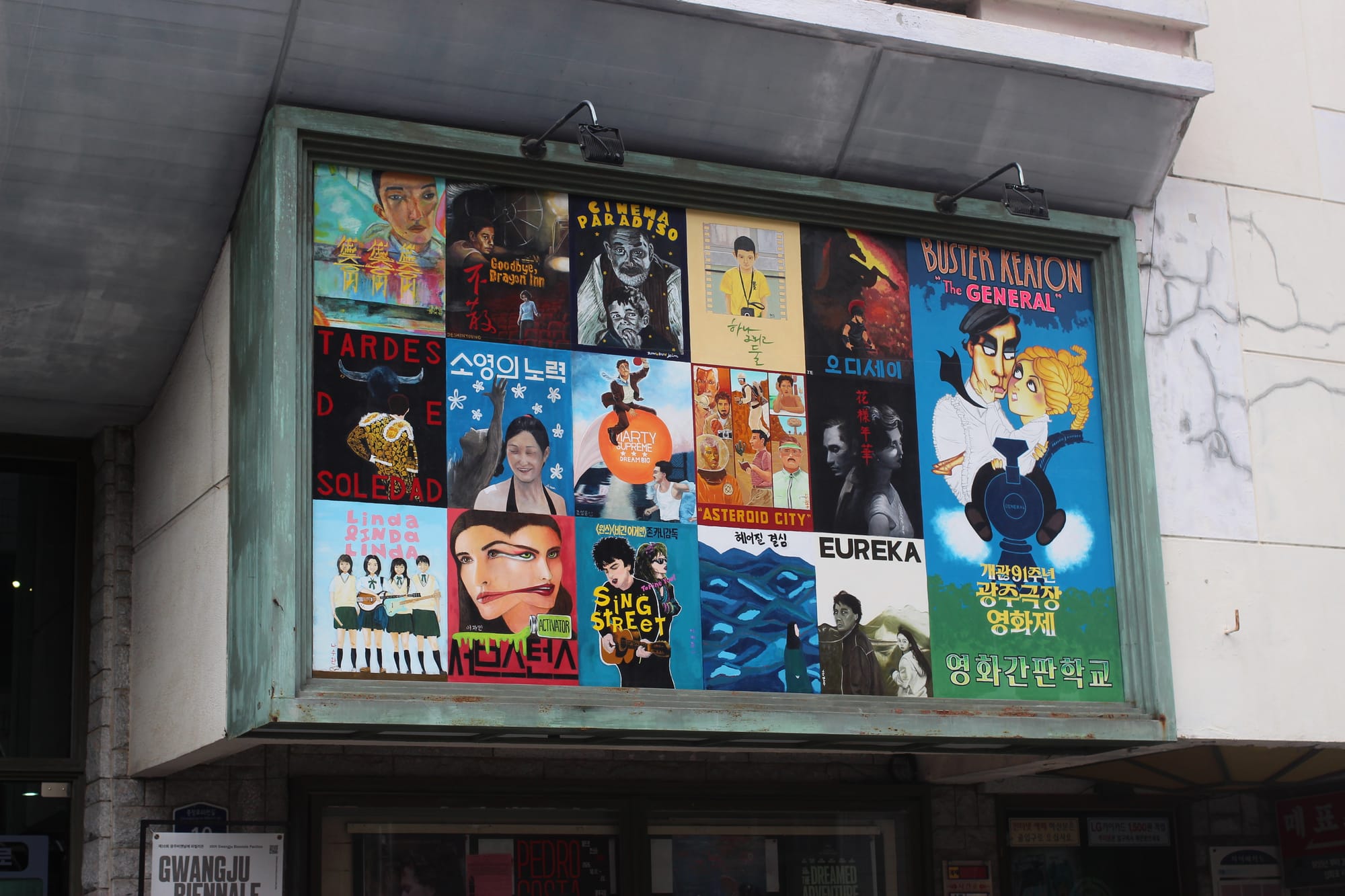
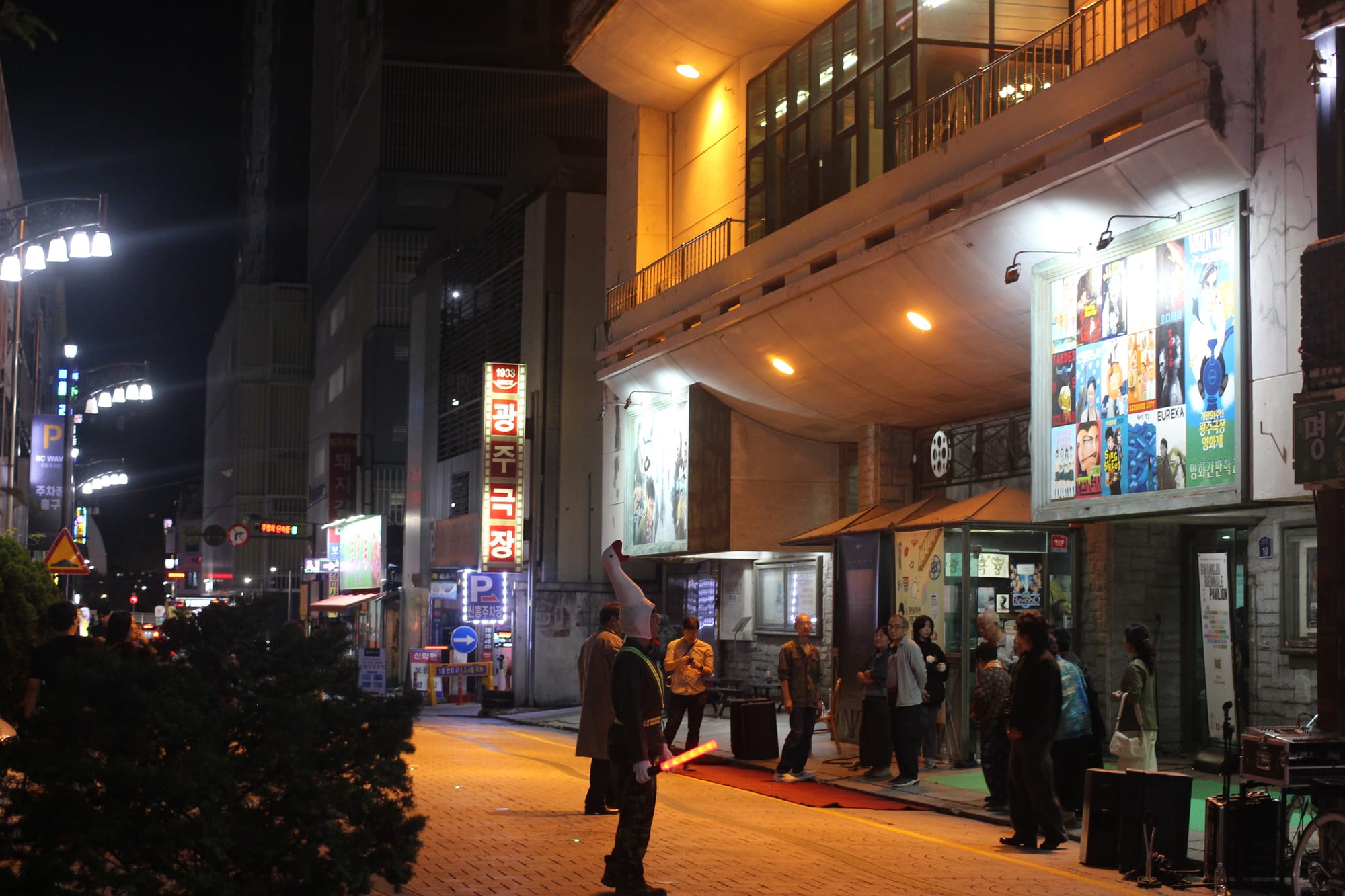
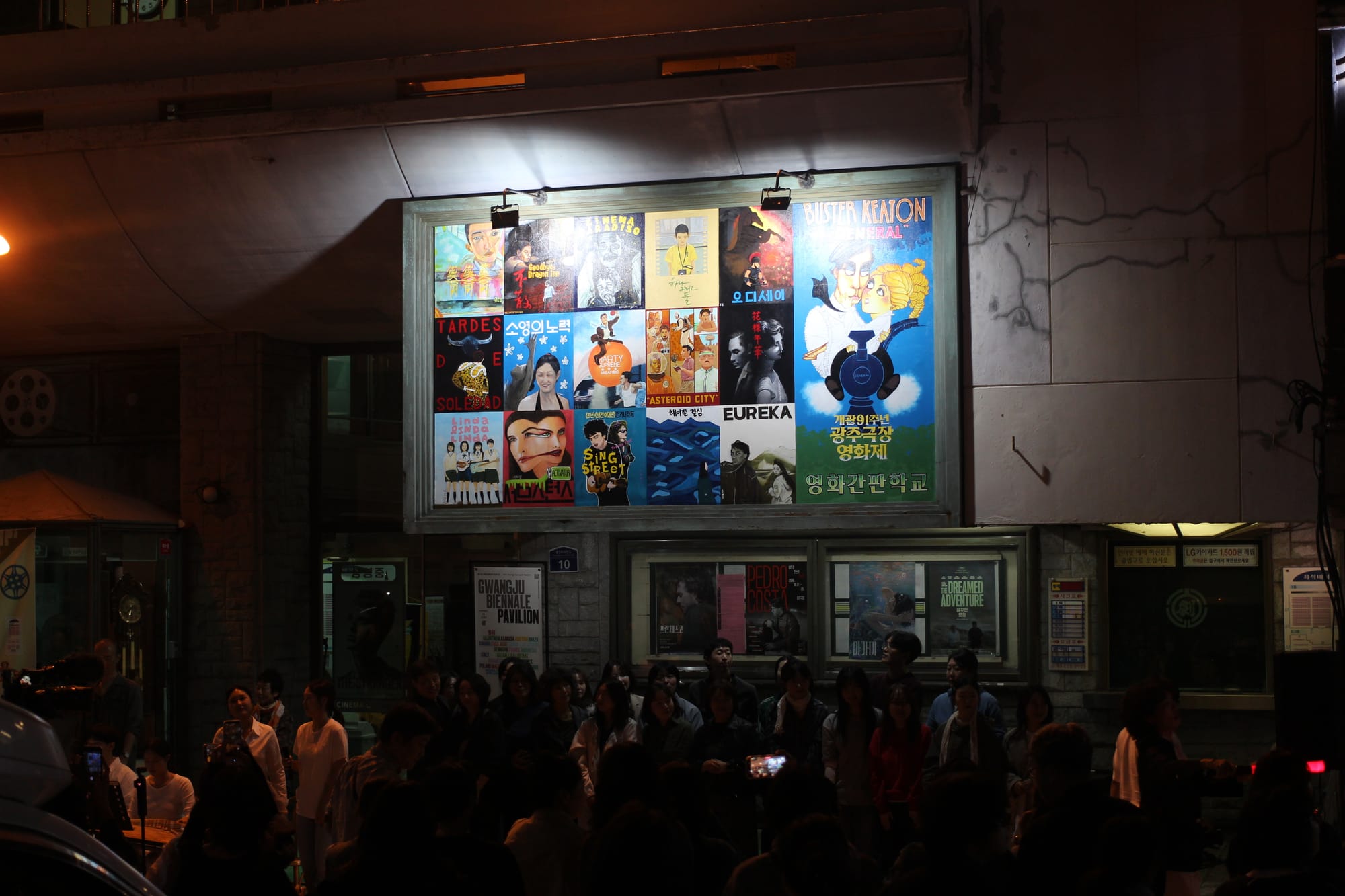
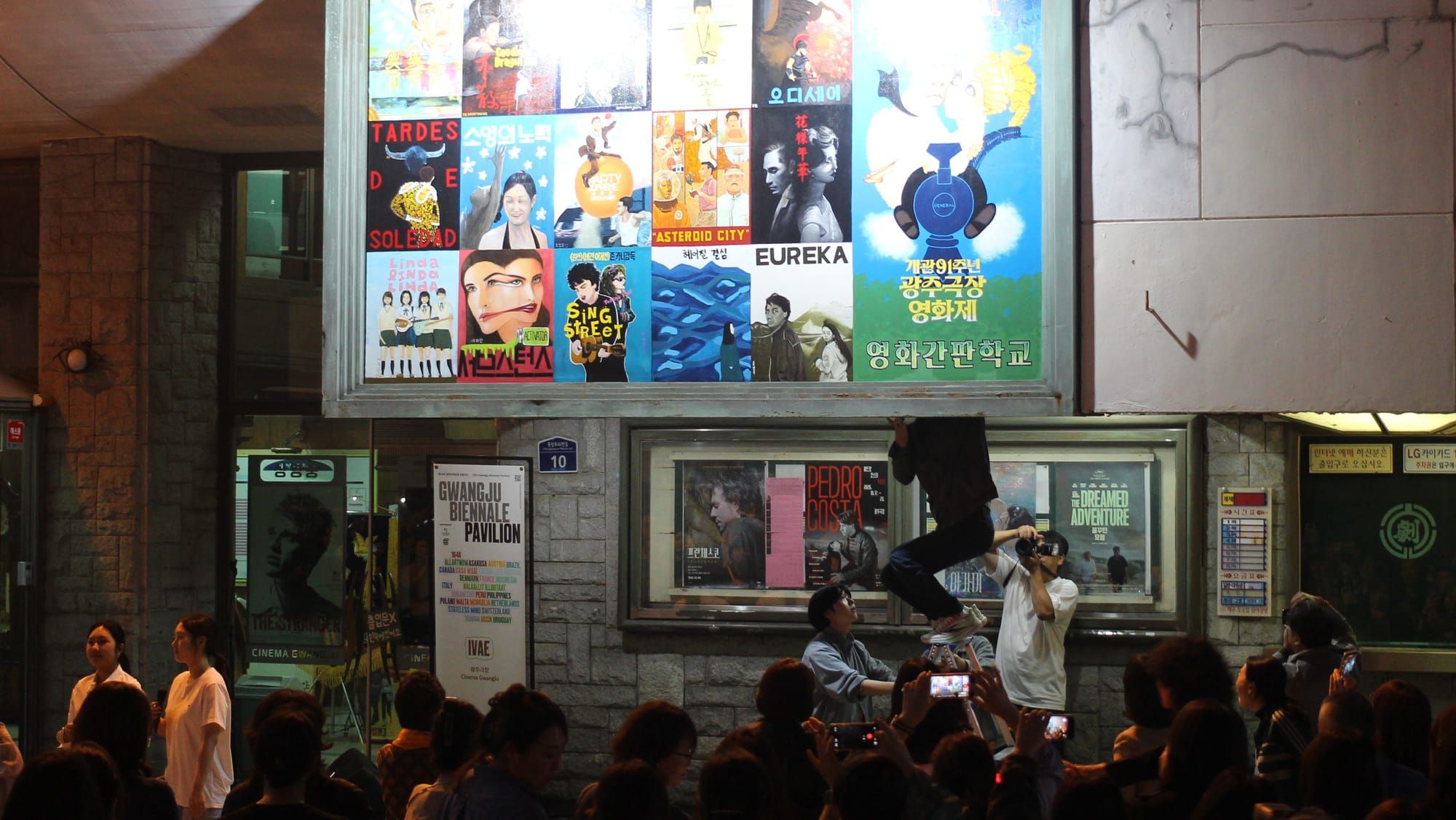
Within the exterior walls of the historic Gwangju Theater on Friday, two sets of hands were hard at work. They were installing a new signboard featuring movie poster images painted by hand.
Below, a crowd held their breath as musicians from Chonnam University played Korean instruments. It was the opening event for Gwangju Theater's annual film festival, with screenings and guest talks running through Nov. 15.
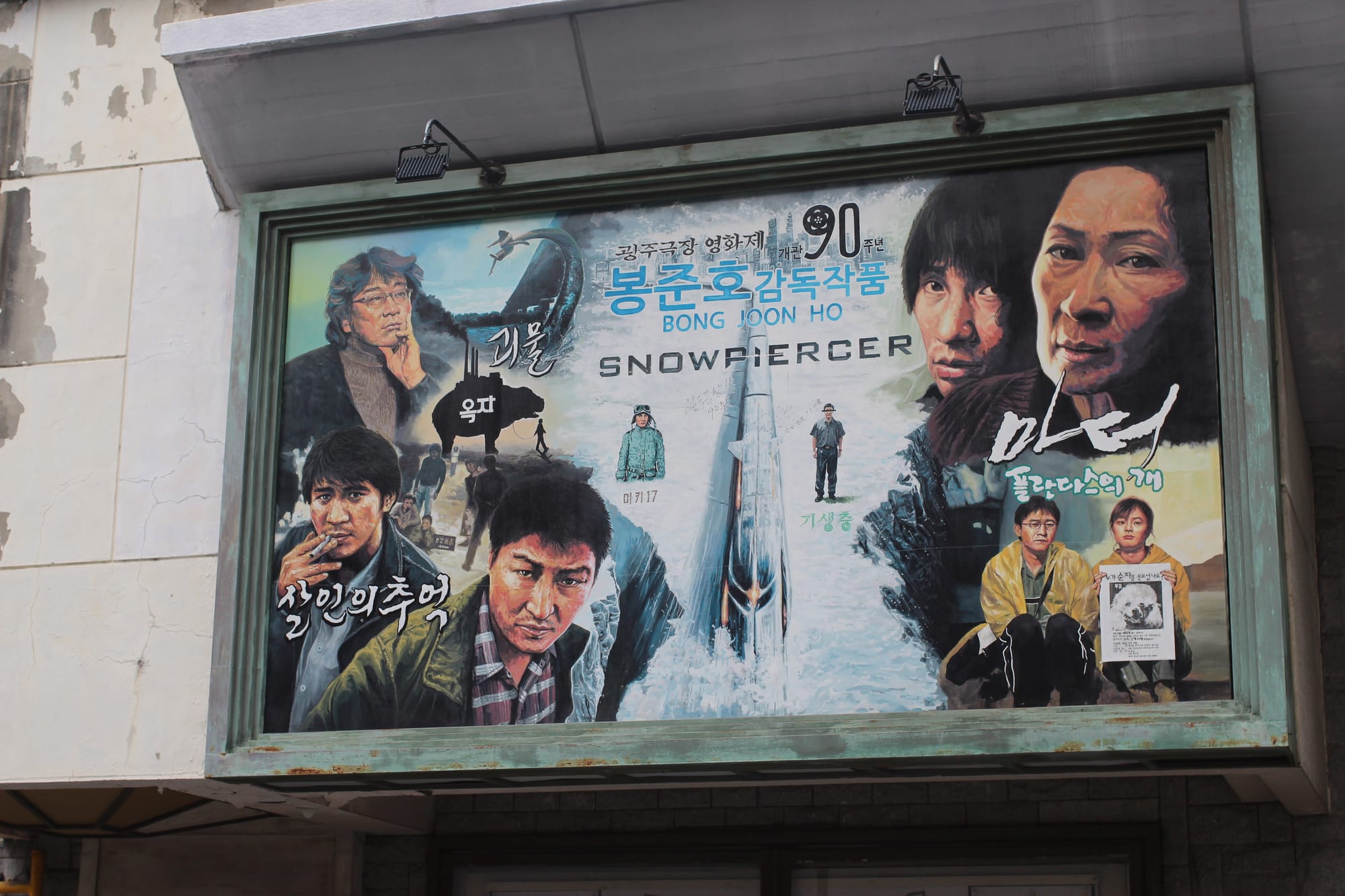
The theater's tradition of hand-painting movie signboards is kept alive through its "last sign-painter," 박태규 (Park Tae-gyu), who continues to paint film posters and teach students his craft every year.
Built in 1933, the theater is old enough to have lived through Japanese colonization. The single-screen theater includes a set of elevated seats separated from the rest of the audience; a few months ago, a moviegoer told me this was a remnant from the times of Japanese police surveillance.
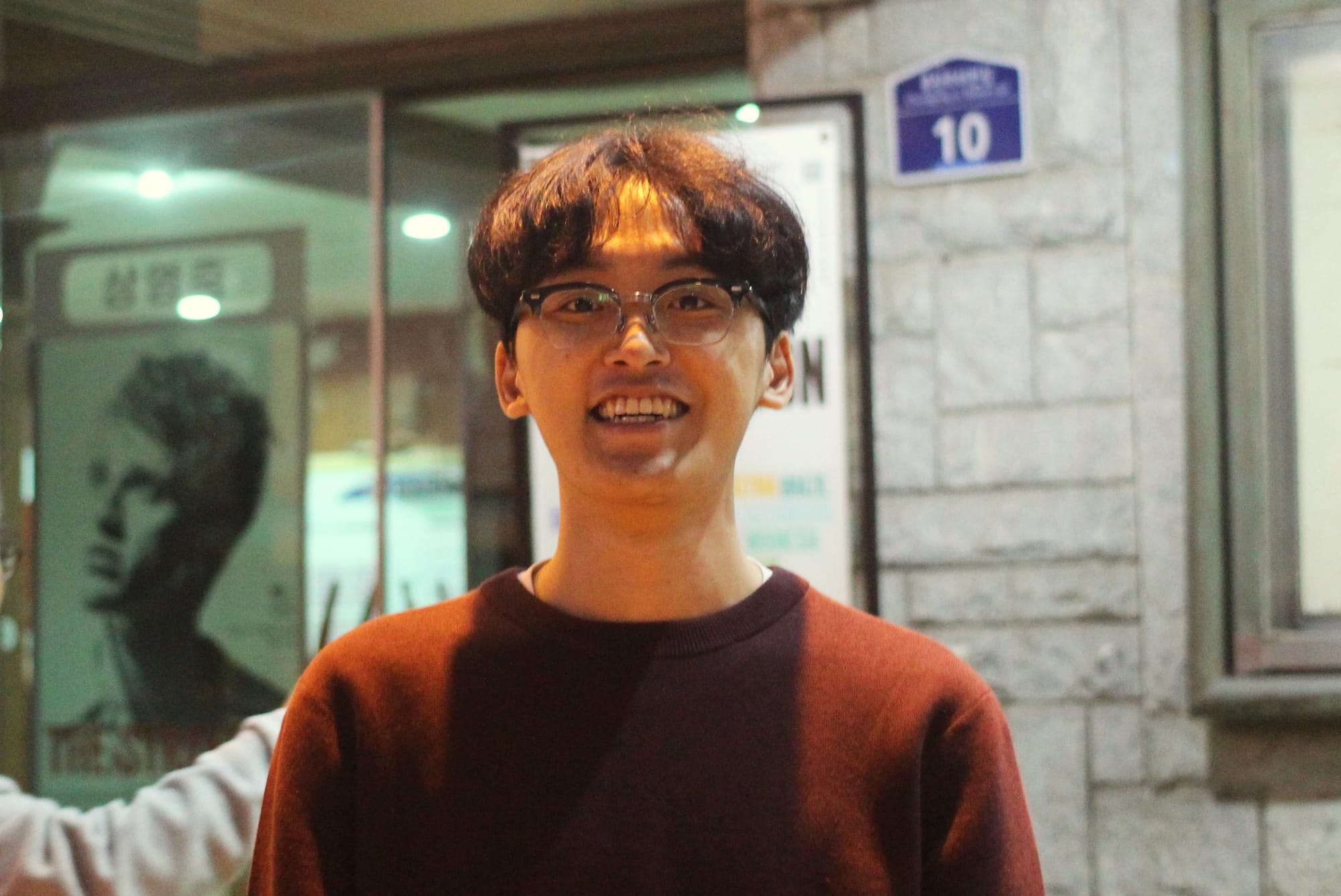
For 김경용 (Kim Kyeong-Yong), one of this year's sign-painting students, the connection to the theater is generational; it's a place his mother would frequent in her youth. While the old symbols of the city are disappearing, Gwangju Theater still stands. Watching films there is one way Kim can get a sense of the Gwangju his mother grew up in.
For the new signboard, Kim painted a poster from a movie by Spanish director Albert Serra called Tardes de Soledad, which he watched this past June. The story centers on bullfighting, a topic Kim says he didn't know much about before the film.
Another movie-poster-painter from this year's cohort, 김지은 (Kim Ji Eun), also illustrated a movie she saw this summer, 소영의노력 (Soyoung's Efforts), following main character Soyoung as she dreams of dancing on stage. Kim came to painting from a background of textile art, which she studied at Chosun University. "It was so much fun," she said of the signboard workshop.
I remember seeing the printed movie poster for Soyoung's Efforts this year as I passed back and forth by Gwangju Theater. Seeing the painted version, somewhat different but in the same iconic, dreamy blue, I relived memories of summer days through the lens of a stranger.
Watching the sign installation from a sidewalk ledge on the other side of the street, I felt like I was inside a film of my own. I was among a sea of people, all cheering for a giant analog event. The Chonnam University musicians started singing a version of Korean traditional song "Arirang" with lyrics about Gwangju Theater.
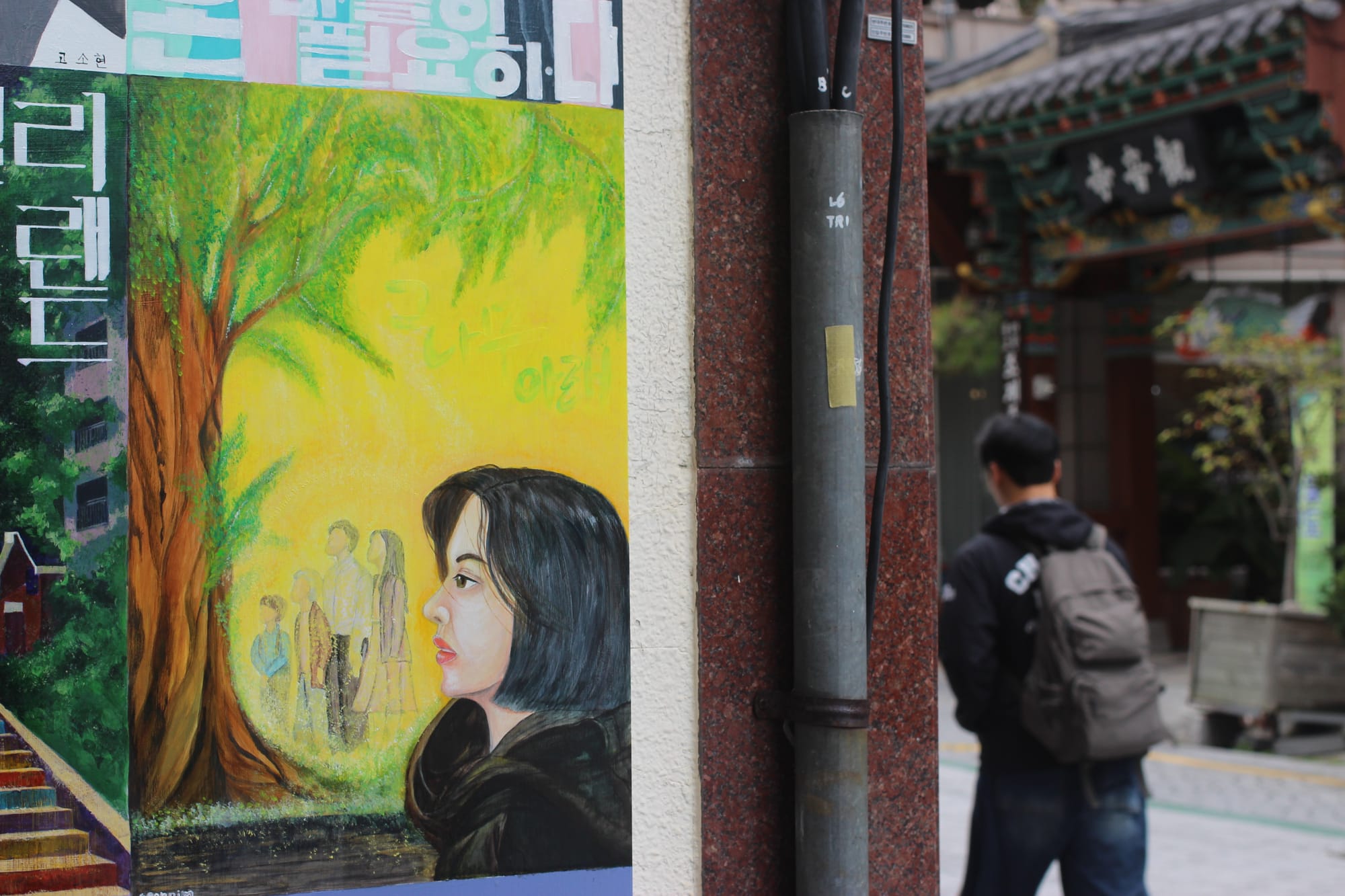
For community artist 김선임 (Kim Seonim), living in Gwangju is a movie with no script, but now with a poster and a title: "그 나무 아래" ("Beneath that Tree"). She had participated in a second signboard-painting project also unveiled that night.
This one featured made-up movie posters answering questions like, "What do you remember about growing up in Gwangju?" and "What do you hope to see in Gwangju's future?"
It was a project organized by Gwangju Biennale Pavilion team IVAE. Participants concentrated on past and future perspectives of the city and illustrated their ideas through fictional movie posters.
When Kim Seonim was young, she lived in the Yangrim neighborhood in Gwangju's South District. She remembers a large tree—perhaps a walnut tree—where she used to play with neighborhood kids. Now, that tree is gone.
Kim Seonim's dream for Gwangju's future is for its residents to be able to stay and even return after time away. Her hopes swirl under the recollection of that tree from her youth, where—at least in her imagined film—the citizens of Gwangju still gather.
Next year, she hopes to sign up for the regular Gwangju Theater sign-painting project, along with fellow painters who participated in the IVAE project.
I asked Kim Kyeong-Yong what his mother thinks about his part in Gwangju Theater's legacy of handmade movie poster paintings.
He paused; he hadn't told her yet. It was his first time painting, and he wanted to see how the poster turned out first.
"Now, I'm looking at it," he said, "And I think it turned out well."
Sign up here to get Gwangju Midbrow email updates delivered straight to your inbox.