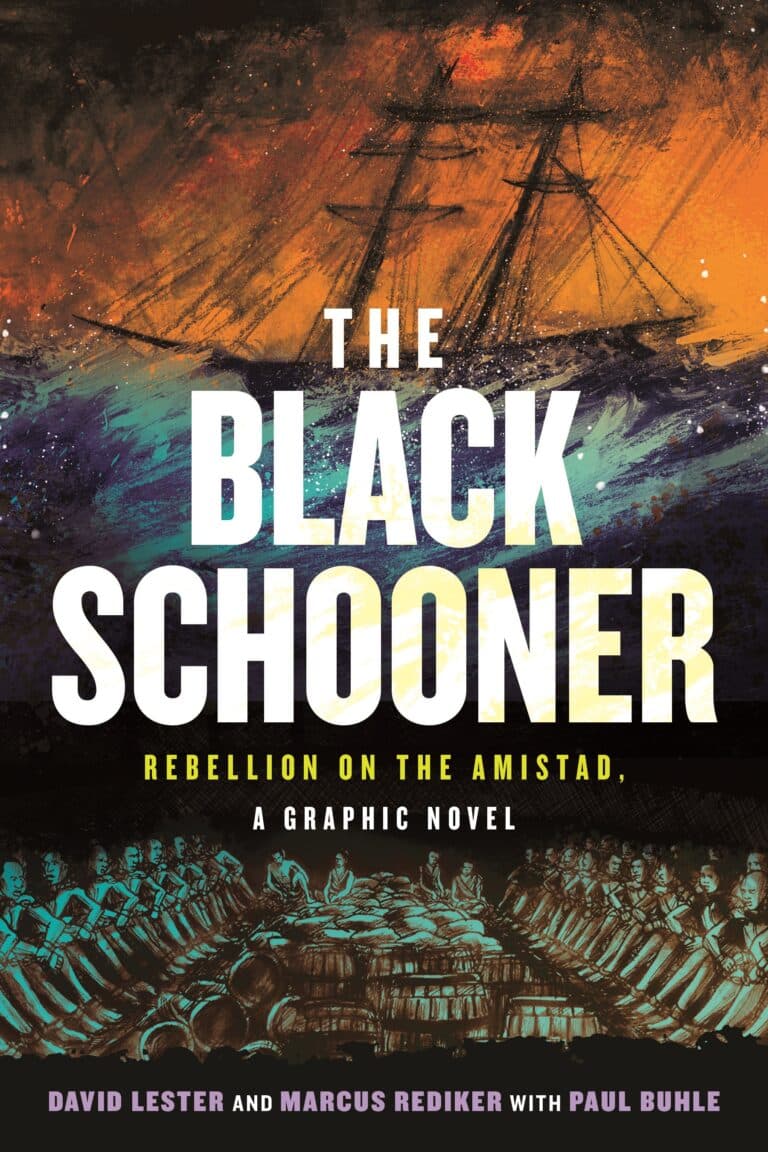
The Black Schooner: Rebellion On The Amistad
By David Lester and Marcus Rediker with Paul Buhle
Beacon Press
Locked up together in a New Haven jail, the Amistad captives weigh their options.
They need their abolitionist “white friends” to convince the Supreme Court to free them and find a way back home to Africa.
But the “white friends” are trying “to change our spirits,” one captive argues. They want to convert the Africans to believe in their god.
The captives’ leader, Cinque, delivers a verdict: “If we must speak ‘Christian,’ we will. Our beliefs will not change. We will go along, we will please our friends. But we will keep our eyes on our own freedom.”
That scene takes place on a three-panel page of a new graphic novel about one of New Haven’s most famous — and retold — stories: The trial, and eventual release, of the 53 kidnapped Africans who rebelled aboard the Amistad slave ship in 1839.
New Haven has embraced that story as a freedom triumph. Meanwhile, the story has gone through a series of retellings. The story’s focus originally highlighted the white abolitionists (including New Haven’s Roger Baldwin and former President John Quincy Adams) who embraced the captives’ cause during their New Haven incarceration and convinced the Supreme Court to free them. In recent years, historians have worked to center the story of revolt leader Cinque/Sengbe Pieh and his fellow captives who seized control of the Amistad schooner, then pressed their case for freedom.
The new graphic novel moves that process further in a mode aimed at not just telling the story in a new way but reaching new readers.
An academic named Marcus Rediker teamed up with illustrator David Lester to produce the graphic novel. They developed it based on a 314-page scholarly traditional-text book Rediker published in 2013 based on five years of deep-dive archival primary-source research into the Amistad affair.
In that and his other books, Rediker, a University of Pittsburgh history professor, practices “history from below”, aka retelling stories from the perspective of people who didn’t have the power (and therefore the mic) but who played crucial roles in shaping what happened. Since 2020, Rediker and Lester have teamed up to translate Rediker’s academic works into the graphic novel format, including the new take on the Amistad rebellion.
“A lot of people will not necessarily read a dense history book of 400 pages,” Lester said in a joint appearance Tuesday with Rediker on WNHH FM’s “Dateline New Haven” program.
The graphic novel format “can communicate for people who find history books intimidating or perhaps, you know, a bit boring” as well as “students, who we hear from teachers are increasingly less likely to read longer texts like a full-length book, but are very sophisticated when it comes to text and images.”
Lester and Rediker went through 11 drafts of the script over four months. They faced a challenge: Making the story fresh and meaningful without reducing it to Amistad For Dummies.
They avoided that fate by picking key moments to explore with depth and nuance. Like a movie director pruning hours of footage, they made each scene and dialogue count.
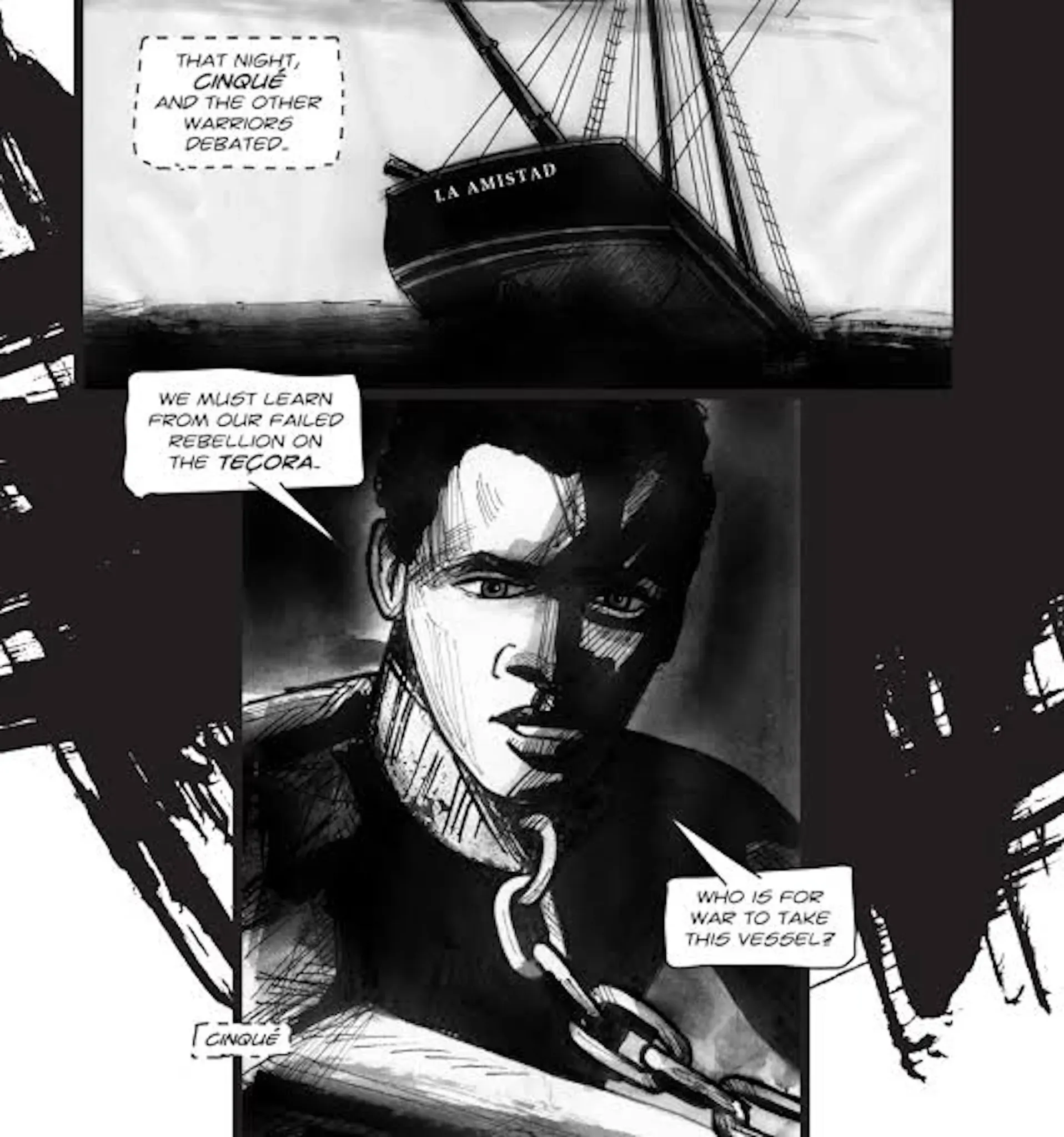
One example is the debate and the planning preceding the revolt, including the key discovery by 10-year-old Margru of cane knives in cargo. Another example is the above-mentioned debate over how to respond to the mixed motives of their abolitionist allies.
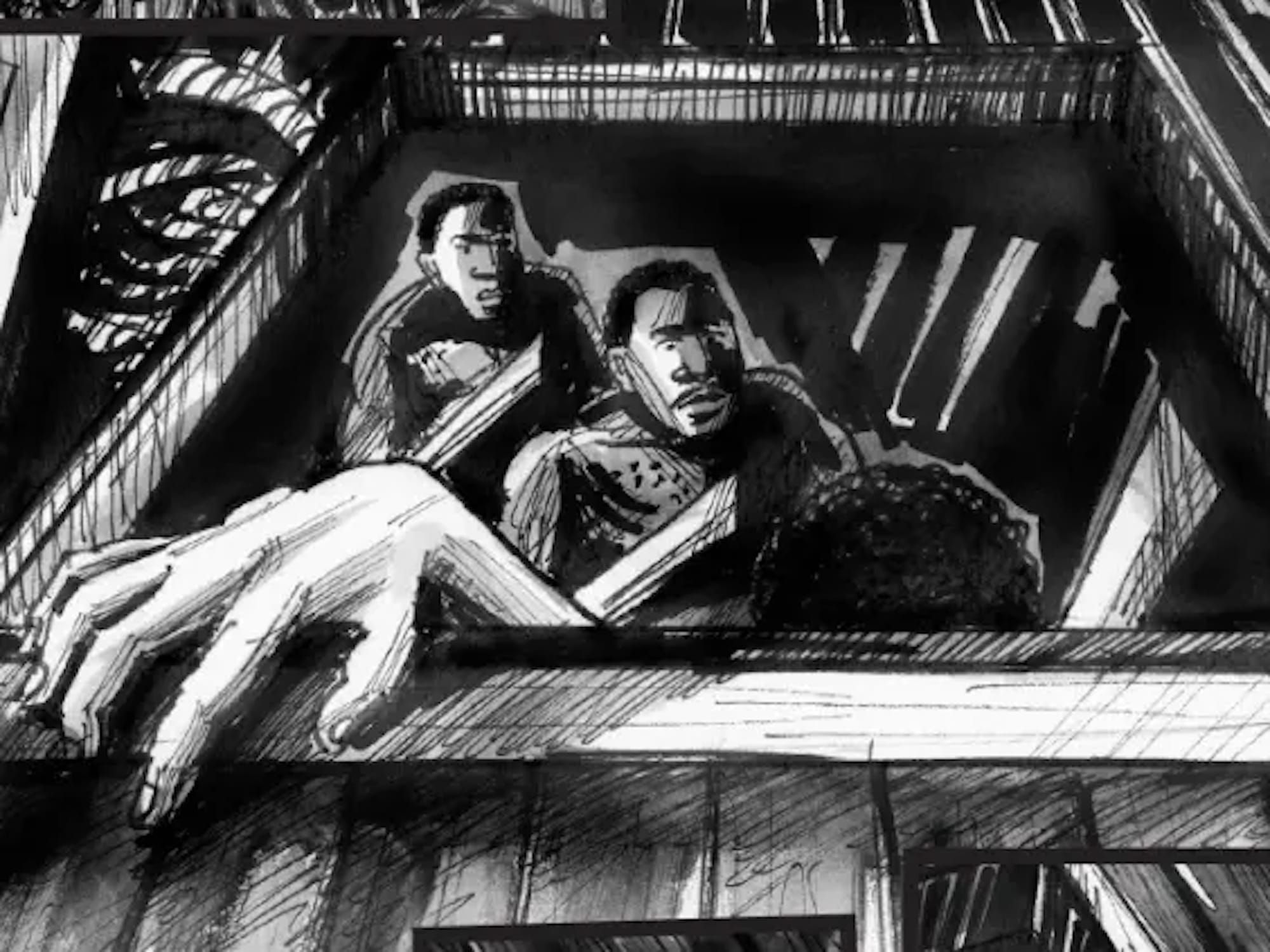
Besides delivering a more digestible version of a story, the graphic format can heighten the sense of drama. Art Spiegelman produced a newly devastating vision of the Holocaust with Maus; Marjane Satrapi’s Persepolis uniquely captured the personal toll of the 1979 Iranian Revolution with a mix of evocative drawing and well-chosen dialogue. In keeping with that genre, I found the wordless passages of The Black Schooner to be some of the most powerful, such as when the captives break their chains and crawl to the deck, and when they battle the schooners’ slavers.
One challenge Rediker and Lester met was preserving a sense of historical context. In a long-format text nonfiction book, the author can devote pages or chapters to detailed background of, say, the slave trade or American political debates or the laws relevant to the case. Rediker and Lester chose pro-slavery U.S. Sen. John Calhoun as the recurring stand-in to explain that context: Calhoun pops up at key moments to deliver some of the arguments used to protect slavery and slave owners.
Also like motion-picture screenwriters, Rediker and Lester wisely narrowed the cast of characters so they have room to develop. They chose four captives as main characters. We follow the group as they figure out whom to trust. Can they trust the blacksmith Burna, who speaks Spanish and English? Did he learn the languages from slave traders? We watch them being paraded around as objects of public fascination in order to build support (and money to return home); we can feel Cinque’s exasperated declaration that “We are not showmen; we are warriors.”
The Amistad story is worth telling and retelling in new ways. At a time of civil rights entrenchment and federal efforts to erase history, the story offers evidence that racial justice can prevail against long odds. In The Black Schooner, Lester and Rediker prove there’s always new power and inspiration to be mined from our oldest stories.
Click on the below video to watch the full conversation about The Black Schooner with author Marcus Rediker and illustrator David Lester. Click here to subscribe or here to listen to other episodes of “Dateline New Haven.” Click here to download the WNHH FM app.