Taiwan Pavilion
16th Gwangju Biennale: You Must Change Your Life
Sept. 5 — Nov. 15, 2026
(Jisu Sheen recently moved from New Haven to Gwangju, South Korea, where she’s covering local arts and culture for the New Haven Independent and Midbrow.)
This week is crunch time for artists participating in the 16th Gwangju Biennale, an international art festival opening Sept. 5. The multi-exhibit, multi-month gathering, featuring sculpture, media art, installations, and more, has been a global point of interest for the contemporary art world since its founding in the '90s.
Aside from the main exhibition, there also exhibits put together by institution- and country-level teams called "Pavilions": the Brazil Pavilion, for example, or the Malta Pavilion.
One such team has already unveiled a statement piece ahead of opening day: a model of democracy in action.
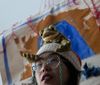
They are the artists and curator behind the Taiwan Pavilion — at least that's the name they signed up under. Until Tuesday, however, it hasn't been the name on the festival materials.
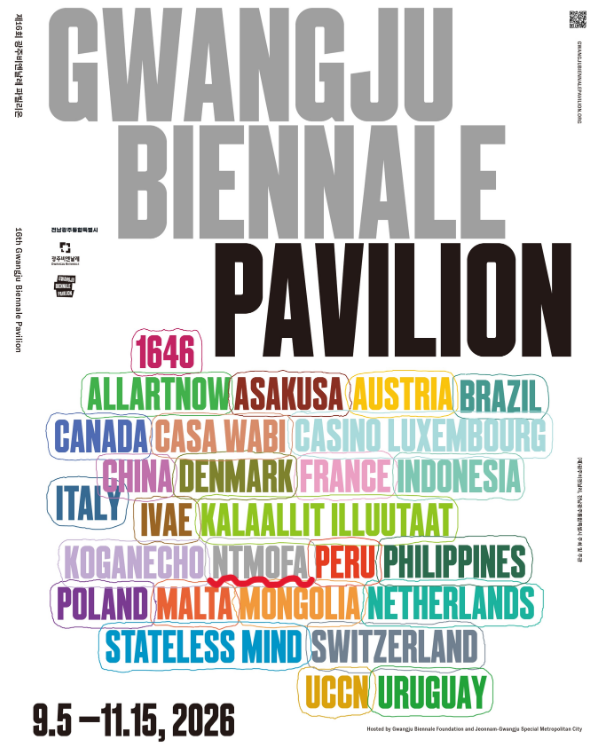
After initially accepting the proposal for the Taiwan Pavilion, the Gwangju Biennale then used the name NTMoFA Pavilion, the acronym for the National Taiwan Museum of Fine Arts, on its official poster.
According to the Taiwan Pavilion team, this wasn't a one-off. It was the outcome of a prolonged negotiation standstill.
They wrote in a statement published Aug. 15 that the Gwangju Biennale Foundation "unilaterally" renamed their exhibition without their consent, and that it "disregarded repeated objections and attempts at negotiation."
By changing the "Taiwan Pavilion" name to "NTMoFA Pavilion," Gwangju Biennale was presenting the group as an institutional participant instead of a national one.
Why would an international organization treat Taiwan differently from the other participating countries? The context on many artists' minds is: the People's Republic of China does not recognize Taiwan as a sovereign nation, considering it instead a province of the PRC.
Chang Wen-Hsuan, an artist from the Taiwan Pavilion, shared with me in an email Tuesday, "In view of the political tension between Taiwan and China, I personally read the naming dispute as part of the PRC’s escalating political control beyond its national borders. But in the whole dispute, the PRC remains the elephant in the room."
The importance of self-determination hits close to home for artists working in Gwangju, a city known for its democratic uprising in 1980.
"We believe that a biennale whose historical foundations are rooted in democracy, human rights, and the spirit of Gwangju has a responsibility to explain why participants’ right to name and identify themselves must be subjected to political restrictions," the Taiwan Pavilion artists write.
Their full message can be found below:
Taiwan Pavilion statementDownload
On Tuesday, amid mounting pressure including statements from Taiwan's Ministry of Culture, the Biennale announced it will restore the Taiwan Pavilion name.
The Gwangju Biennale has claimed that the Taiwan Pavilion artists applied as an institution, and that this is why they are listed as such on the festival materials. Taiwan's Ministry of Culture disputes this, stating that "'Taiwan Pavilion' was clearly labeled both in the proposal and in subsequent communications."
So the question remains: how did the name change happen?
If the naming issue is settled without a reason (that holds up under scrutiny), it could serve a successful test run in censorship: an international festival can make a decision almost guaranteed to prompt government-level pushback, as long as they chalk it up to an error. They don't even need to prove it. We are seeing right now what the public will accept.
For Chang, on a personal level, "I think what matters more than reinstating the name or receiving a formal apology is for GB to acknowledge that the naming dispute constitutes political censorship, and to make its decision-making process transparent to the public."
Then she made a prediction that seems to have borne out so far, writing, "It is highly possible that the dispute will be 'resolved' by citing an administrative error, thereby veiling the real concern behind the erasure of Taiwan."
The good thing about being an artist in a 1.) multicultural festival that is 2.) set in a city known for its activism — two traits important to Gwangju Biennale's identity — is the ability to gain friends in the fight.
The Taiwan Pavilion artists penned an open letter that has received signatures from other Pavilion artists, curators, and art workers. In their post of the letter and 47 (so far) signatories on Tuesday, the Taiwan Pavilion also details suppression from their exhibition venue, Gwangju's National Asian Culture Center (ACC), which "has, since August 18, repeatedly refused to grant the Taiwan Pavilion team access to the exhibition venue as promised."
The obstruction has put the team seven days behind schedule.
One day after the letter was published online, the Gwangju Biennale stated the ACC is now granting access that had been "on hold."
In the process of writing their statements, the Taiwan Pavilion artists have had to work together to decide on the wording that best captures what they are going through. They planned meetings and exercised consensus. Chang likened it to "an intensive course in practising democracy on a small scale."
"It might sound strange, but the whole process has been exhausting and heartwarming at the same time," Chang wrote.
She said she is learning that "at a time when we may feel there is no way to fight against big powers, be they states, corporations, or often distorted ideologies, a committed civil society formed across national borders can still exert pressure on what may appear to be the total control of an authority."
"Freedom and democracy can only be with the people and within the people."
Sign up here to get Gwangju Midbrow email updates delivered straight to your inbox.


