
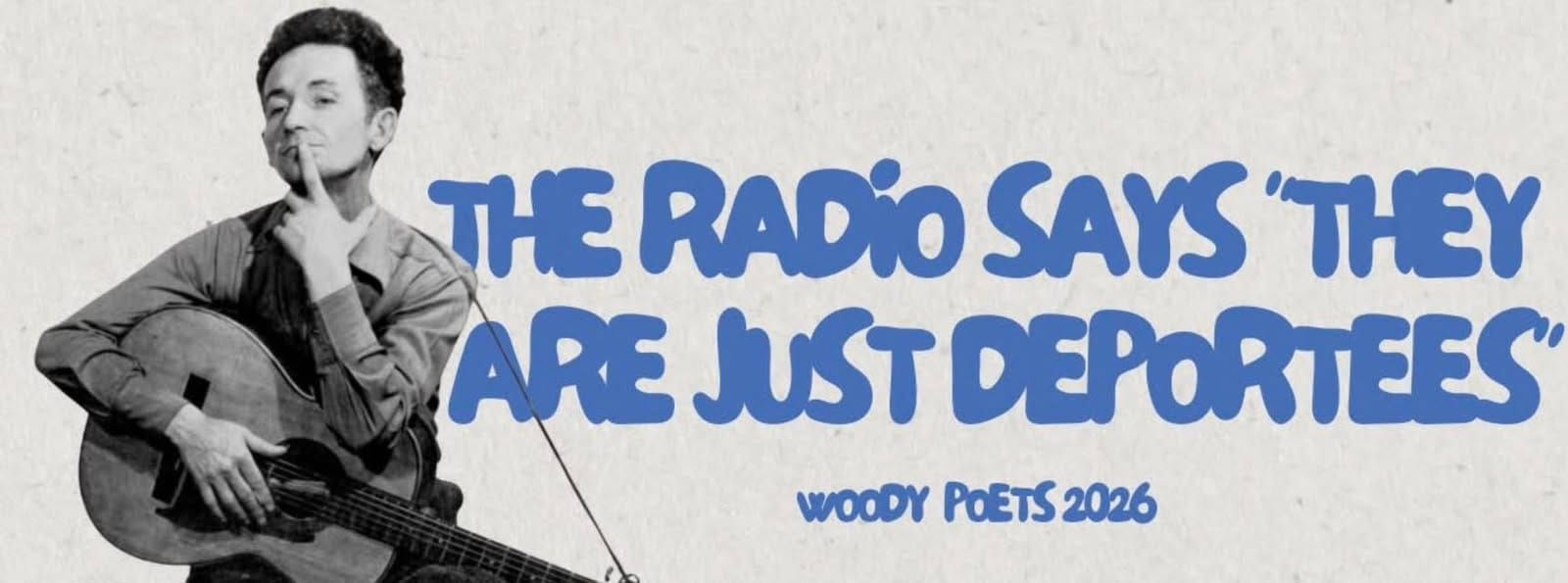
Woody Poets 2026
Woody Guthrie Center
July 12, 2026
The culmination of the Woody Poets 2026 reading series—an annual event that toured to Oklahoma City and Okemah before landing in Tulsa last Sunday—was well-attended, emotional, and all too urgent. Centered around this year’s series theme, “Deportee,” each of the 12 poets who read their work last weekend at the Woody Guthrie Center Theater pulled from images of language, movement, and violence.
“Deportee,” also known as “Plane Wreck at Los Gatos,” was Woody Guthrie’s written response to the lack of care from American media in relation to the 1948 plane crash that killed 28 migrant farm workers in Los Gatos, California. Guthrie’s frustration and anger at American media for not naming the victims in its coverage combines his deep-seated support for labor movements with his passion for racial justice. In its 19th official year of convening, the Woody Poets series reflected on these ideas within a current wave of violent anti-immigration action perpetrated by the American government.
With each poetry reading I attend, I expect to buy into an intense earnestness that lets me connect with the poets. At this one in particular, each reader performed their work with confidence and effortlessly invited audience connection. By the end of it, 12 poets and a little over an hour later, I felt like I had been given a baptism in the poetic practice of communal grieving. It was heavy, but out of respect for the large number of readers, the poets kept their work brief and kept the energy going for the next poet.
The reading shined when it balanced Woody Guthrie's trademark satirical political humor with the emotional weight of our current reality. I personally yearned for a perspective from Latin American poets within the lineup, considering the intent behind the series’ theme. Where that was lacking, there was still a deep sympathetic lens to these workers, unnamed in original reports, and plenty of connections to the current state of ICE and their mass deportation efforts.
Opening with homages to Guthrie and his worldview, with poets referencing Oklahoma, labor, and community, the reading continued with poems that shifted the lens towards injustices committed against Americans, citizens or not. Within their work, Paul Austin and Linda Neil Reising focused on the power of names, given or taken away. I especially appreciated poets like Jordan Wright, Robin Wheeler, and Ken Hada, who drew on themes of labor and workers as it related to their experiences—and a community experience—of labor and union organizing.
Many poets, such as Rilla Askew, named and honored those killed by ICE in the last year, which included Lorenzo Salgado Araujo, a Houston man killed on July 7, 2026. Were these poems performed not 24 hours later, they would have included the as-yet-unnamed Colombian man fatally shot by ICE agents in Maine on July 13. The sick irony of this man being unnamed, a day after hearing poem after poem about the power of names, is not lost on me.
There are very real and high stakes at play within these conversations. Our community members and neighbors are being surveilled at a disproportionate rate and poets and artists have an obligation, especially here and especially now, to confront these violences.
I was listening to these poems in the Woody Guthrie Center while ICE is using David L. Moss, less than half a mile away, to hold their detainees. When Oklahoma’s own Markwayne Mullin is the mouthpiece of DHS, waving away these murders, Oklahomans owe it to ourselves to combat inaction in any way we can. Far from being futile, a poetry reading like this one provides not just cosmic relief for our collective weariness, but a vital act of resistance.


