
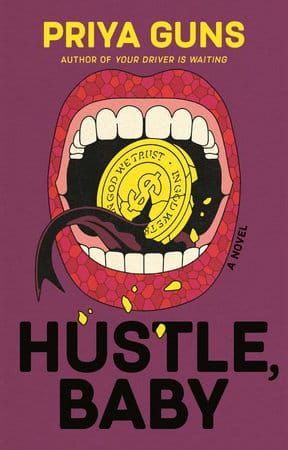
Hustle, Baby
By Priya Guns
Doubleday
From snacks to cans of cold coffee to elicit DVDs, Dilo sells everything a high schooler could need out of her high school locker. She’s known to her peers as Hustle Baby, and she’s hustling to make ends meet for her family who fled Sri Lanka during the civil war. They’re living hand to mouth because their rags-to-riches fantasy was just that, a fantasy.
In Priya Guns’ most recent novel, “Hustle, Baby,” Dilo’s family is in a bind. It’s October 2000, and they need to come up with $5,000 by the middle of December so that they don't get evicted. Dilo’s mom, Mary, and aunt Anji were barely making ends meet as it was. With the added pressure, desperation sets in. So when they meet Mark, a daytrader promising at least a 10 percent return on any investment, it feels like a gift from heaven … until it’s not.
Guns’ novel is ambitious. She gives Anji and Mary interesting back stories which are mostly left unexplored in the text of the book. They were freedom fighters. They probably had to live through some really horrific stuff before they could be broke and hustling in Toronto. Guns has crafted a novel about refugees that’s not primarily about the trauma of war or trouble acclimating to a new culture.
Instead, “Hustle, Baby” reminds us that sometimes the "happily ever after" of getting settled into a new country is just the beginning. The two main characters, Anji and Dilo, are both messy. Anji makes questionable romantic decisions that make the family’s predicament even more complicated. Dilo is suspended from school for using the r-slur in an essay she wrote and doubling down on it when confronted. Then she’s talking to some older guy she met on an internet chatroom which is intercut throughout the book. Dilo is exceptionally resourceful, to the point that it can feel like she’s parenting Mary and Anji sometimes. She’s the one who’s most concerned about the money, and it almost feels like she’s been parentified to try to keep her family together. There are no quietly hard-working adults with no personality in this storyline, and that’s refreshing.
Despite everything going on with Dilo and Mark’s promises of riches, these plot-y elements almost feel like a background to what is actually driving the book: the relationships between these women and what they’re willing to do to survive. The beginning of the book can feel slow as Guns walks the reader through character development and introductions. Perhaps it’s a book that is best read cold rather than scanning a blurb and getting almost 100 pages in and wondering when, if ever, the Mark who seems so essential to the plot will appear.
Nevertheless, “Hustle, Baby” is an enjoyable and complex exploration of desperation, rage and yes, hustle.


