
Sea Glass
City Gallery
New Haven
Through Aug. 1
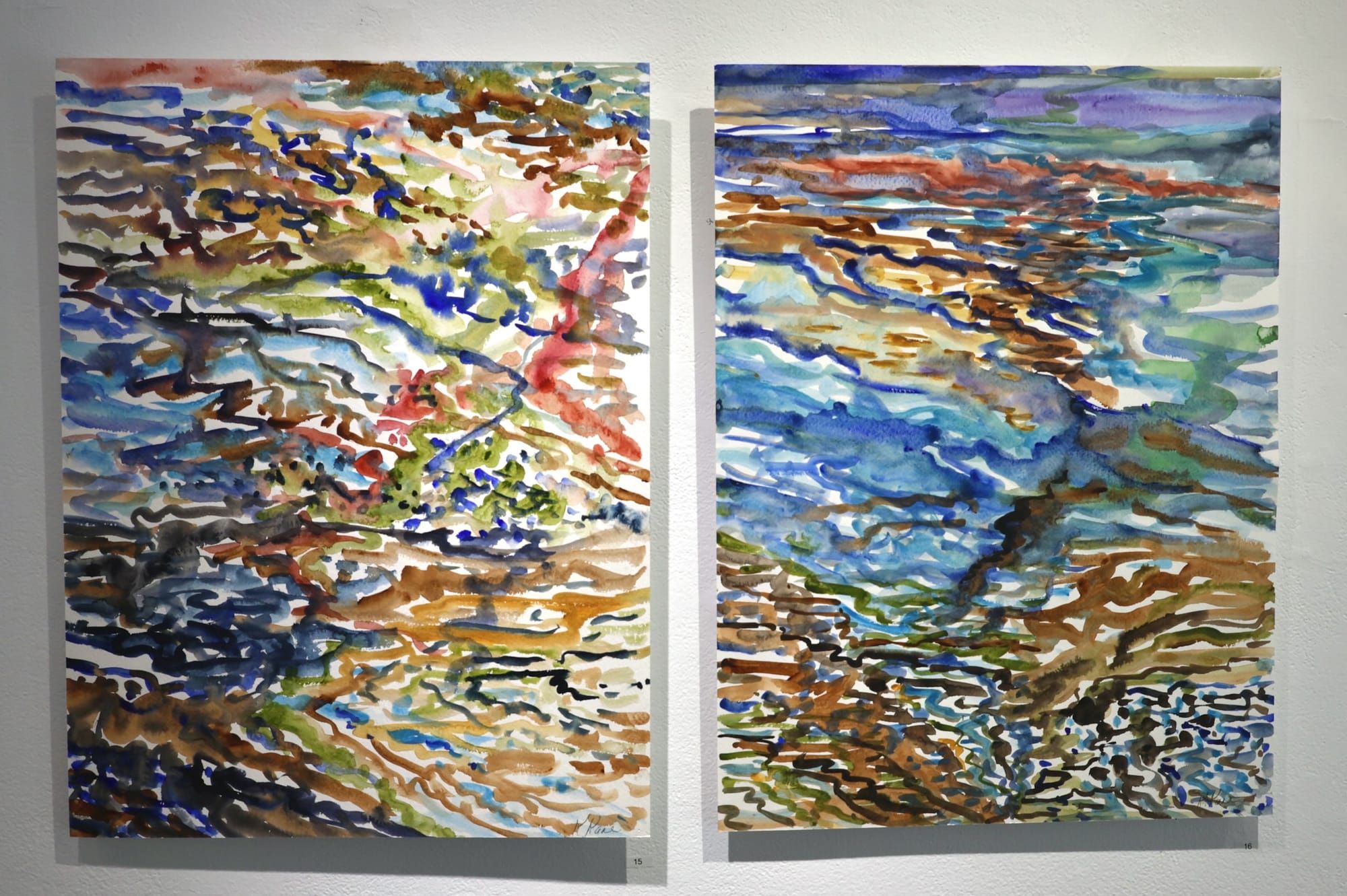
Kathy Kane's pair of paintings, Tidal Rush and Shimmer, hang close enough together on the wall of City Gallery that they can be read as flowing into one another, part of the same body of water. Kane's energetic brushstrokes convey a sense of constant motion, but, depriving the viewer of scale, she doesn't let the mind settle in one place. They could be close-ups of a brook babbling over pebbles. They could also be showing us a stretch of sea whipped by wind. From the human perspective, one is serene, the other dangerous; it's just a question of how big the waves are, and how big we are. But it's all the same to the water.
Kane's watercolors are part of Sea Glass, a show at City Gallery on Upper State running now through Aug. 1 and featuring interpretations of water by Kane and fellow artists Roberta Friedman, Rita Hannafin, and Sheila Kaczmarek, across the media of painting, sculpture, and fiber arts. "Shards of glass, mellowed by relentless pressure from ocean and sand, wash up on beaches all over the world. Tiny slivers transformed into smooth treasures, jewels of nature. How many hours have we spent walking along the ocean's edge to claim even one small prize?" an accompanying note states. "Artists too, weathered but wiser, see beauty where others don't, color more vividly. And learn to accept the gray. Artists work within their own pressure and turmoil to help the rest of us make sense of the world. We understand that creativity works from within, and like sea glass, we eventually produce our own gems."
The note gets at the way that, for each of the artists, the theme has two layers. There's the wavering, mesmerizing, ever-changing surface, and then there's what moves beneath it, sometimes in sight, sometimes invisible, but there nonetheless. It all affects us, sometimes in the moment, sometimes in ways we don't understand until later.
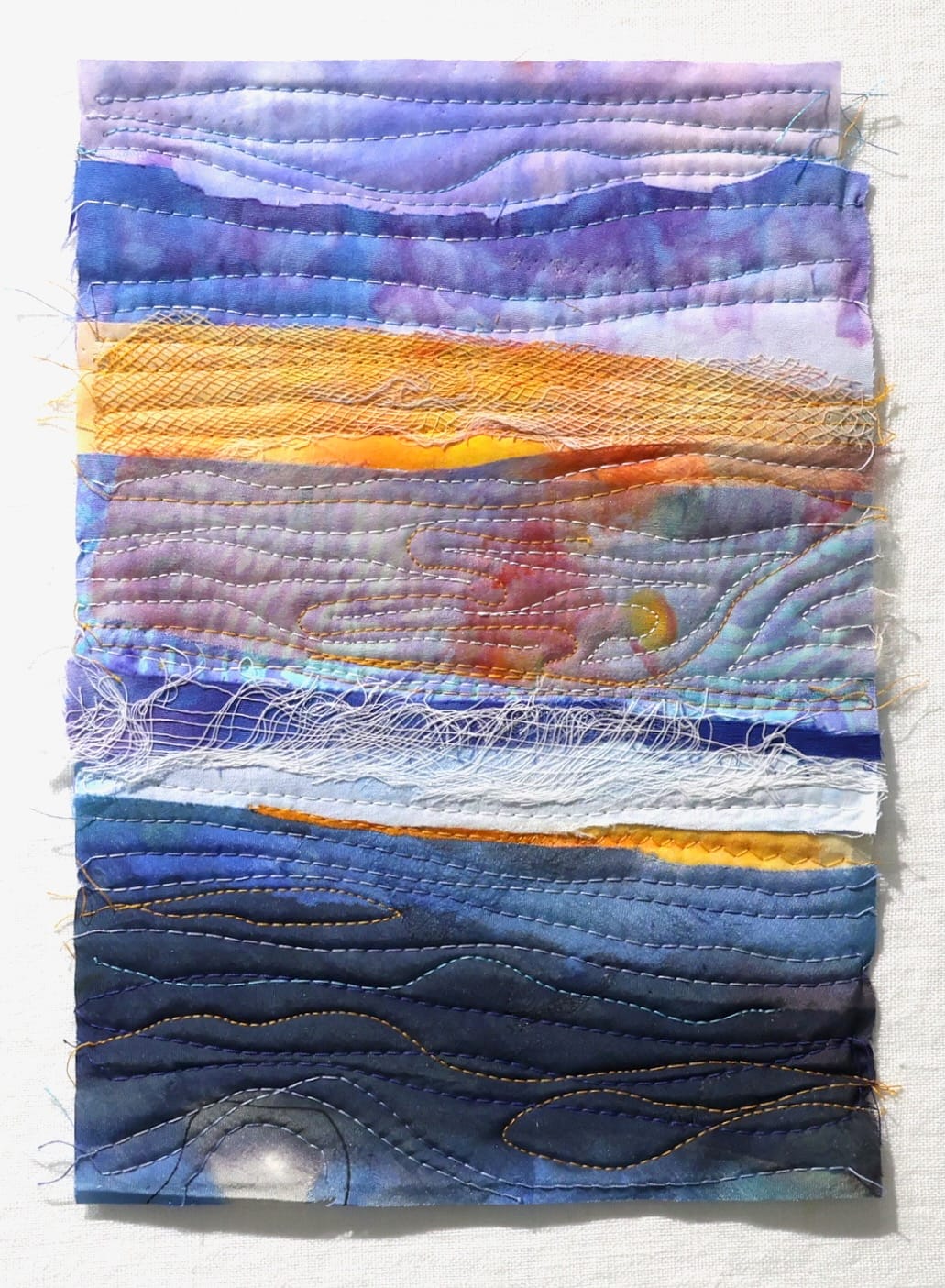
Where Kane uses watercolors, Rita Hannafin deploys a deft mix of dyes, stitches, and frays to connect with the viewer. The colors, taken on their own, lean toward being rather soothing, as one hue blends into another with ease. The stitching and textures work at cross purposes with that, insisting on sharpness and direction. The title implies that the landscape itself feels settled, but that doesn't mean the mind of the viewer, or the artist, is. In that sense, Hannafin's work conveys acknowledgement and solace.
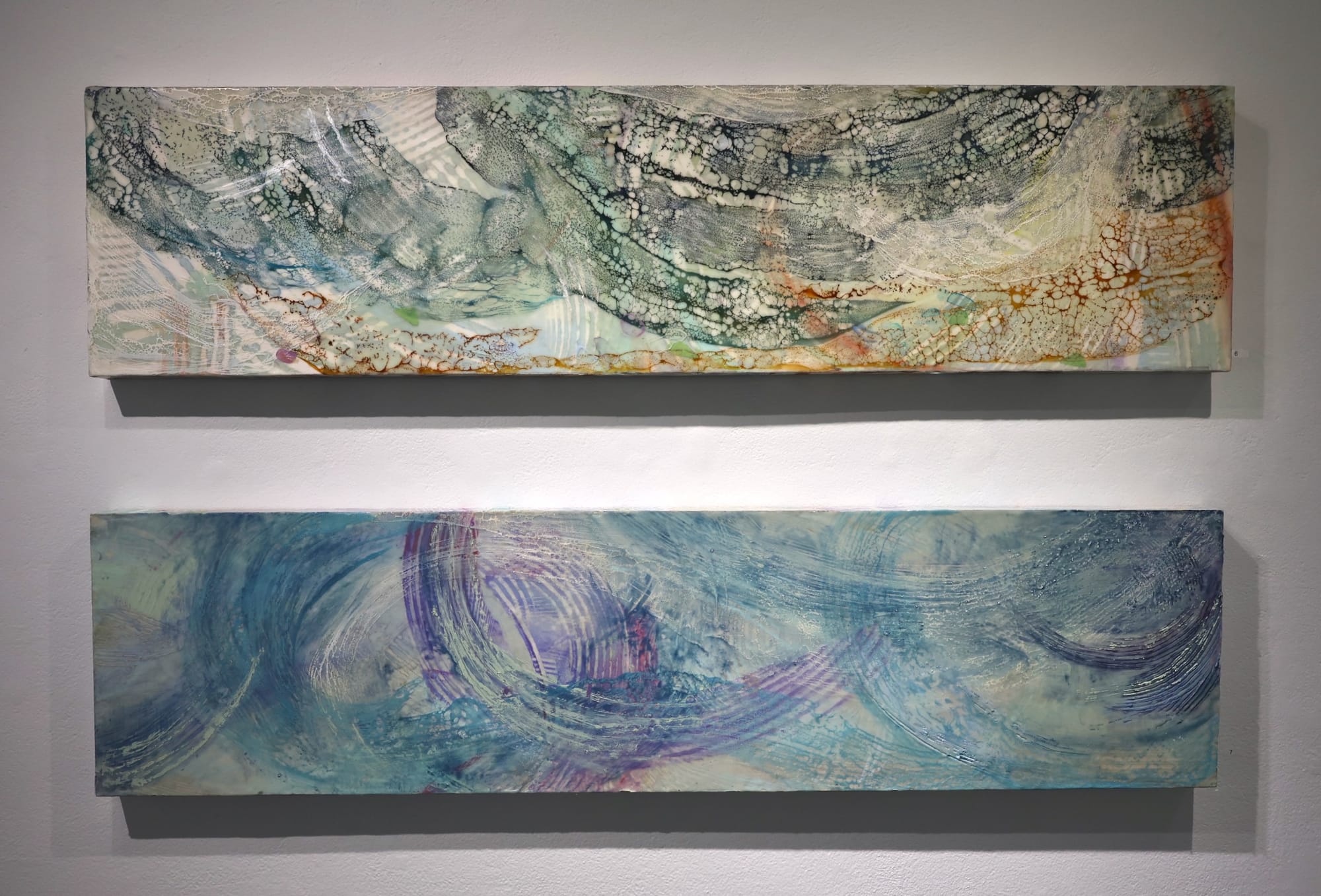
Roberta Friedman's choice of encaustics is tailor-made for the theme of the show, as the layers of textures and colors are almost uniquely suited among media to depict changing surfaces and murkier depths. In Friedman's pieces everything is moving. The layer closest to us is kinetic, but so are the colors beneath it. Is the energy from the surface being transferred downward to roil the depths? Or is something stirring hard enough below to create tumult on the surface?
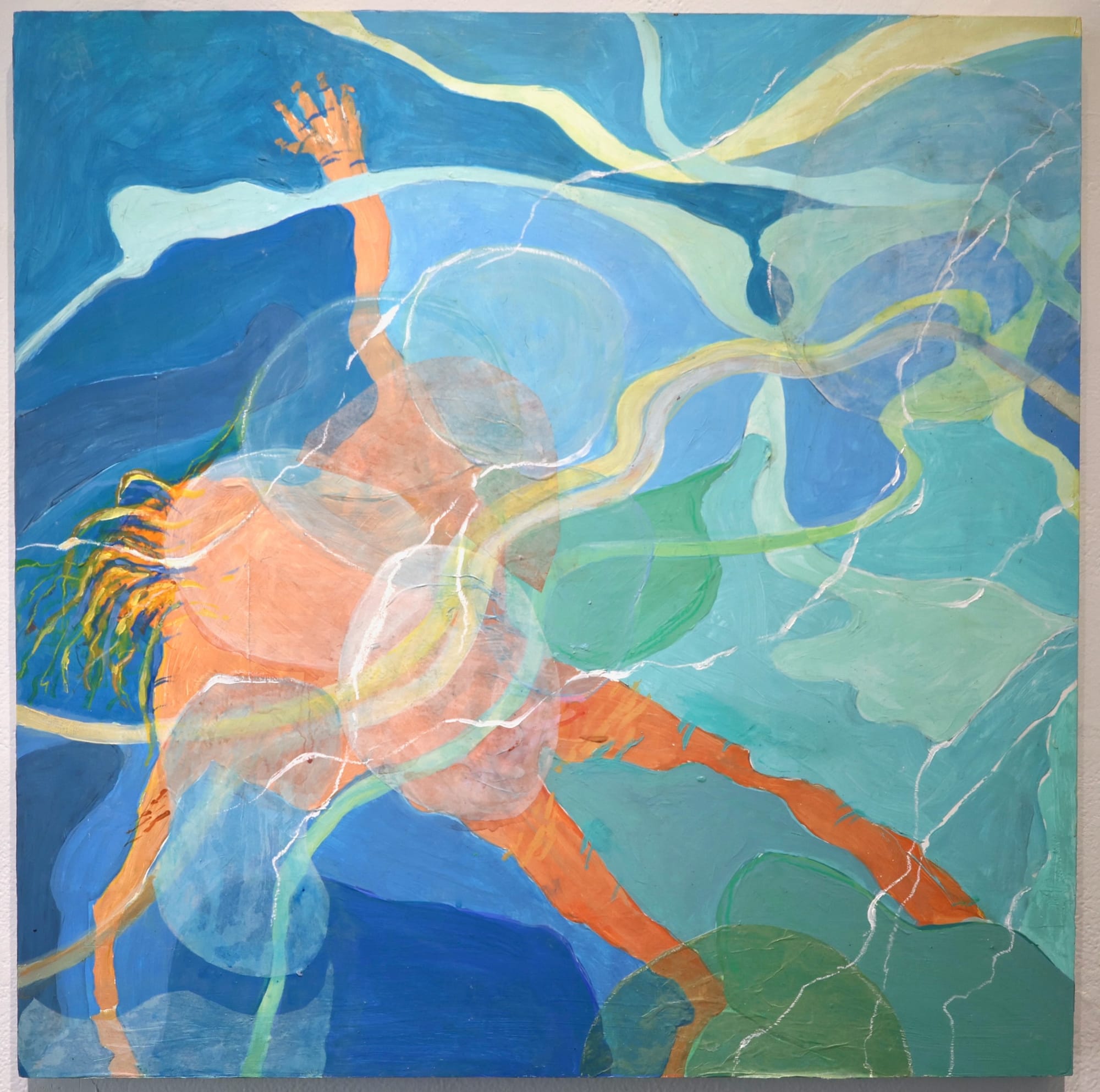
Sheila Kaczmarek's Remembering David is the only piece in the show to depict a recognizable human figure. The ambiguity of its neighbors makes it easier to connect with the piece's own complex possibilities. The figure just beneath the surface could be swimming or drowning, within or out of reach. The person could still be with us, and the painting a fond memory of a particular moment in the past—or gone forever, and the painting a painful memorial. Or anything in between, a mix of bittersweet feelings, sadness with a touch of hope, or vice versa. To try to capture water is, in the end, a reminder that it's impossible. But there's art to be made in the effort.


