
Women's Work
Positive Space Tulsa
through July 25
The trap of women’s work knows no boundaries. The devaluation of the specialized, time-consuming labor of women in the home and workplace is historic, systemic, and on-purpose. The gender wage gap in the U.S. grew wider in 2025. In the arts, there remains gender disparity in women's perspectives in art and arts administration, a situation that also has specific systemic roots, like the delineation between the noble skill of “art” versus the feminine “craft.”
This has all only questionably improved since the term was coined in the 1600s (by a man). Its ongoing reality gets an in-depth examination in “Women’s Work,” a multi-artist show on display at Positive Space Tulsa through July 25. According to curator Claudette Torneden, the show “confronts, questions, and reimagines the spaces women are told they ‘should’ and ‘should not’ occupy,” within the field of fine art and societally.
Positive Space is an artist-run gallery and studio spaces dedicated to supporting the work of womxn artists. (That letter “x” recognizes all women, including gender-expansive identities.) It’s a poignant platform for a show like this: by stripping away unrelated voices, it amplifies the observations, perspectives, and skill of the participating artists, while also serving as a reminder that a space like this is still necessary to make this platforming possible.
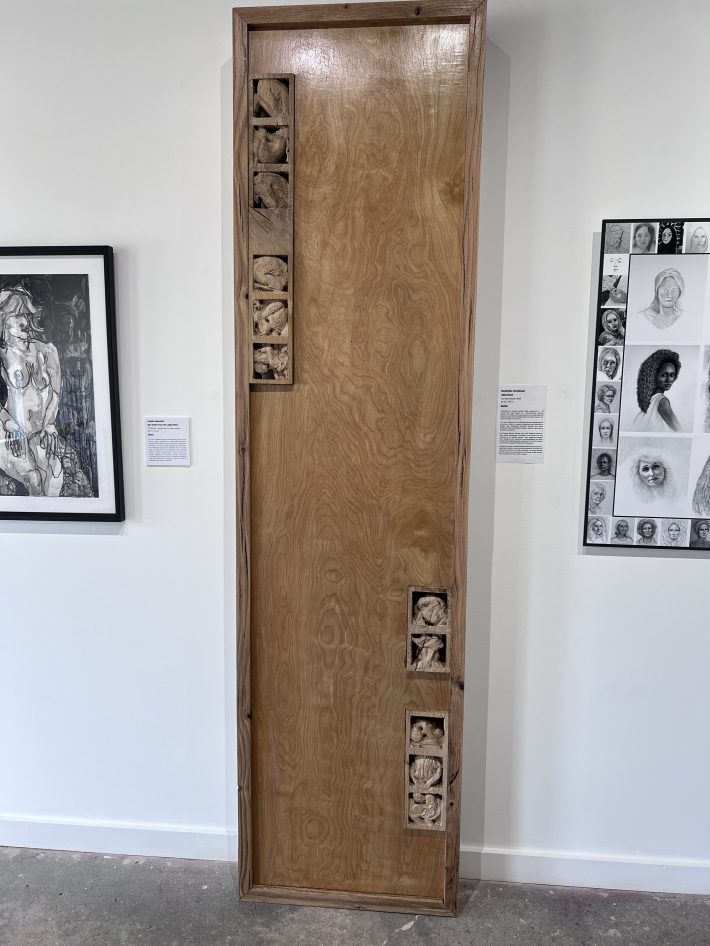
Rochelle Hardman’s “Allocated,” one of the largest pieces in the show, illustrates this reality plainly. It’s a stark, rectangular wood piece 92 inches high and mostly flat, 11 percent of which the artist has carved into relief. Small squares shoved against the edges contain contorted and compressed carvings of female forms, signifying the disproportionate (lack of) representation of women artists in museum exhibitions and collections, as well as the expectation placed on them of what women’s art “should” be.
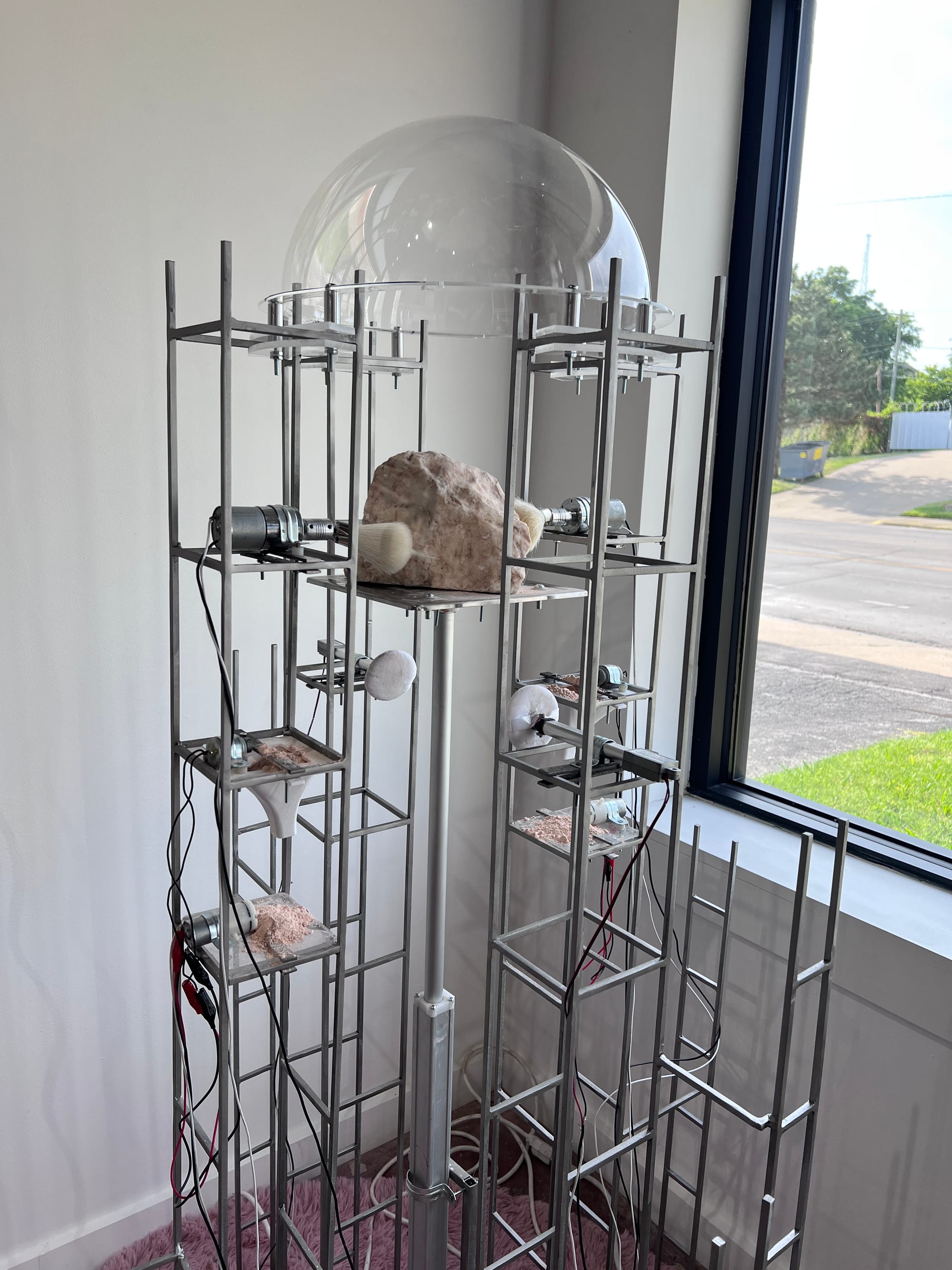
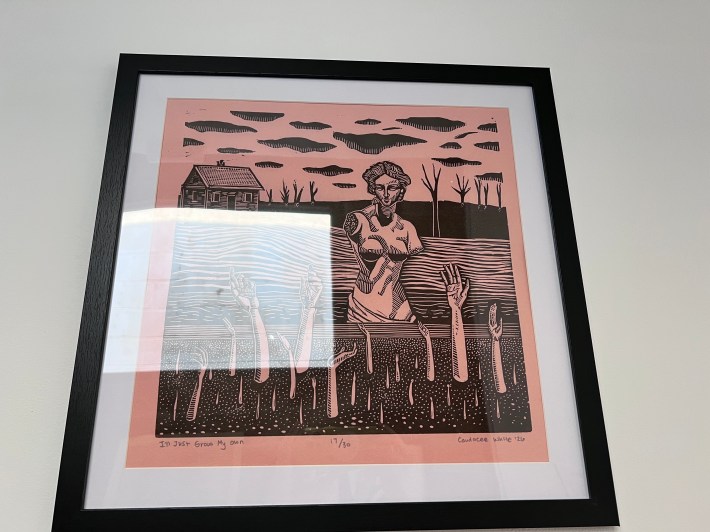
Some of the pieces skew comical, like Candacee White’s “I’ll Just Grow My Own,” a linocut print that depicts an armless female form tending to a garden of replacement limbs. Jordan Vinyard’s “Marionette for a Glass Ceiling”—an electronic sculpture in which a stone is primped and preened on its ascent, only to be lowered back down just before reaching the top—is an absurd distillation of a very real situation that made me actually laugh aloud.
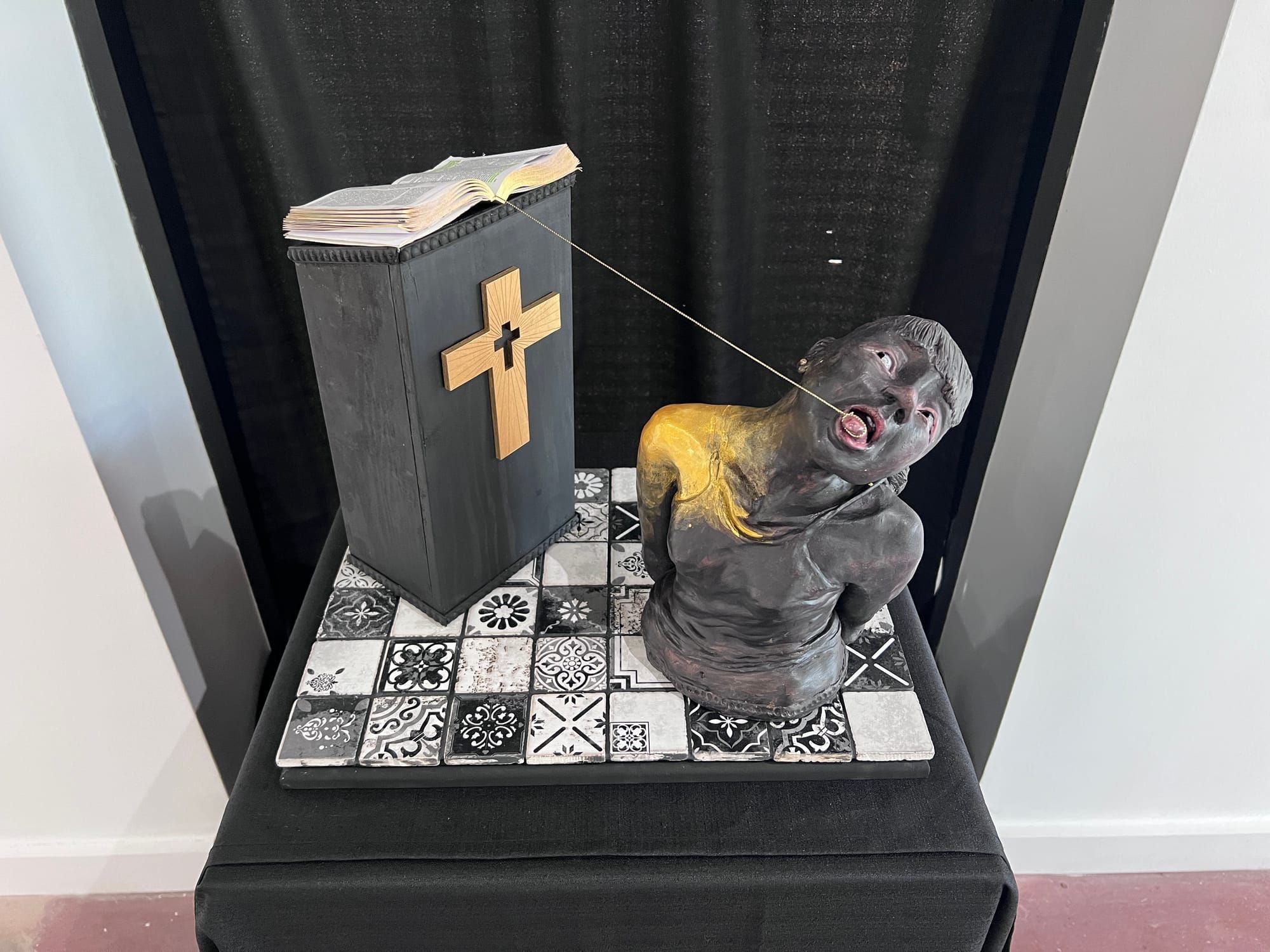
There’s also a bit of the grotesque, like Colleen Stiles’ “Tongue Tied,” a diorama of a young woman with pigtails, her tongue literally tied to an altar with a bible open to Peter 3:1, the passage instructing women to submit to their husbands and husbands to recognize their wives as the weaker vessel.
Tornedon’s own “Shrinking,” a cyanotype self-portrait series, documents several layers of the problem of being a woman. The image series represents the way women lessen themselves on a daily basis. Cyanotype, she mentions in her commentary on the series, was popularized by a woman. And the curation of this very show inspired her to take back some power for herself, moving away from her longtime artist epithet VC Tornedon—originally used to open doors that having a woman’s name could not—and starting to show her work under the name Claudette. “Hope you all reclaim some ground in your lives soon too,” she writes.
As a collection, "Women's Work" succeeds in both impact and range, attaching visceral imagery to concepts women feel deeply but don’t always have the words, medium, or audience to transmit. It's on display through its closing reception on Saturday, July 25, with an artist panel discussion that day at 3pm; Torneden leads a cynanotype workshop on July 18.


