
Practice Makes Process, Teaching Artists of the East Bay Photo Collective
312 8th st Oakland
June 5- July 19 2026
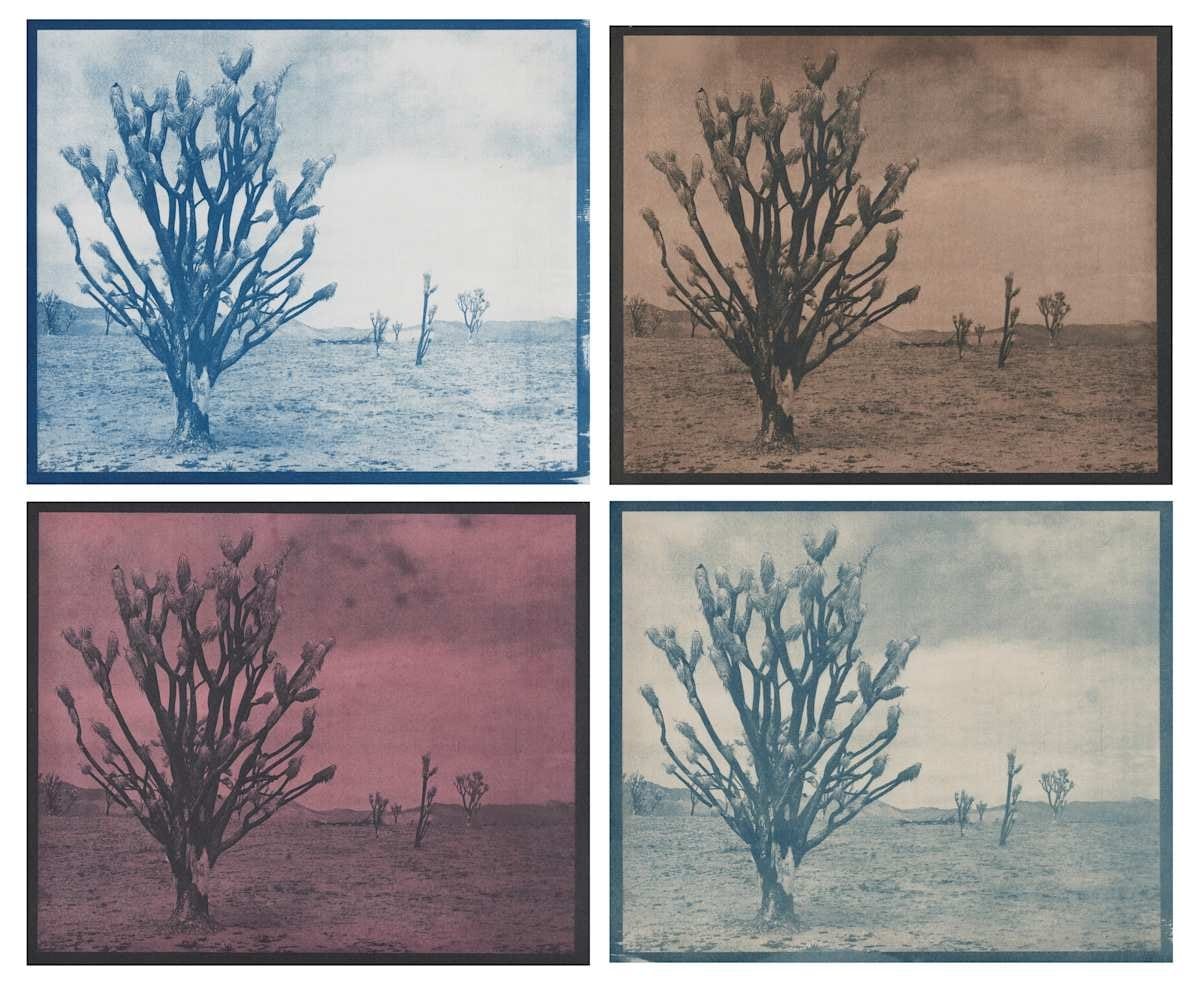
Cyanotypes toned with black tea and madder root, Polaroids on glass, plant developed silver gelatin fiber prints, and many other mixed process prints make up East Bay Photo Collective’s current show, Practice Makes Process. Featuring the works of the teaching artists who offer workshops year round at the collective, this exhibition is an impressive showcase of what photography can do.
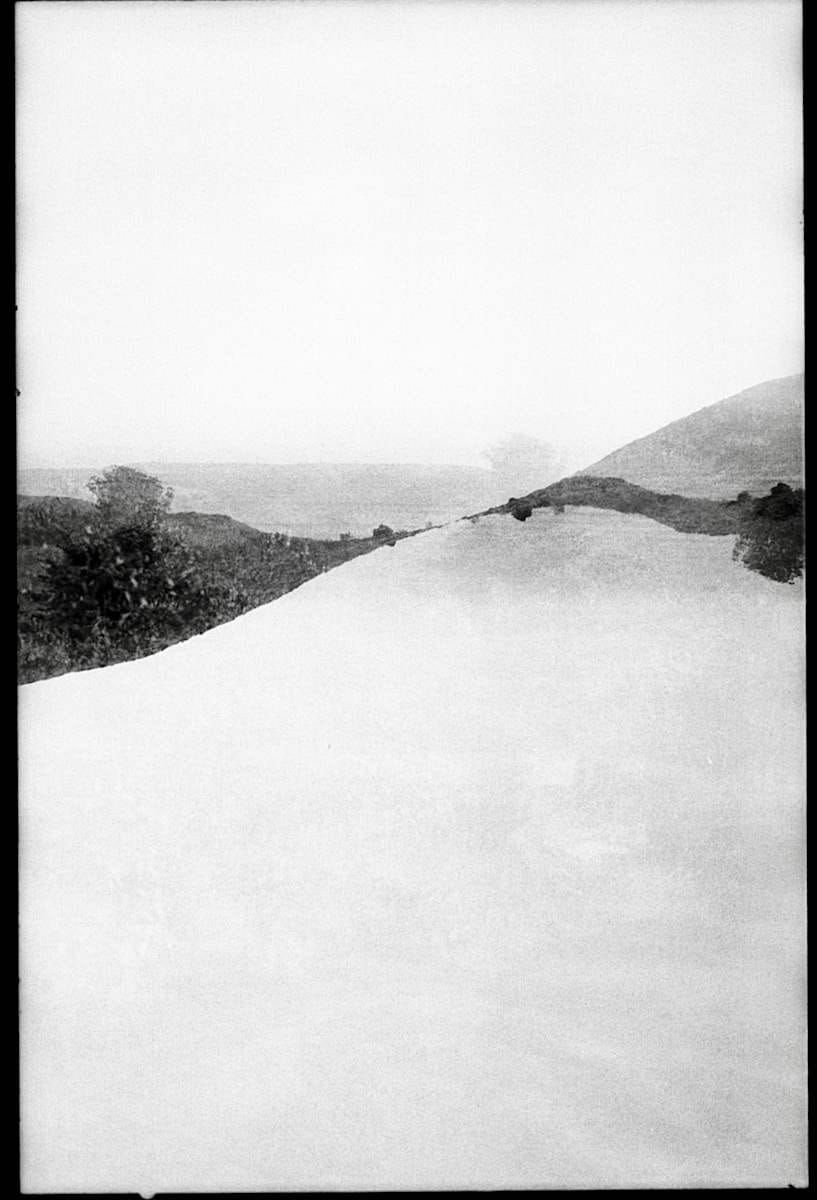
Beatrice Thornton’s Laguna Trail Waveforms caught my eye first. Laguna Trail Waveform, Point Reyes presents a mesmerizing grayscale study of gently undulating grassy hills bisected by the darker presence of trees. A pointillist universe of texture lives in the light spaces that hug the top and bottom of the image.
On the back wall Jenny Sampson’s jewel-like diptychs, Dueling Senecios and Lunar Melon, hang serenely. Created with wet plate collodion tintype and rubtype processes, the subjects’ ephemeral nature draws the eye inward. Sampson teaches Wet Plate Collodion at EPCO along with a host of other classes.

As delightful a discovery as each piece proved to be, it was Kim Campisano’s Bella Ciao, Ciao, Ciao that grabbed my attention and got me thinking. A cascade of lips sings a line of the protest song of the female rice paddy weeders, or mondine, of Northern Italy, syllable by syllable. Printed on rice paper as a nod to the song’s origin, Campisano’s piece manages to encapsulate both the power of the song and the strength of a movement.
The weeding of rice fields was an extremely tiring task carried out primarily by women who hailed from the more impoverished classes in Italy. The pay was unlivable with working conditions that matched. In rebellion, the women protested alongside their counterparts in the cities, uniting both rural and urban populations. Their demands for fair pay and the eight hour workday that we still use today were finally granted between 1906 and 1909. The song Bella Ciao was their rallying cry. Campisano’s work serves as a reminder of what is possible in times of great oppression.
“I call upon the legends of the ancient Sibyls and Oracles of the Mediterranean, those female truth speakers whom the Greeks and Romans consulted during times of crises and momentous episodes. Only fragments survived the collapse of empires. Yet these sibyls and oracles, whose utterances written on scrolls or leaves represented the destinies of modest visitors and emperors alike, could not be silenced forever. They were a bridge between the living and the dead, portals through which the gods spoke directly to people. Perhaps some were my own ancestors,” says Campisano of the project.
For those curious about alternative photographic processes or eager to see the breadth of experimentation possible within the medium, this exhibition offers both inspiration and instruction.


