윤상하 (Yoon Sangha)
산책하는 그림자 / Walking Shadow
예술공간집 / Artspace House)
Gwangju
Through Aug. 12, 2026
Jisu Sheen recently moved from New Haven to Gwangju, South Korea, where she’s covering local arts and culture for the New Haven Independent and Midbrow.)
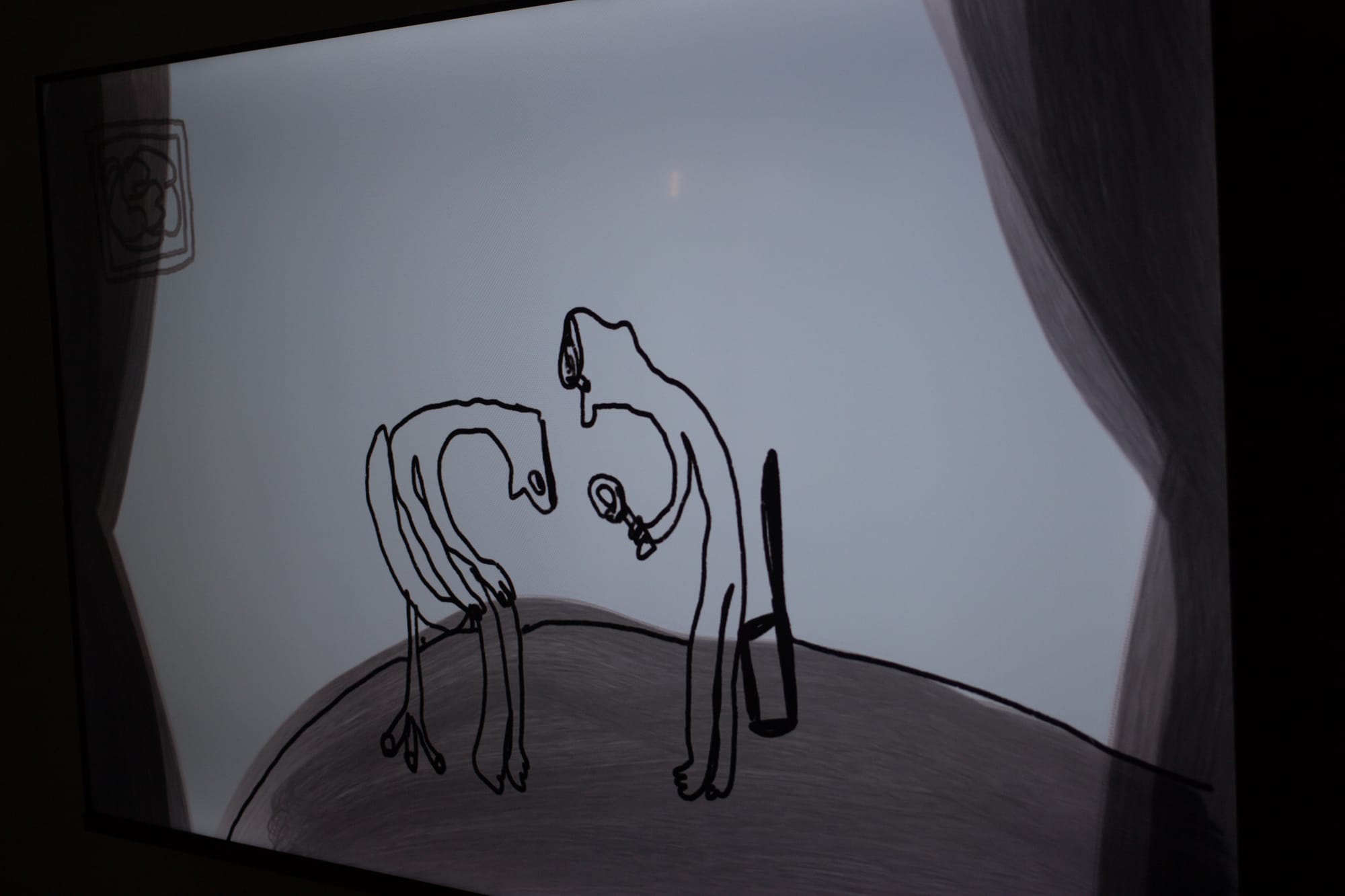
In a mysterious curtained room, a man gets his brain examined with a magnifying glass. There are creatures inside. The examiner smiles.
I encounted the two via a television screen in an exhibition-space-turned-creepy-wonderland in Gwangju’s Dong district. The site, a neat gallery called Artspace House, was holding an exhibition of works by Yoon Sangha called “Walking Shadow.” I turned onto a narrow alley, entered the hanok (traditional Korean house)-style structure, and fell headfirst into the rough lines and fantastical characters of Yoon’s work.
Most of Yoon’s works were paintings and drawings, with the exception of an animated short film called “perfect sleep” playing in a side room behind a curtain, to a soundtrack of unsettling industrial ambient music.
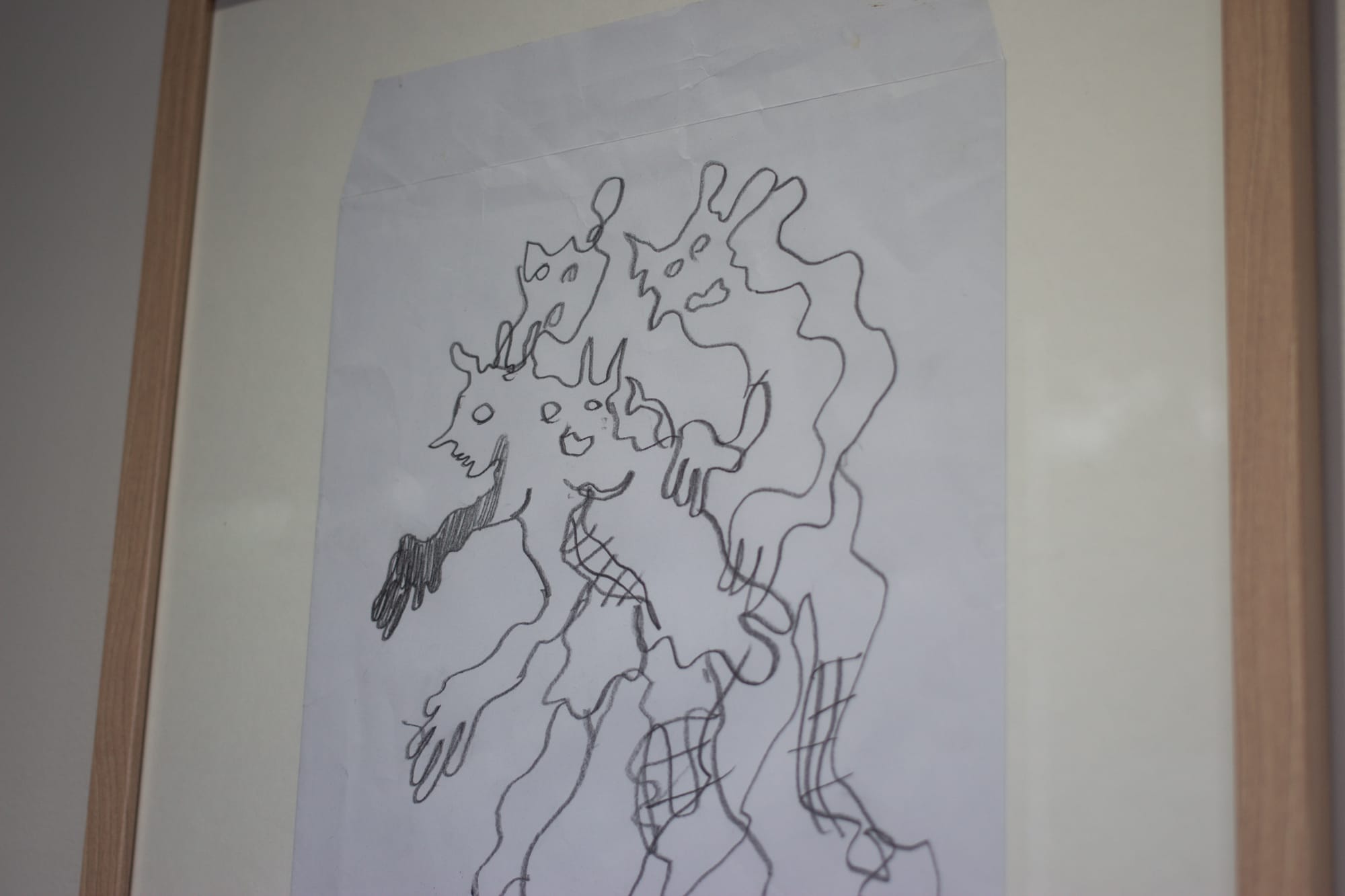
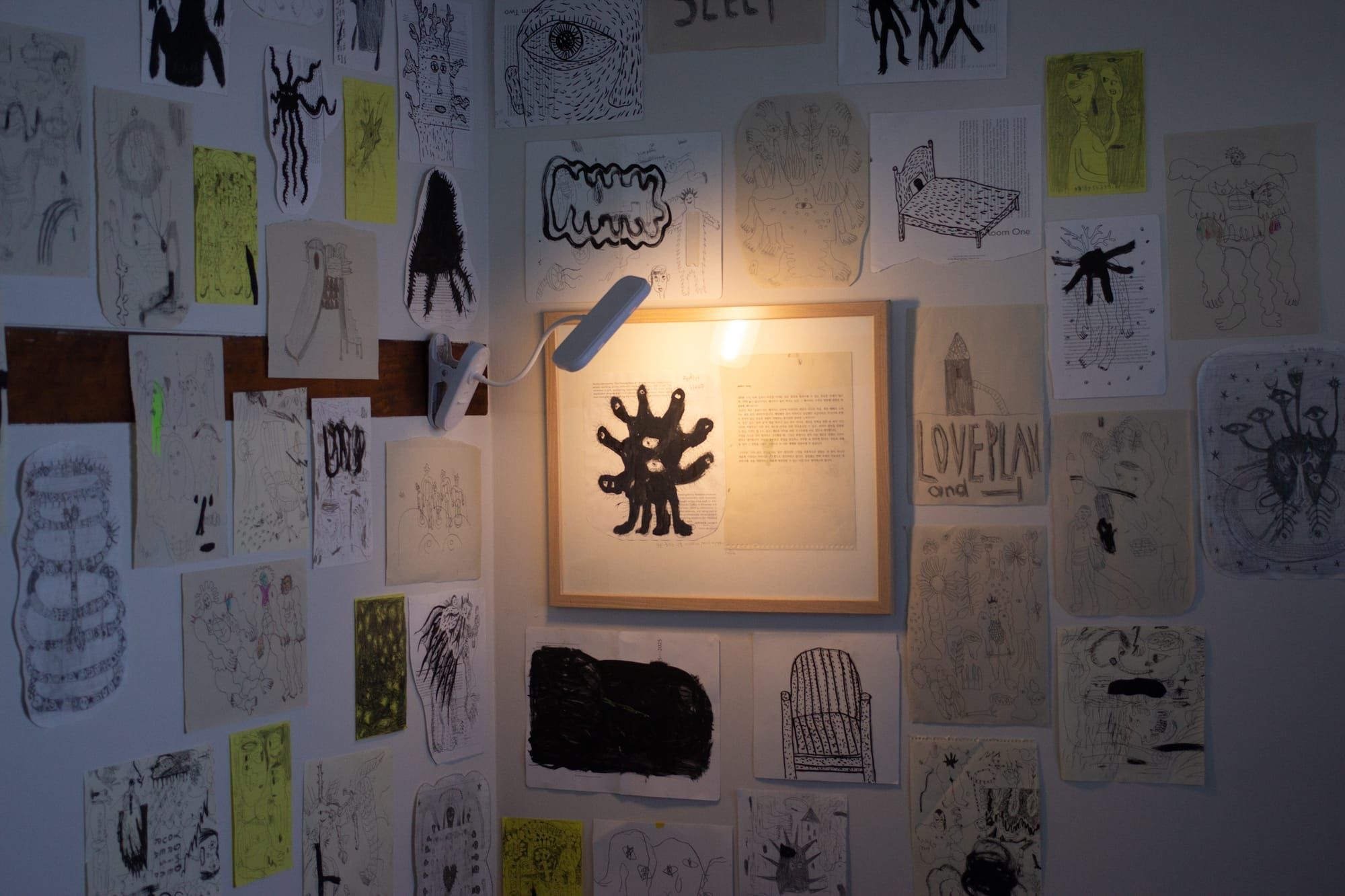
The “sleep” portrayed in the drawings decorating the little room looked far from perfect. No one’s eyelids were closed. Extra eyeballs around the figures stared. Forget monsters under the bed—here, monsters crept up from all angles. How could anyone sleep in these conditions?
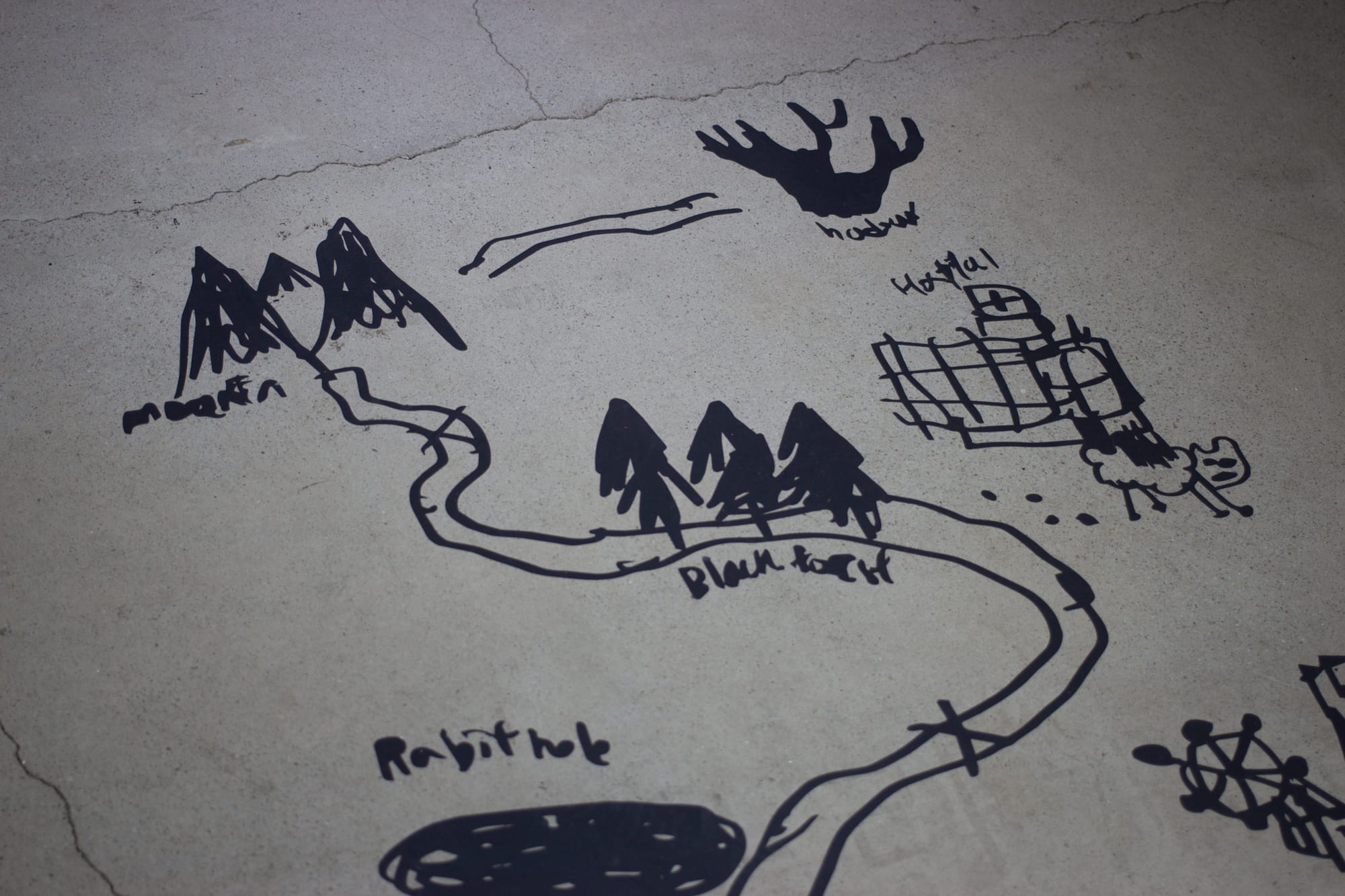
Outside the “perfect sleep” chamber, a map on the floor foretold adventures to come. “White castle,” “Dream Land,” and “Rabit hole” [sic] were just a few of the stops along the way, echoing architectural paintings in the exhibit. Parts of the path were crossed out with ominous, unexplained “x”s.
Along the walls, I found Donnie-Darko-esque rabbits, many-headed gremlins, and creatures with names like 꿈을 훔치는 괴물, or “dream-stealing monster.”
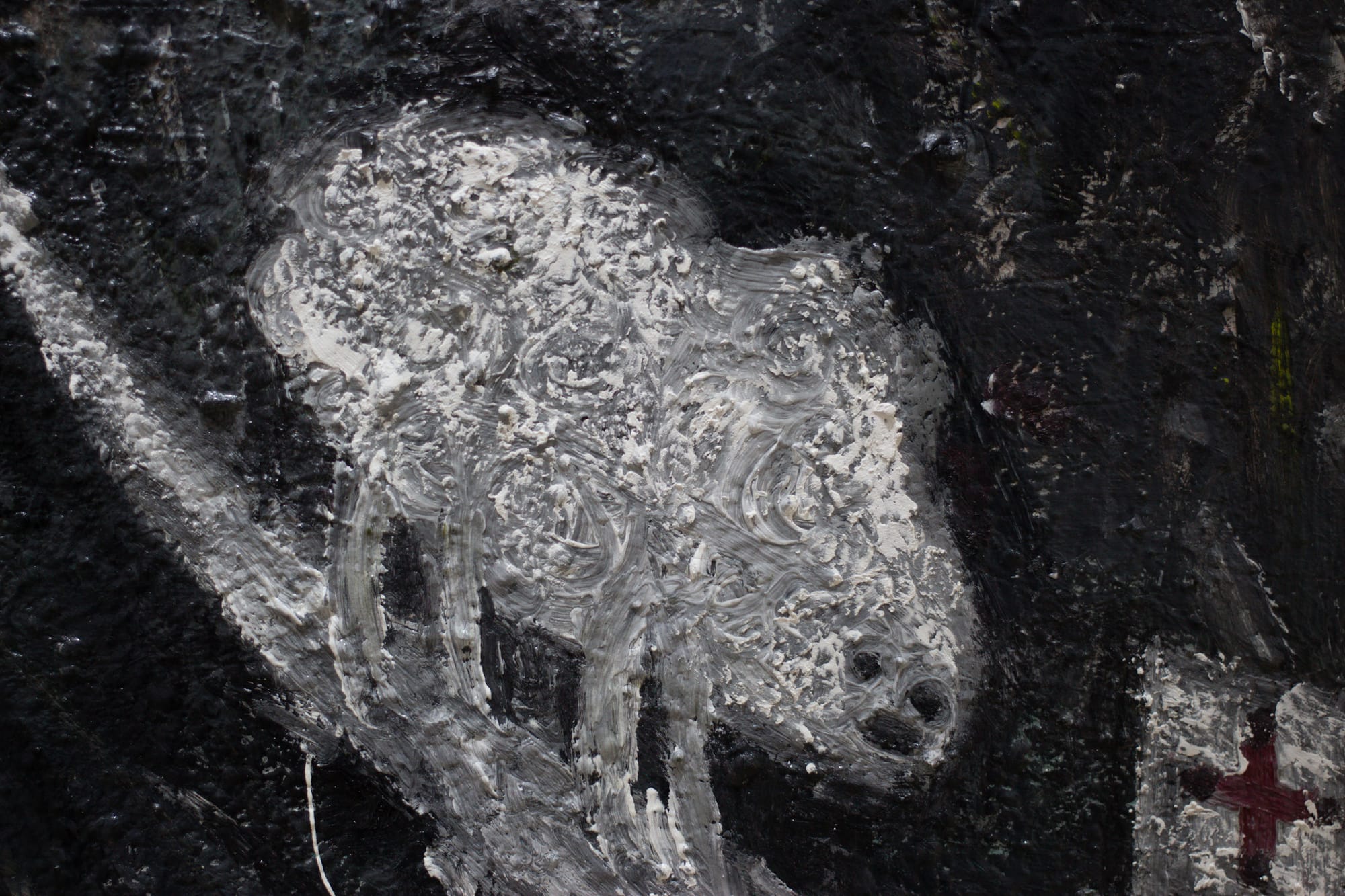
Their grotesque nature held an endearing softness. It felt like they were trying their best under non-ideal circumstances. A white lump with four legs and a blank gaze was identified in Korean as a “sheep in search of a pharmacy.”
A description on the wall clarified in Korean that these beings “have not lost their way,” but that they just “haven’t found where to arrive.”
Above all, I was enchanted by the feeling of necessity in Yoon’s art. It was like he’d been cursed by fate to create haunted settings and weird little guys to inhabit them—and that they were counting on him to let them out.
“The ‘castle’ is a secret spot I’ve built up piece by piece since childhood,” he writes in a book accompanying the exhibit. “When I was young, the castle was full, but after becoming an adult, I feel a sense of loss as it starts to get older and crumble.” He writes that he is now trying to fill his castle again. The creatures he draws give him energy to build a new refuge for his thoughts.
Behind the curtain, in Yoon’s animation, our two heroes ride an eyeball up a thin column in a pyramid-like structure. They get caught inside a lamp, fuse their heads into one another, and sprout even more eyeballs.
The short has the fuzziness of The Midnight Gospel, the emotional depth of Everybody Rides the Carousel, and, dare I say, the occult appeal of New Haven’s Midnight Visitor. It uses the trappings of horror to strike at something true and funny, deep inside.
That night, I lay in bed marveling at the freaky, relatable creatures that had made my acquaintance at Yoon’s exhibit. I was dreaming, but my eyes were open. Perhaps this was the “perfect sleep” Yoon was on about.
Sign up here to get Gwangju Midbrow email updates delivered straight to your inbox.