
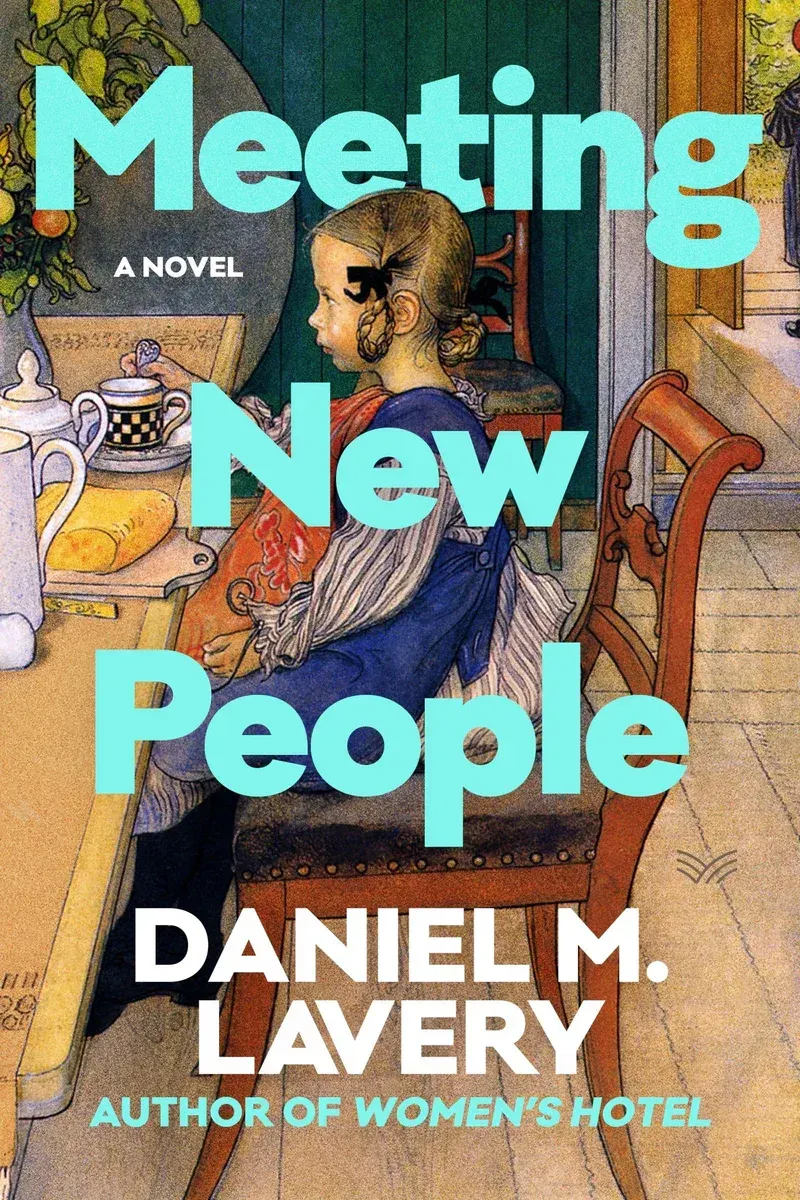
Meeting New People
By Daniel Lavery
HarperVia
How did you meet your best friends? People look at friendships that have stood the test of time with a certain amount of awe and admiration. Oh, to be settled and know who your people are. These common romanticizations are a nod to the reality that real friendship, like all other human endeavors, is never simple.
In Daniel Lavery’s latest novel, “Meeting New People,” we're introduced to the character of Barbara, a woman in her late 50s who has cycled through and lost nine different best friends throughout her lifetime. Her latest friend break-up at the book's start is with a woman named Susan, who delivers Barbara a whole list of grievances to justify the severing of their ties. So, at 58, Barbara finds herself in an uncomfortable position: she's looking for a new best friend to tether herself to.
Lavery is a former advice columnist for Slate, and it seems like his lens of looking closely at people's relationships directly informs this book. “Meeting New People” is a character driven novel full of witty observations about friendship, relationships, growing older and living in a complicated and contradictory world.
“I honestly believe that there are no longer any great, really great, barn-burning friendships because you can get everything delivered these days,” the book opens. “Nobody needs anybody, not when they can just pay for it.”
The food you used to wait for other people to bring you as a souvenir from home once a year is now just $24.99 plus shipping away any time. You don’t need anyone to bring you a casserole when you’re sick or going through something because UberEats exists. The world is fiercely independent, and therefore desperately lonely.
Not much happens in the book, Barbara goes to work, thinks about her other relationships with old friends, tries to do some damage control about Susan, navigates her relationship with her son and starts attending church. But it’s not like she starts auditioning new best friends or even goes that far out of her way to do something about her situation. Rather than doling out advice for self-betterment like he once did for Slate, Lavery uses Barbara as a tool to observe and accept the world (and its people) as is.
Barbara is self-aware enough — at least where it’s important. After all, if you’re burning through friendships, and you’re always the one getting broken up with, not once or twice but nine times, some self reflection is in order. Maybe the problem is you. And in Barbara’s case it very well may be. But that's not the point: the real takeaway from the book is that Lavery has crafted a character one can’t help rooting for, despite her flaws.
Women in their late 50s rarely get a novel about just existing; their stories are often reduced through sensationalist fixations on marriage-related drama, financial ruin, or mid-life career crises. Lavery reminds us that sometimes life is composed of less sexy but still worthwhile struggles: trying to maintain your friendships, feeling misunderstood by those around you, worrying about how you’re going to fill your dinner party invite list.
“Meeting New People” is not so much about Barbara meeting new people as it is about us meeting Barbara, and feeling like we understand our own lives just a little better for having known her. Isn't that what real friendship is truly about?


