Backyard Potters
4415 Baltimore Ave.
Philadelphia
Aug. 1, 2026
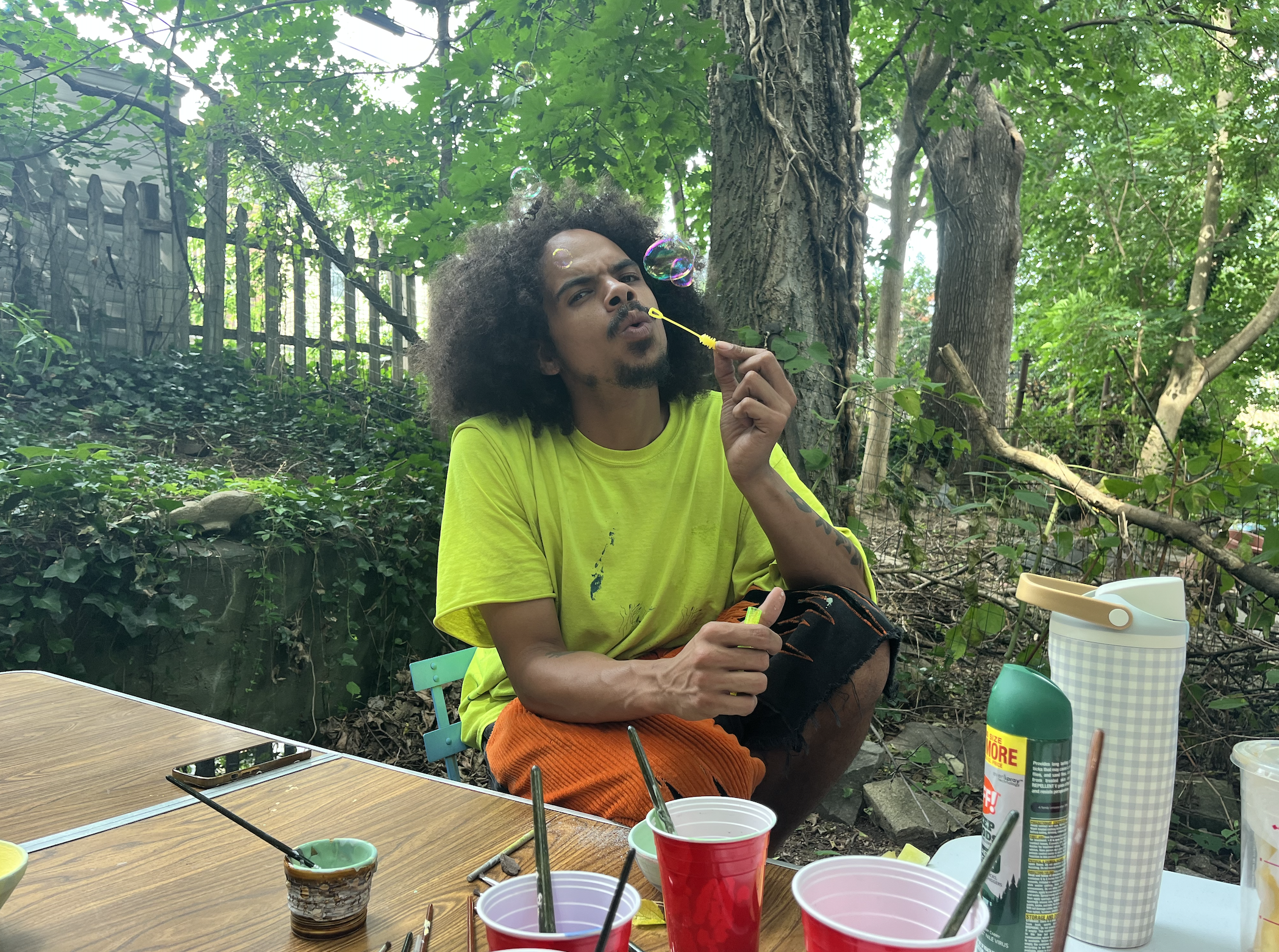
If you walk along Baltimore Avenue on the regular, you’ve probably encountered Dairian Smith throwing clay in his front yard on 44th St. The local artist is now inviting the public into his backyard — to paint some of the pots he produces.
“Backyard Potters” is a new DIY art class pioneered by Smith and fellow potter Isabel Llosa intended to make ceramics a more accessible craft for anyone interested in picking it up. All while building community among neighbors.
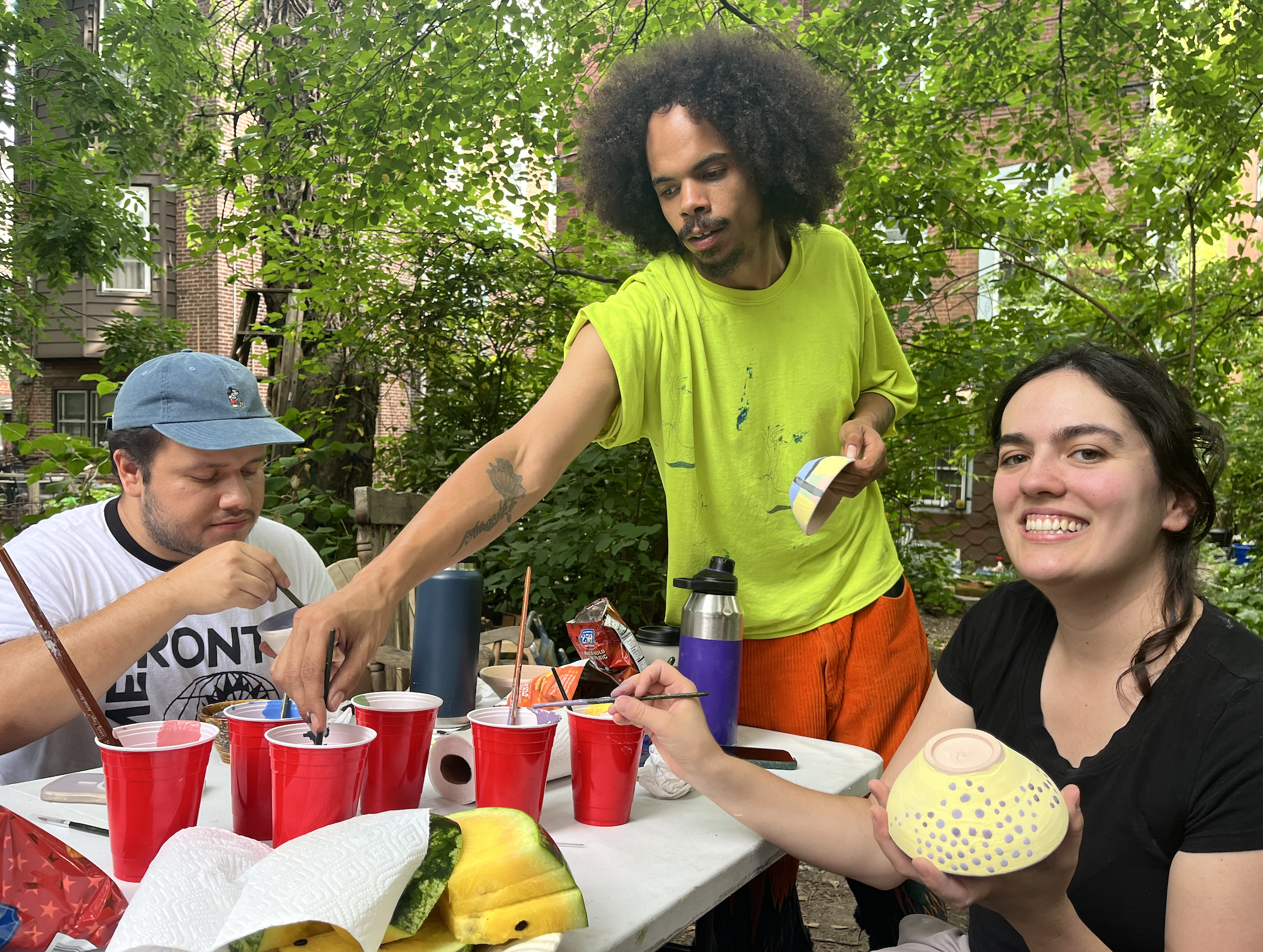
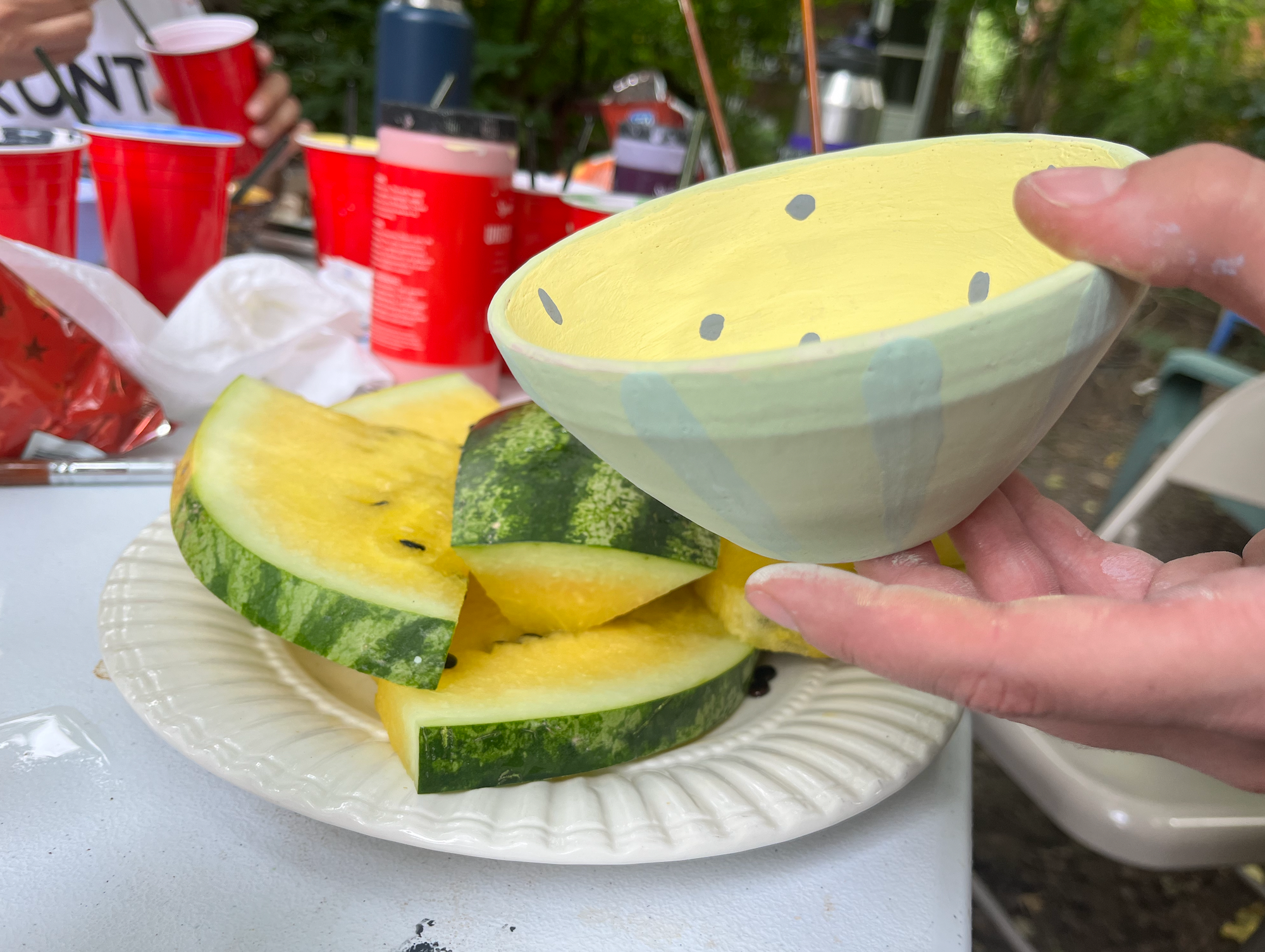
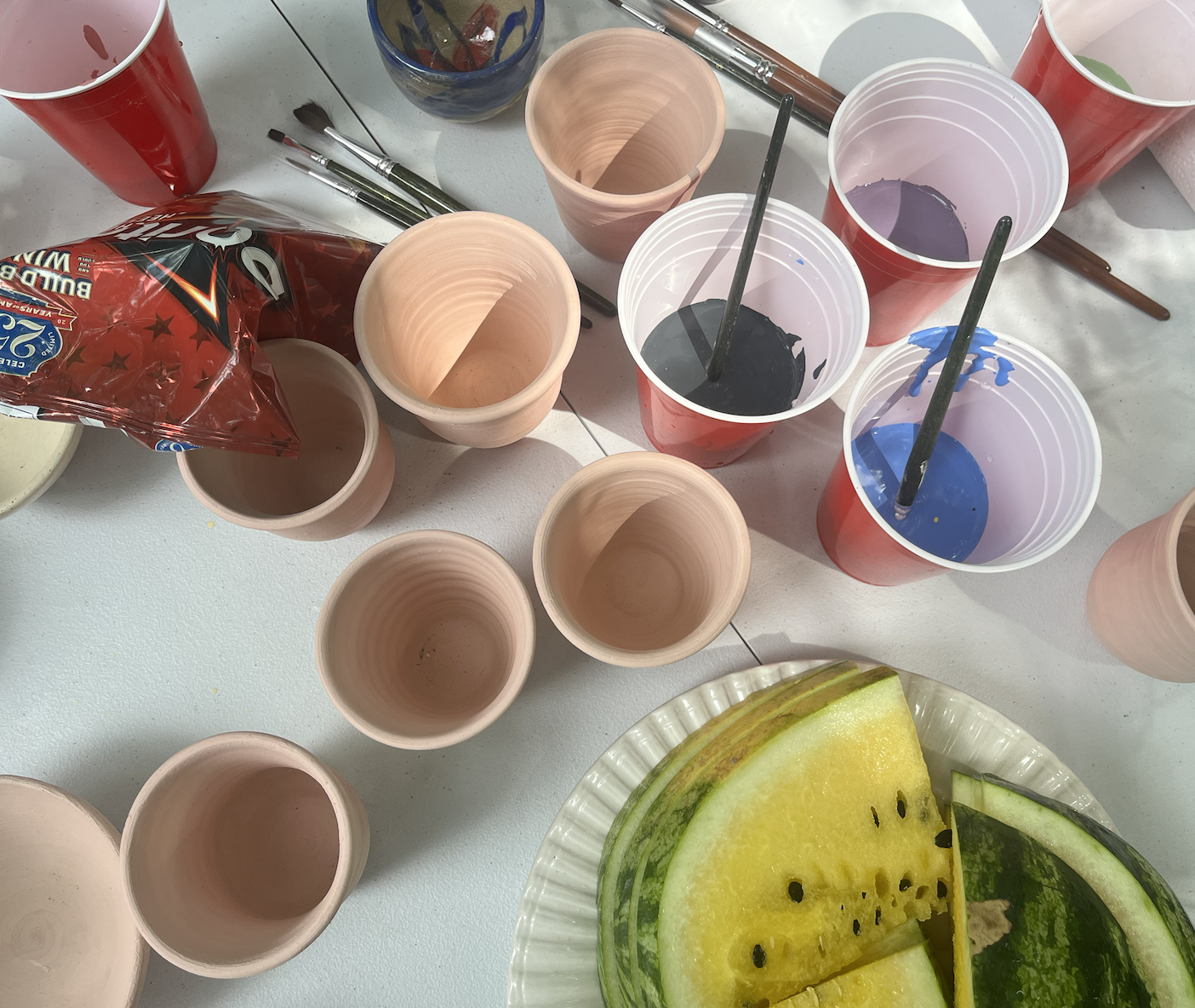
I showed up this past Saturday for the second session of a four-class series hosted by the duo this summer. I was ushered by Smith into the backyard, where I was met by three other students, a plate full of freshly cut yellow watermelon ("picked straight from the Jersey dirt!" Smith declared), a table of recently thrown cups and bowls, and at least ten red solo cups full of different underglazes with which to paint them. For $35 (with sliding scale availability) you get to pick out your own pot — and use Smith’s and Llosa’s materials to decorate them.
“My hands and Isabel’s hands have touched all of these,” Smith said, gesturing at the tableware in front of us. “And now you guys paint on it. We’re working together!”
Smith and Llosa met while working at the Clay Studio, one of the country’s oldest ceramic centers located in Philly's Fishtown neighborhood. Llosa became an intern there after studying pottery under legendary Philly ceramicist Syd Carpenter at Swarthmore College. Smith started at the studio as a custodian before getting hired as the center’s events coordinator. For two years, he taught himself how to throw — with input and oversight from resident artists — during his hour-long lunch break.
He now works as a contracting teaching artist at the non-profit, but left his role as events coordinator to put more time towards growing his own business: “I had to make a sacrifice — it was that I either keep working for someone else or I try to start something for myself.”
That life transition happens to parallel exactly what Smith says he loves about clay: “Clay goes through many phases — it’s a challenging but also forgiving process. It’s about the idea of being able to restart.”
To kick off the class, Llosa gave us efficient instruction on “all kinds of transformation” latent in the process of cooking clay. Today, we’d be decorating “bisque” forms, referring to unglazed clay that had gone through its first kiln firing, meaning it was hardened but still porous enough to absorb paint. Anymore than two layers of paint could cause crackage, but we had to be sure to apply enough glaze to successfully conjure the colors we wanted to convey. After 90 minutes of painting, Smith and Isabel would let our designs dry before firing and glazing them again in order to deliver us a final product.
Smith offered a conclusion to Llosa’s lesson: “There’s mad brushes. Go crazy.”
That was the cue for me and my classmates to start panicking over the creative process.
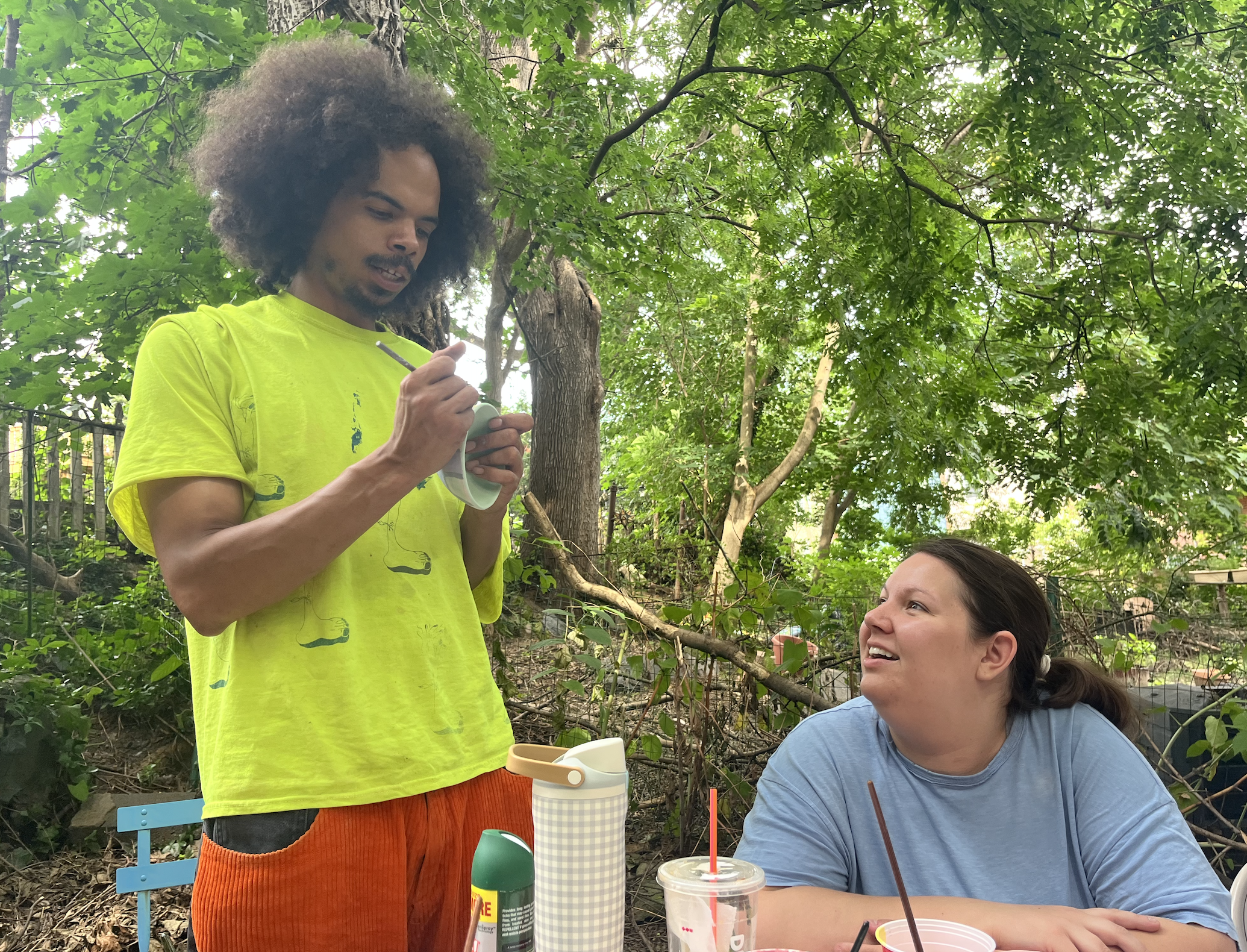
Llosa offered some fine-point utensils for us to etch images and details into the clay as we started thinking through decorative concepts. That summoned some more of Smith’s hippie sensibility: “Or you can just use a stick!” he proclaimed, scavenging the floor of the backyard for inspiration.
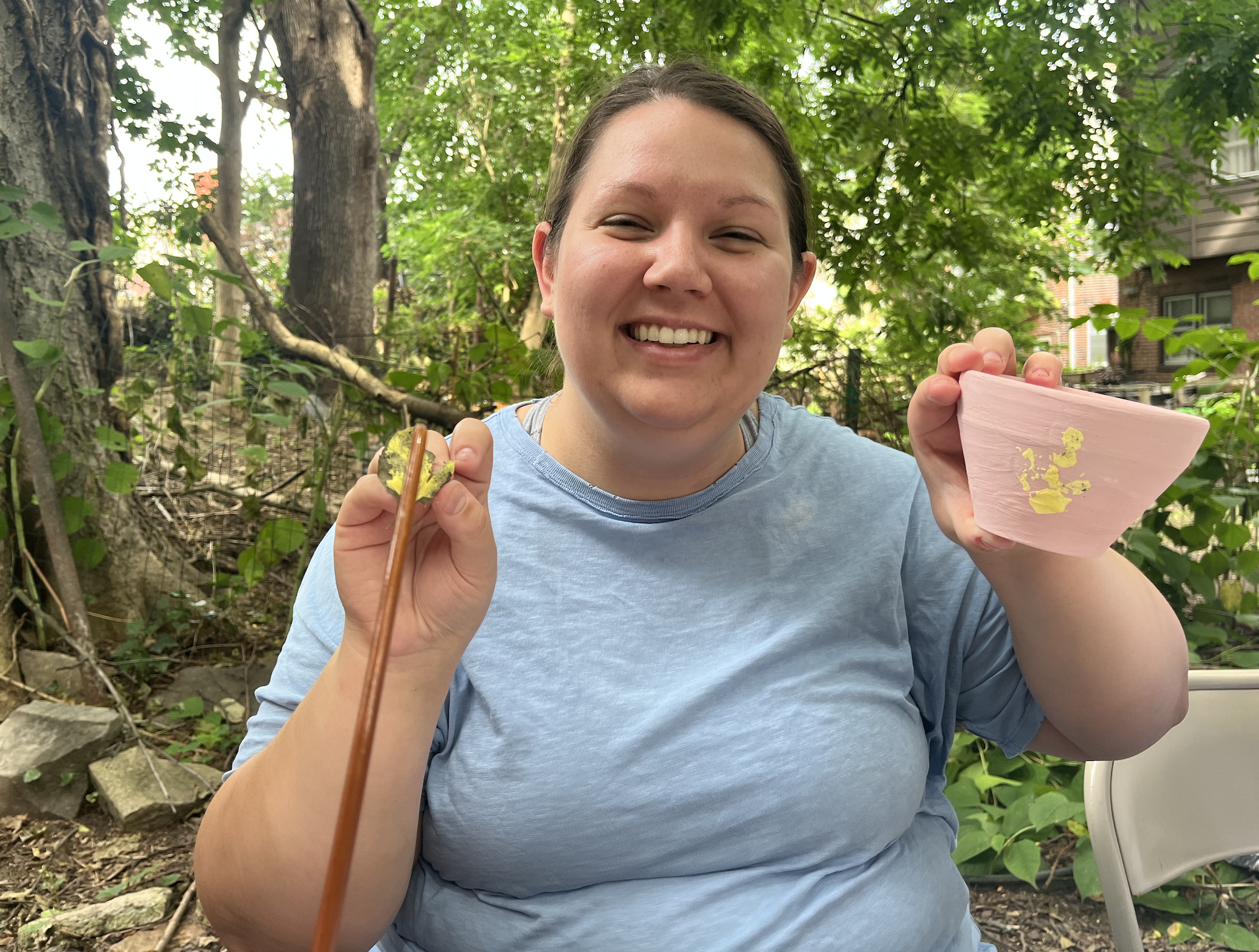
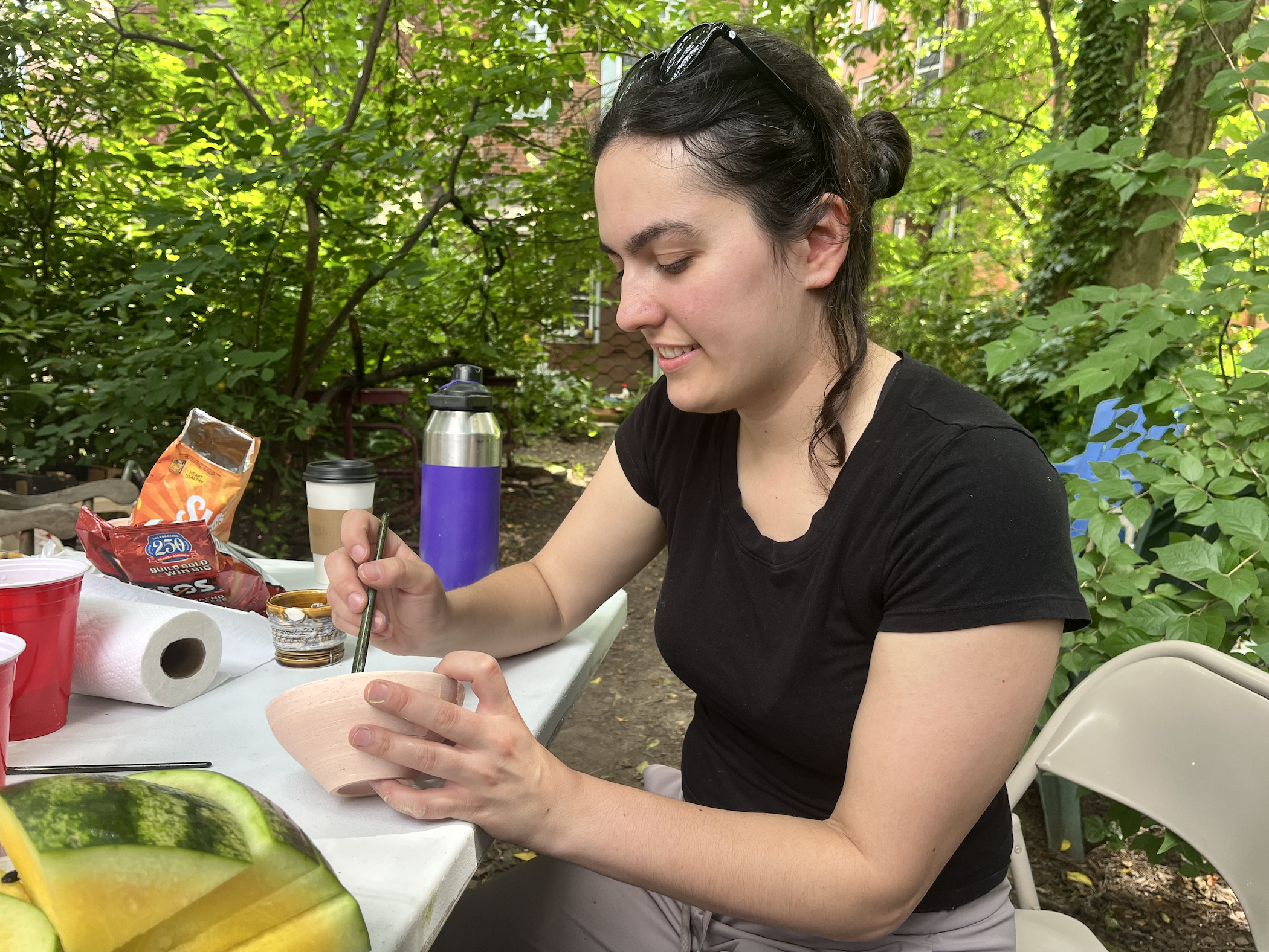
Student Kyra DePersia (pictured above) followed Smith’s lead and found a leaf to imprint upon her piece.
We took turns sharing what we saw in the print, comparing it to a Rorschach test. “I see a middle finger,” I said. “I see a leaf,” everyone else said.
In lieu of producing professional-level pots, we churned out proficient conversation: over our allotted hour-and-a-half, we talked about methods for cooking corn on the cob; case studies of modern-day embezzlement schemes; everyone in the group's employment status; the fact that you can buy sacramental bread on Amazon; and, most surprisingly, several personal anecdotes about middle-aged women threatening to shoot up people’s workplaces.
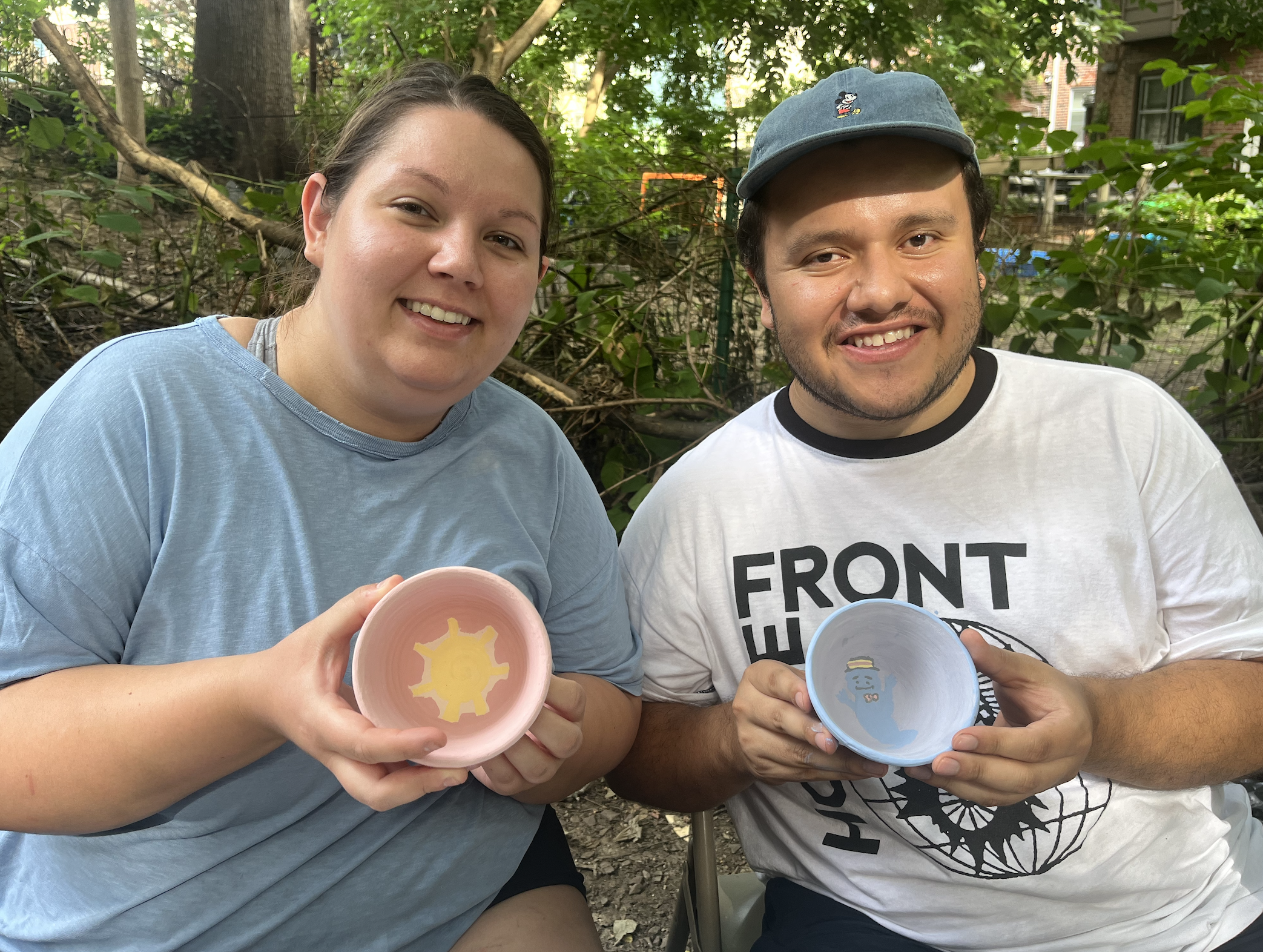
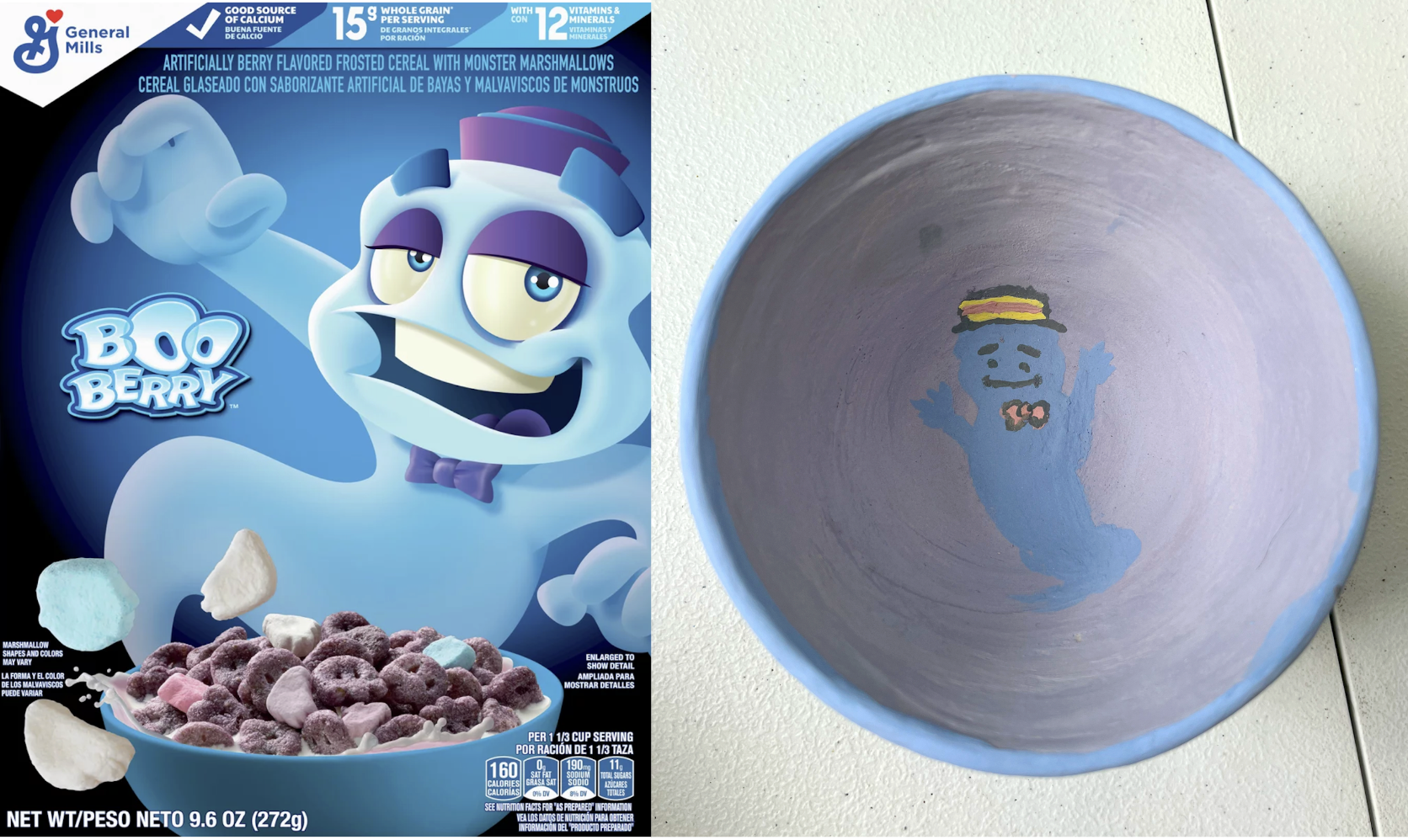
By the end of class, I was struck by everyone's creativity. DePersia’s print-centered dish was joined by her husband Al Hernandez’s (a graphic designer) “Boo Berry”-style cereal bowl. Our classmate Clara stole the show by painting a bowl to look exactly like the striped shell of watermelon we’d just eaten. The weakest link in the group was, admittedly, my own cup (not pictured on purpose), which I had tried to fill up with the letters of my own first name — was I “Aron?” “Rona?” “Orna?” Nobody would ever be able to tell based on my botched calligraphy.
It was ultimately a no-sweat (maybe some sweat and a couple mosquito bites), no-shame endeavor: the shady outdoors and good spirited company was enough to cut any stress over performative artistry. While wheel throwing is perhaps the most eye catching part of the pottery process (check out the time lapse above of Smith molding pots in his front yard, an inadvertent advertisement for his budding business), it's also the most intense and independent aspect of the craft ("it's the competitive sport of ceramics," as Llosa put it).
Decorating, on the other hand, is a looser and less technical means of expression — it paired well with a class environment designed to get people talking to each other.
“This was so fun!” DePersia and others reviewed the event as Smith and Llosa wrapped up our artwork in newspaper, and as Smith handed out invitations to a backyard bonfire he was planning for the following week.
“I know!” Smith agreed. “It’s what I wanna do all the time.”
“But,” he added, “it ain’t shit without you guys.”
You can sign up for "Backyard Potters" here. There are two more classes happening this summer, both on Aug 15. You can also catch Smith and Llosa selling their pottery at the Clark Park farmer's market on Sept. 25.