Kim Suha
오월밥집 (Maybap)
Gwangju
Aug. 5th, 2026
Jisu Sheen recently moved from New Haven to Gwangju, South Korea, where she’s covering local arts and culture for the New Haven Independent and Midbrow.)
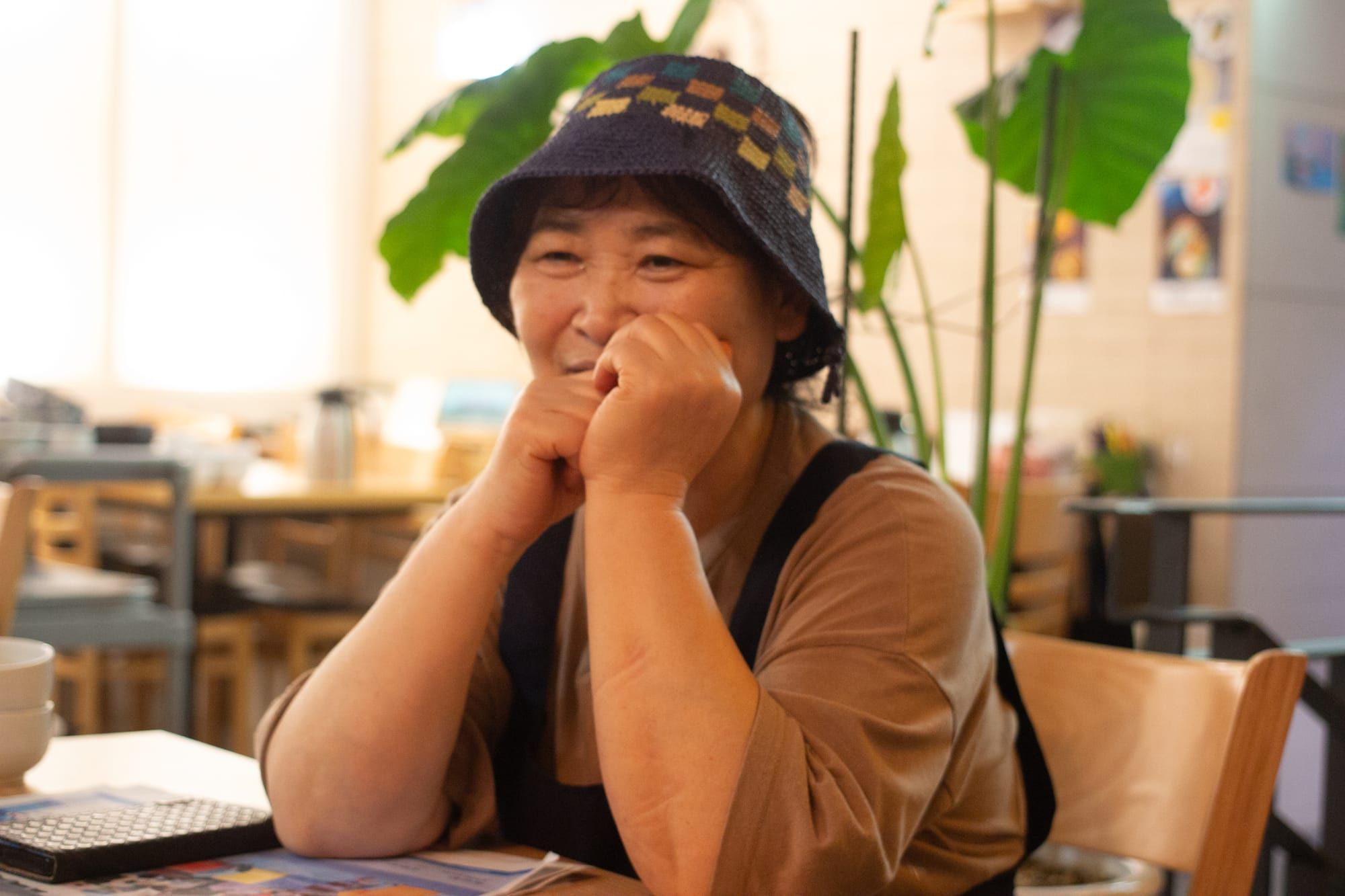
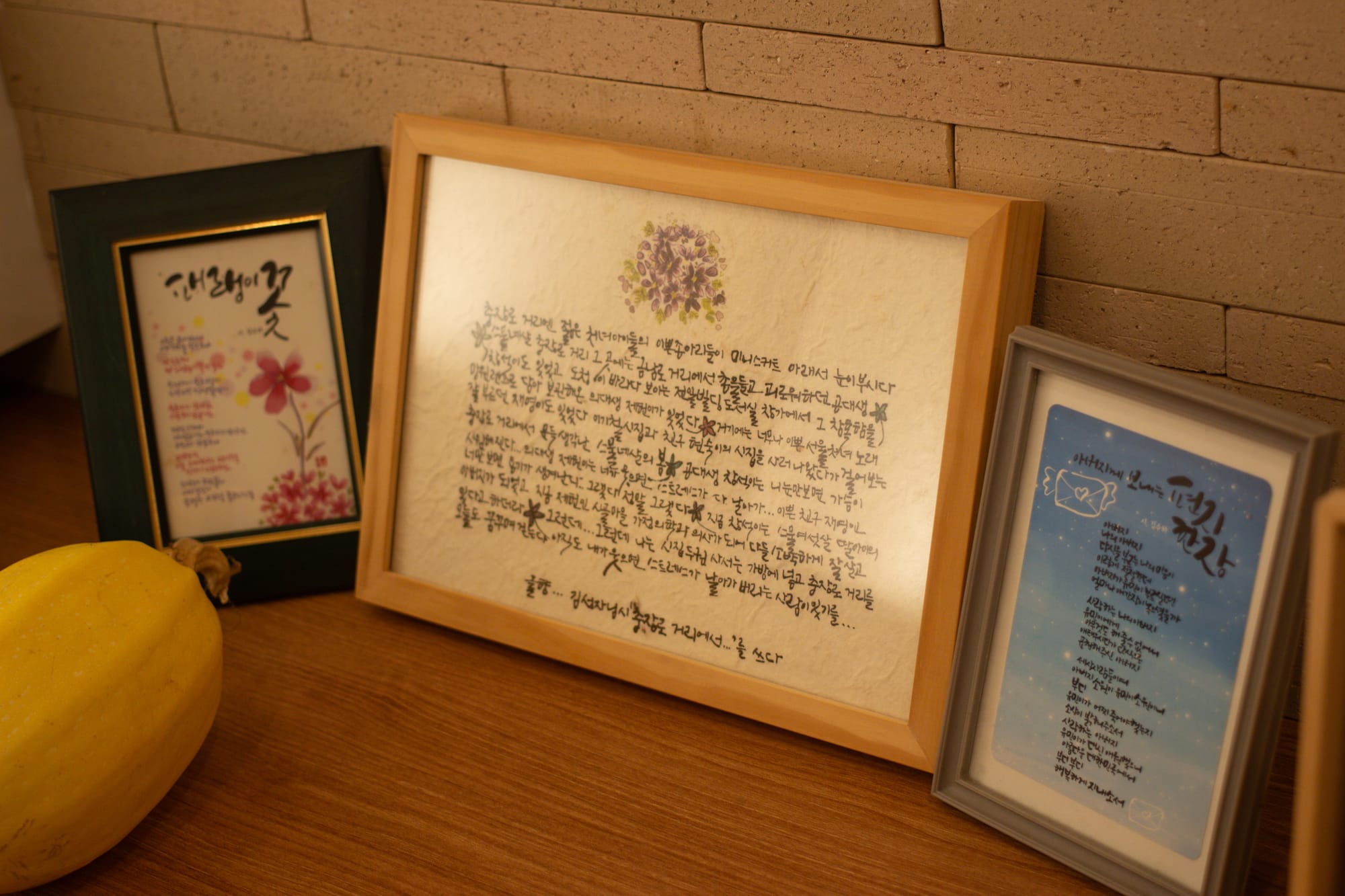
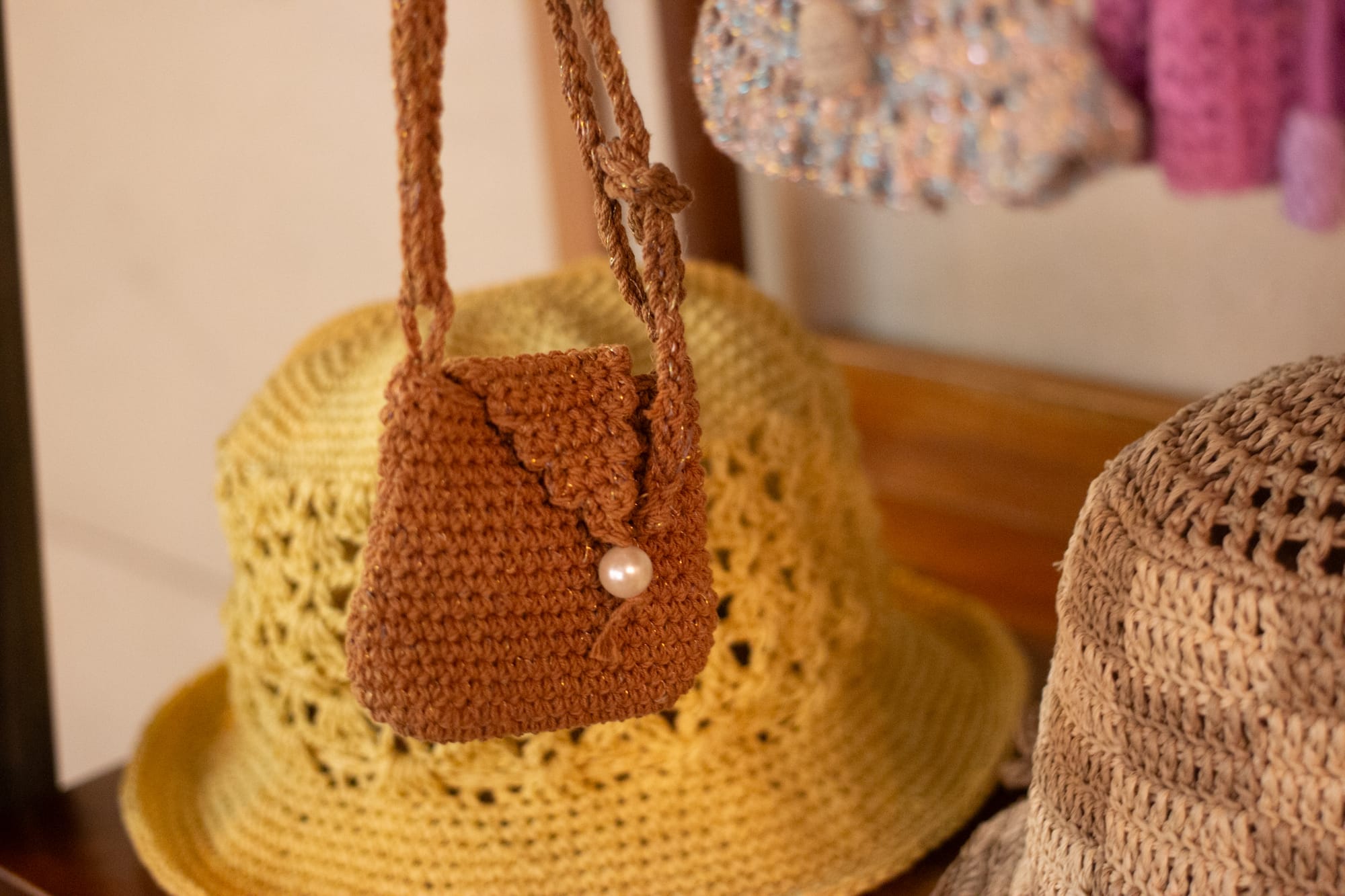
Kim Suha decorates her restaurant with textile creations and poetry. For her, food is just one of the many creations she brings to life. She's at the helm of 오월밥집 (known as MayBab in English), where visitors can try the famous jumeokbap rice balls people shared during the Gwangju Uprising of May 18, 1980.
It's a warm place to have a wholesome meal—so warm, in fact, that a simple question between strangers opened up into a conversation between everyone in the restaurant Wednesday night.
"Is that your Korean name?" Kim asked in Korean to a man in a baseball jersey. She was pointing to the name printed on the back. He didn't understand her, so I repeated it in English.
It wasn't his own name but that of a famous Korean baseball player. In fact, he said, he had come to Gwangju to watch baseball—the city has a well-known team, the Kia Tigers—but all the games were cancelled due to the record heat.
Then everyone was talking and translating, fueled by their hearty meals ($4 bought me a full set). The man had us guess where he was from—Italy—and we helped explain stories behind the poems on the walls.
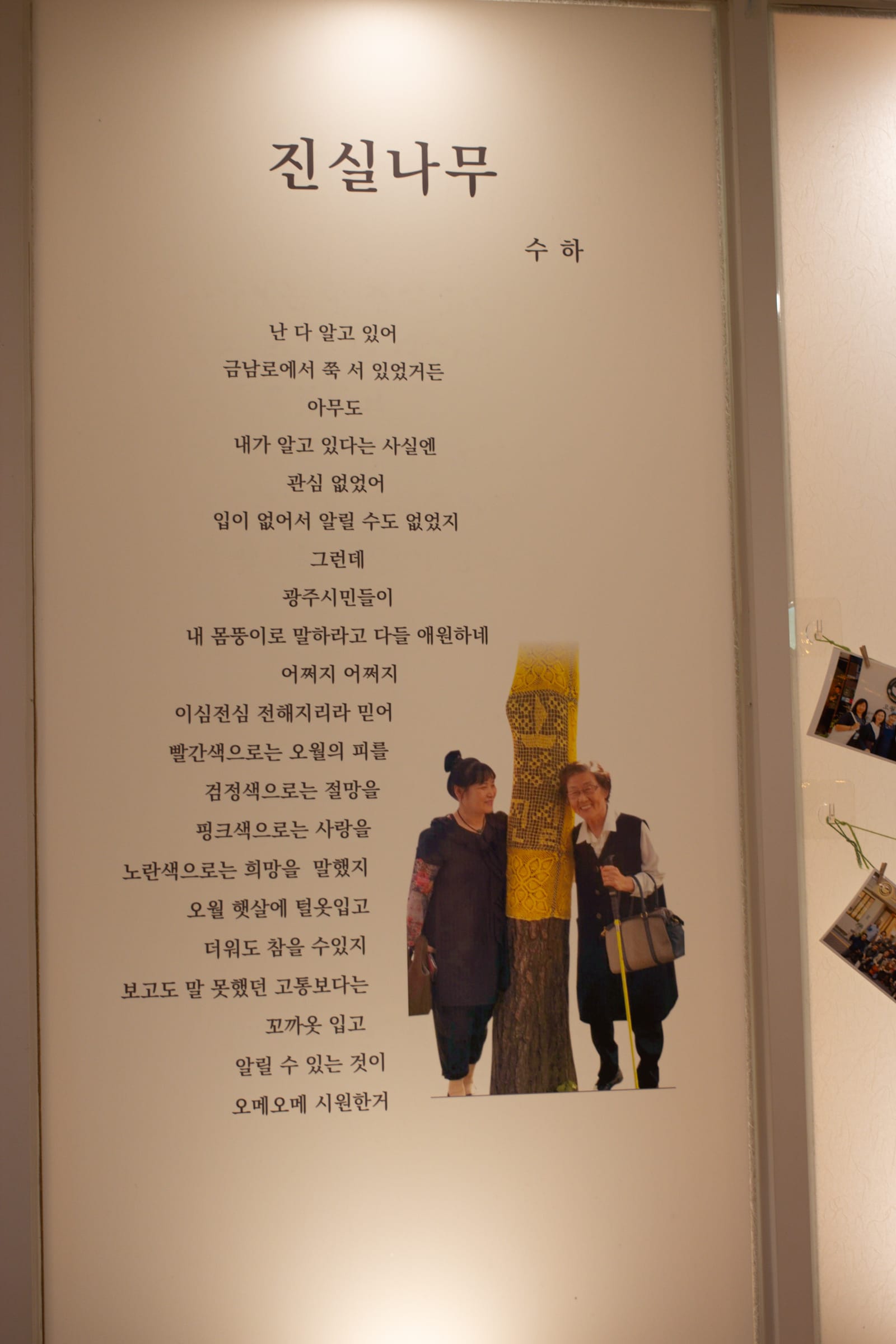
The first poem we discussed was called 진실나무, or "Tree of Truth," about a movement to clothe the trees of Geumnam-ro, a street in downtown Gwangju, with intricate yarn decorations. Humans may fight hard to suppress or protect the truth, but the trees, in their silence and honesty, witnessed everything just how it was.
Kim was born and raised in Jeju Island off the southern coast of Korea. She moved to Gwangju in the spring of 1980. When the city erupted in citizen uprising, she was there.
Here in Gwangju, it's hard to hear about May 18th without also hearing about the sharing of food that underscored the nature of this moment in history as a fight between humanity and authoritarian rule. Jumeokbap, the first item on Kim's menu, has become a symbol for spontaneous generosity in Gwangju.
It's a well-seasoned rice ball that carries a sense of kindness in its simple, tasty design. I had seen it many times in pictures of the May 18th uprising before trying it for the first time at MayBap last month. On Wednesday, that's what I was eating when the night turned into a community hang.
Gwangju is famous for its side dishes, and MayBap didn't disappoint. The Jeolla-do style kimchi was fresh, and the bean sprout and potato side dishes joined in perfect flavor harmony. At the base of it all was a savory soup that reached straight from the bowl to depths beyond everyday human reach.
I had just come in to eat dinner, but now I wanted to sit with Kim and listen to more of her stories. Perhaps she felt the same; she sat down across from me. I felt like I was at her house.
Soon she was reciting her poetry and showing me pictures of the flowers that grow in Jeju.
In one poem, she echoes the words of her grandmother, a haenyeo diving woman in Jeju. If you aren't going to study, Kim's grandmother had told her, you need to at least learn to dive.
According to the poem, Kim did want to study. She had big dreams of leaving and returning in glory, only later realizing true dignity was in the generational wisdom of Jeju's diving women.
By the time Kim looped back in the poem to say, in her own words, "물질이라도 배워야 되는건데/ 물질이라도 배웠어야 하는건데" ("I should have at least learned to dive/ I should have at least learned to dive"), I had to stop myself from tearing up at the dinner table.
Kim told me her next step is to let someone else take over her restaurant so she can focus on making and selling textile objects.
"But the food you make is so delicious!" I said. She invited me to eat at her future studio, and I calmed down. It's not like she'll stop making food when she stops selling it.
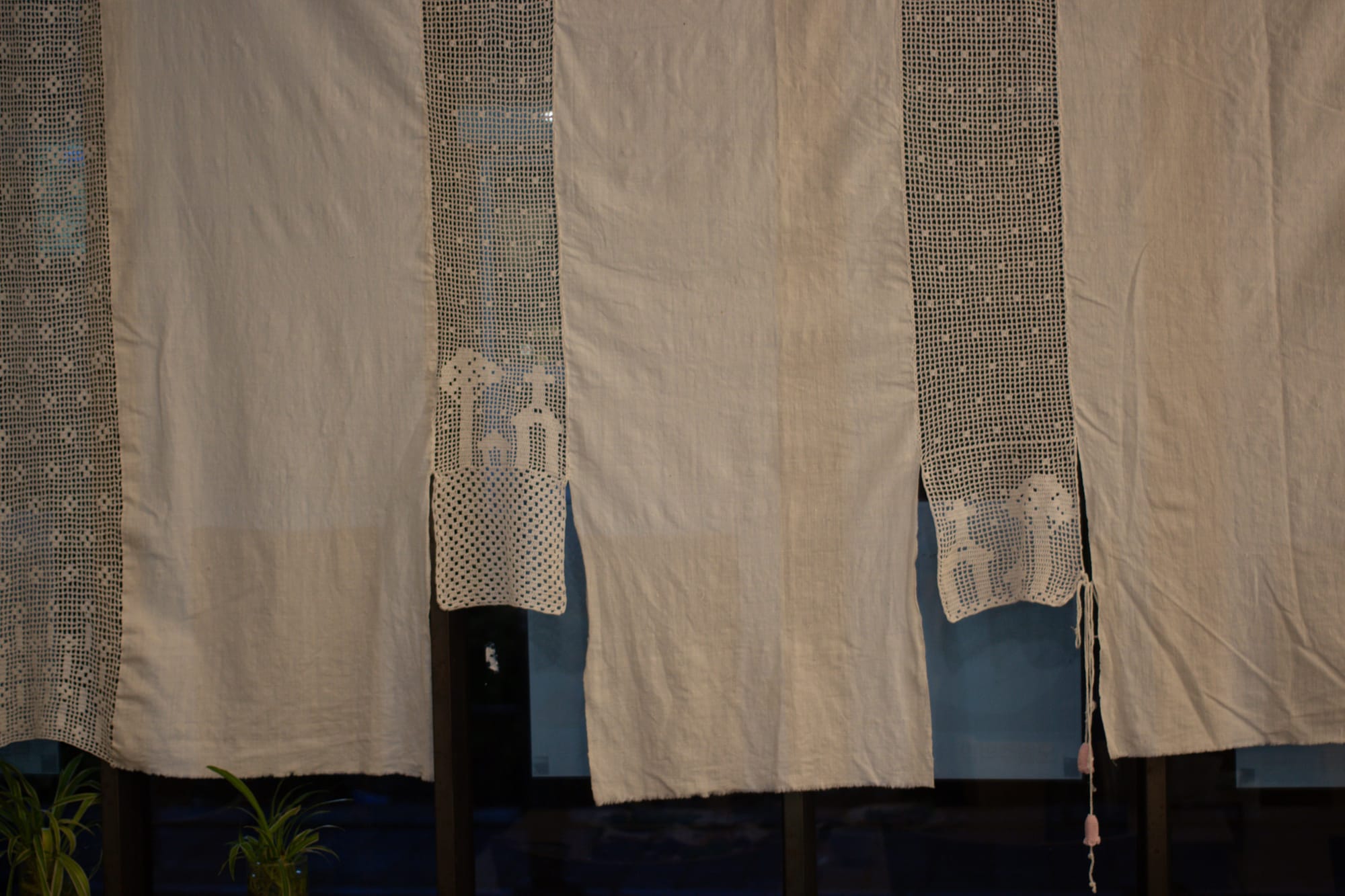
I walked around the restaurant, admiring the intricate building motifs woven into the white lace curtains at the front window. She made them, it turns out. It took her a month. Her idea was to convey a feeling of coolness, and I felt the visual sensation of a fresh breeze even on one of the hottest days in Korea's history.
One of the printed writings on MayBap's wall was a quote from a jumeokbap auntie at Gwangju's Yangdong Market in 1980:
시상에 그 애린 것들이
목숨 내놓고 싸우고 다닌디
사방에서 초상이 나고,
사방이 눈물바단디
어떻게 내 식구 입만 챙기고
자빠졌당가
which means something like:
Good God, those young ones
are risking their lives fighting
with funerals everywhere you turn,
an ocean of tears everywhere you turn,
how could I just sit back and look out for my own family's mouths?
Kim talked about the spirit of May 1980 and the jumeokbap sellers who fed the movement as only they could. It made me feel like she was carrying on their legacy not only through food, but through the poetry behind it.
"I was too young then," she said, but if she'd been the age she is now, "I think I would have been among them."
You can follow Kim Suha's writing at 기억 창고 (Memory Storehouse).
Sign up here to get Gwangju Midbrow email updates delivered straight to your inbox.