
Much Ado About Nothing
New Haven Academy
New Haven, CT
Nov. 5-8
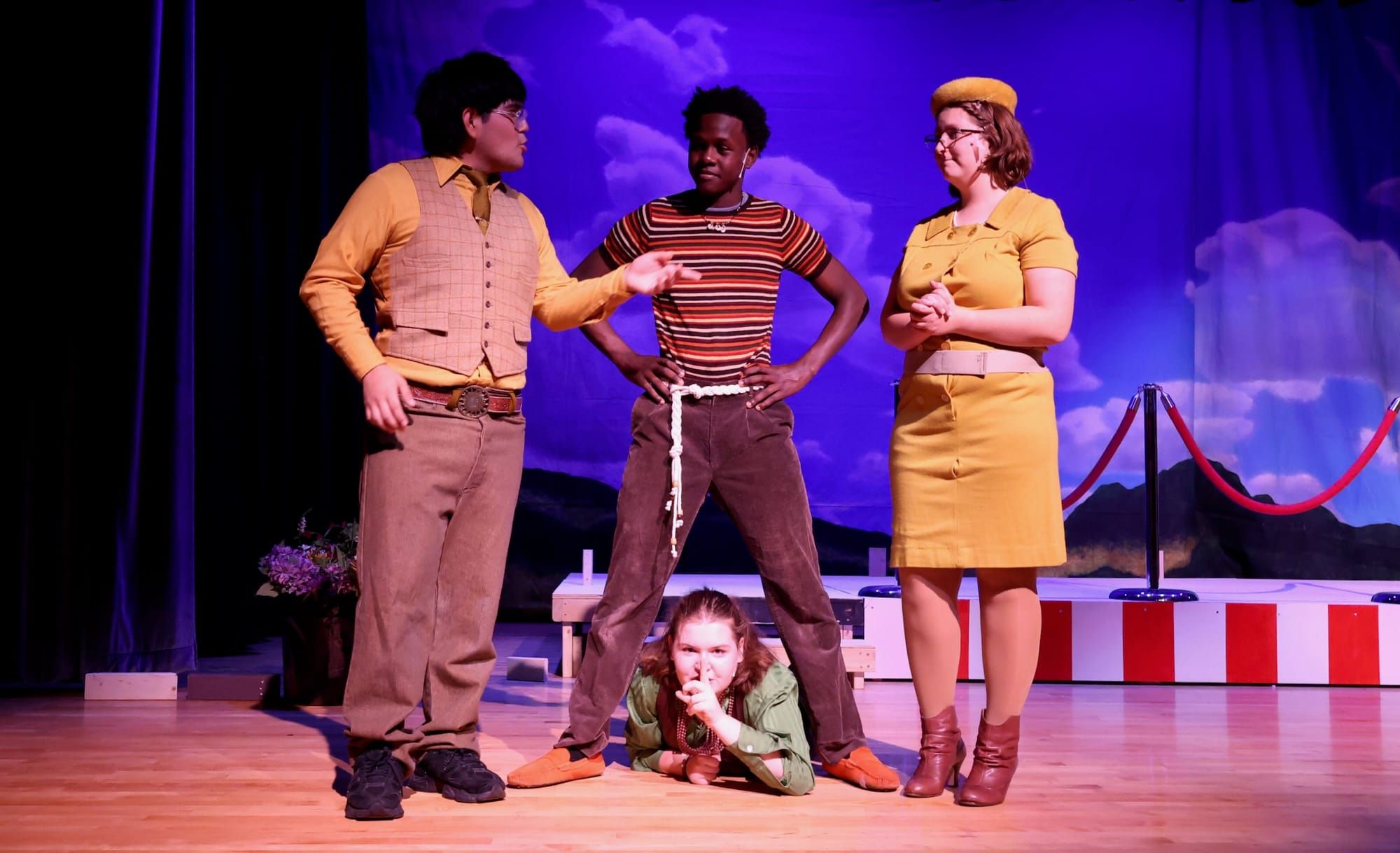
Don Pedro (Joseph Pallo), Claudio (Jonah-Theo Ssemwezi), and Leonata (Michelle Cochran) have an idea for how to get the bickering Benedick (Molly Davis) to see that maybe beneath the unwavering desire to constantly spar verbally with the equally sharp-tongued Beatrice (Olivia Tapia Ko) is something more like just plain desire. They wait until Benedick is within earshot, and then talk loudly about how they heard Beatrice is secretly in love with him. They know Benedick can hear them. The audience knows it, too, because Benedick keeps sneaking closer, in plain sight, to get a better earful. It gets harder and harder for the trio to pretend, but they keep straight faces. They know if they just hold it together, they can use Benedick's pride to get to Benedick's heart.
The hilarious results are just one moment of many in the Legacy Studios Drama Club-Elm Shakespeare collaborative production of Much Ado About Nothing—Shakespeare's indelible comedy of romantic derring-do and mistaken intentions—which will run at New Haven Academy on Orange Street Nov. 5 to Nov. 8 (click here for tickets). In its verve, energy, and attention to humor, Much Ado shows off the obvious talent of New Haven Academy's students, the enduring power of one of Shakespeare's greatest plays to entertain four centuries after it was written, but also what dedicated educators can accomplish working together.

Tyheed Scurry, of Legacy Studios Drama Club, is in his fifth year of putting together productions at New Haven Academy, and Much Ado marks his 11th show at the school. But his experience of doing theatre in New Haven's public schools goes back to his own time as a student at Wilbur Cross. He started putting together theater productions at Hillhouse High School in late 2019 and early 2020 while he was working toward his undergraduate theatre degree, and resumed in 2022 when the pandemic shutdown ended while also acting in local companies. His shows at New Haven Academy have encompassed musicals and dramas. Two years ago, he began collaborating with Elm Shakespeare Company, but the relationship began before that.
Sarah Bowles, Elm Shakespeare's director of education, "reached out to me when I was at Hillhouse," Scurry said, but the "timing didn't work out." With Scurry's move to New Haven Academy, he "really got settled" into running its theatre program, and 2024 "felt like a really good time" to take on a collaboration. Scurry and Elm Shakespeare teaching artist Liz Daingerfield, co-directing, discovered a knack for working together and putting Shakespeare's work in more unorthodox settings. Their first production, of A Midsummer Night's Dream, was set during the Harlem Renaissance. The production of Hamlet the next year was set in the punk scene of the late '90s and early '00s, "a lot of black, a lot of leather," Scurry said.
"Now we're doing Much Ado, and it's been a lot of fun," Scurry said. As the production has come together, Bowles has visited four times to check in on the process. But the main point of collaboration remains Scurry and Daingerfield, who is "way more knowledgaeable about Shakespeare than I am," Scurry said. But "we think on the same wavelength," especially about how best to hook their actors into Shakespeare's world. "We're always texting," Scurry said.
The collaboration has paid off. Students "love" the Shakespeare productions, Scurry said. "I have some students who work tech on all my other shows, but they will act in the Shakespeare show." Part of the allure is that, after running it at New Haven Academy this week, the students will remount the show again in December as part of the Elm Shakespeare Youth Festival, held at Naugatuck Valley Community College in Waterbury. The festival brings together Shakespeare groups from high schools across the state. and "there's nothing like having 130 teenagers in an auditorium booing a villain," Scurry said.
This production of Much Ado About Nothing is set in the world of the 1964 World's Fair, which took place in Queens, New York City, because — perhaps to echo our own time without making it too explicit — "we were thinking about a point in time where we were on the cusp of something crazy, and no one quite knew what was happening," Scurry said. The mid-60s, on the eve of several major cultural shifts, felt like that kind of time. "We're getting ready to go to war, but there's also this burst of newness, and I think the students really connected with that."
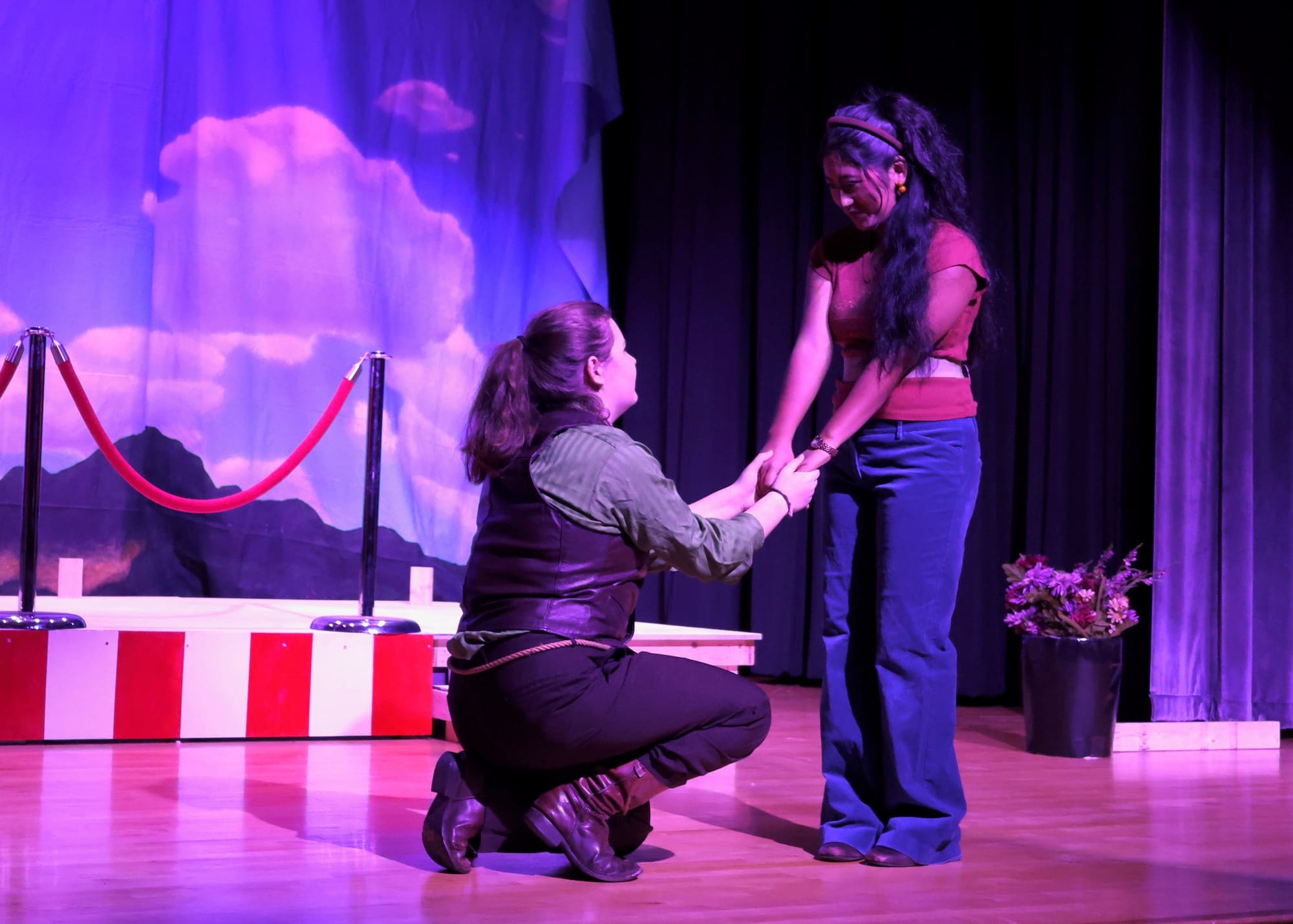
The connection is clear in the students' commitment to the play, and the fleet, vibrant take on the play that results. Davis and Ko, as rivals and soon-to-be lovers Benedick and Beatrice, are naturals in their roles, so inhabiting Shakespeare's language that they land every joke, and deeper, bring out the delightful flaws in the complex pair that might be the template for every rom-com that has followed. We see from the start that they spar because they are so alike: each of them is the smartest, fastest person in the room until the other shows up; each is too proud to admit, even to themselves, that their irritation with one another is just the leading edge of a deep attraction. When their self-deceptions fall away, they reveal more of their characters' swoony sides, without ever losing the sharpness that drew them together in the first place.
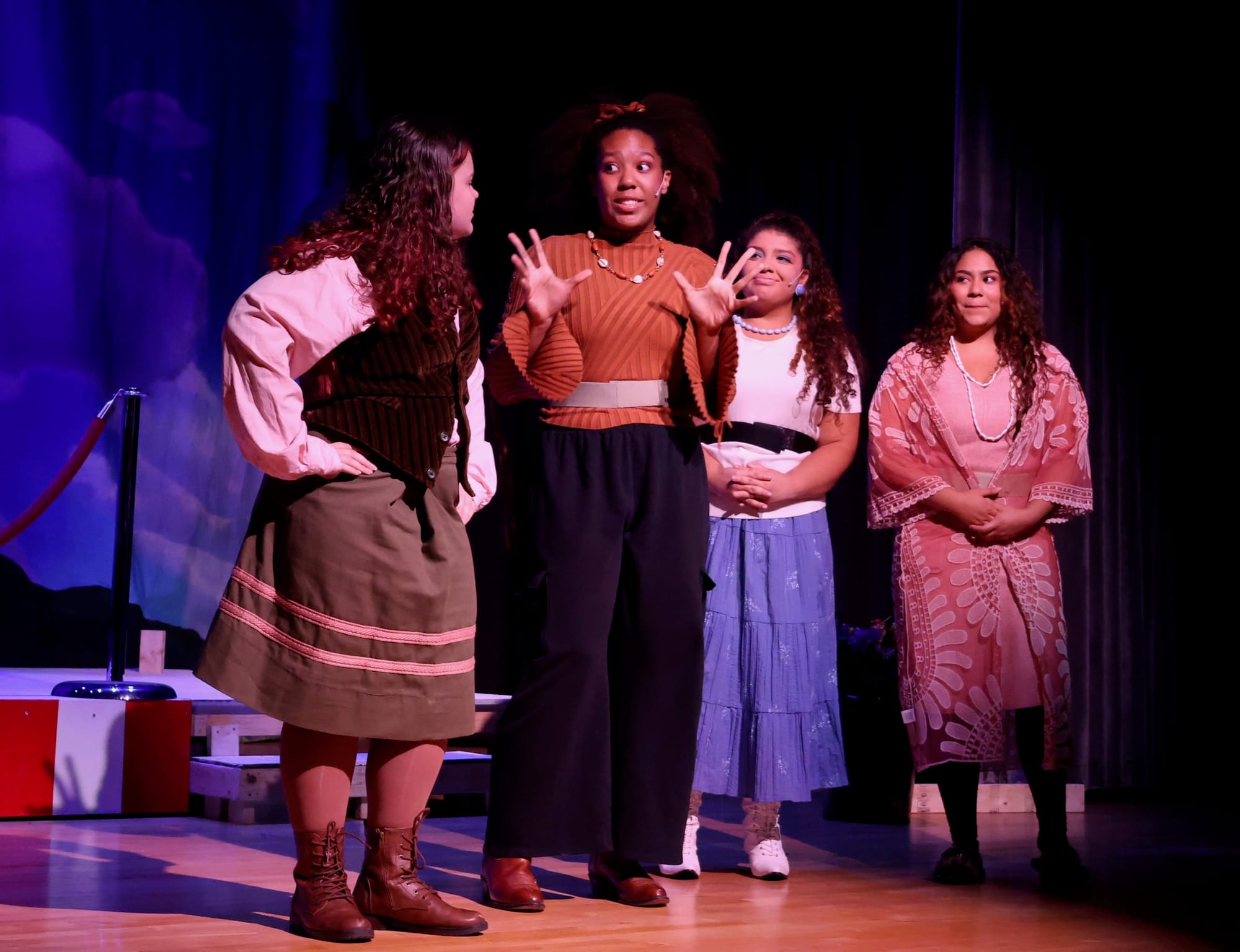
The supporting cast for the famous duo works so well as a unit that, in this production, it functions almost as a Greek chorus, helping move Benedick's and Beatrice's romance along while also commenting on it. This places the more serious-minded romance, between Claudio and Hero, in a different light, and the actors — Jonah-Theo Ssemwezi and Marilyn Acosta Robinson — bring out what's infuriating and tragic about the misunderstanding that almost dooms them. Ssemwezi gets the pettiness and pride that are the other side of the blade of Claudio's earnestness, and Robinson plays Hero as a woman too sure of herself to take his accusations of impropriety to heart, even though she's devastated. It's a good decision to treat both characters this way in 2026, with the meanness behind Claudio's actions brought to the fore, as well as the way he can be easily manipulated to be brought back into line — little knowing that, without the intercession of the authorities, it could have cost him his life.
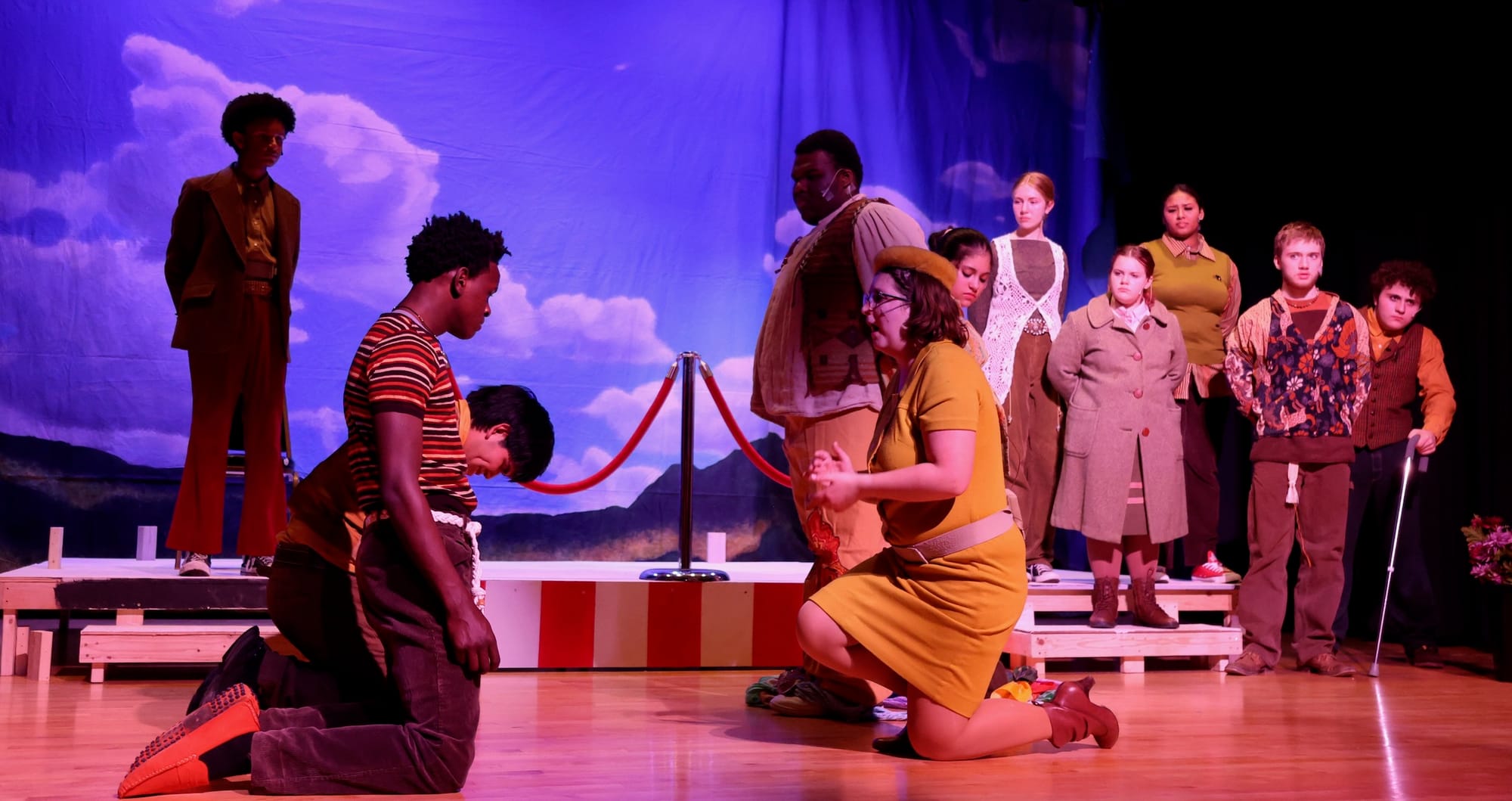
But the production never forgets the play is a comedy, especially in the treatment of a second subplot that explains how Claudio's misplaced accusations against Hero came about. Curtis Reason plays Don John, the closest thing the play has to a villain, as the most petty of the petty bunch. Things get even funnier with the arrival of Dogberry (Oliver Reymond) and Verges (Mateo Cordero), two inept police who still somehow manage to do their jobs and reveal Don John's treachery. It all comes to a satisfying, lighthearted conclusion, made even lighter by the 1950s to mid-1960s soundtrack that leans hard into soul and early rock 'n' roll, before drugs and politics. The songs remind us what Shakespeare's best comedy is really about: you might as well spell "nothing" with an L, an O, a V, and an E.


