“When We Were Young and Unafraid”
Detroit Repertory Theatre
Detroit
Through Dec. 13, 2026
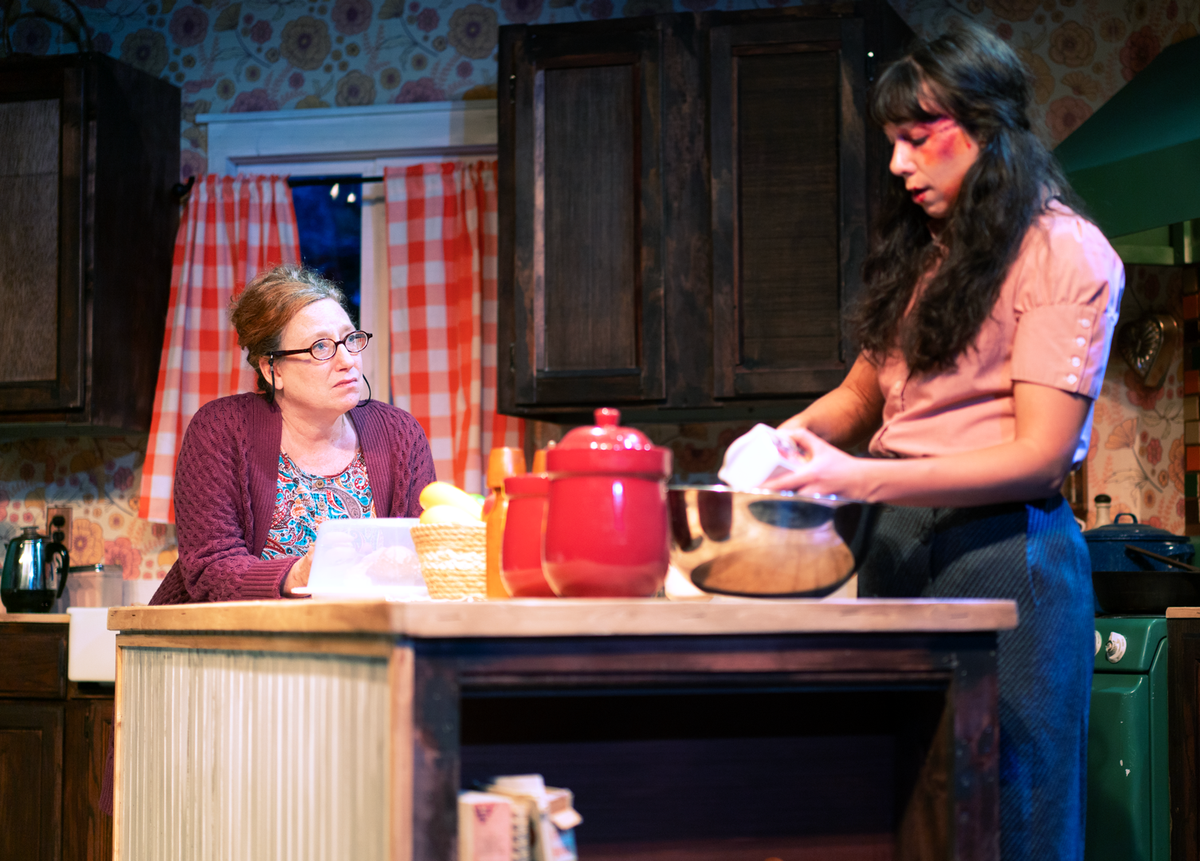
At first, you could be convinced that “When We Were Young and Unafraid” is a family sitcom. It takes place in what appears to be a family’s home. The gang’s all there. We’ve got the angsty daughter who’s too smart for her own good, and the homemaker mother baking muffins. And there’s that pesky birth certificate the daughter wants so badly, so we know it’s going to be a major plot point later. It all seems familiar until they turn off the lights and slide a cabinet out of the way to reveal a hidden tunnel that a battered woman has just crawled through.
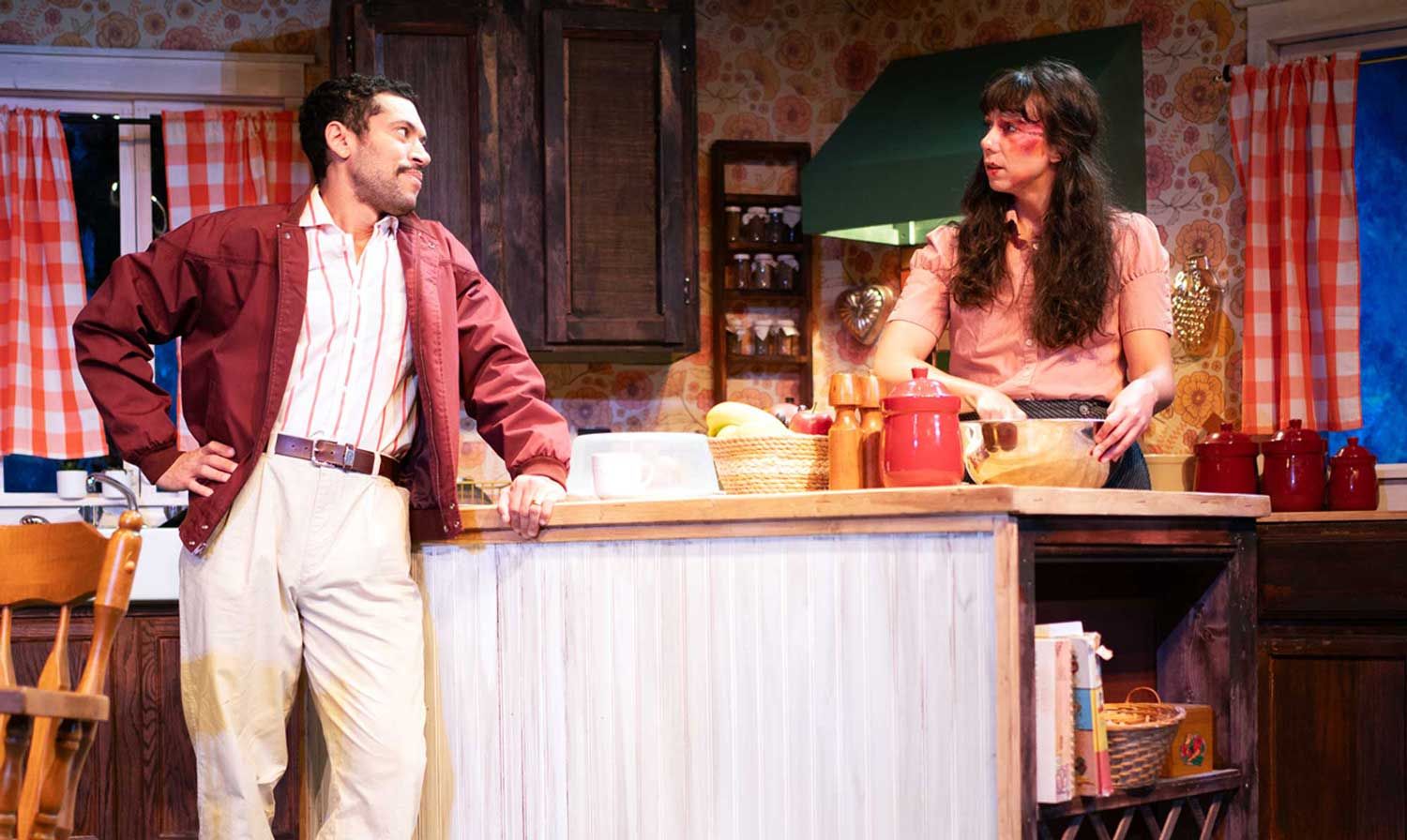
“When We Were Young and Unafraid” takes place in 1972 on Whidbey Island in Washington state. There, a middle-aged woman named Agnes, played by Leah Smith, runs a bed and breakfast that doubles as a refuge for women fleeing domestic violence. The latest resident, Mary Anne (Jessica Annunziata), struggles with wanting to return to her abusive husband. She is also becoming a bad influence on Agnes’s teenage daughter Penny (Tayler Jones), who is determined to get into Yale. Then there’s Hannah (Stacey Herring), a butch handywoman who is looking to join a group of feminists called The Gorgons. The play was written by Sarah Treem and directed by Kelly Komlen.
Somehow, even though the material itself isn’t funny, the production continues to feel like a sitcom. The characters make strange choices, yes, but there is some nuance missing in their delivery. A male guest named Paul, played by Bello Paolo Pizzimenti, feels like a parody of himself. He’s a pushover and a bit of a jerk who is both nosy and condescending, and represents the typical “nice guy” trope. No wonder his wife left him.
Smith shines in the play as Agnes, the concerned mother who just wants what’s best for her daughter and the women she tries to help. She is the glue that (barely) keeps everyone together. I won’t give the ending away, but there’s a moment where her love for Penny permeates the room and brings tears to my eyes. Some of the other moments in the play, which should have felt more harrowing, didn’t hit as hard and felt glossed over. When Annunziata as Mary Anne finally recounts her assault and how it has haunted her dreams, it fell flat, like a beat that was missed.
Smith’s Agnes and Herring’s Hannah are the most believable pairing. They play off each other well. As Agnes works to warm Hannah’s cold exterior in the first half of the play, Hannah tries to provide Agnes the space to feel later on.
To put things into context, the play is happening before Roe v. Wade and the Violence Against Women Act. Back in 1972, which wasn’t that long ago, domestic violence was widely treated as a private matter, and a husband could not be charged with raping his wife. It makes sense that Agnes is a former nurse who lost her license for performing abortions, and all the women in the play are grappling with womanhood. Despite being physically and sexually assaulted by her husband, Mary Anne wants to go back to him. Sixteen-year-old Penny is college-bound, and boys are intimidated by her, so Mary Anne coaches Penny on how to shrink herself to get the attention of her crush. Agnes takes on the mother role not only to Penny but to the battered women who come through her house, and Penny may think Agnes is strict but she means well. Hannah is on the opposite end of the spectrum as a radical, anti-male feminist, and really, can you blame her?
They all represent responses to patriarchal ideas that women are pushing up against, whether they give in or chart their own path. And isn’t that the decision that all women are still dealing with today?
There is so much garbage talk in the internet manosphere about what it means for a woman to be “feminine.” Trad wife influencers try to sell us on a life dedicated to cooking, cleaning, and raising children for a man. Then the Megan Thee Stallions of the world present a new form of feminism (which I identify with) of outspoken sexual freedom and autonomy over our bodies and choices. You also have activists like Jex Blackmore taking abortion pills on live TV after Roe v. Wade was overturned in 2022, a sentence I never envisioned myself writing. While the idea of the Gorgons’ radical community where no men are allowed sounds extreme, those communities do exist from Texas all the way to Berlin. While many of those communities cater to retired women, increasingly women in my generation are choosing to stay single and avoid dating men altogether.
The purpose of “When We Were Young and Unafraid” is not to bash men but to call out systems of oppression that force women to negotiate their personhood in a world that feels hellbent on crushing our spirits.
“When We Were Young and Unafraid” is at Detroit Repertory Theatre until Dec. 13. For more information and tickets, see detroitreptheatre.com.
Follow Midbrow Detroit on social media:
Bluesky, Facebook, Instagram, Threads, TikTok, X.
 Erica Hobbs