
“When We Were Young and Unafraid”
Detroit Repertory Theatre
Detroit
Through Dec. 13, 2026
A lot was changing for women in 1972. In the midst of the women’s liberation movement, a year before Roe v. Wade, women were on the verge of new possibilities for independence from men. And as highlighted in Detroit Repertory Theatre’s production of Sarah Treem’s “When We Were Young and Unafraid,” that change can be terrifying, with stakes that can literally mean the difference between life and death. The play, directed by Kelly Komlen, explores the complicated relationships between men and women — and women and women — as traditional gender roles were changing.
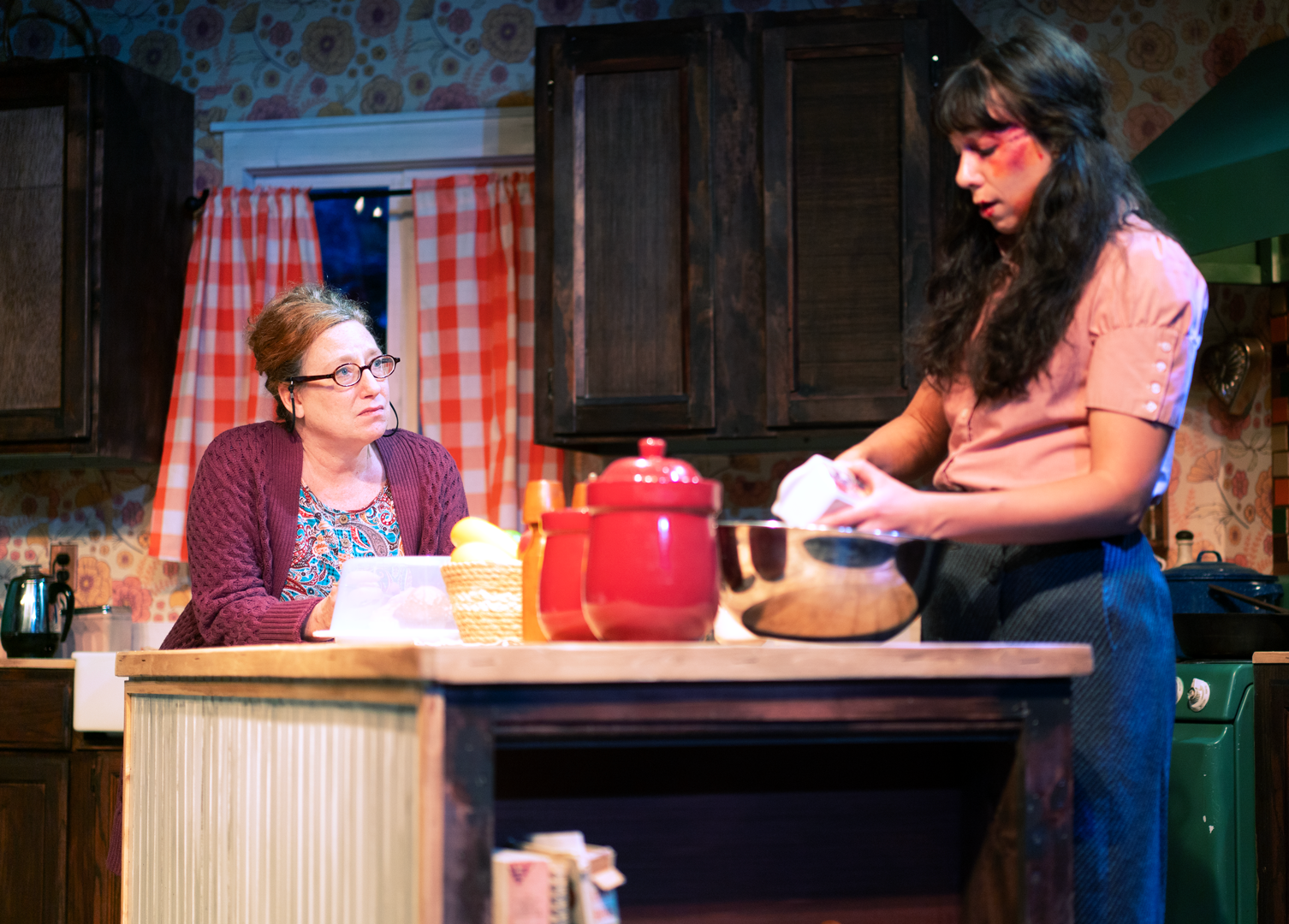
Set in a bed and breakfast on a remote island off the coast of Washington state, “When We Were Young and Unafraid” follows the life of innkeeper Agnes and her studious 16-year-old daughter, Penny. During the day, Agnes bakes muffins, cleans her “Golden Girls”-esque kitchen, and takes care of her guests. Quietly, she takes in women escaping from domestic violence, providing them a safe space to heal from injuries and plan new lives away from their abusers.
Amid a mother-daughter squabble about prom and college applications, a rap at the secret door behind the cabinet introduces us to Mary Anne, a traumatized young woman with a black eye in need of refuge. Over subsequent weeks, Mary Anne begins to heal, though she struggles with missing her abusive husband. She bonds with Penny — who has dreams of Yale — offering her terrible yet successful advice to catch the attention of the toxic captain of the football team, setting her up to repeat her own mistakes. Meanwhile, angry lesbian Hannah barges in looking for work, then leaves to find a nearby women’s commune offering a radical alternative: a life entirely without men. Then there’s needy guest Paul — the lone male of the show — an annoying “nice guy” obtrusively pining for Mary Anne.
The show sheds light on the emotions of domestic violence — how the memories of a formerly loving man, or an idealized version of him, can cloud judgment, to the point of a woman repeatedly putting herself back in danger and potentially endangering others. And when a woman is financially dependent on that man, choices become more difficult.
The roles in “When We Were Young and Unafraid” are not easy. DRT executive artistic director Leah Smith shines as Agnes, a warm innkeeper and loving mother on the outside, quietly fighting the patriarchy on the inside — all with admirable patience and grace.
Tayler Jones as Penny and Jessica Annunziata as Mary Anne do not quite rise to the occasion. Both deliver emotional performances: Jones plays a petulant teenager navigating the overwhelming feelings of a first love. Annunziata plays an abused housewife, struggling to find the courage to escape to a safer unknown while facing an impossible situation. But both performers lack nuance in their portrayals, bringing a near-constant intensity to their scenes that reduces the impact of their most poignant moments.
“When We Were Young and Unafraid” is a difficult watch. It’s frustrating on many levels, highlighting the toxicity of so many men — even the “nice” guys — and watching women continue to accommodate their bad behavior, even when we’re meant to sympathize with the women. While the production doesn’t always deliver the full emotional impact of its subject matter, it is a sobering reminder of the dangers of women being fully reliant on men — and the importance of women supporting one another.
Follow Midbrow Detroit on social media:
Bluesky, Facebook, Instagram, Threads, TikTok, X.


