
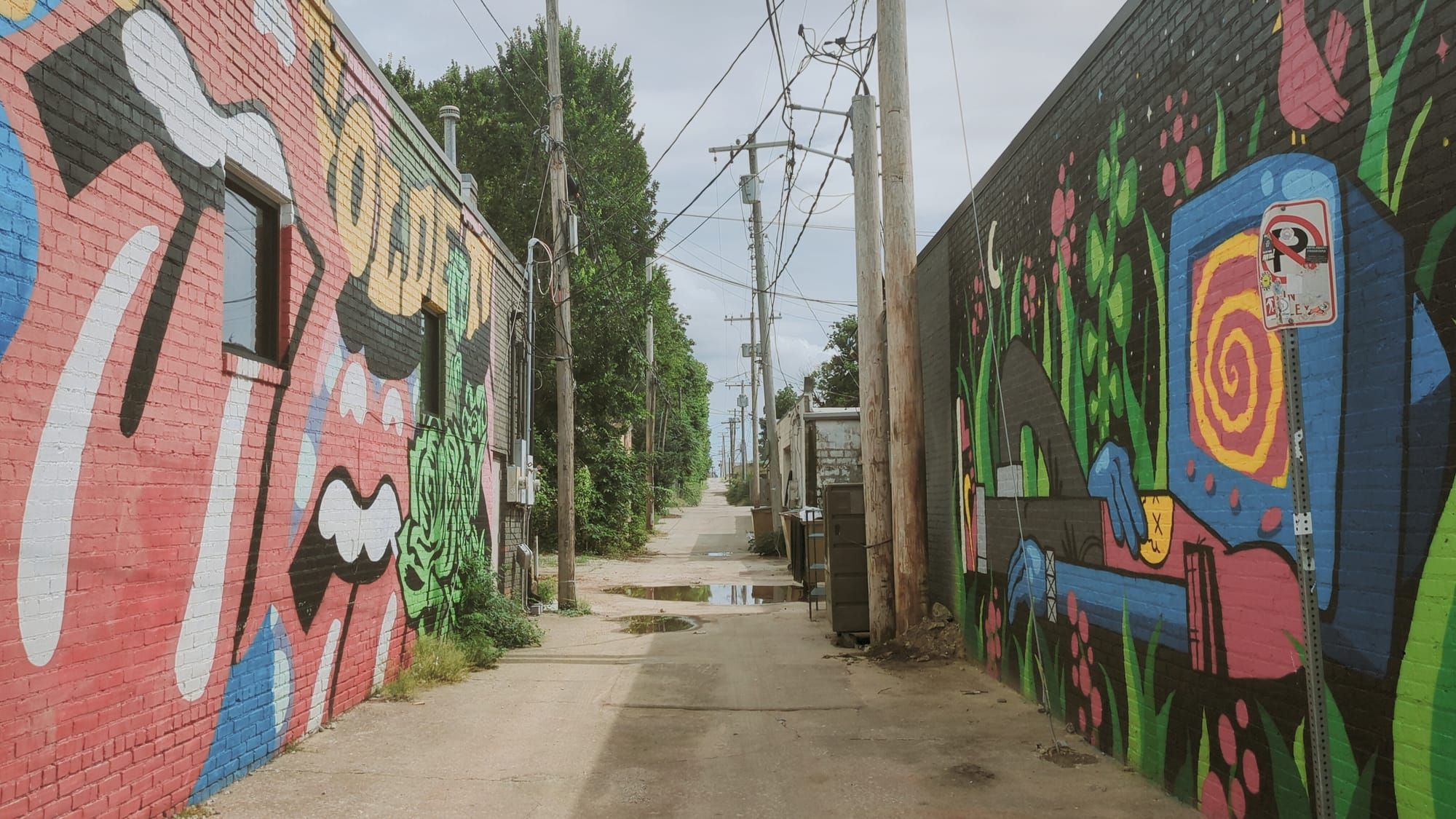
“Admiror o pariens te non cecidisse ruinis qui tot scriptorum taedia sustineas // I'm amazed, oh wall, that you haven't fallen into ruins since you hold the boring scribbles of so many writers.” —Anonymous graffiti, Pompeii
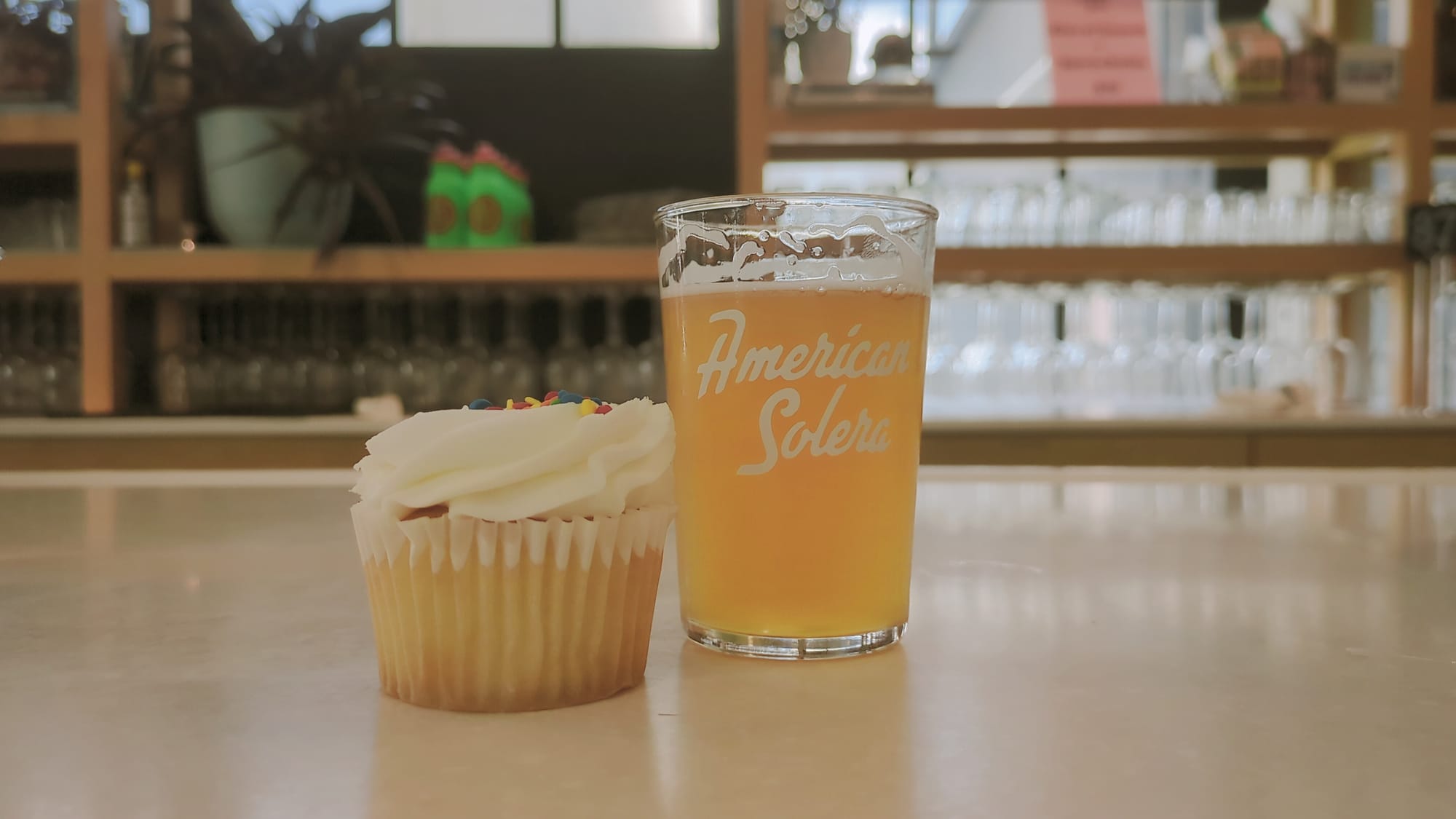
For Habit Mural Festival’s seventh go-round this year, instead of focusing on one building as they’ve done in the past, the public art bonanza took over the Pearl District. Up and down 6th Street between Peoria and Utica, 15 new large-scale murals now dot the landscape after a late-May two-day festival that included 20 individual artists and art collectives, music and dance performances, and even a special beer release at American Solera.
With the festival long over, the paint dry, and the beer drunk, I returned to the scene to see how one of Tulsa’s most curious corridors was coming along after renewed attention from the film industry, municipal care, and nonprofit placemaking.
Using the map of the murals provided by Habit Mural Festival, whose name is often shortened to just “Habitfest,” I decided to walk the entirety of the works as if it were a traditional art gallery. Any city is walkable with enough determination, sunscreen, and self-hatred. (Except for San Antonio. Between Victor Wembanyama crash-outs and an average walkability score of 37/100, pick a struggle. Tulsa, on the other hand, with its average walkability score of 39, is a beacon of on-foot travel.)
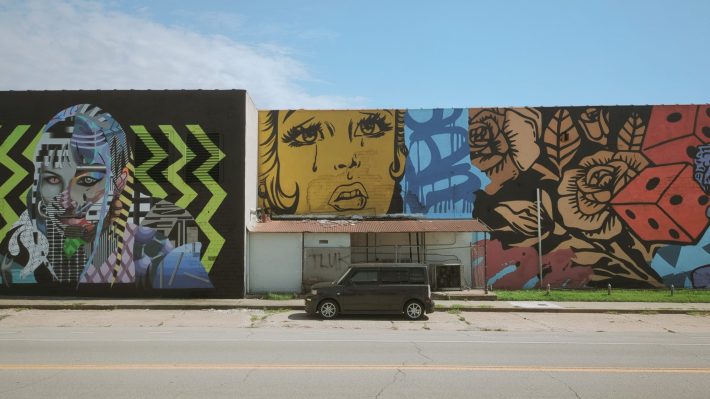
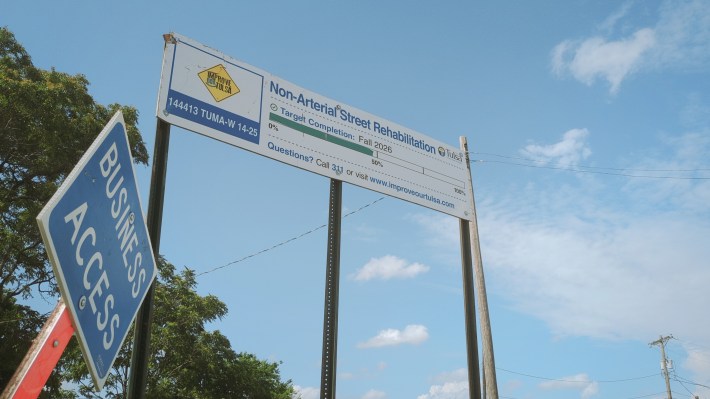
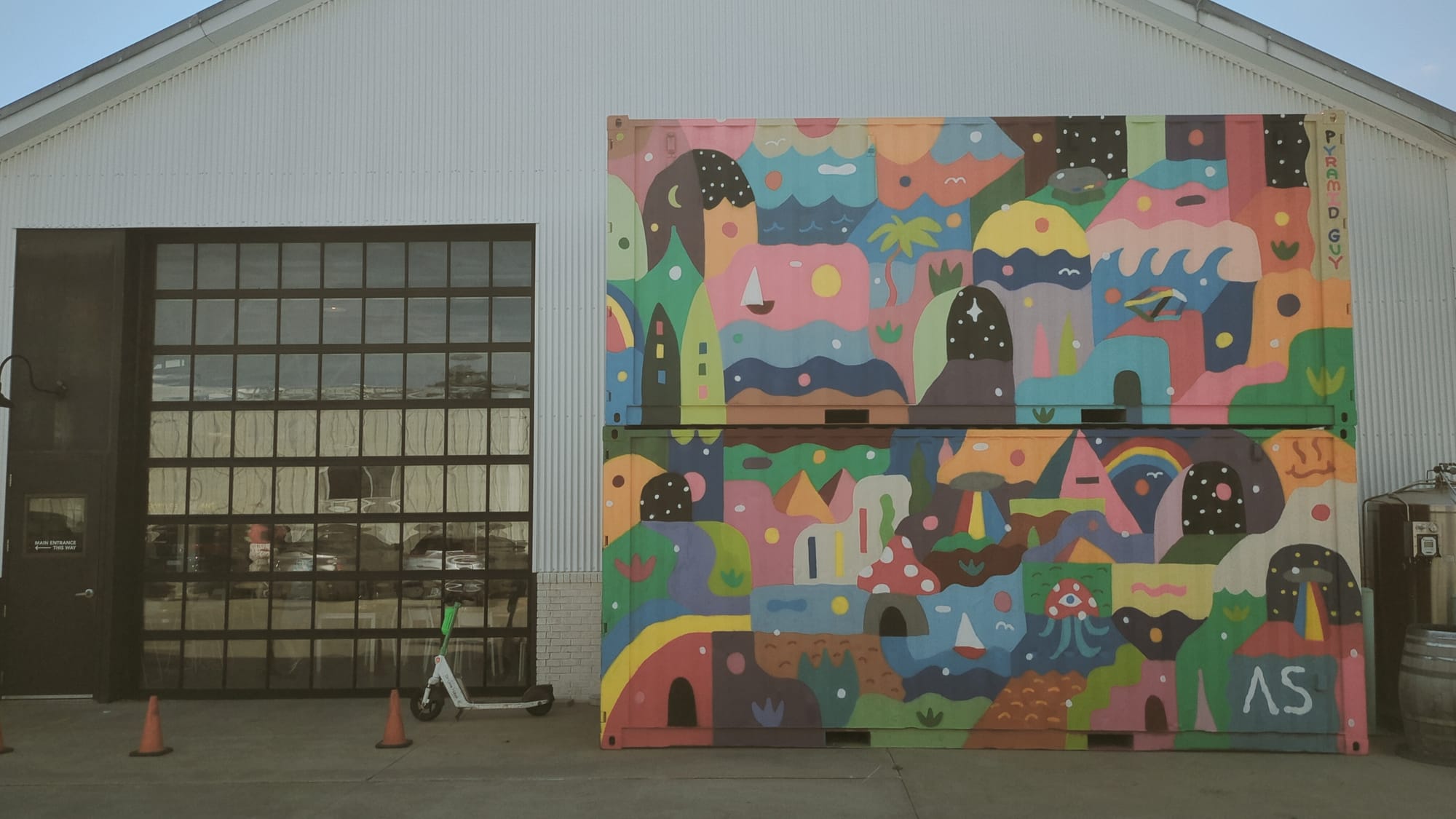
The roughly half-mile of murals between The Center for Public Secrets to the west and American Solera to the east is mostly an enjoyable, albeit very sunny walk. A majority of the works are clumped closer to the now-closed coffee shop formerly known as Cirque, with a few more over near Nothing’s Left Brewing, then finally on some shipping containers in the American Solera parking lot. A large “Improve Our Tulsa” sign notes that the “Non-Arterial Street Rehabilitation” is just under 50% finished with a completion date of Fall 2026. A damaged “Business Access” sign leans towards it.
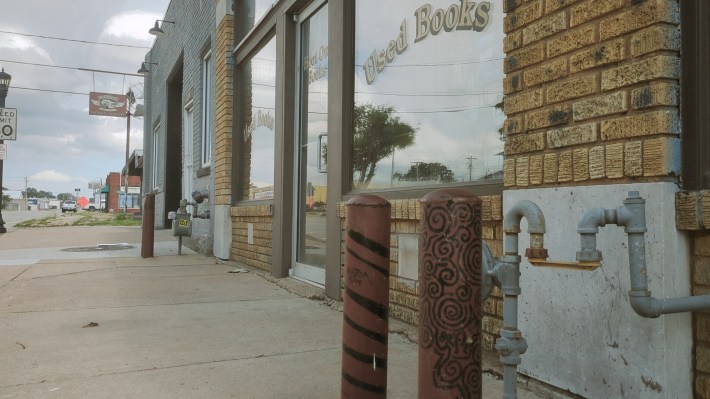
For those able and abled, walking the Pearl does have some added bonus over simply touring the pieces by car. As I walked past the set pieces from the TV show The Lowdown, the little shops, and the noisy auto repair businesses, I got to see a lot of details that get missed when you zip past at 35mph. In fact, you can’t even see all the Habitfest pieces from the road; many are tucked in alleyways and behind storefronts, in places that you might not ever tread otherwise.
A fun part of this walk is also finding all the, one might say, unsanctioned works, tags, stickers, and little hidden messages. I treated these as if they were a part of this open air gallery, stroking my chin and swirling my to-go coffee like it was wine. Like the painted caves of Lascaux, France, here too we leave our little mark of existence, even if it's just a simple question in blue paint on an electrical box that dares to ask: “butt?” I contemplated the haunting question and moved on.
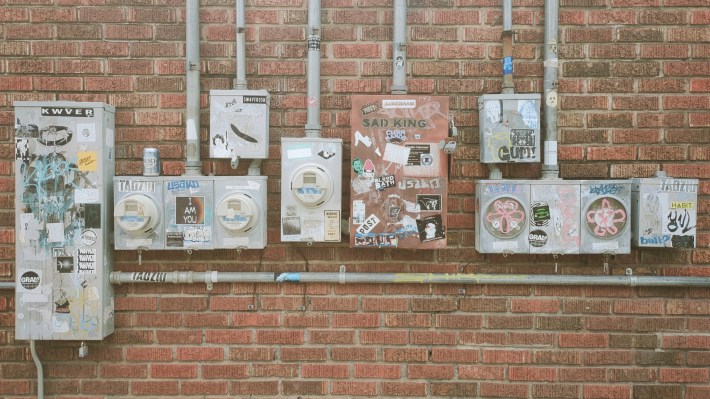
As for the sanctioned art, the murals are mostly large-scale, complex, and colorful. They range in size from about as tall as myself, to towering a couple stories up the sides of large industrial buildings. While some of the styles shown could be categorized as large throw-ups and wildstyle, the majority of the works are what the graffiti world calls “masterpieces” or simply “pieces.” This type of large mural art is rare in non-sanctioned spaces without artists taking great risk, so it's a treat to see so many all together.
Sanctioned mural works do tend to have less political messages, which appears to be largely true with the Habitfest 7 works, as the artists seemed to be more focused on creating beautiful and technically difficult pieces over anything with overt messaging. This is, of course, expected and not really an inherent issue, but it does create a bit of stark contrast when the “Mass Graves This Way” mural on the backside of the Center for Public Secrets sits near the Habit pieces.
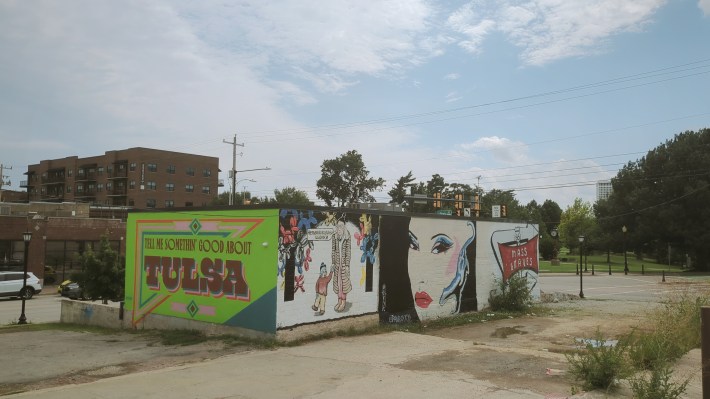
While our increasingly booming commercial film industry continues to find its stride, and our arts nonprofits seek to beautify our city through placemaking, we still have to reckon with difficult pasts. Graffiti artists often sit in an unfair crossroads between funding, exposure, truth, and legality. Likewise, the Pearl District also sits in that uncomfortable place between development, abandonment, and affordability. I do think Habit Fest threads the needle on giving a platform to locals to go for something big and own it, and they help improve a local area without dominating it. Of all the people I talked to about the murals, no one had anything negative to say about the works along 6th Street or Habitfest as a whole, even if they were not particular fans of mural works in general.
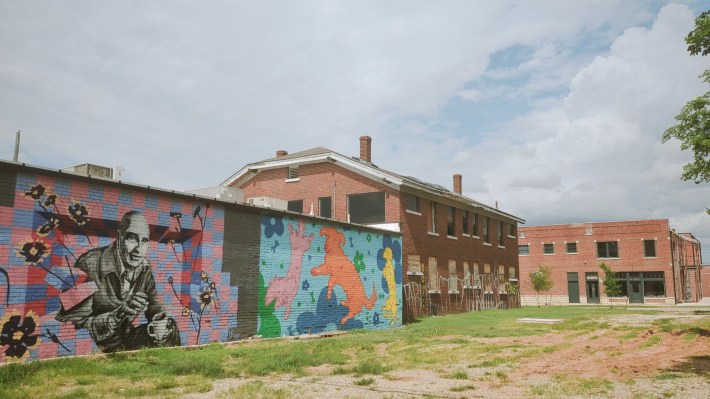
So what distinguishes 6th Street from other mural- and graffiti-heavy areas in Tulsa? The variety of styles, for one thing. From the ubiquitous works of the Clean Hands crew, to the drippy airbrush salon art of Dan Rocky, to the surrealist cyberpunk pieces by Zuwaé & Qumes, all the artists feel unique from each other, and create great visual contrast across the stretch of road. The Habit Mural Festival team did a great job in selecting artists with a great mix of more traditional, non-traditional, and even more experimental styles—everything from western and kitschy to spooky and gothic.
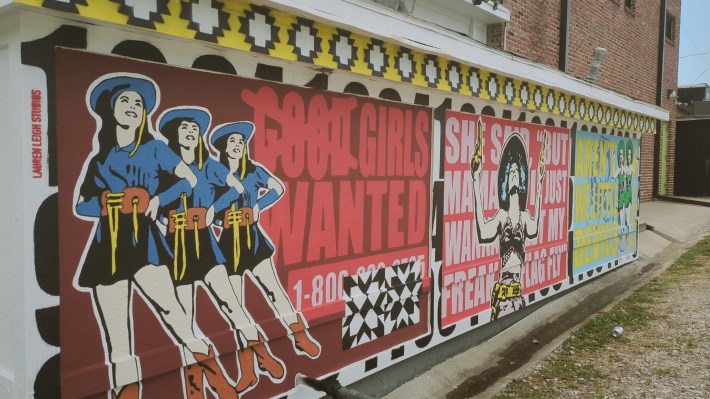
Unfortunately, due to Tulsa being such a car-dependent place, I fear many of these great works will be hidden from a proper viewing for most passersby. For those choosing to explore on foot, the wide streets are not the easiest to cross, and the straightaway nature of 6th Street means cars are often moving with purpose and not paying attention. A lack of trees or other shelters means you are at the mercy of the elements, and there are few benches or other places for respite.
With so little public-friendly space along the way, I often felt I was borderline trespassing trying to view some of the works. That said, the Pearl, one of Tulsa’s oldest neighborhoods, is showing some great ways placemaking can be done in a place that's still in the making.
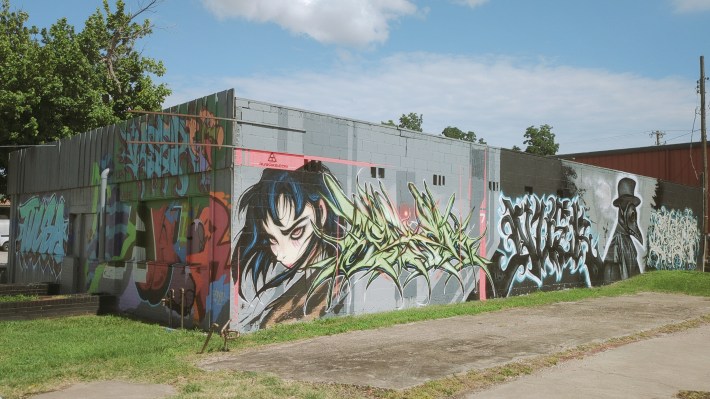
Habitfest chose to break their own mold this year by moving from a single, centralized space to a half-mile stretch of mixed-use development, and I think it paid off, even with some of its downsides. Instead of one building in one area seeing all the love, this brought attention to a whole district, making this year’s festival distinctive in terms of layout as well as style. The variety is excellent and the works are all excellently done. I hope to see Habit continue to try these district-focused festivals, alongside their main event, as a way of uniting Tulsa as one big brick-and-mortar canvas.
Also, in true Tulsa fashion, at both the very beginning of my walk at the Center for Public Secrets and at the very end at American Solera, I ran into someone I knew: one on their way to yoga, another celebrating their mom’s birthday. In Tulsa, you are never far from a friend, and it’s sweet enough to make you want to throw up a piece. Uh, permit willing, of course.
photos by Henry Roanhorse Gray


