
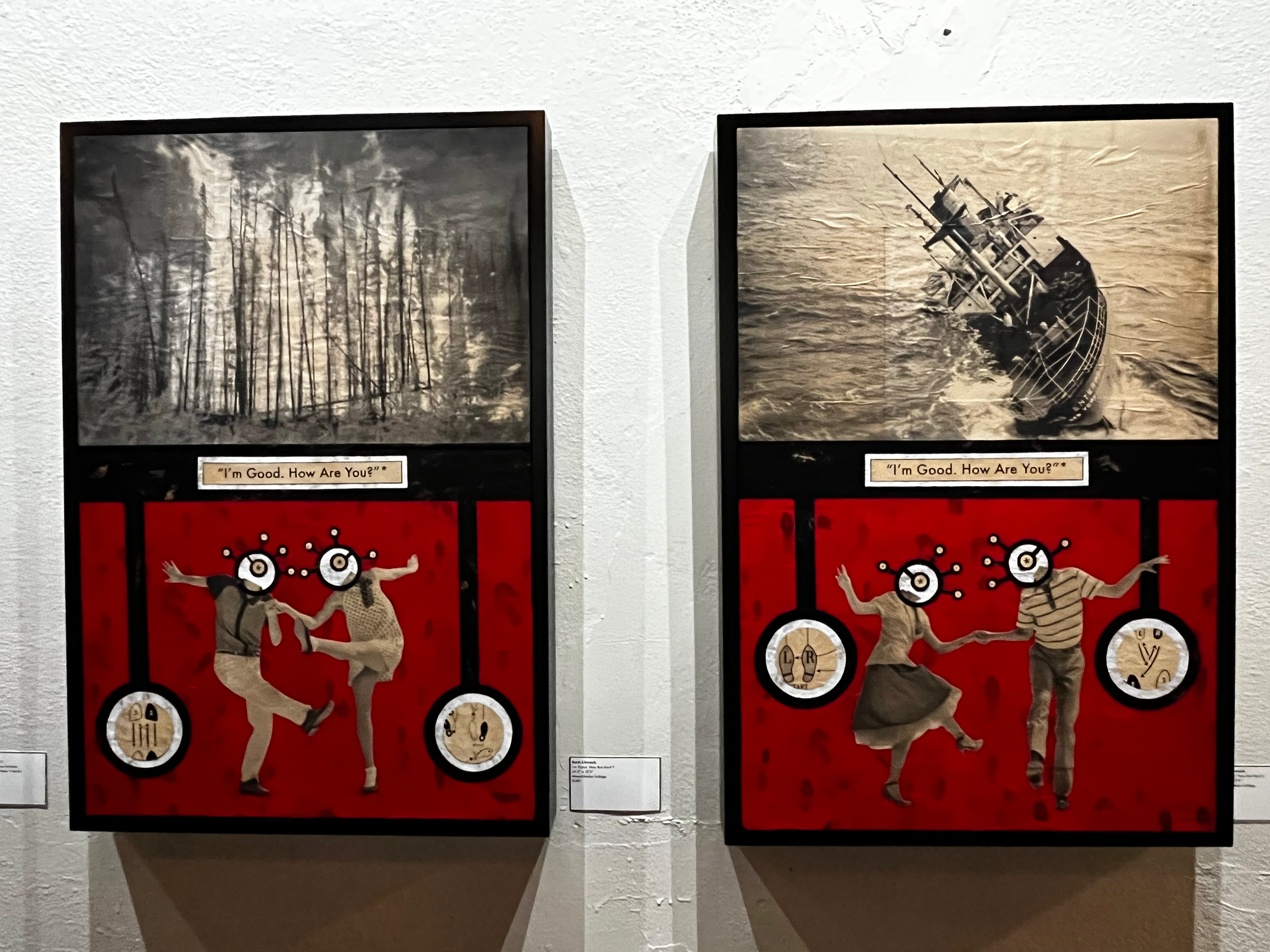
“I’m Good. How Are You?” by Zach Litwack
Belafonte
Through May 15, 2026
Aggressive politeness, relentless optimism, the constant presentation of okay-ness: toxic positivity is the American way of life, where the price of getting along is the cold-metal clink of one reality distortion coin after another into the “it’s all fine” machine. The mechanics—and the costs—of these social expectations are the subject of Zach Litwack’s I’m Good. How Are You?, a potent little show that stopped me in my tracks.
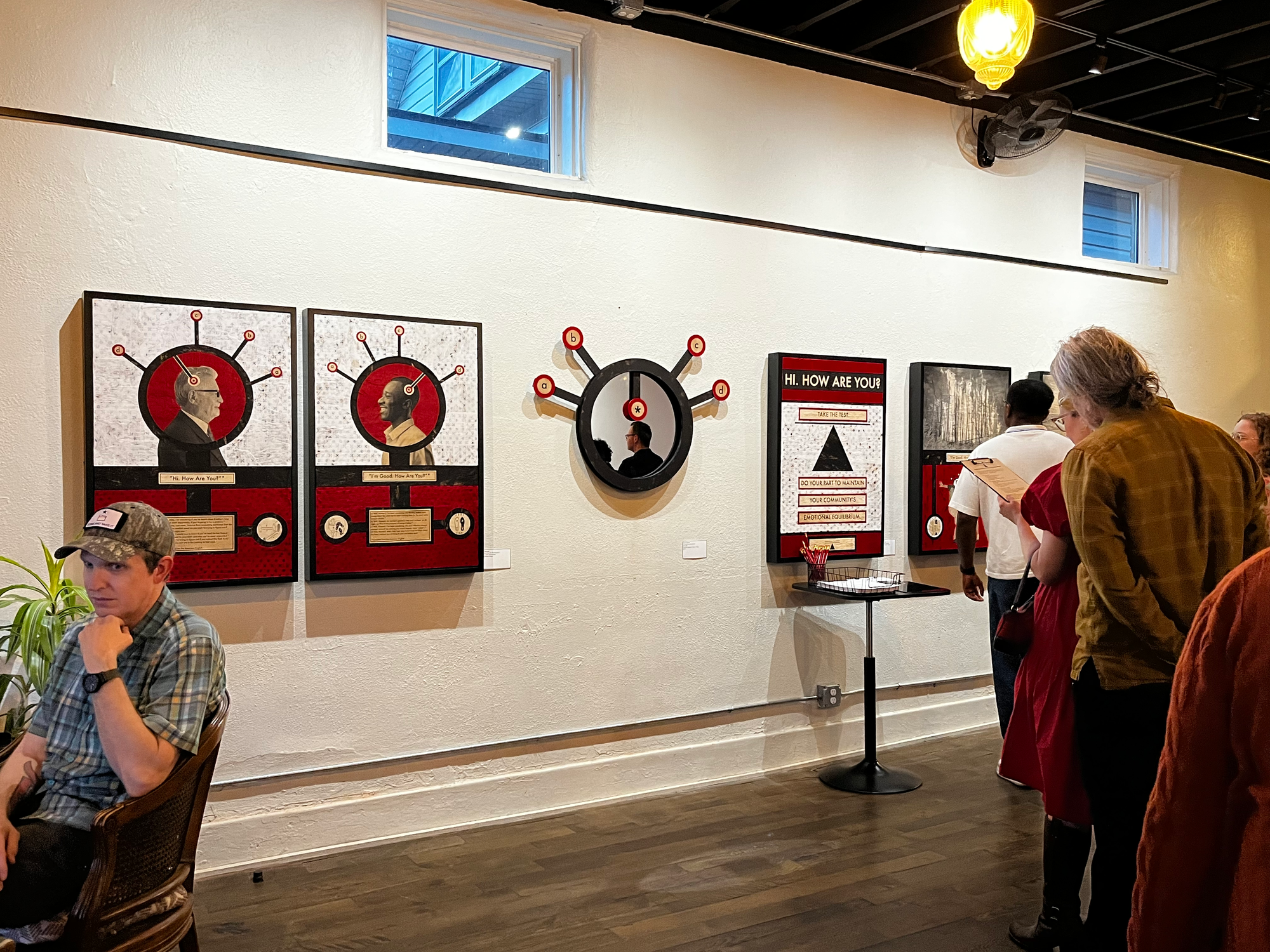
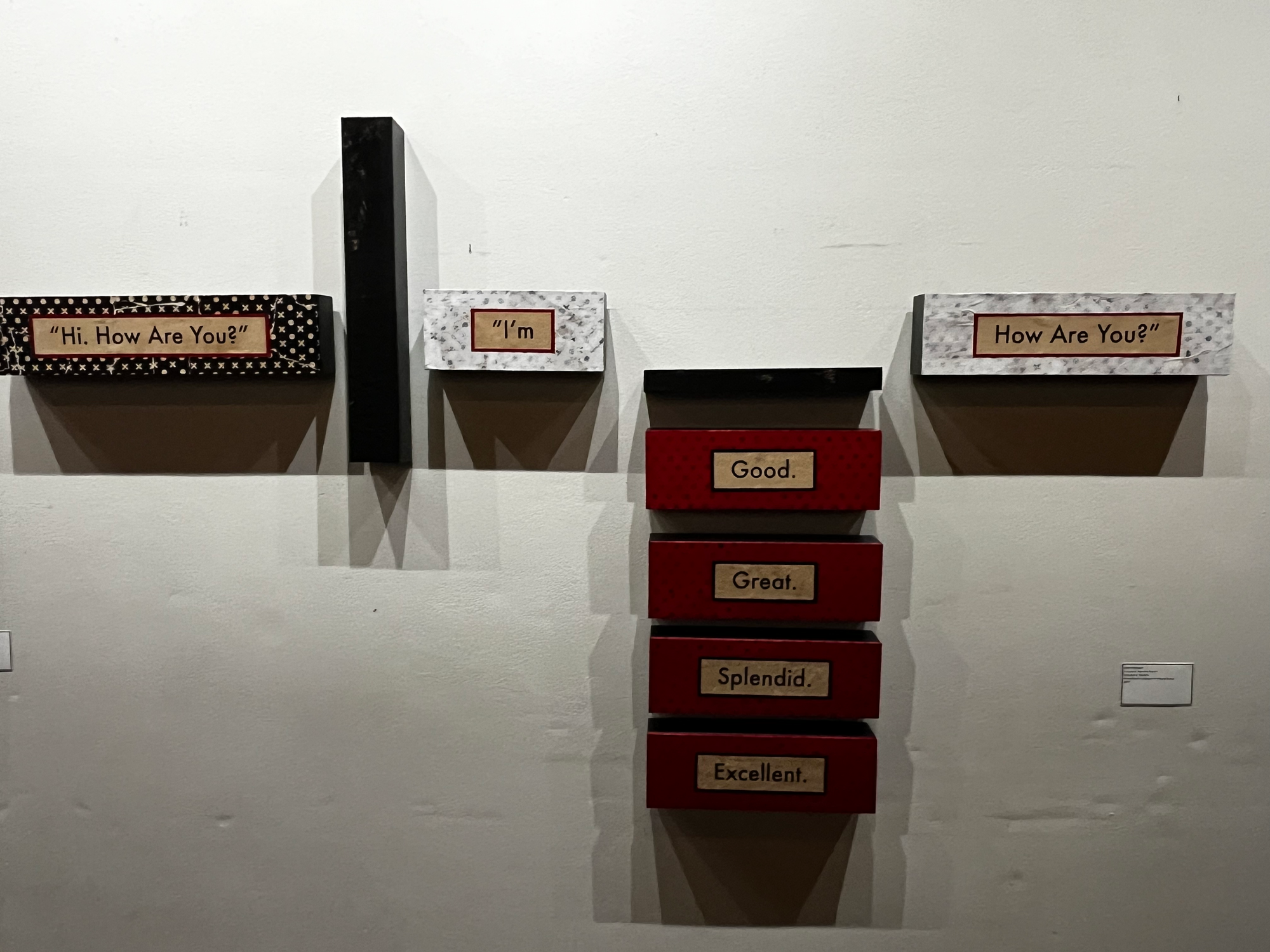
Like his exhibit Phantom Limb at Liggett Studio three years ago, Litwack’s new body of work, supported by the Artists Creative Fund, takes a single concept and allows it to filter through every element in the show. Arranged on two sides of Belafonte’s one-room space, his hand-built, hand-collaged pieces are both subtle and confrontational, starting with their Soviet propaganda-inspired color palette and blocky shapes that push out from the wall like a comic book speech bubble. Litwack is a filmmaker as well as a visual artist, and his storytelling here feels effortlessly cinematic, dropping the viewer into close-up worlds that churn with unsettling currents below the surface.
photos by Alicia Chesser
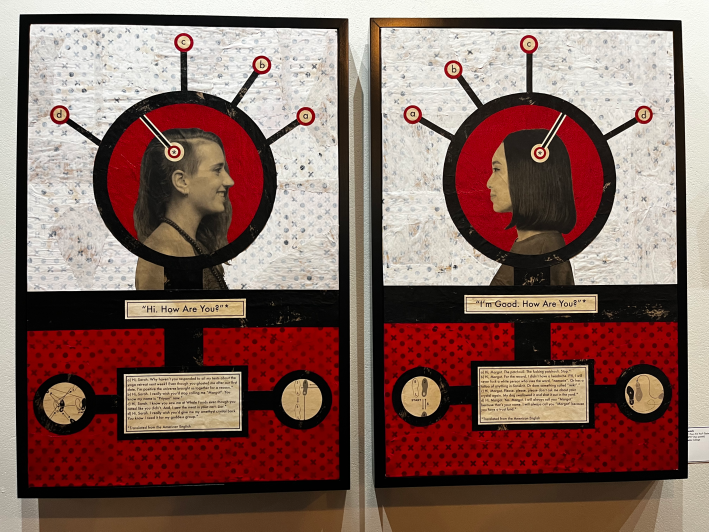
The jaunty vibe you see at first glance—high-contrast design, dancing couples, big cut-outs of people’s profiles facing each other as if in conversation—gets sharper and darker the closer you get to each piece. But Litwack’s touch stays light as little gestures of obedience to positivity slowly take shape as control mechanisms for much bigger forces.
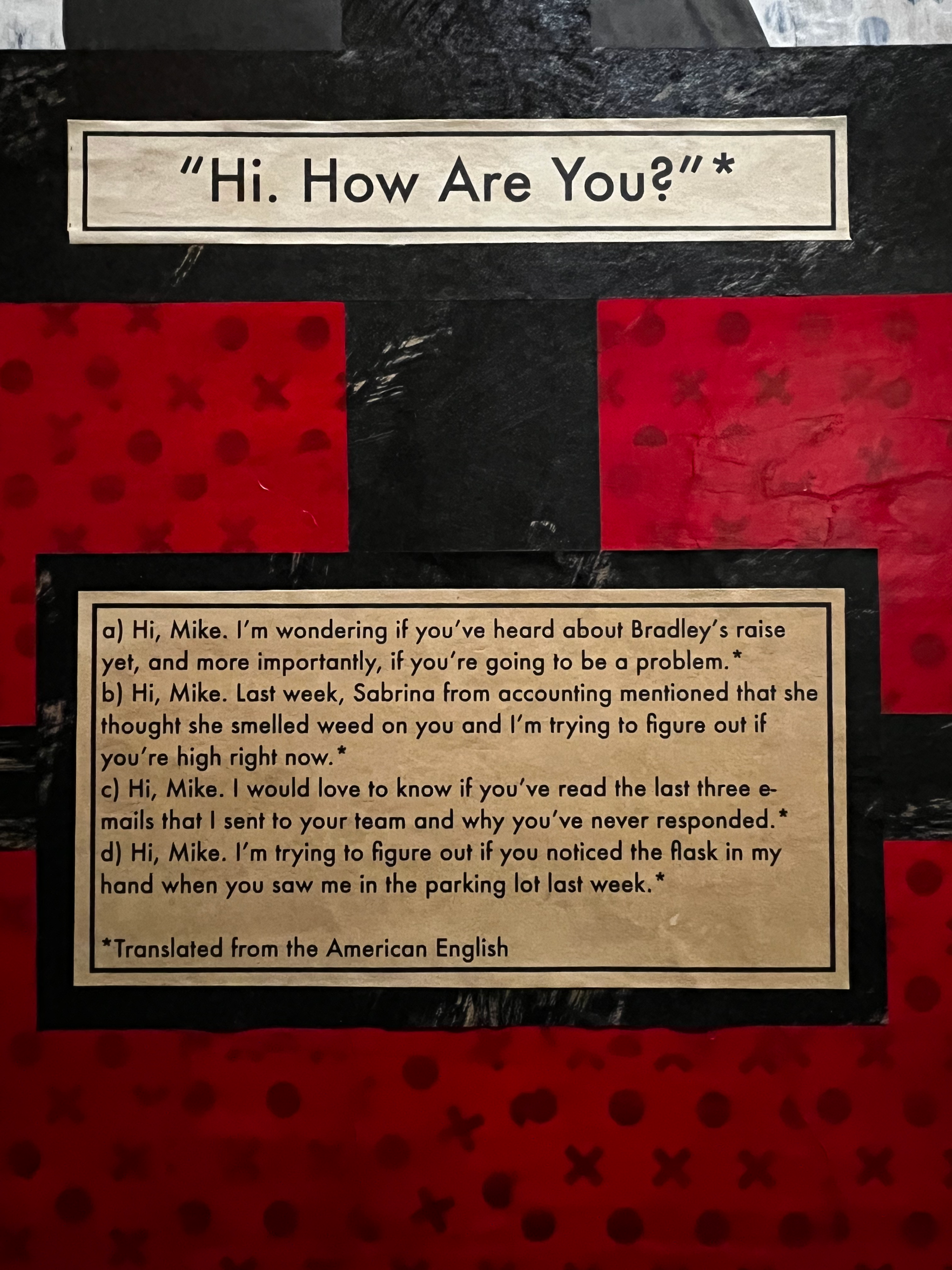
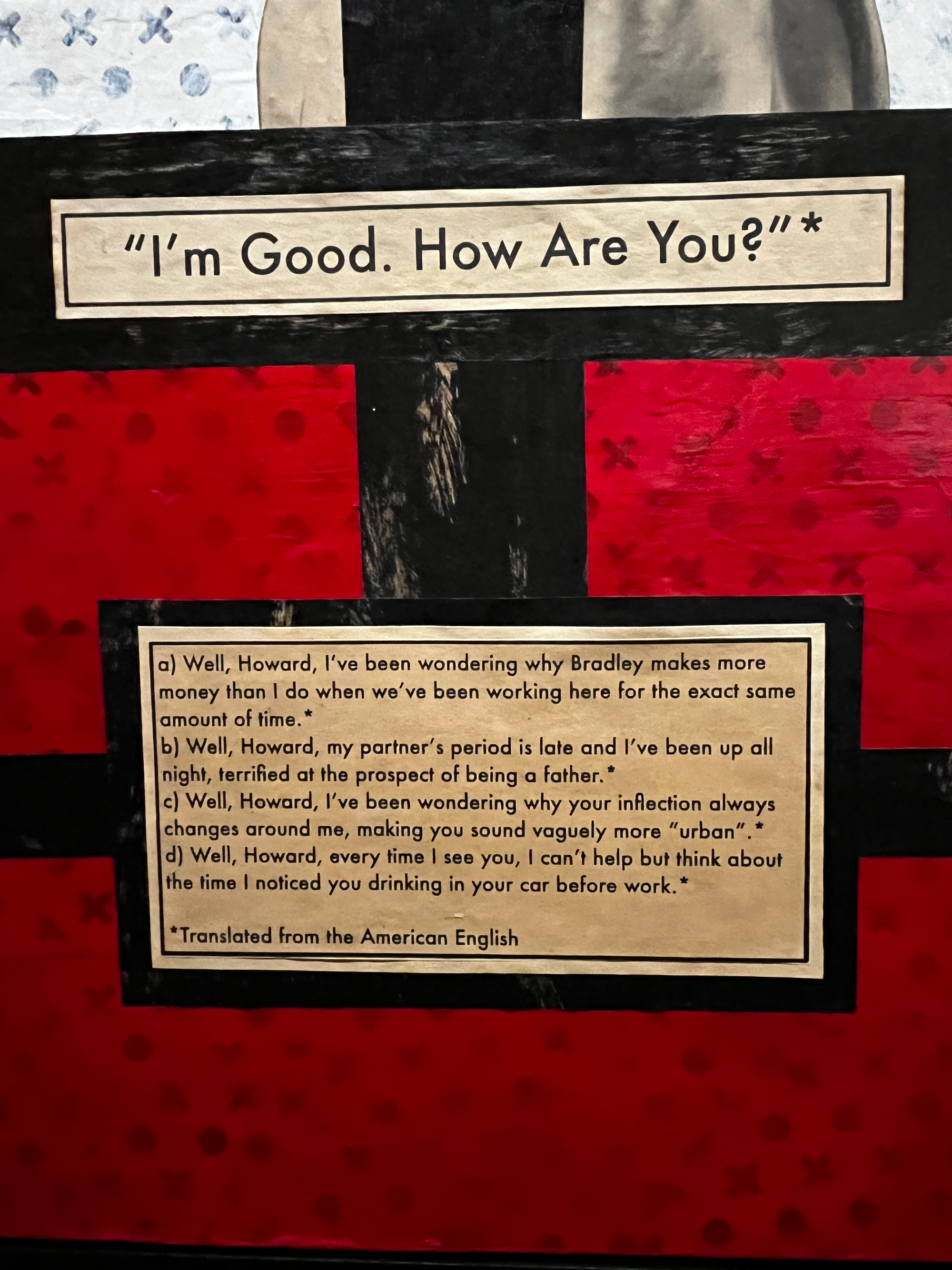
Next to those jitterbugging couples, we see the pre-set dance moves through which they telegraph spontaneity. Under the rote dialogue—“Hi, how are you? I’m good, how are you?”—we see the real conversations playing out in those people’s heads, from which little buttons poke out on black stalks like typewriter keys. (Just press one for your pre-programmed response!) Those silent dialogues are brutally funny and uncomfortable one-shots that render a whole toxic relationship—with its deeper infrastructure of aggressions, fears, projections, and protections—in a few agonizing lines.
photos by Alicia Chesser
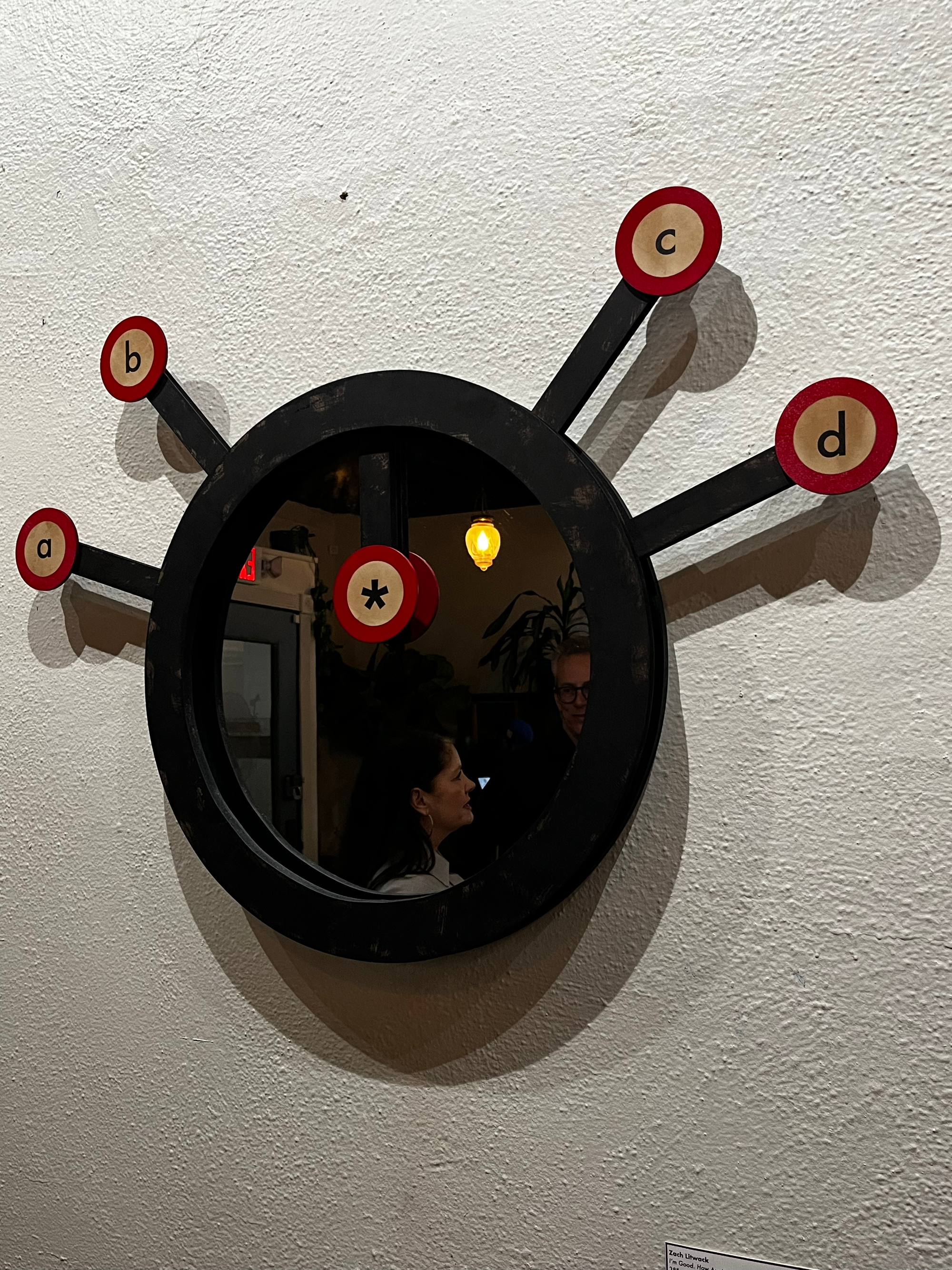
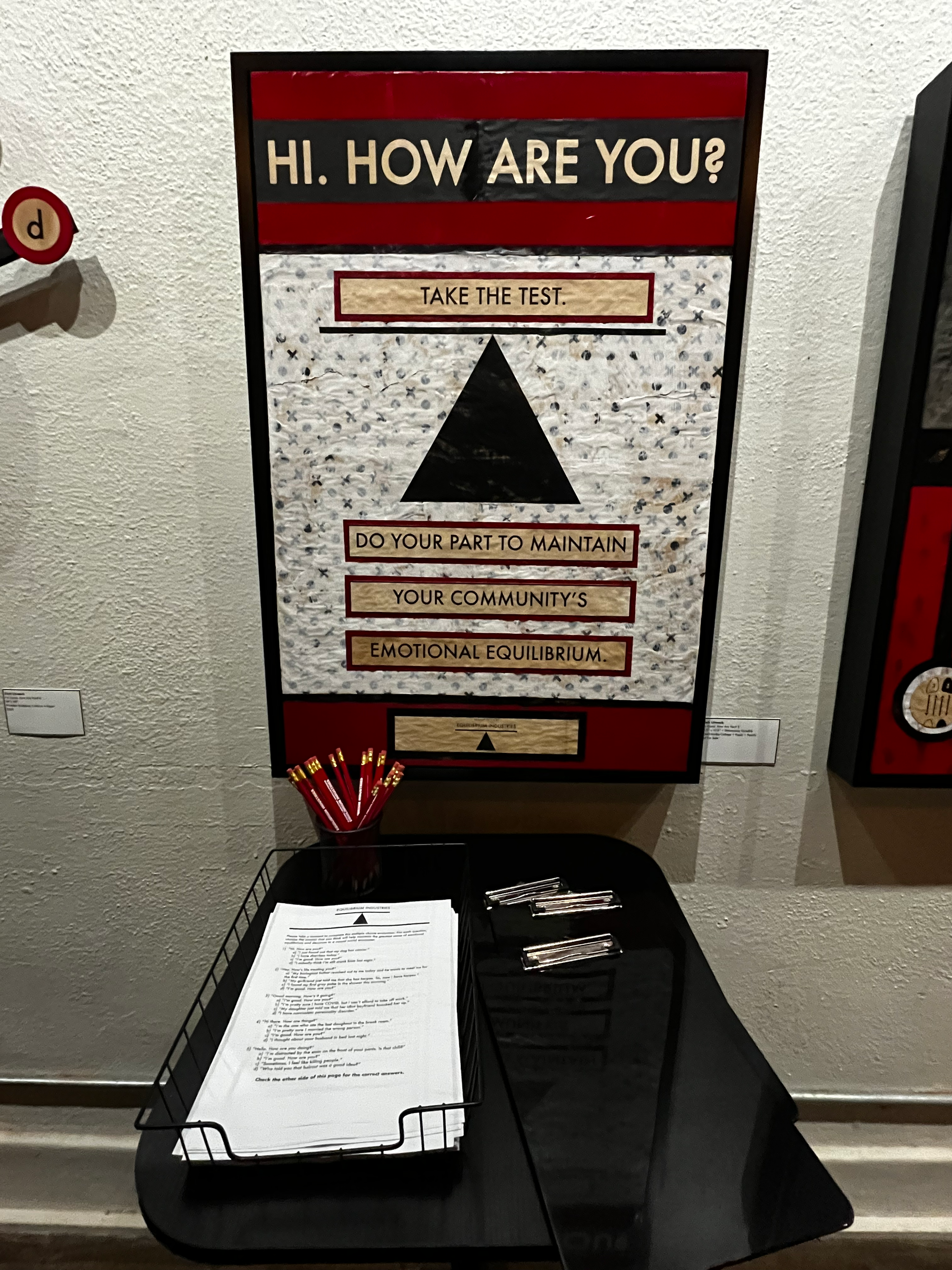
Litwack gives viewers the chance to step directly into this uneasy zone by literally offering us a mirror with those typewriter keys sticking out of it and setting out a farcical multiple-choice survey for us to fill in using a pencil emblazoned with “EQUILIBRIUM INDUSTRIES.” This interactive survey installation gives huge Severance vibes—the whole exhibit has that delicious tinge of comedy-horror—with the invitation to “do your part to maintain your community’s emotional equilibrium.” The smudged Xs and Os peppered across the background and the scale balancing the words “take the test” suggest friendly smooches and easy justice, as well as the anxiety around needing to win at this game, the fraught weighing of honesty and safety and belonging.
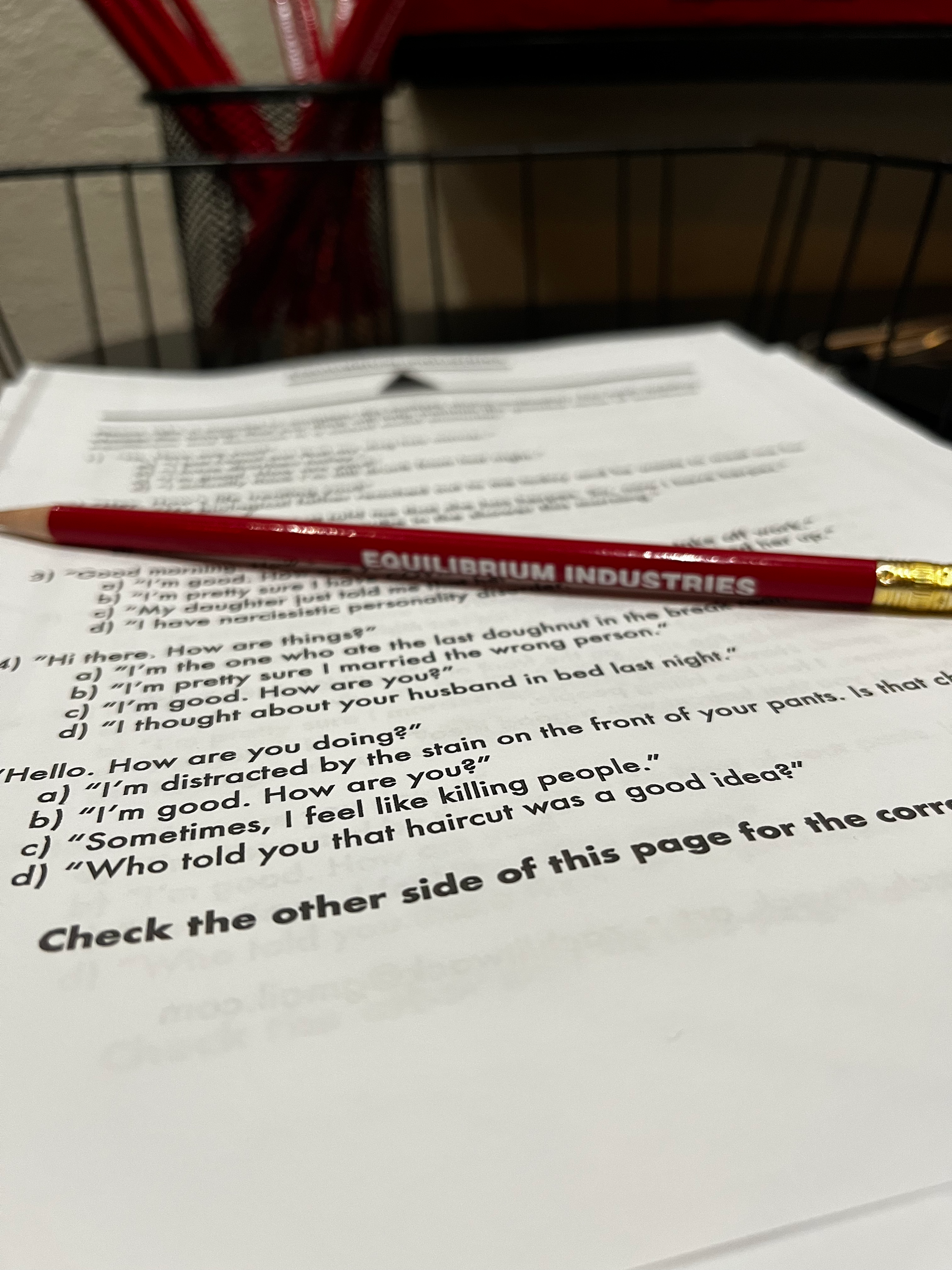
photos by Alicia Chesser
I’m Good. How Are You? touches a vulnerable spot with dark humor, clear compassion, and shrewd imagery that disorients just enough to make space to consider a shift in how we’re doing things. Litwack resists the glib urge to tell us just to stop being so polite; he simply invites us to look at the behavior and helps us glimpse what’s underneath.
With its precisely calibrated mix of text, color, image, and design, the show’s visual unity is a satisfying nod to that unblinking, pasted-on feeling of image-management, as well as the underlying fear of what would happen if we just … stopped. Is there a place to live in that line between the performative sentiment and the real disaster? How much could we actually take, and give, and still be able to go on together?
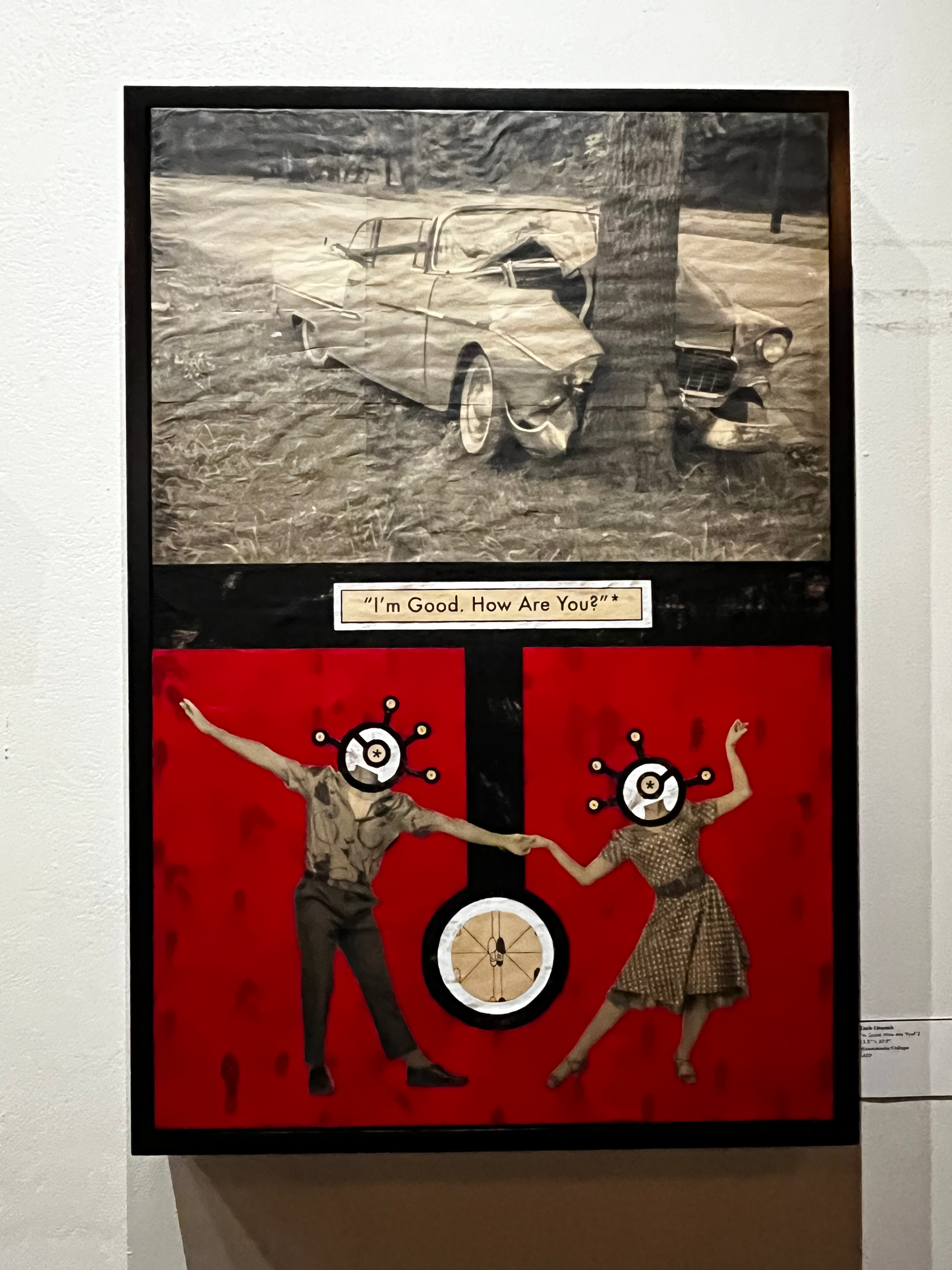
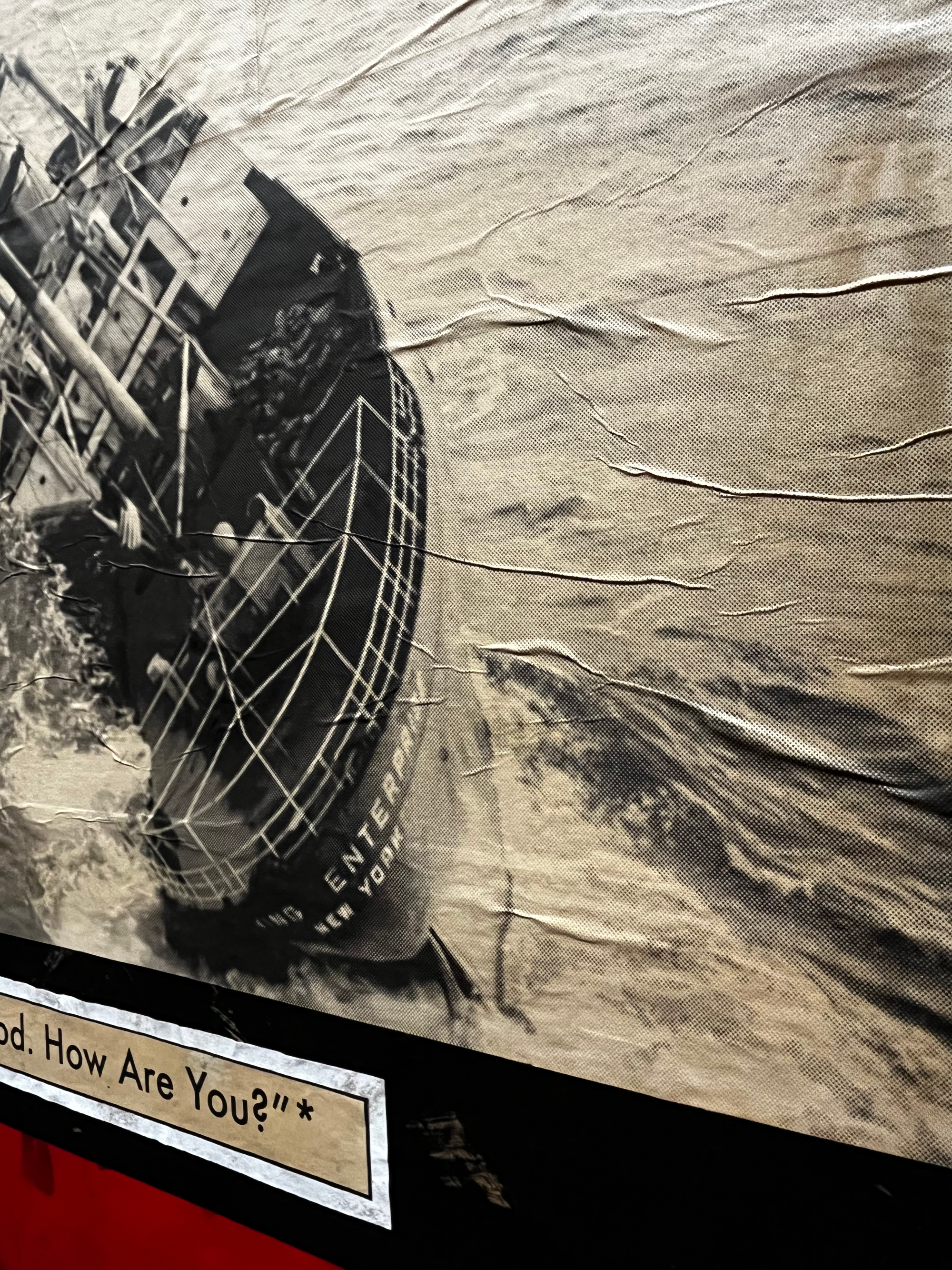
photos by Alicia Chesser
What stays with me the most from this show are the vintage photos glued to the black backing above those dancing figures: a car wrapped around a pole, a shipwreck, a forest fire. If we just keep up the hype, the “I’m Good” programming says, we won’t need to face reality, won’t have to face each other or deal with the fact that what’s roiling underneath—pain that’s personal, intergenerational, climatic, systemic—begs for a true and total reckoning. The dread that makes us keep telling each other we’re fine sits on top of a deeper dread: that nothing is fine.
Litwack has retained the bubbles and warps in these photos, and their textural imperfections are a relief amid the show’s boxy shapes and insistent color palette. They also suggest a gentle way forward: what happens if we let more of our “imperfections”—in other words, our reality—stay intentionally unsmoothed?
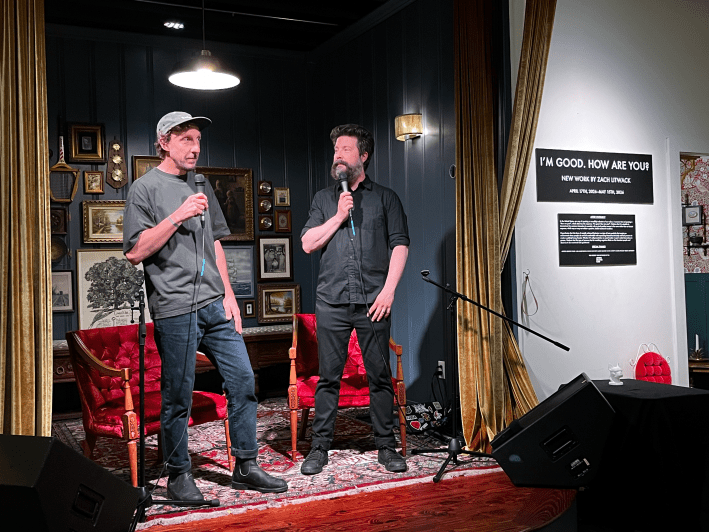
More honesty, more reality: it’s something to work toward, among friends and in the office and at the town hall meeting. For now, we’ve got a very strong example of how to do it—namely, art like this, which bites down on something that many of us avoid wrestling with, then shakes at it until it loosens up enough for us to look at it head on. In an intensely gaslit and cognitively dissonant time, positivity propaganda tells us that a relentless papering-over is the only way to keep things “good.” But real, sustainable, life-affirming goodness doesn’t move like that, and I’m grateful to Litwack for bringing this truth into our community’s own conversation.


