(Jisu Sheen recently moved from New Haven to Gwangju, South Korea, where she’s covering local arts and culture for the New Haven Independent and Midbrow.)
I saw her in stationery aisles and river paths before ever learning she had a name.
She would change from moment to moment, more a feeling than a stable image.
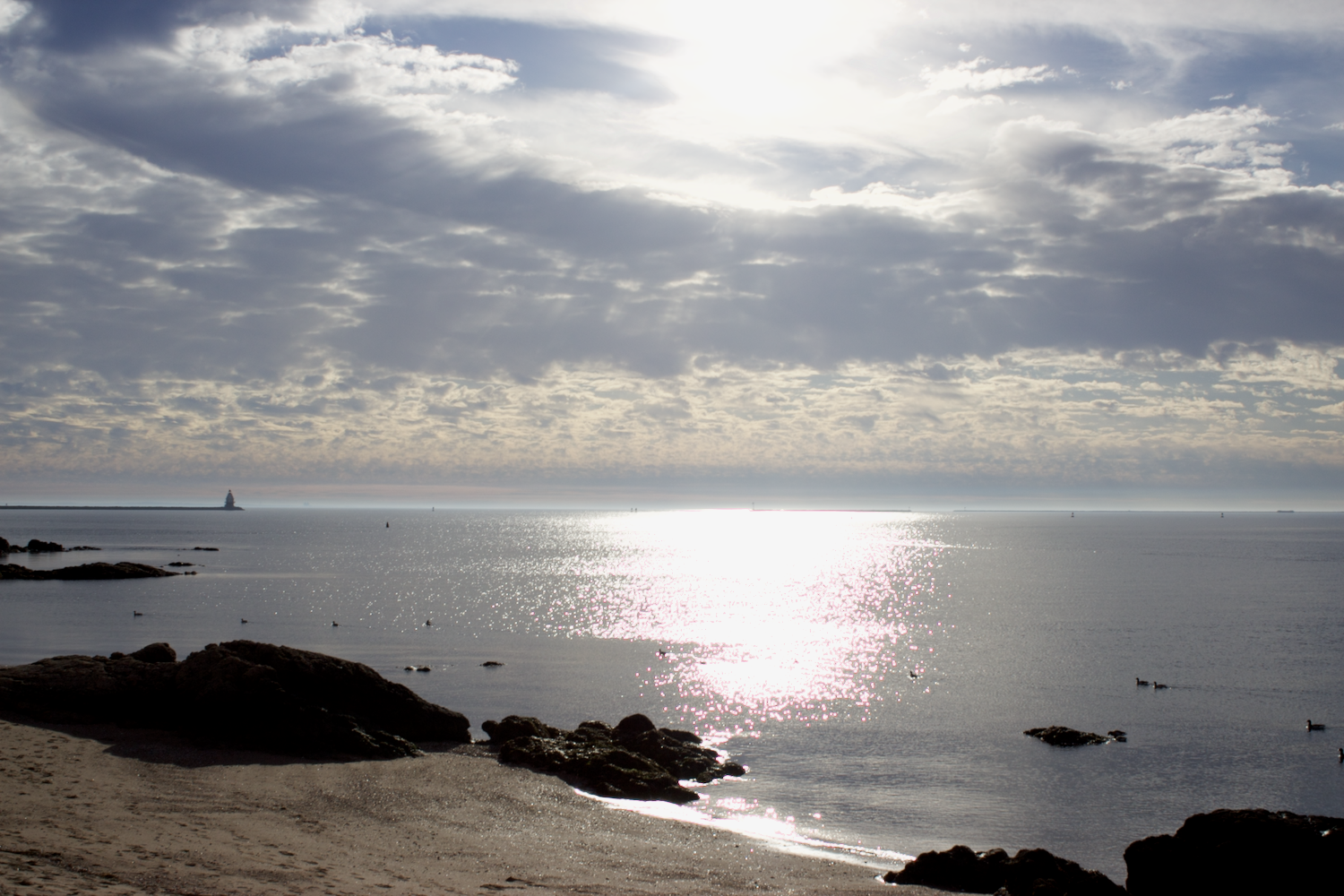
I used to go to the duck pond in New Haven's Edgewood Park just to visit her. Imagine my surprise when she turned up in Gwangju, South Korea, not just the object of my attention but a phenomenon with a fan club of thousands.
This is the story of how I learned the Korean word for the way light sparkles across bodies of water: yoonseul.
Having a word for something doesn't mean all of a sudden you can perceive truths you wouldn't otherwise. (Sorry, alien movies.) Perception is a fast cognitive process, even faster than language. You can see sunlight on the water whether you like it or not.
Words do provide something even more useful than x-ray goggles: memory and nuance.
"Yoonseul? There's no word like that," my mom said when I asked her about it. She moved out of Korea 40 years ago, which was 41 years after the end of Japanese colonization. In the decades since, there have been renewed cultural efforts to claim Korean words with non-colonial roots.
Yoonseul is a beautiful, uniquely Korean word. People name their babies Yoonseul. In Gwangju's Buk district, there's a Cafe Yoonseul.
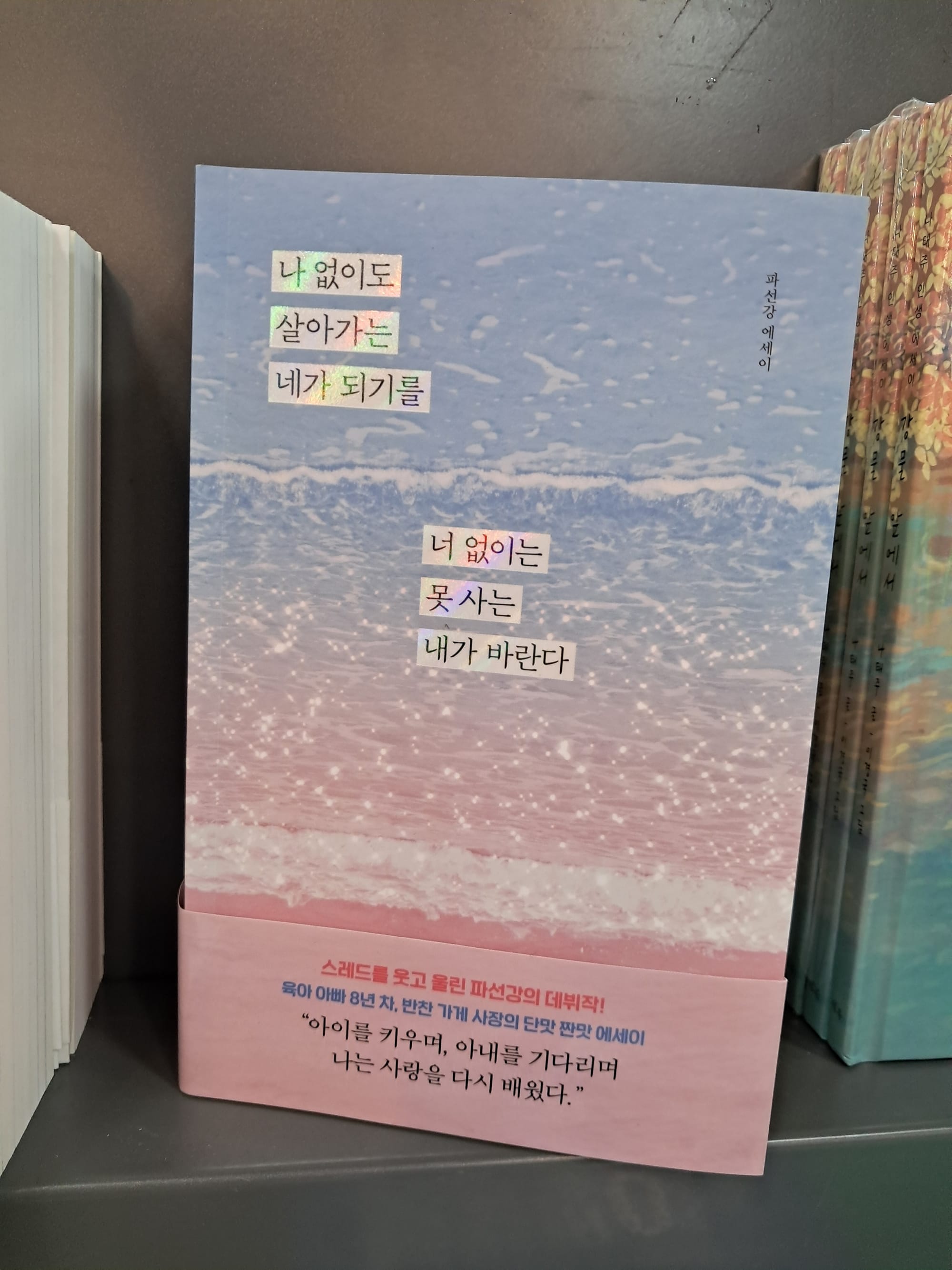
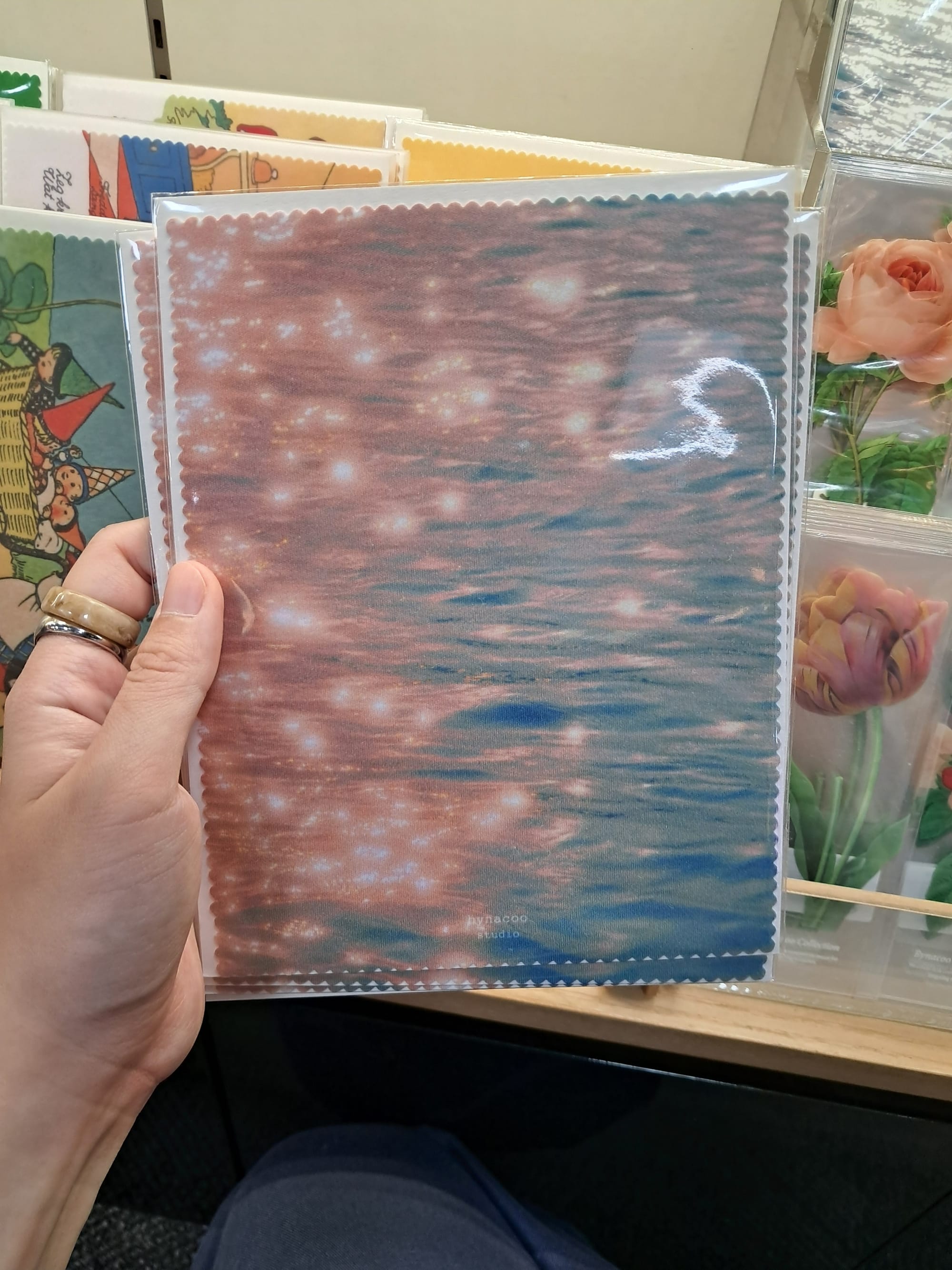
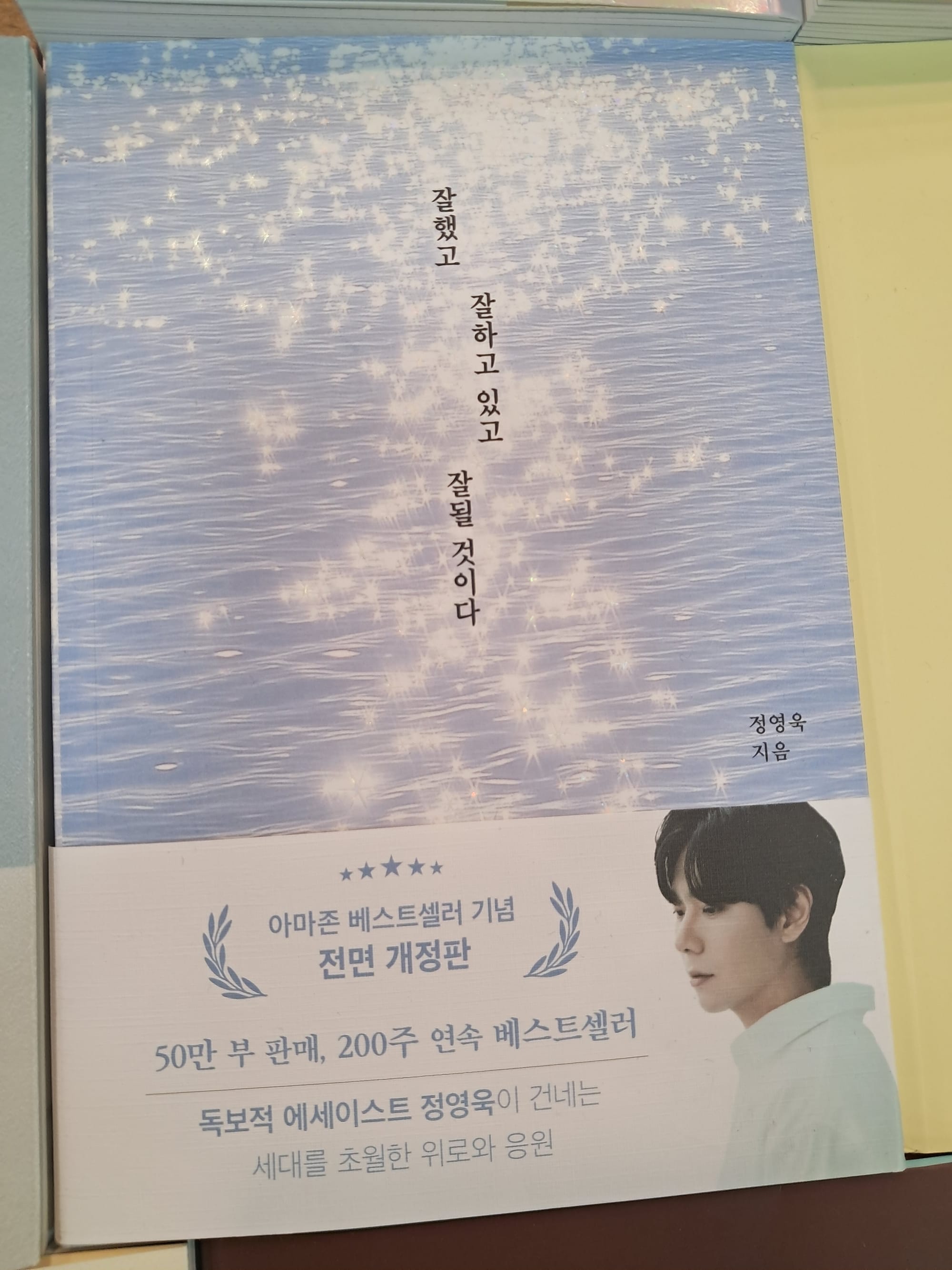
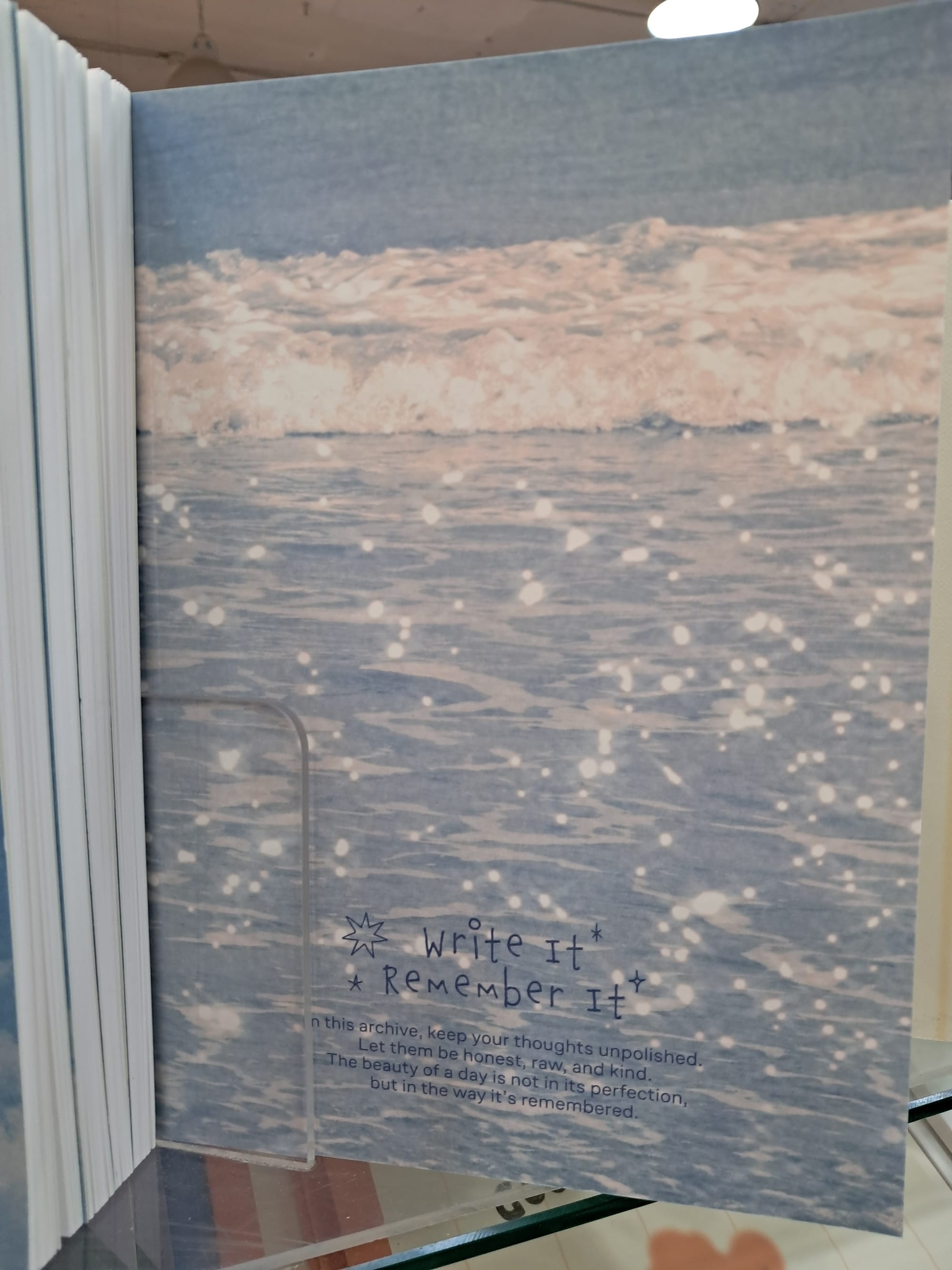
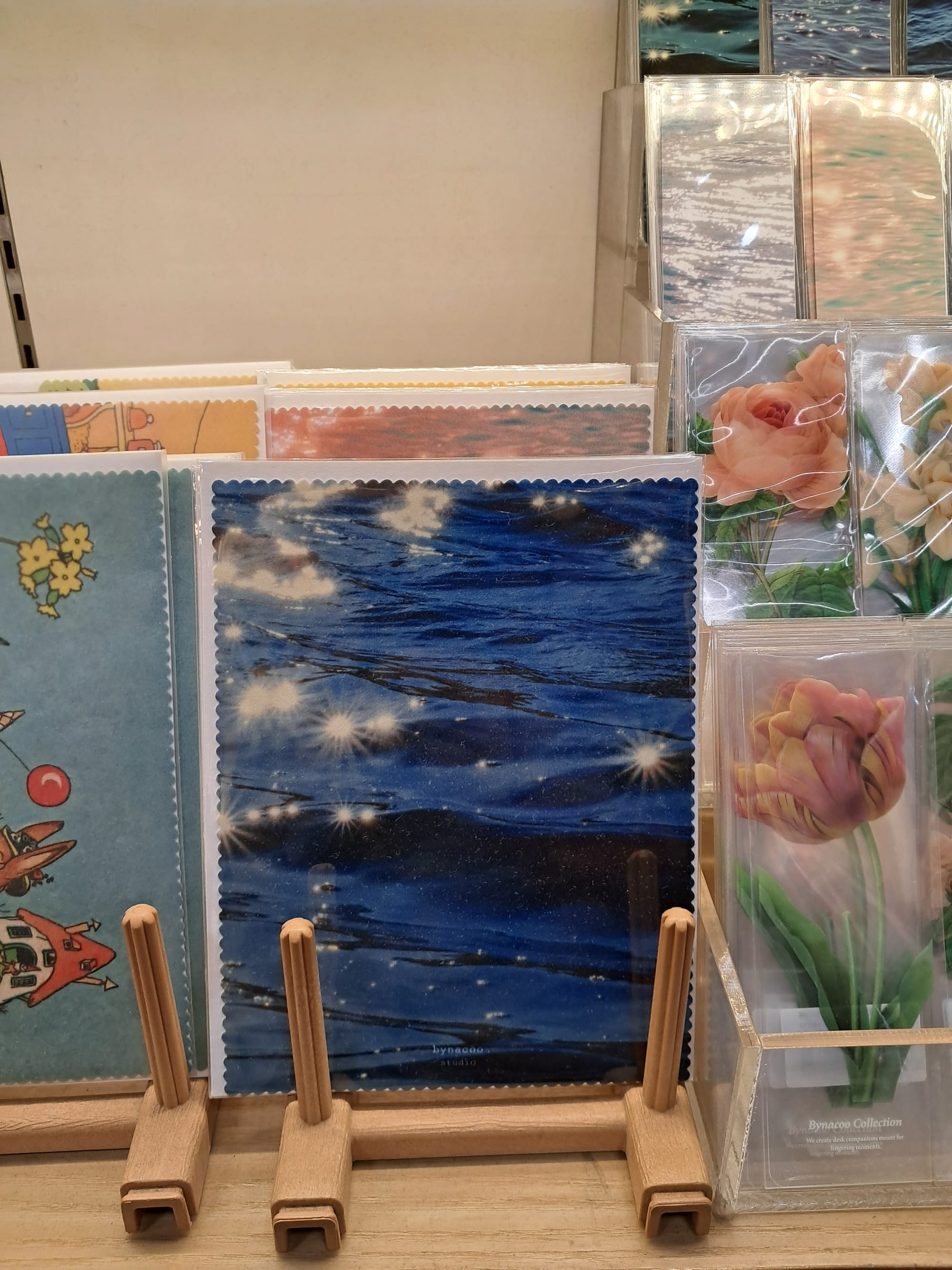
Gwangju's stationery aisles were my first tip-off that yoonseul might be something special here. I saw it again and again on postcards, books, and notebook covers.
The first time, I felt seen. The seventh, I thought: There's gotta be a word for this. I did some digging and found it.
The yoonseul design motifs in the stores are wordless, but they carry language's unmistakable trace. They've been touched by the process that turns life's innumerable moments into concepts. They stand out as a category, a block of semi-conscious grouping.
Of course, commercial success is not the only sign you've "made it." When I attended Seo Eun Ji's bookmark-painting workshop last week, we thought I might paint a yoonseul scene. I had shown her my collection of yoonseul sightings, and she brought examples of the image in the form of her friend's photographs.
By the time we started, I had decided to paint a water bird instead. The photographs came in handy anyway.
They were tucked in my bag when the woman sitting across from me, with no knowledge of my previous idea, said she wanted to paint yoonseul. I was happy to hear the word in the wild.
Stars "sparkling like yoonseul beyond the mountains" appear in the work (in Korean) of Gwangju Citizen Writer Yong Yoona in collaborative book Living in Gwangju. I read the passage and felt the gap between my experience and hers.
I've spent years thinking, without having the word, that I was yoonseul's Number One Fan. Anyone who came to the Edgewood duck pond with me knew they'd have to wait several minutes for me to crouch down on a rock and film ... seemingly nothing, just a fresh batch of light dancing on the water's surface for my collection.
If I were ever to put the sight in a metaphor, I'd place it on the unfamiliar side, the other that is connected to the giventhrough a literary device. Yoonseul is like mirrors, or diamonds, or glittering city lights.
Yong's metaphor struck me with its placement. In the writing, yoonseul doesn't even need to be explained. It's so familiar, so deep in the common ground, you can use it to define a concept as old as the stars.
Sign up here to get Gwangju Midbrow email updates delivered straight to your inbox.


