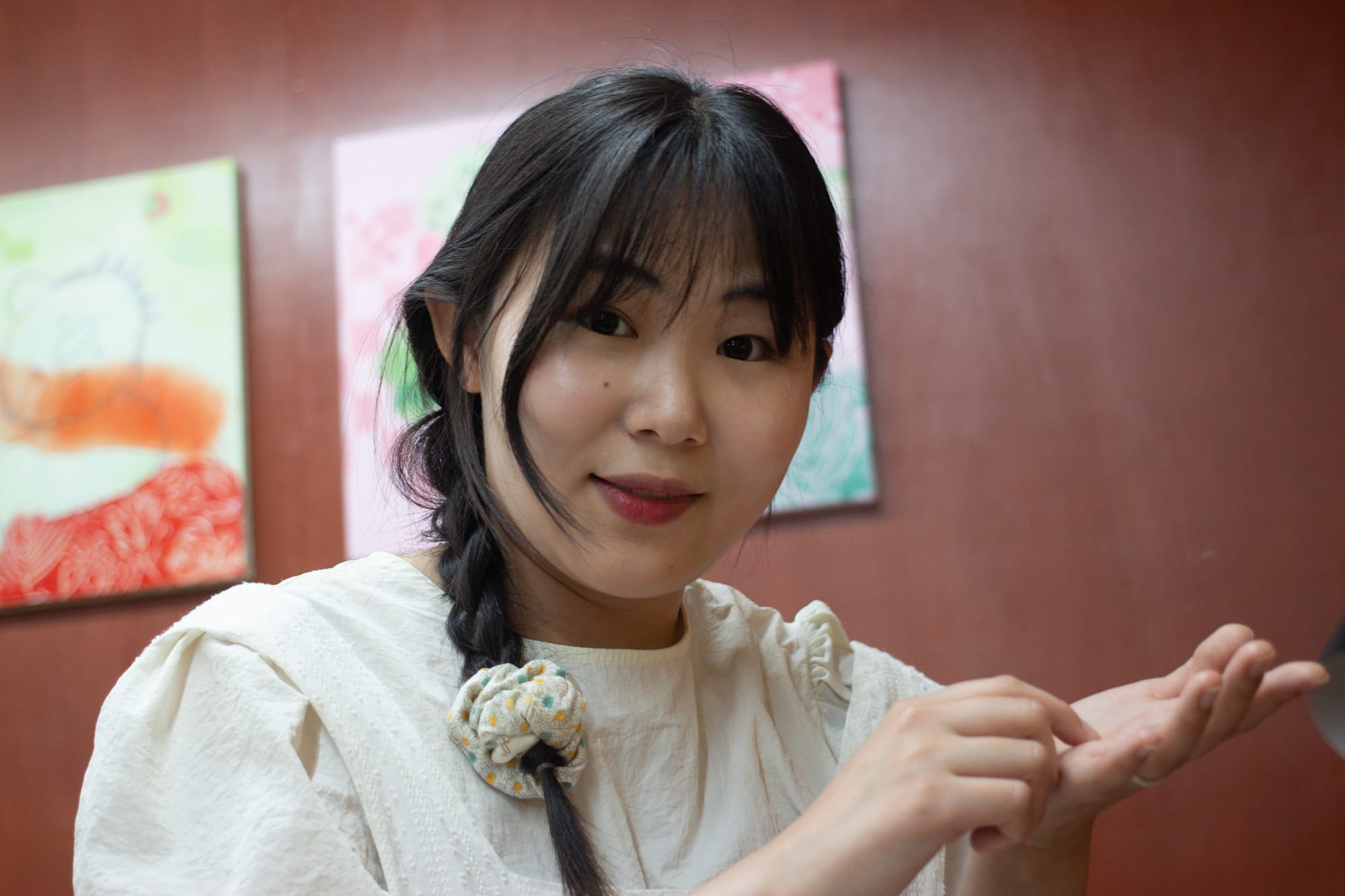
서은지 (Seo Eun Ji)
Podo Bookspace
Gwangju
June 26, 2026
(Jisu Sheen recently moved from New Haven to Gwangju, South Korea, where she’s covering local arts and culture for the New Haven Independent and Midbrow.)
One day in 2024, the winter version of Gwangju artist Seo Eun Ji opened a letter from her summer self.
It was written with a quick honesty, describing her worries and dreams.
"I hope the dots I embroidered can become a line, or even a plane," one part read in Korean.
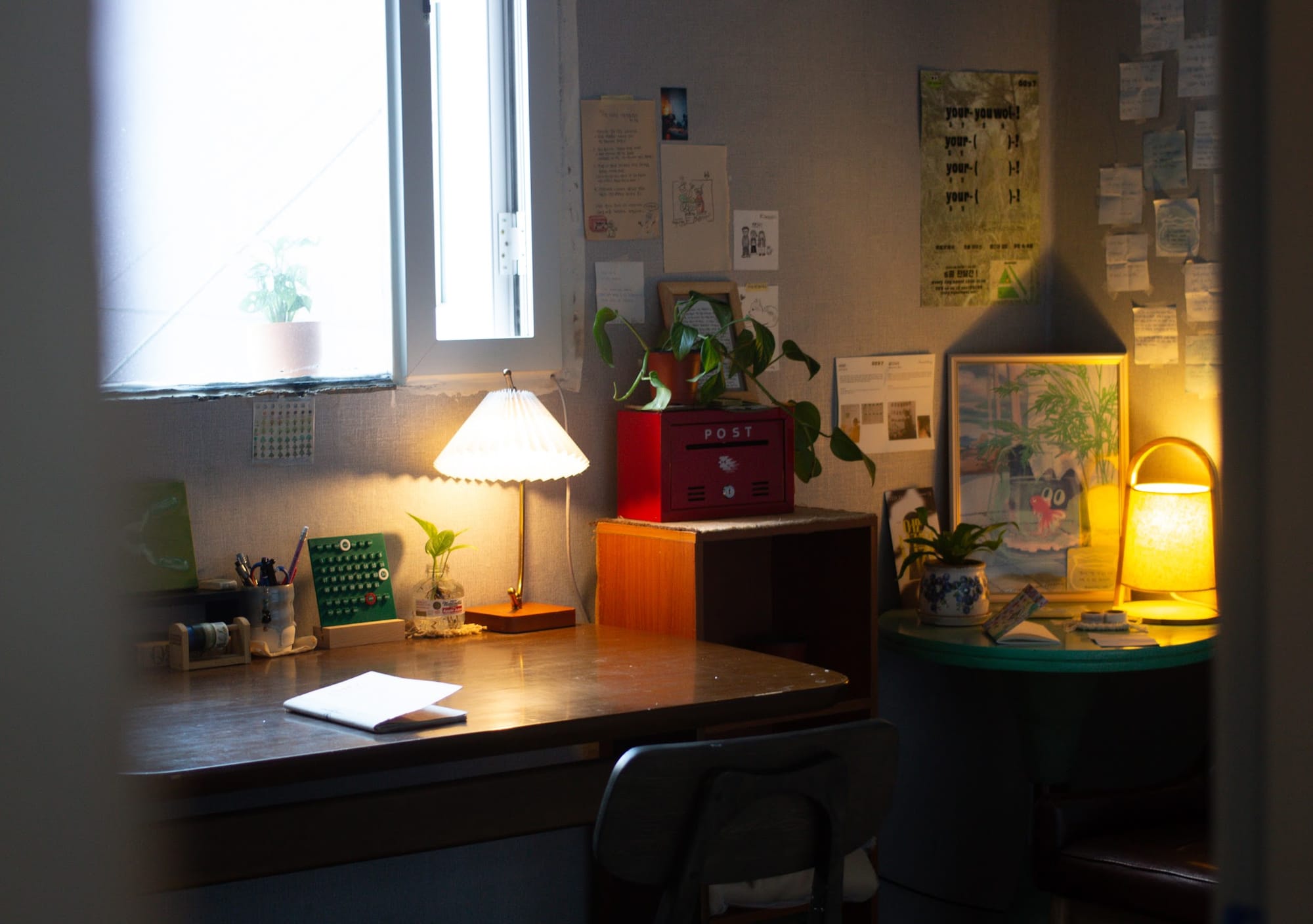
Now, the letter rests behind the glass of a wooden frame on the shelf of a room Seo has turned into a mail-inspired installation for the month of June, part of a multi-artist pop-up called "Your You Wol." The name is both a play on the word "June" in Korean, which sounds like "your," and an invitation to make the month your own.
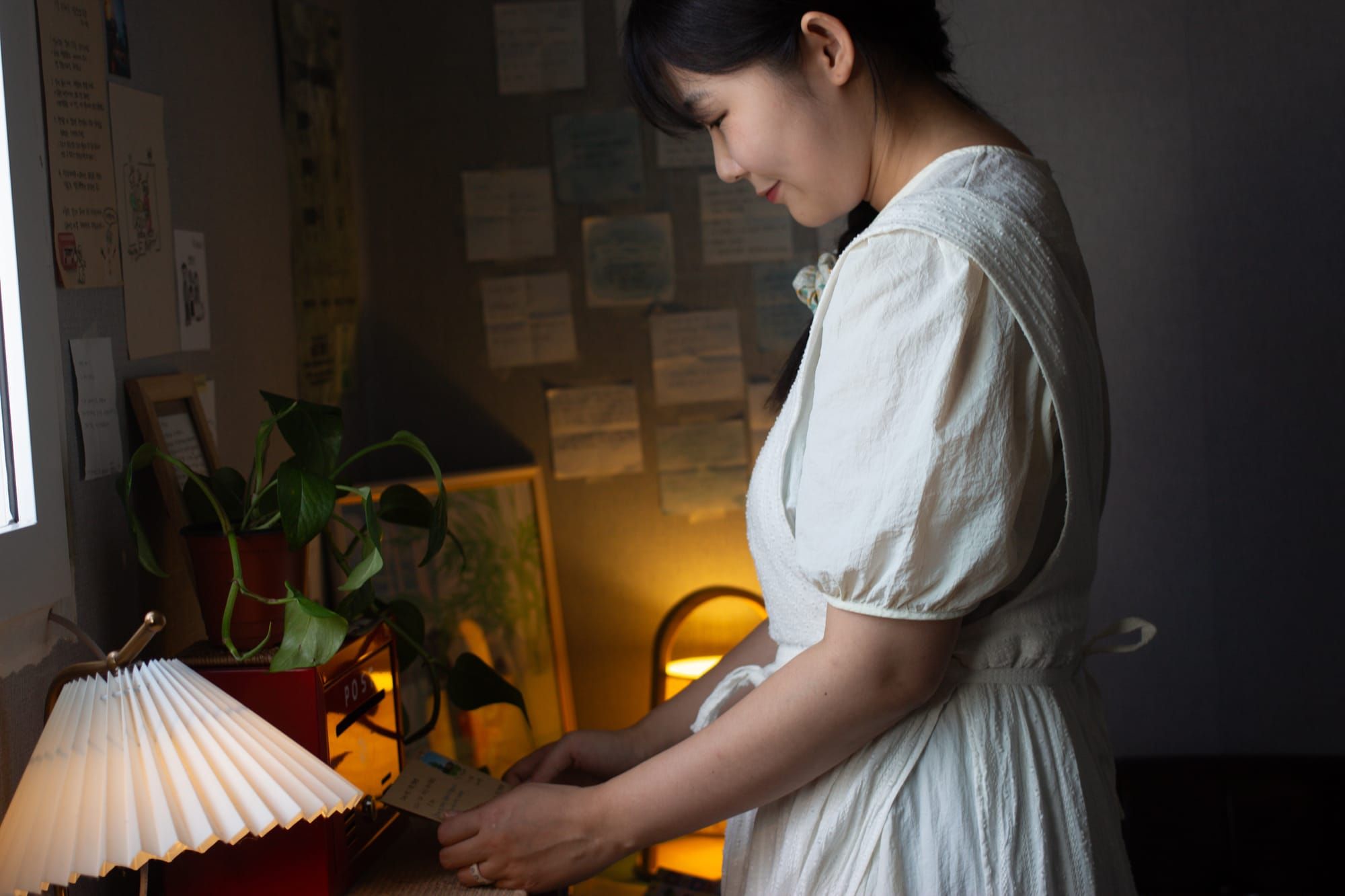
I stood in the cozy, lamp-lit space as Seo read from the letter she'd written two years ago. We were on the third floor of the Podo Bookspace in Gwangju's Buk District.
In an hour, just outside the installation space, Seo and a fellow artist would lead a one-day class painting wooden bookmarks. A freelancer who grew up in Gwangju, went to school in Jeonju, and has now returned to her hometown, Seo appreciates her local digs. That comes through in the art. Under her own name and the moniker Percent Diary, Seo is building a career selling photographs, writing poetic insights, teaching workshops, and doing design.
Looking back on her framed letter, Seo revealed a softer edge to her geometric ambitions.
"If it's hard to get to a plane. A line is OK," she remembered thinking. When her winter self opened the letter, she realized she really did create a line from the points of her life.
And where is she now?
Still a line, she said.
As I learned about Seo's work, each dot along her line materialized into a different hat she wears in her creative practice:
Snapshot Historian
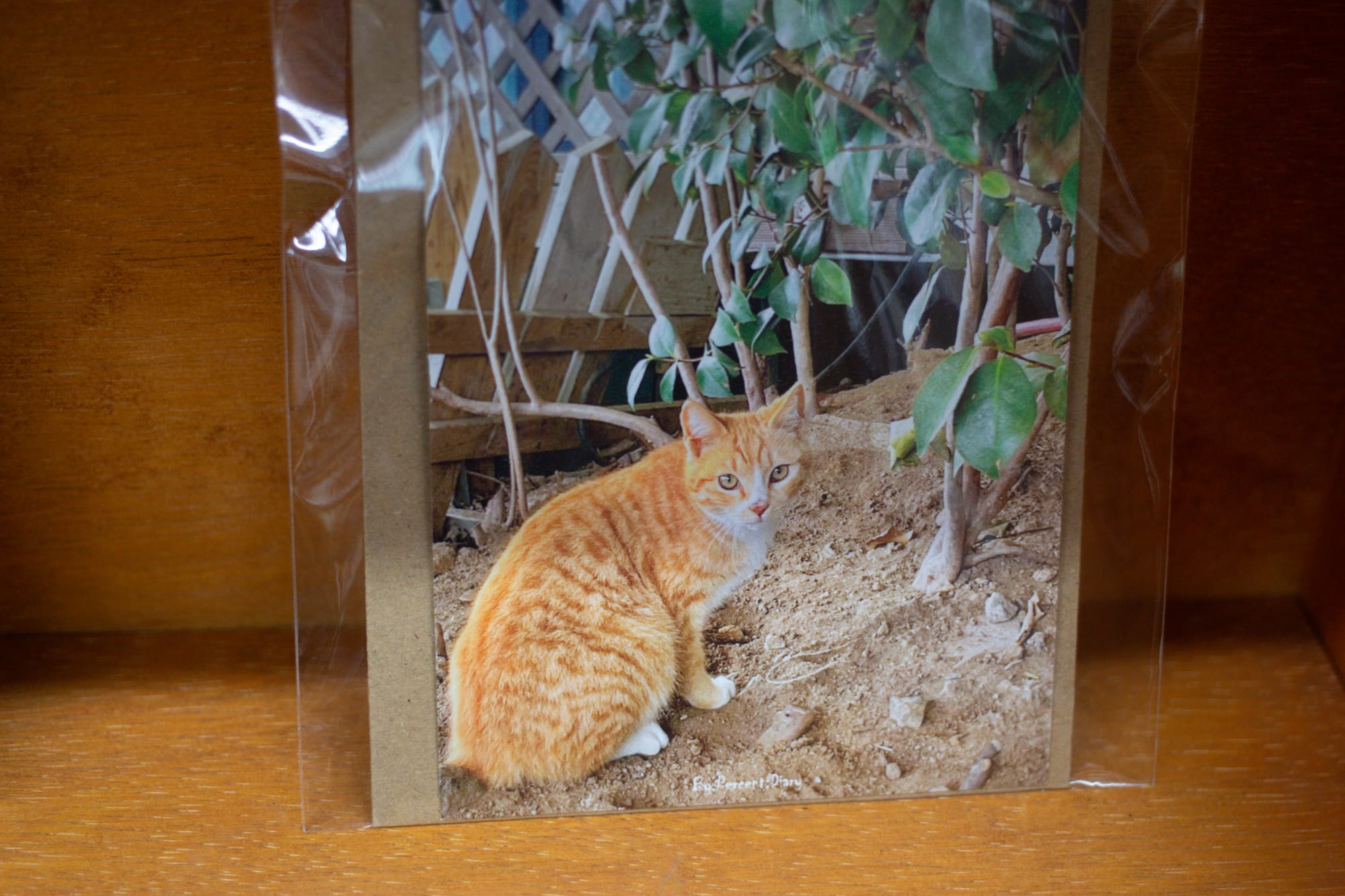
Seo's photographs are of scenes in the Jeolla-do region in the south of Korea, where Gwangju and Jeonju are, as well as more rural cities like Suncheon.
On the other side of Seo's lens, stray cats take hidden paths and buildings shine in the sun. Some vignettes no longer look like how they do in the snapshots.
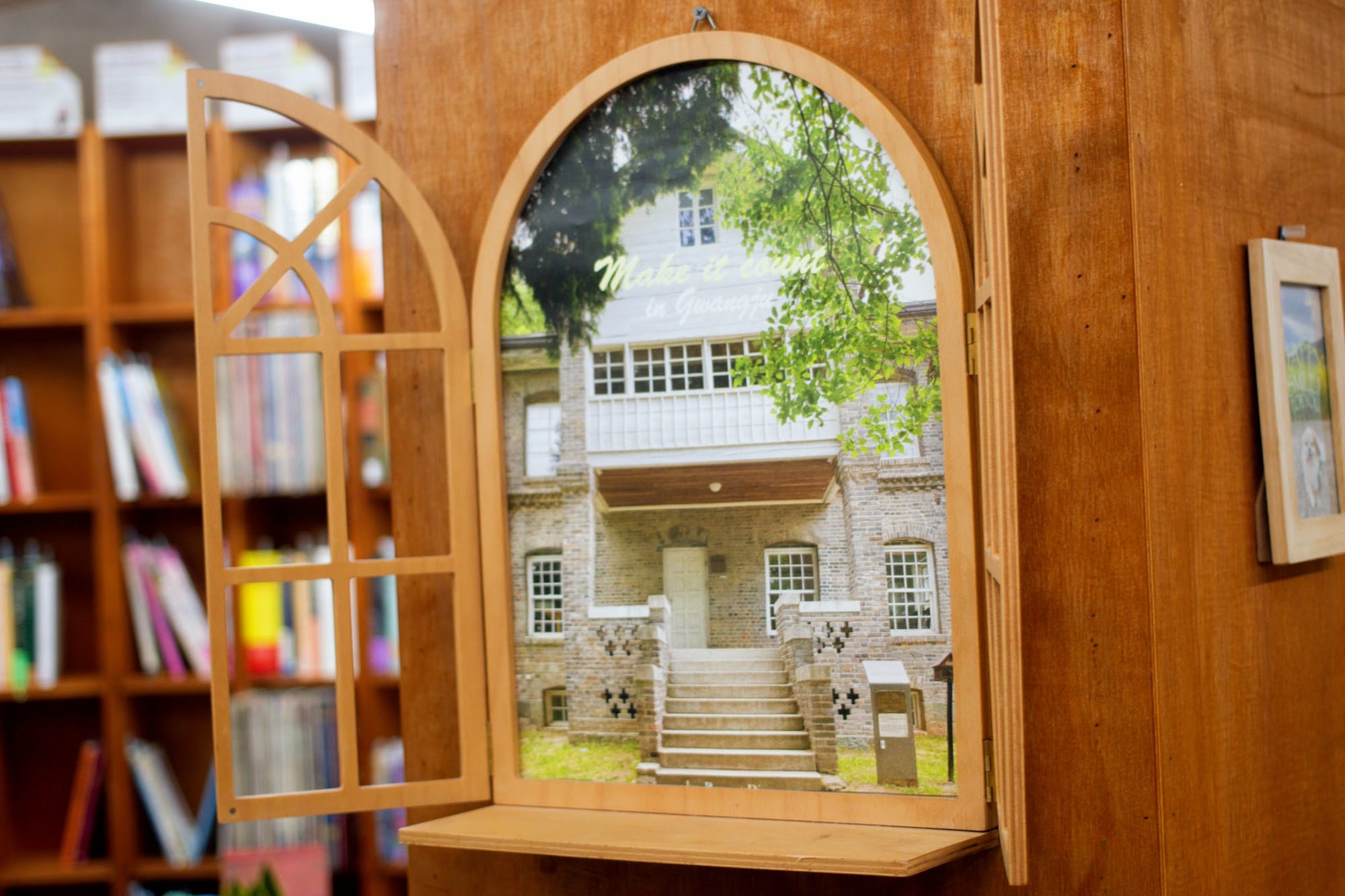
As Seo described each image on the shelf, the story of a changing province spilled out, inseparable from the photos themselves.
"Here's the Jungle Book cafe," she said, pointing to a photo of a multi-story cafe with sprawling greenery. People used to say it looked like the house from that Studio Ghibli movie, My Neighbor Totoro. It closed in January.
Another picture was of a Gwangju alley full of shops for engaged couples to buy wedding items like traditional Korean clothing, hanbok. Business has gone down as wedding tastes changed, Seo explained. Busy or not, the alley carries a charm for her.
Turtle Taxicab
Taxis are supposed to go fast.
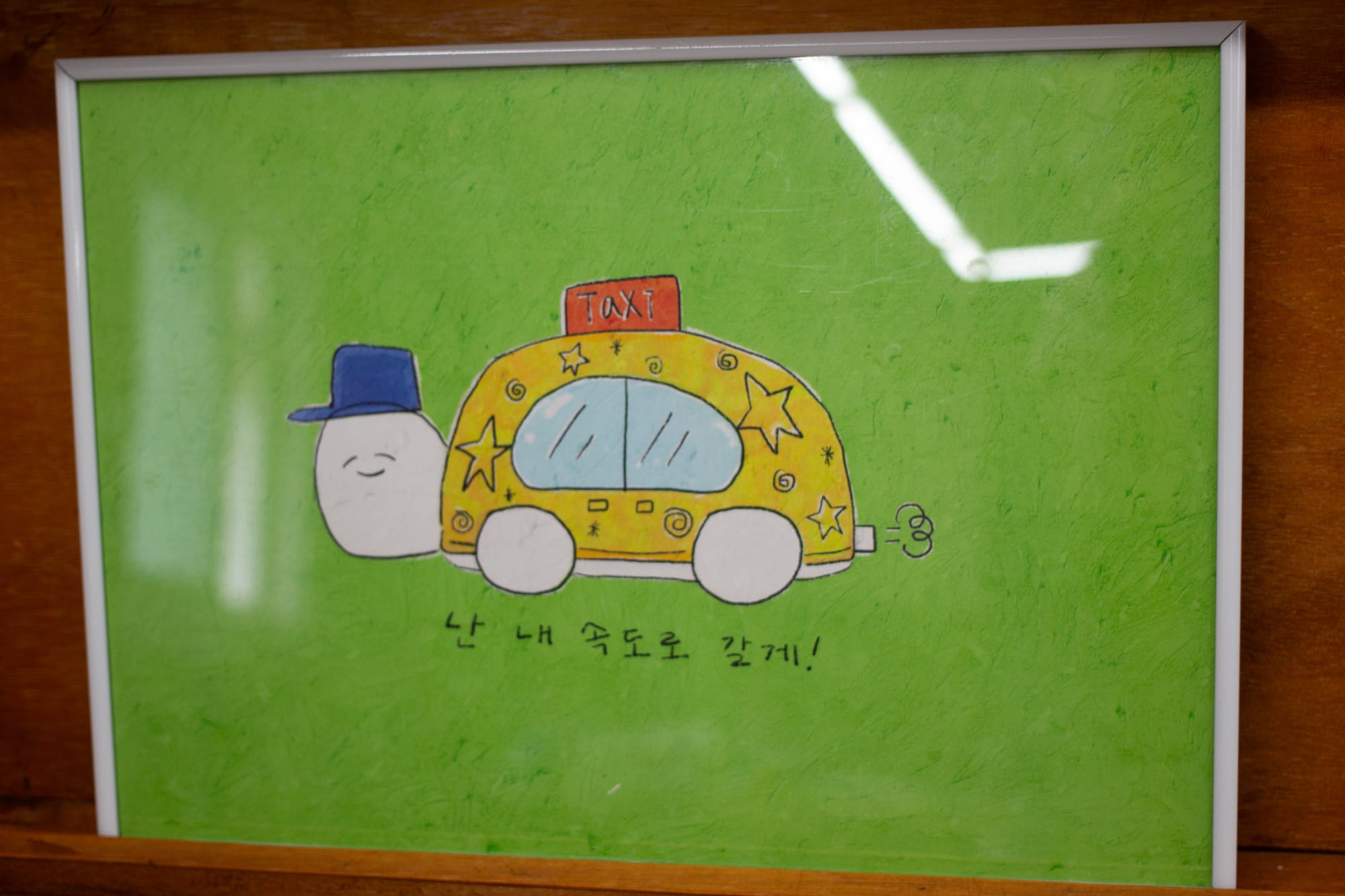
"I'll go at my own pace," a taxi declares from a vibrant green drawing beside Seo's photos. This cab's not just a vehicle; it's an animal as well, one with a shell and a penchant for taking it slow. It's a benevolent turtle, finding its own way in the world.
Seo made the drawing after thinking about the path her life is taking. She didn't go straight into a company like many of her peers from college did. Instead, she is creating a freelance career one step at a time, learning through experience rather than a guidebook.
Even when a more direct route exists, not everyone needs or wants to take it.
"These days, you can email," Seo said. People still use the post office.
And for the snail's-pace penpals among us, there is a place even more suited to those speeds: just around the corner from Seo's photo display is the entrance to her "summer post office."
Time-travelling Postal Worker
At Seo's slow postal service, people can select a photograph and write a letter on the back. When they're done, they drop off their letter in a red metal post office box.
Then Seo sends it to the winter.
It's not as complicated as people think, she explained. She keeps the letters as the seasons change, and then mails them out at the actual post office in December. Some people write to friends or family; others write to future versions of themselves.
One of Seo's bookmark-making students for the day arrived early and looked around the conceptual post office. She noted that when she reads something she'd written in the past, it strikes a solemn tone, even if the words aren't sad.
I was amazed; I knew exactly what she was talking about. The more I tried to guess why, the more I felt like I could understand Seo's photographs.
Change comes with loss. Every day, we gain some things and shed others. Each moment, we're seeing something we won't quite see again. It usually doesn't even hurt, because we don't notice.
If we're feeling brave, we can record—and catch the disappearance in the act.
Later in the weekend, I came back to write two letters and put them in the mailbox. I wrote about movies I've been watching in Gwangju and a rainfall in New York. Then I slid my letters through the mail slot.
"OK, now you can forget about them," Seo said with a grin. I'll see them in the winter, after losing plenty of memories and fleeting thoughts (but maybe, if I'm lucky, gaining a dimension).
Sign up here to get Gwangju Midbrow email updates delivered straight to your inbox.


