
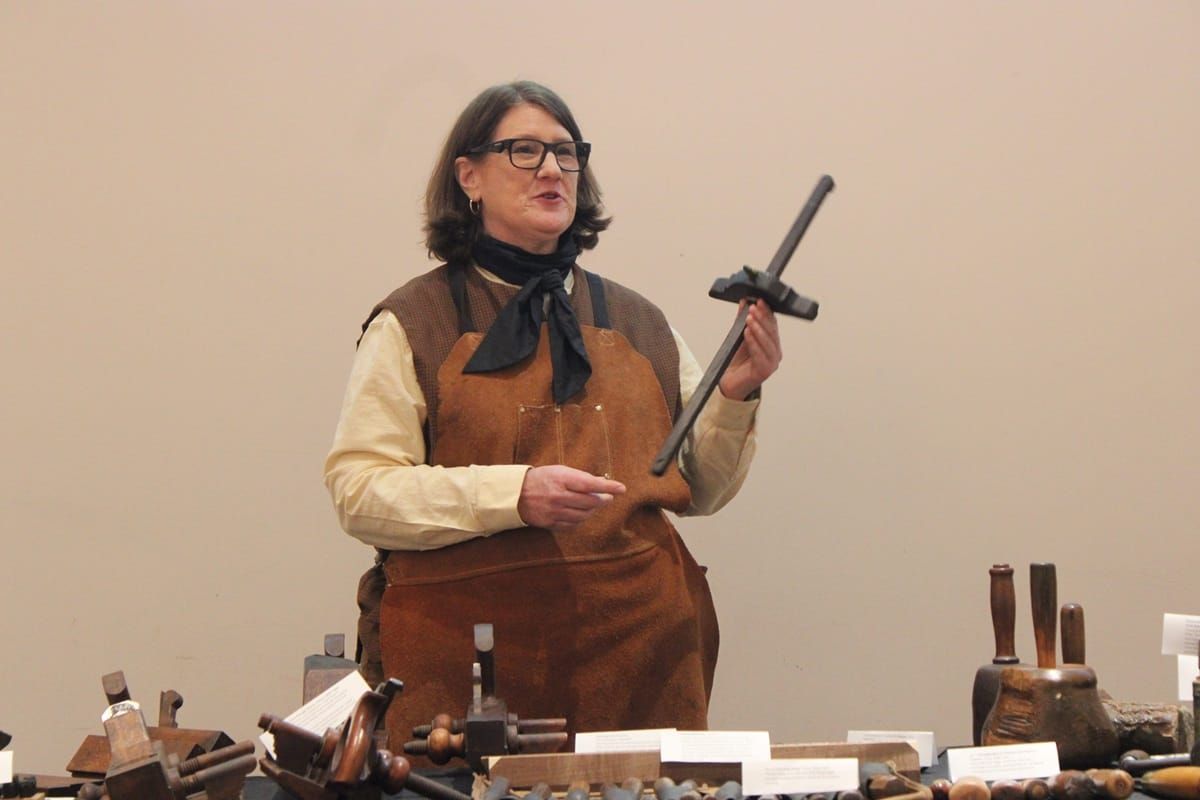
The Legacy: Building With My Great-Grandfather’s Tools
Connecticut Museum of Culture and History
Hartford
Nov. 12, 2026
By day, Anne Marie Elder is a mild-mannered senior executive for one of the largest insurance companies in the world. On nights and weekends, she transforms, traveling through time and space to become an old-school woodworker like her great-grandfather before her.
“They’re both equally boring work,” she joked to a crowd at the Connecticut Museum of Culture and History. They had come to hear Elder describe the process for her historically accurate woodworking process, and learn more about the proud history of furniture making in New England.
I don’t know much about insurance work, but Elder’s work with wood is anything but boring (unless she has to bore something). She began woodworking during the Covid pandemic, starting with the relatively simple spoon. After she made nearly 400, her brother gifted her a set of woodworking tools that belonged to their great-grandfather. Elder set out to learn to use them, utilizing YouTube University, reading books and studying with a master craftsman.
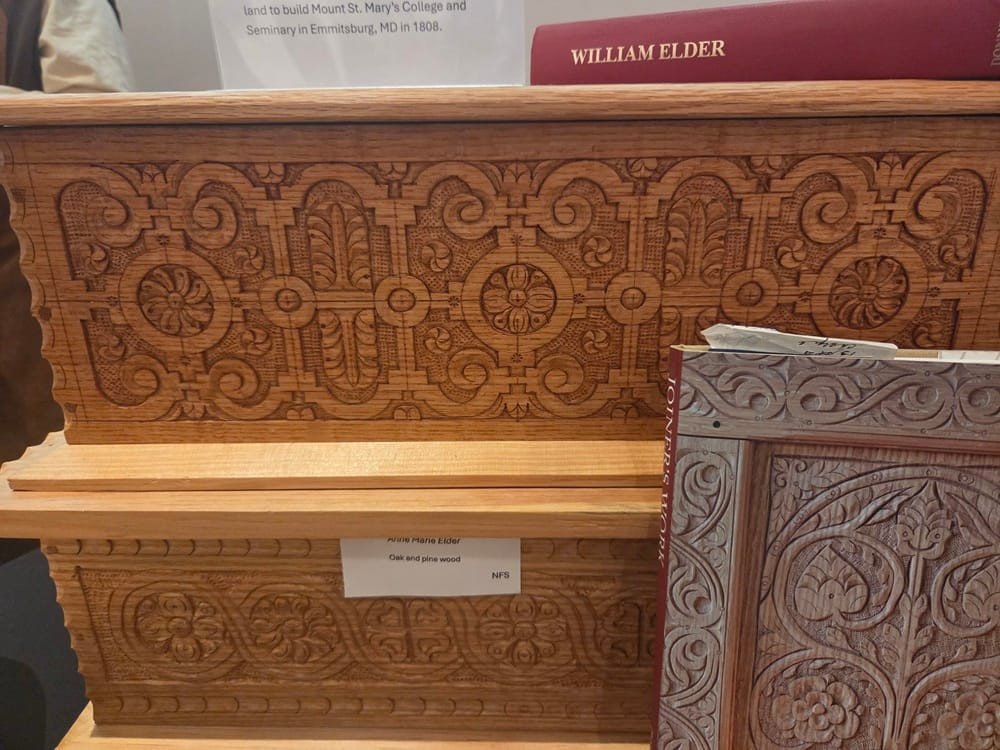
Elder has done exquisite work in building bible boxes using traditional tools and methods. She designs the intricate detailing and patterns in the traditional way, which reflects New England’s special spin on furniture-making. The New World offered flexible pine and sturdy oak woods to furniture makers. Artisans improved upon woodworking techniques from Europe, while adding their own regional flair with designs and decorations.
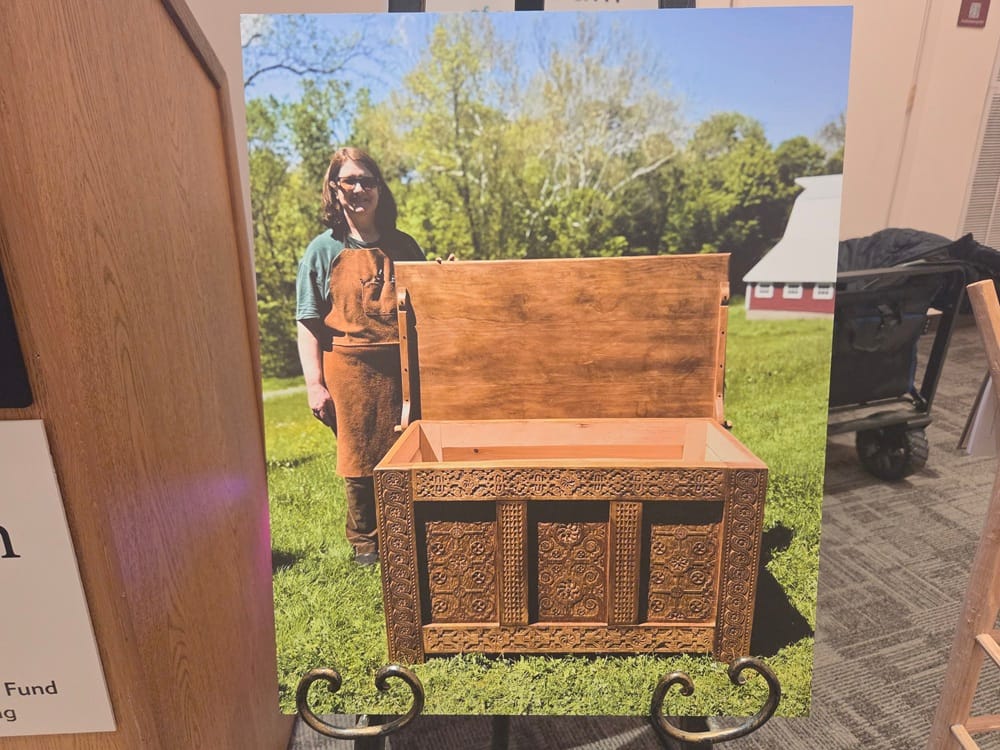
The subject of Elder’s talk was a large joined chest she made this year. As nails and other metal were rare, chests in the Colonial era were joined expertly using wood in a way that utilized the strengths of the different materials: Pine was used for the backing and bottom of the chest, while hearty oak provided the frame and load-bearing points.
Elder spent more than five months and 140 hours completing the chest, which weighs over 100 pounds (explaining its absence from the talk). She listed all the old tools she used: an axe, saws, wood planes, winding sticks, a mortise gauge, plough plane, awl, a square, and mallets. The tools were used the old-fashioned way, and the result is a breathtaking piece of art that connects Elder to her family’s tradition of woodworking.
Elder takes the tools just as seriously as the finished work. She said she feels a responsibility to care for the tools so that they’ll be there for the next Elders who want to keep the family traditions going.
“When you're going around this museum, look closely at a piece of furniture and notice the marks that were made while they were being built, or the signs of wear and their use,” she said. “I hope that you'll think of the people that came before us. And someday, I hope that my chest and all these tools will continue their journey with another generation, and that's what makes this project so meaningful to me.”
NEXT
Jamil goes to the Wadsworth to hear two artists discuss their work.


