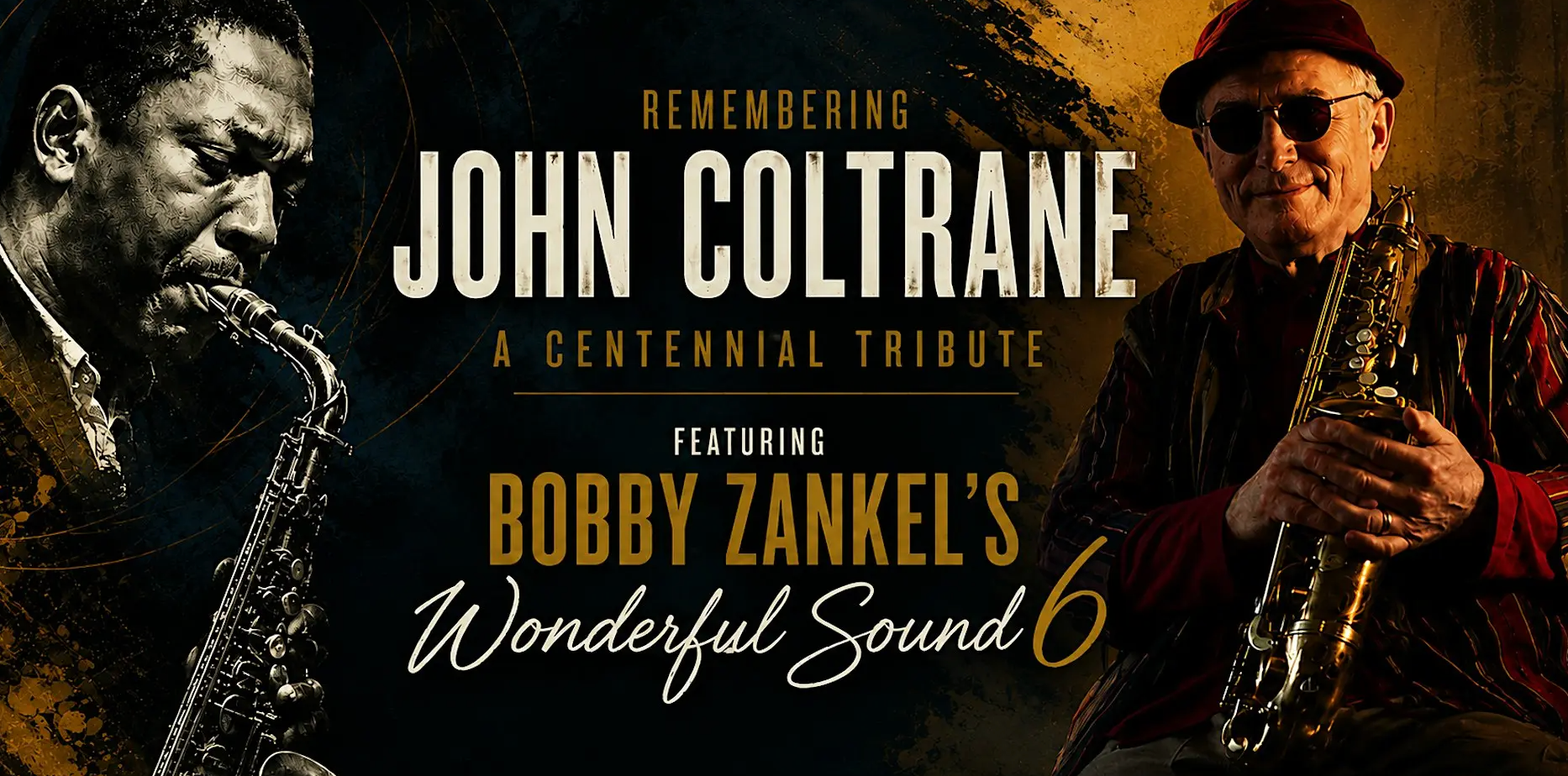
Remembering John Coltrane: A Centennial Tribute
Black Squirrel Club
1049 Sarah St.
Philadelphia
July 17, 2026
When John Coltrane arrived in Philadelphia in the summer of 1943, it was the beginning of a symbiotic relationship that still exists today. In Philadelphia, Coltrane found a new home that would shape him musically and spiritually. In the fantastic 1997 book Soundtrack to a Movement: African American Islam, Jazz And Black Internationalism, scholar Richard Brent Turner explains that Philadelphia’s Black Muslim community played an integral role in Coltrane’s spiritual evolution. Turner notes that in addition to being surrounded by Muslims like his wife Naima, “Several Muslim musicians influenced Coltrane’s musical and religious development during his Philly years.” While Philadelphia undoubtedly shaped Coltrane, he also left an indelible mark on the city. Coltrane’s peers like legendary saxophonist Odean Pope are still active in Philly’s jazz scene while the city has produced generations of musicians, artists and scholars who’ve looked to Coltrane as their creative north star.
This year, 2026, marks the 100th year since John Coltrane’s birth, and there are a number of celebrations being staged here in his adopted city. On Friday night, July 17, the Black Squirrel Club in Fishtown hosted Bobby Zankel’s "Wonderful Sound 6, Remembering John Coltrane In His Centennial Year," a live concert capturing the musical and spiritual power of Coltrane’s work.
The front room of the Black Squirrel was packed as musical lovers of all ages filled every pew and chatted beneath the sound of Coltrane’s bluesy, contemplative classic “Equinox” blaring from the speakers. Led by Brooklyn-born saxophonist and veteran of Philly’s music scene Bobby Zankel, the ensemble was staffed with titans including Jaleel Shaw on sax, Nazir Ebo on the drums, Sumi Tonooka on piano and Sam Harris holding it down on the upright bass. The set opened with Tonooka, Harris and Ebo improvising slowly and patiently. Tonooka’s piano chords, Harris’ bass and Ebo’s drumming swelled and coalesced into a booming thunder cloud of sound. As the tempo and intensity increased, the duo of Shaw and Zankel joined in with a soaring regal melody. From there, Shaw’s solo was furious and exploratory, running through arpeggios and rapid fire phrases that practically came screaming out of his horn.
Once Zankel got on the mic and addressed the crowd, he spoke passionately about the significance of John Coltrane’s life and work, describing the late jazz great as “a musician, a philosopher and a holy man.” The band’s command of Coltrane-inspired works like Zankel’s A Change of Destiny and songs from the Coltrane songbook was extraordinary. At one point in the set, the band played “Coltrane Time,” an incredibly complex piece marked by its shifting meter and Tonooka’s solo that fluidly moved from densely clustered chords to quick, dextrous melodic lines. The sheer intensity of the music played on the bandstand Friday night was almost overwhelming. The commitment and curiosity required to play John Coltrane’s music is perhaps the greatest gift that he left us. Hearing these musicians — who like Coltrane were molded by this city — push themselves and their instruments to their furthest limits reminds us of the legacy of musical excellence that lives on in this city. John Coltrane’s body may have left Philadelphia long ago, but his spirit still inhabits the music being played here.


