Lee Kyo
When Memory Expires, It Becomes Translucent
Ark Gallery
Gwangju
Through Aug. 26, 2026
(Jisu Sheen recently moved from New Haven to Gwangju, South Korea, where she’s covering local arts and culture for the New Haven Independent and Midbrow.)
Where do late-night thoughts go when they're done swirling around in the dark?
According to Gwangju artist Lee Kyo, they might get stuck in the sheets. That's not even the hard part; at least bedding is washable.
"It would be nice if we could wash ourselves of those thoughts so easily," she said in Korean. Instead, like a stubbon spot, the thoughts remain in our minds.
What to do with a stain that won't go away?
There's a lot of talk around the downsides of saving a problem for later. Sweeping it under the rug, bottling it up, ignoring the elephant in the room... all these sayings about waiting tend to imply some future disaster.
Lee offers another option.
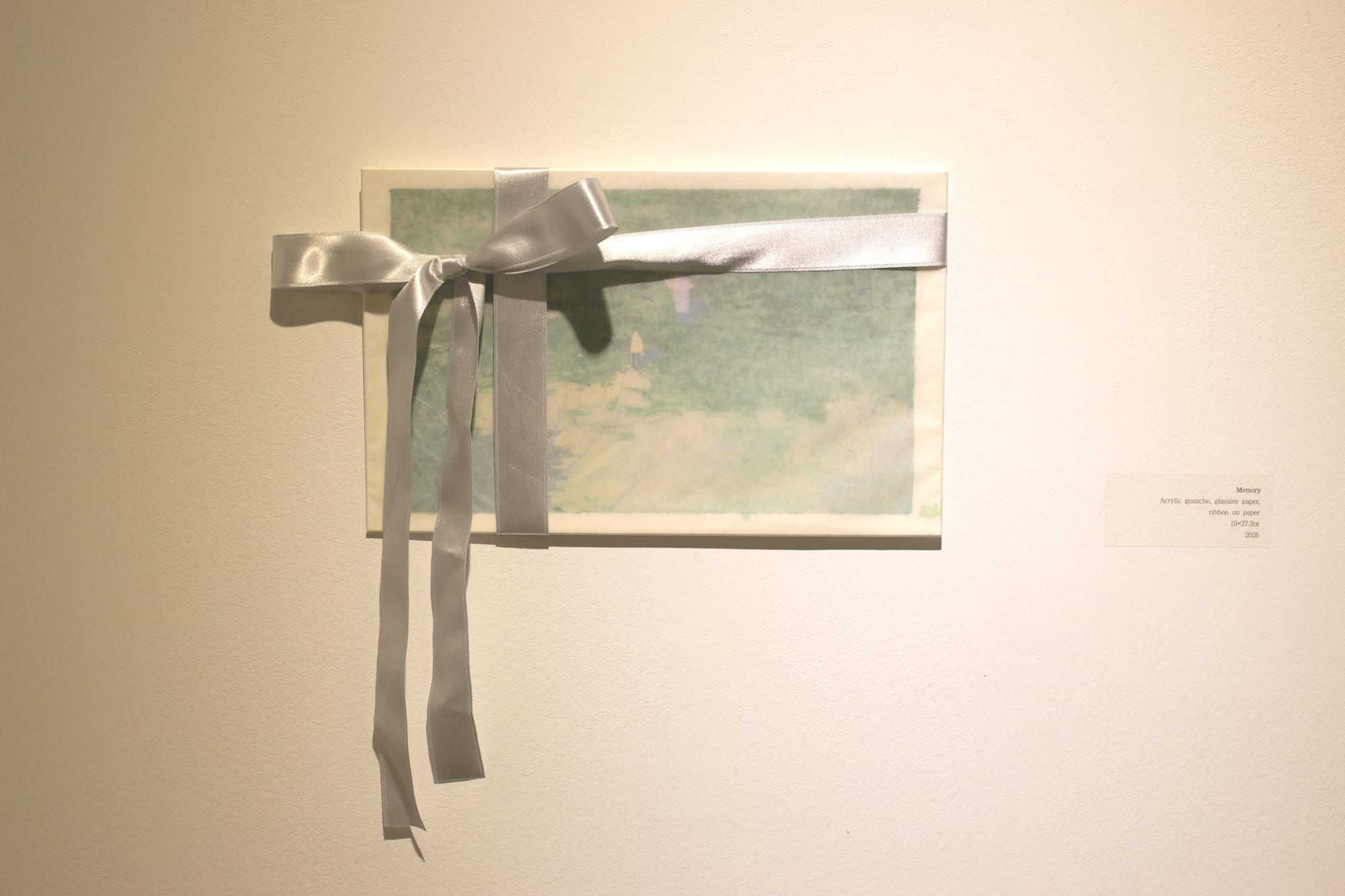
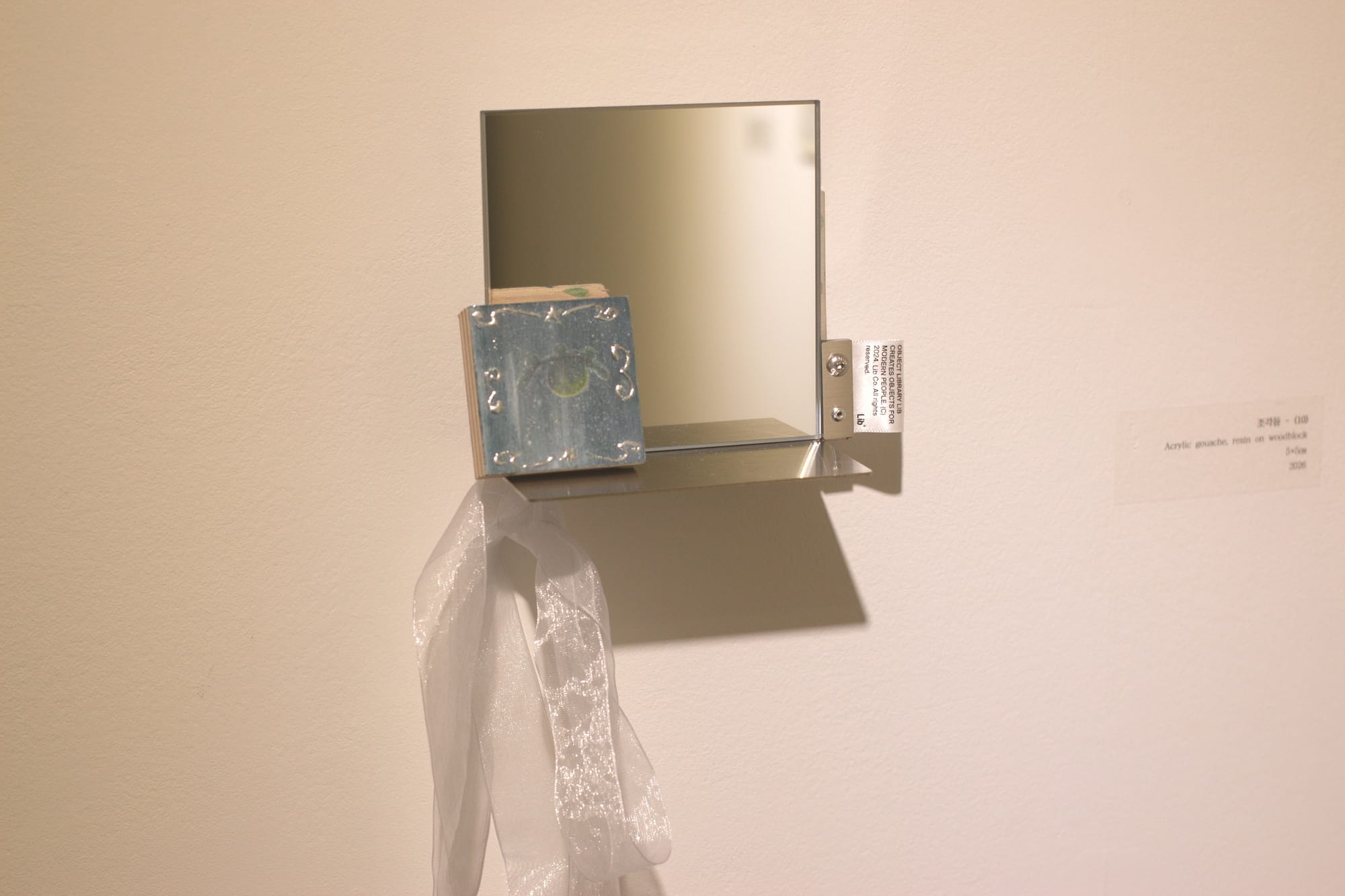
Her solo show, When Memory Expires, It Becomes Translucent, at Ark Gallery in downtown Gwangju, is centered on the theme of packaging. She uses motifs of bows and frames to gift-wrap memories faded by time and sunlight. Our difficult thoughts might not disappear in our lifetimes, but they can wait in a beautiful box until we are ready to face them.
I visited the show on Sunday. Lee offered me coffee and apologized for only having hot, not iced. Little did she know (until I informed her right after) it's one of my life's joys to drink hot coffee in the summer.
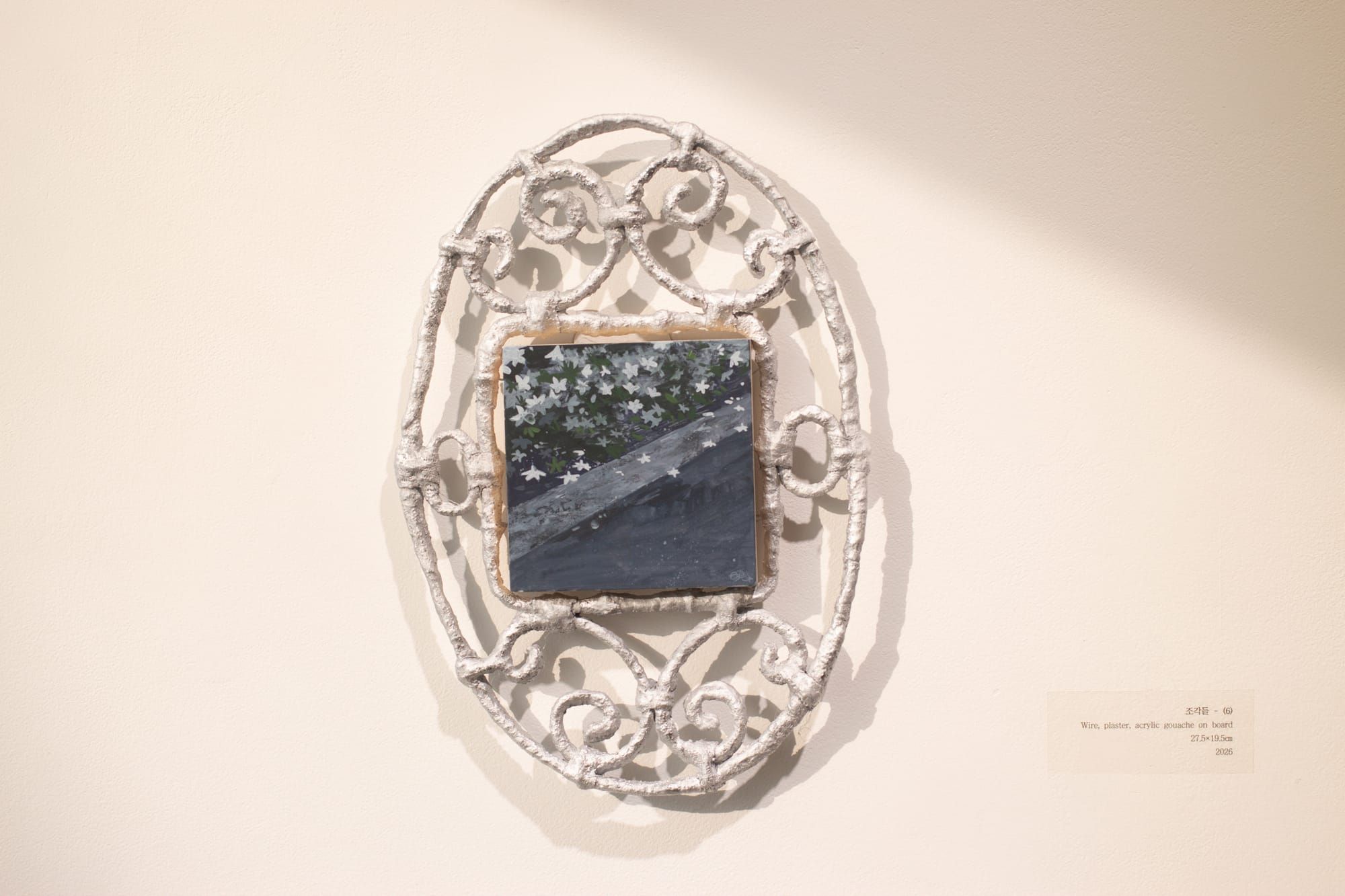
Sipping my warm treat, I watched the sunlight fall over the gallery walls, dousing a painting called "조각딜 (6)" (Fragment #6) in warm tones.
The piece looked like a cutout of a larger scene, a quick snapshot. Tiny white flowers dotted a dark background, maybe asphalt. Surrounding the small square, taking up the same amount of space or more, was a large, white oval frame of wire and plaster. Its decorative curls offered a sense of protection and permanence.
I thought of the way the sun cleans fabrics; not just by drying but by sanitizing, deodorizing, lightening stains. And if it doesn't get everything out, at least it's pretty in the meantime.
One of Lee's paintings was of a mattress catching some rays. Between the dappled, shadow-like floral design of the mattress, Lee's painted sunlight, and the real sunlight streaming through the gallery windows, I wasn't sure what was real and what wasn't.
Of course, the truth was that it was all real.
In the context of Lee's packaging theme, her ribbons and curly flourishes were more than decorations. These elegant touches seemed to underscore the heaviness of life's inescapable memories — the things we can't bear to look at right away, that we need to put away for a long time.
Lee's metaphors came to me as a relief. Not only because someone else had this feeling too (I once made an animation of a creature taking out its brain to wash it under a faucet), but because the concept of wrapping opened up a whole world of things to do while we wait.
Just waiting, with nothing but doom to keep us company, is like waiting for the rug to flip, the bottle to break, the elephant to charge. It's no way to live.
Wrapping up our worries, thoughts, and memories in ribbons provides a throughline between past and future selves. It's a kind act, meaning there must be someone to receive that kindness.
To me, it meant recognizing a future self. Someone I don't know yet. And although it might seem unwise to give that stranger the problems I can't deal with right now, Lee's paintings showed me there is a way to do it gently. There are bows, and wrappings, and carefully designed fences. We can wait to open these gifts when we're ready.
Sign up here to get Gwangju Midbrow email updates delivered straight to your inbox.