
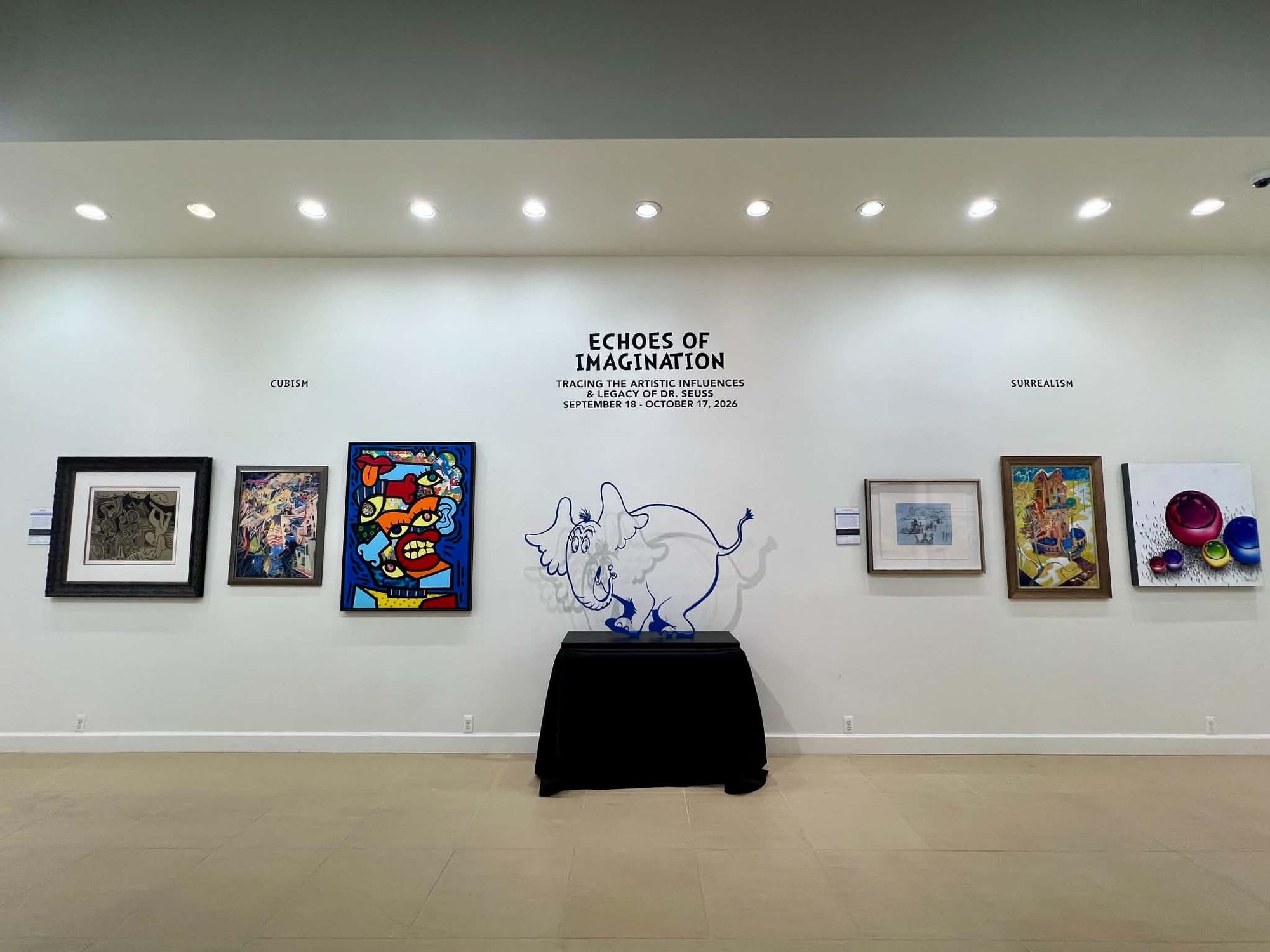
“Echoes of Imagination: Tracing the Artistic Influences and Legacy of Dr. Seuss”
Art Leaders Gallery
West Bloomfield, Mich.
Through Oct. 17
We may think of him as mainly a children’s book author but Dr. Seuss was a pretty interesting artist as well. This was made apparent in “Echoes of Imagination: Tracing the Artistic Influences and Legacy of Dr. Seuss,” a new exhibit at Art Leaders Gallery in West Bloomfield. The exhibit groups some of Seuss’s work with other artists who either influenced him or were influenced by him, in a colorful, whimsical throughline that spans seven decades — including work by masters like Pablo Picasso and Salvador Dalí.
“Echoes of Imagination: Tracing the Artistic Influences and Legacy of Dr. Seuss" at Art Leaders Gallery.
“Echoes” is one of the most fun exhibits I have been to in a long time, and Art Leaders Gallery leaned into quirkiness with a delightful opening reception that encouraged people to dress in theme and featured snacks like deviled green eggs and a ham and Thing 1 and Thing 2 chips.

But the art itself was, of course, the main event and a fascinating exploration of 20th-century art history. As described in a presentation by art historian Jes Stiner with the Seuss estate, Seuss — real name Theodor Seuss Geisel — was a sponge, studying and soaking in the artistic movements of his time and applying them to his own work (including his time as an ad man). The exhibit was organized into six sections: Post-Impressionism, Art Nouveau, Cubism, Surrealism, Color Theory, and Abstract Expressionism. Each featured a grouping of three works, progressing from an original master to Seuss to a modern artist.
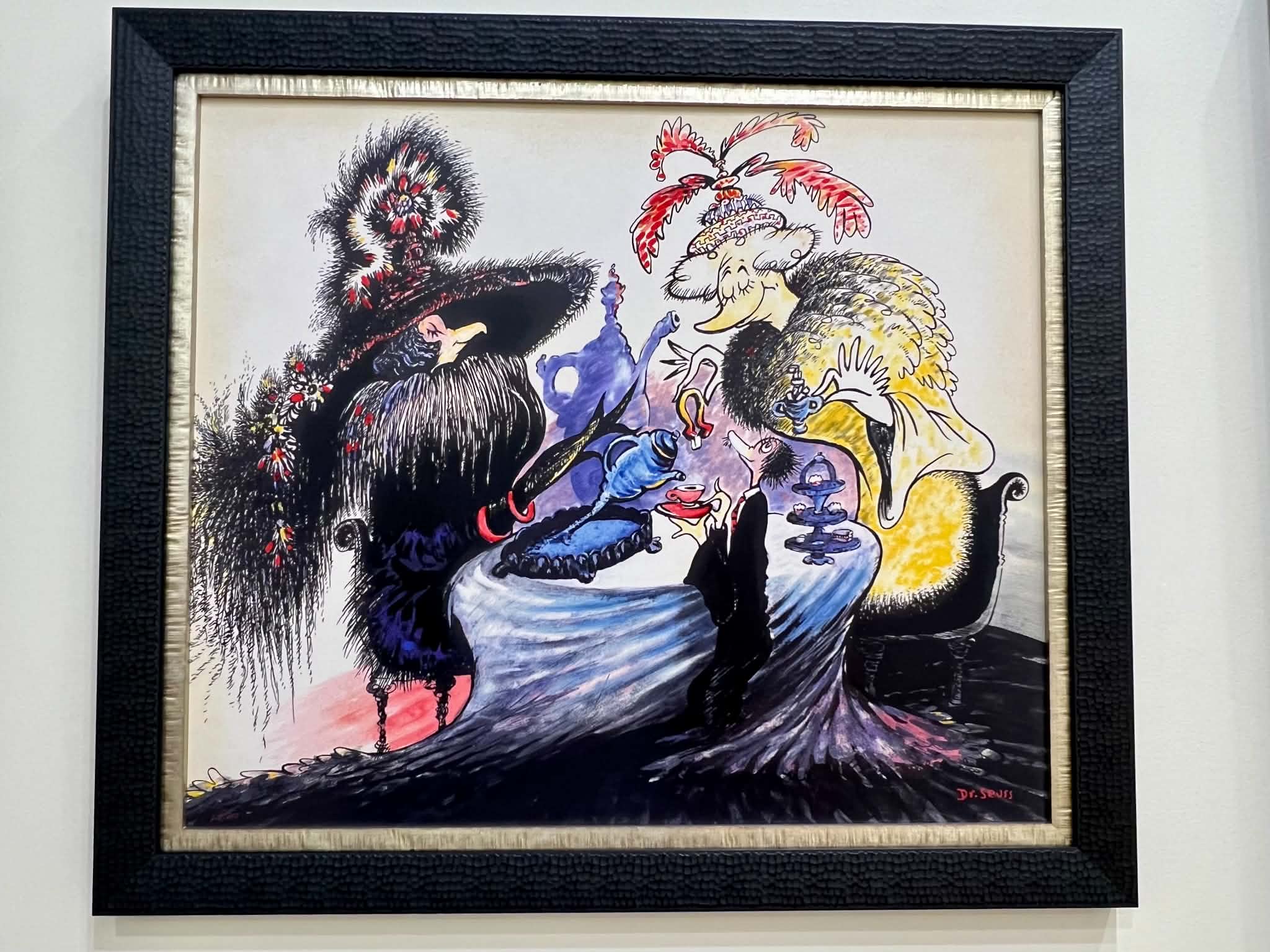
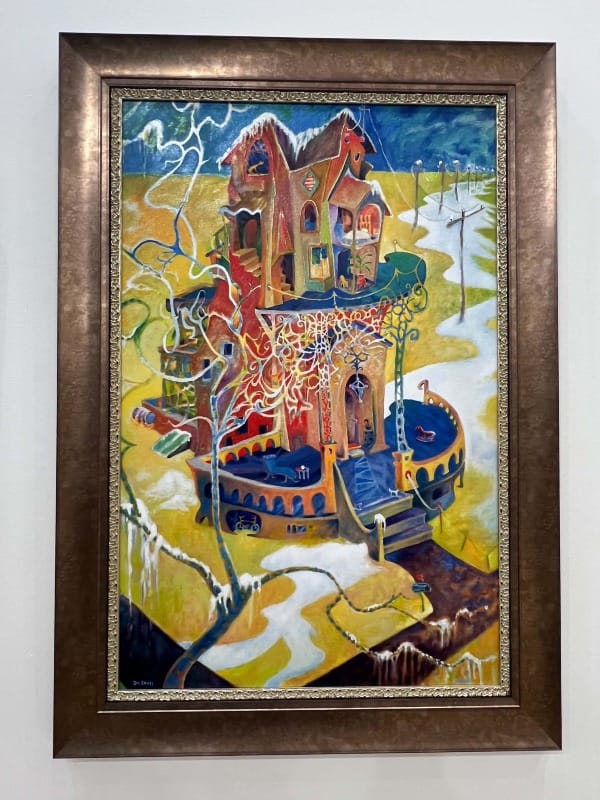
Some of Seuss’s art was easily recognizable, like the 1962 “Raising Money for the Arts” with two Seussian characters enjoying a tea party in exaggerated finery, or his 1969 “That Winter Spring Came Late,” a fantastical reinterpretation of his childhood home which looks like it could be lifted from one of his books. Others were more subtle but still carried the vibrant colors and whimsy of his style — and many also featured tiny Seussian creatures hidden within, adding a “Where’s Waldo?” aspect that made seeing the painting even more fun.
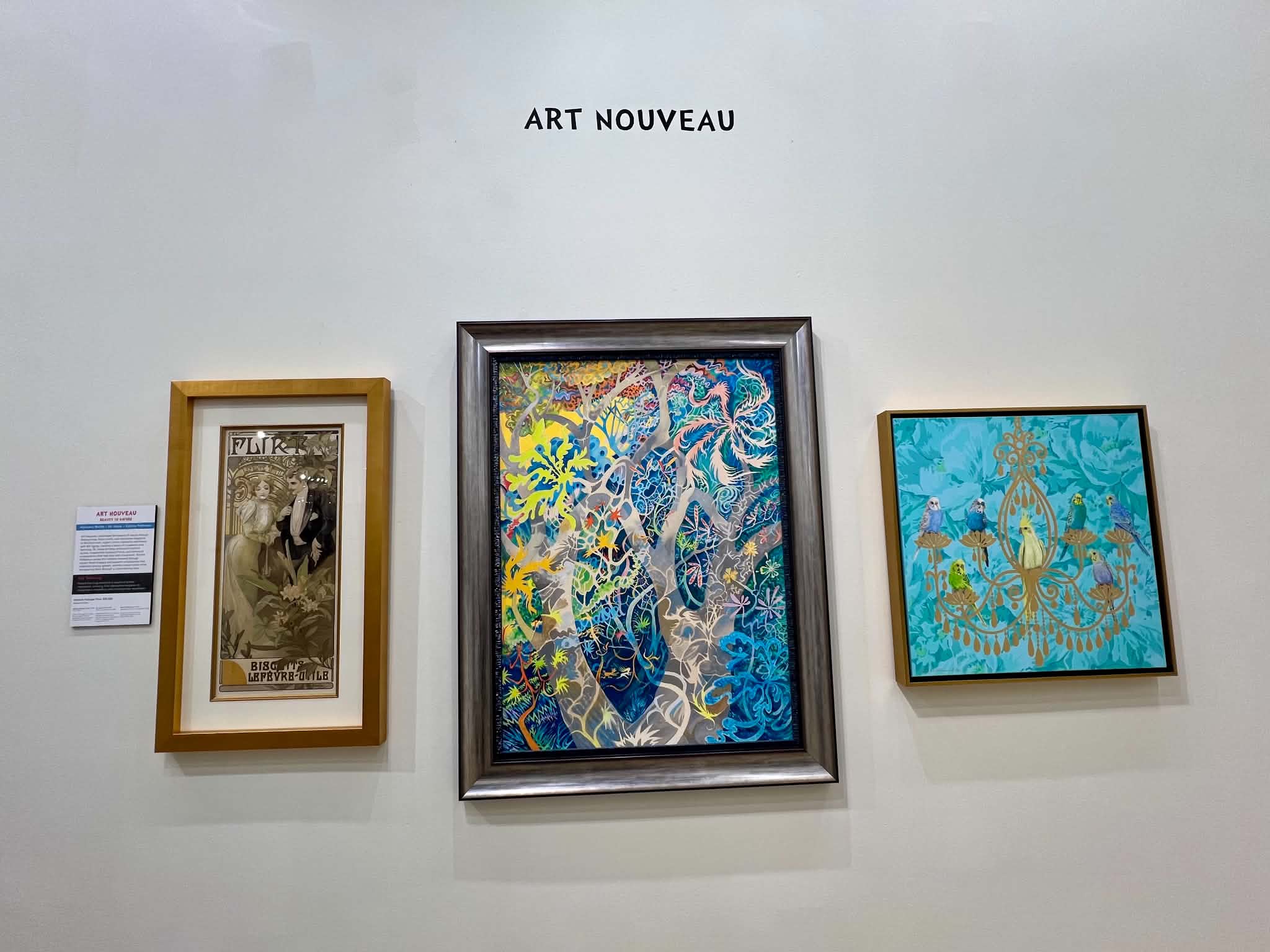
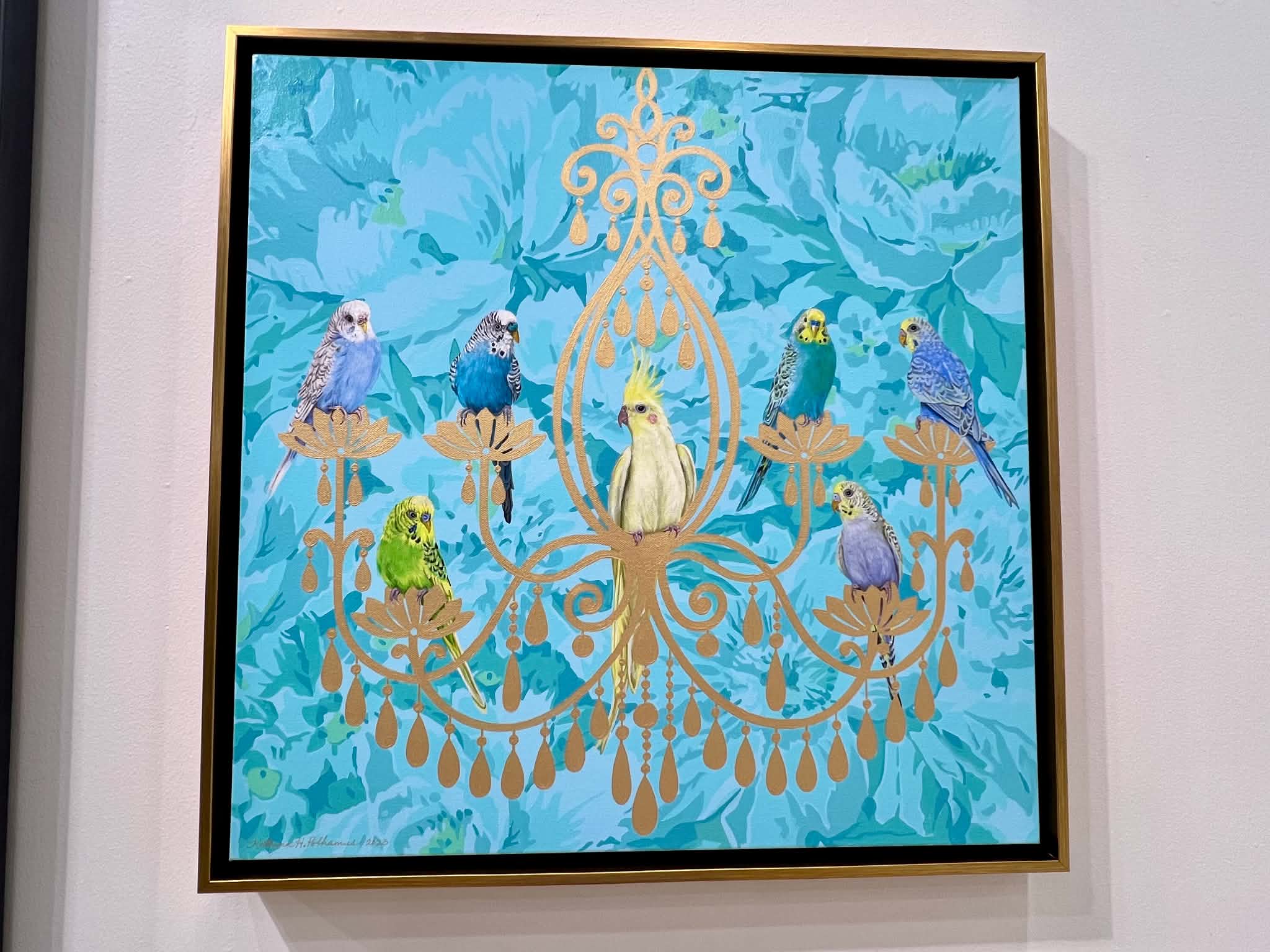
The Art Nouveau section was perhaps my favorite, a style inspired by nature, with distinctive curves and florals. Alphonse Mucha’s 1899 “Flirt” and Katrina Polhamus’s 2026 “Swinging from the Chandelier” flanked Seuss’s 1965 “Chase in the Forest,” a vibrant painting of a whimsical tree with branches overlapped by flowers, leaves, and blooms of contrasting colors — plus a couple of tiny characters hidden within (a charming trait I noted in his other paintings as well). “Chandelier” — a favorite of the whole exhibition — seems closer to Seuss’s style than Mucha’s work. It features vibrant birds perched on a golden chandelier in front of a blue, floral background while “Flirt” is a poster advertisement for the French Lefèvre-Utile biscuits brand featuring a young couple framed by flowers in muted tones. All three were lovely in their own ways.
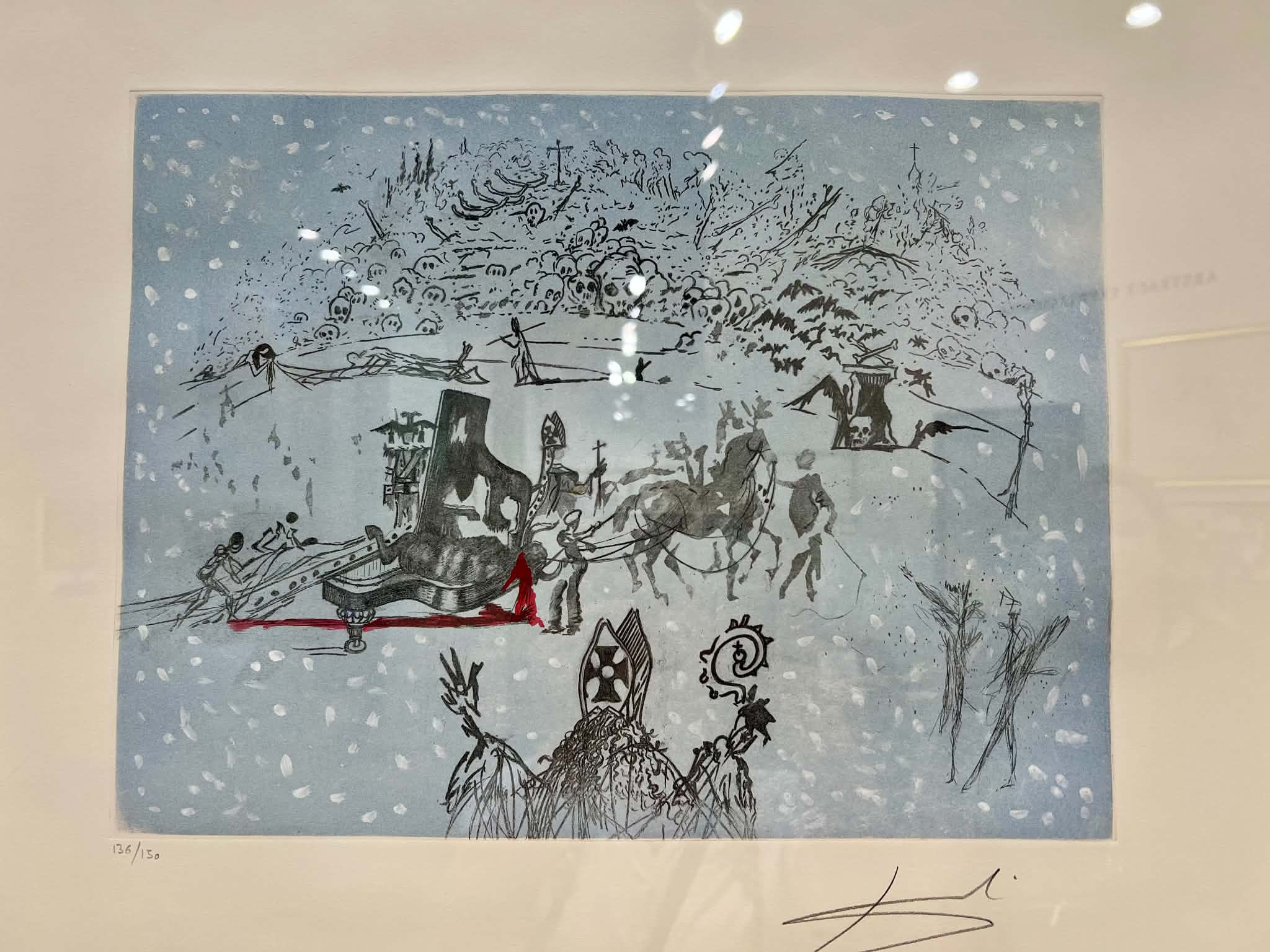
While not aesthetically my favorite, one of the most interesting pieces in the exhibit was Dalí’s “Piano Under the Snow” in the Surrealism section. In a sea of color and whimsy, “Piano Under the Snow” was the lone downer of the lot, a black and white etching featuring a bull bleeding red under a piano — the work’s only distinct color — surrounded by bishops and skeletons of spectators. Gallery owner David Gorman gave me a fascinating mini art history lesson, explaining that the work was part of Dalí’s larger “Surrealistic Bullfight” series, a darker response to Picasso’s “Tauromachie” series, also about bullfighting. I enjoyed learning a darker side of Dalí I hadn’t been familiar with, even if it was a bit of an outlier.
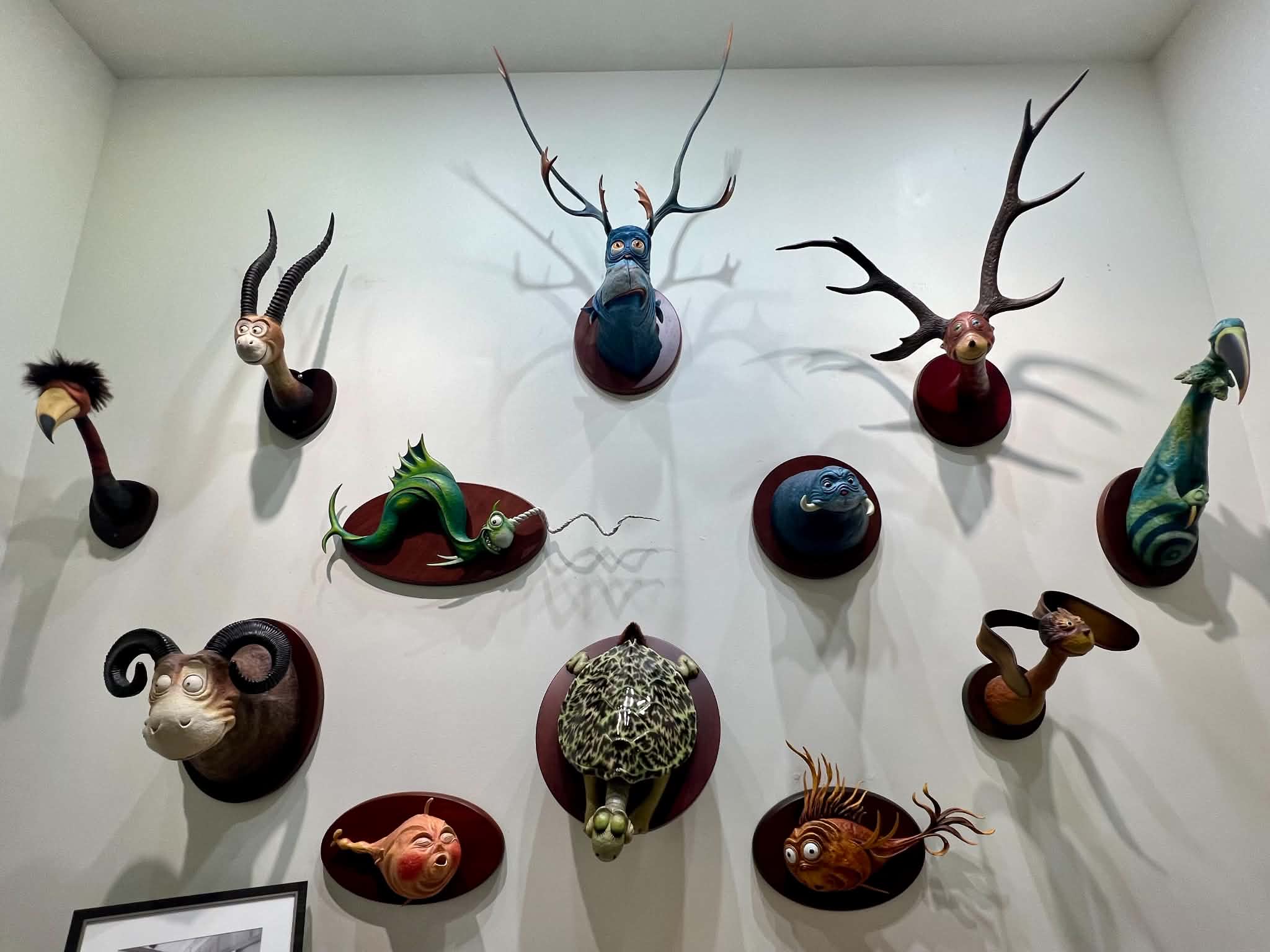
The exhibit is just one corner of the larger gallery full of about 90 additional Seuss works — including a quirky Seussified taxidermy wall — as well as additional paintings from other featured artists, and lots of pop art. The whole experience was fascinating, nostalgic, and smile-inducing. You may never look at Dr. Seuss the same way again.
Follow Midbrow Detroit on social media:
Bluesky, Facebook, Instagram, Threads, TikTok, X.


