
“This is 100: America’s Thanksgiving Parade”
Detroit Historical Museum
Detroit
Through Jan. 3
America’s Thanksgiving Parade in Detroit is looking pretty good for a centenarian — and it’s seen some stuff. Behind the whimsical floats, giant balloons, goofy clowns, and upbeat marching bands is a tradition that’s survived a World War, financial strain, and the pandemic — not to mention the literal demolition of its founding institution. But the parade is still holding strong — and as joyful as ever — as evidenced by the Detroit Historical Museum’s “This is 100: America’s Thanksgiving Parade” exhibit, which marks the parade’s centennial this year.
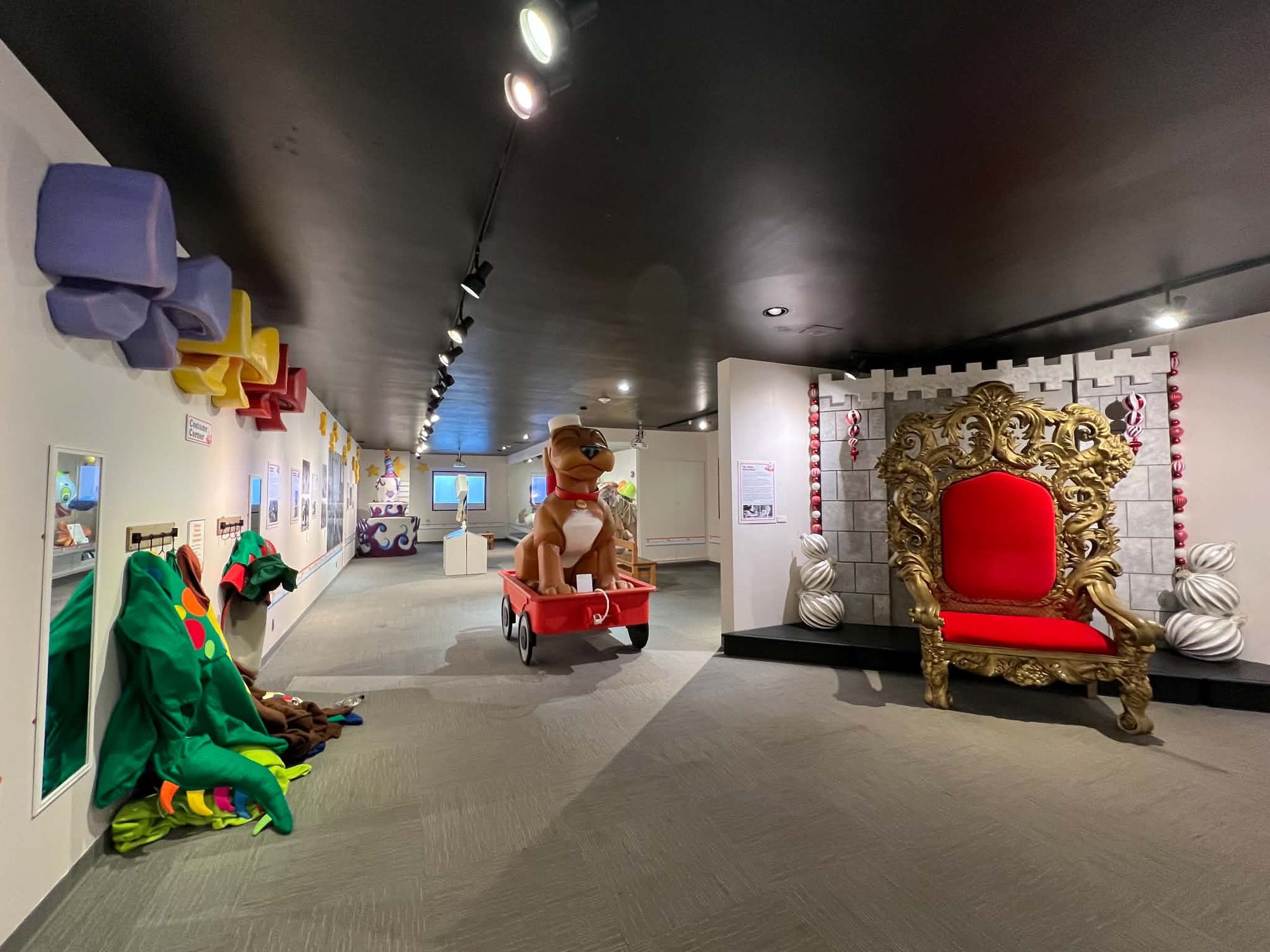
The vibe of the intimate exhibit is festive and cheerful, a celebration of the parade’s most important historical moments and a behind-the-scenes look at the magic behind the magic. An encased Santa costume greets you as you enter the room, surrounded by giant parade props, including a Santa chair, a peppermint, and a foam dog that compete for your immediate attention.
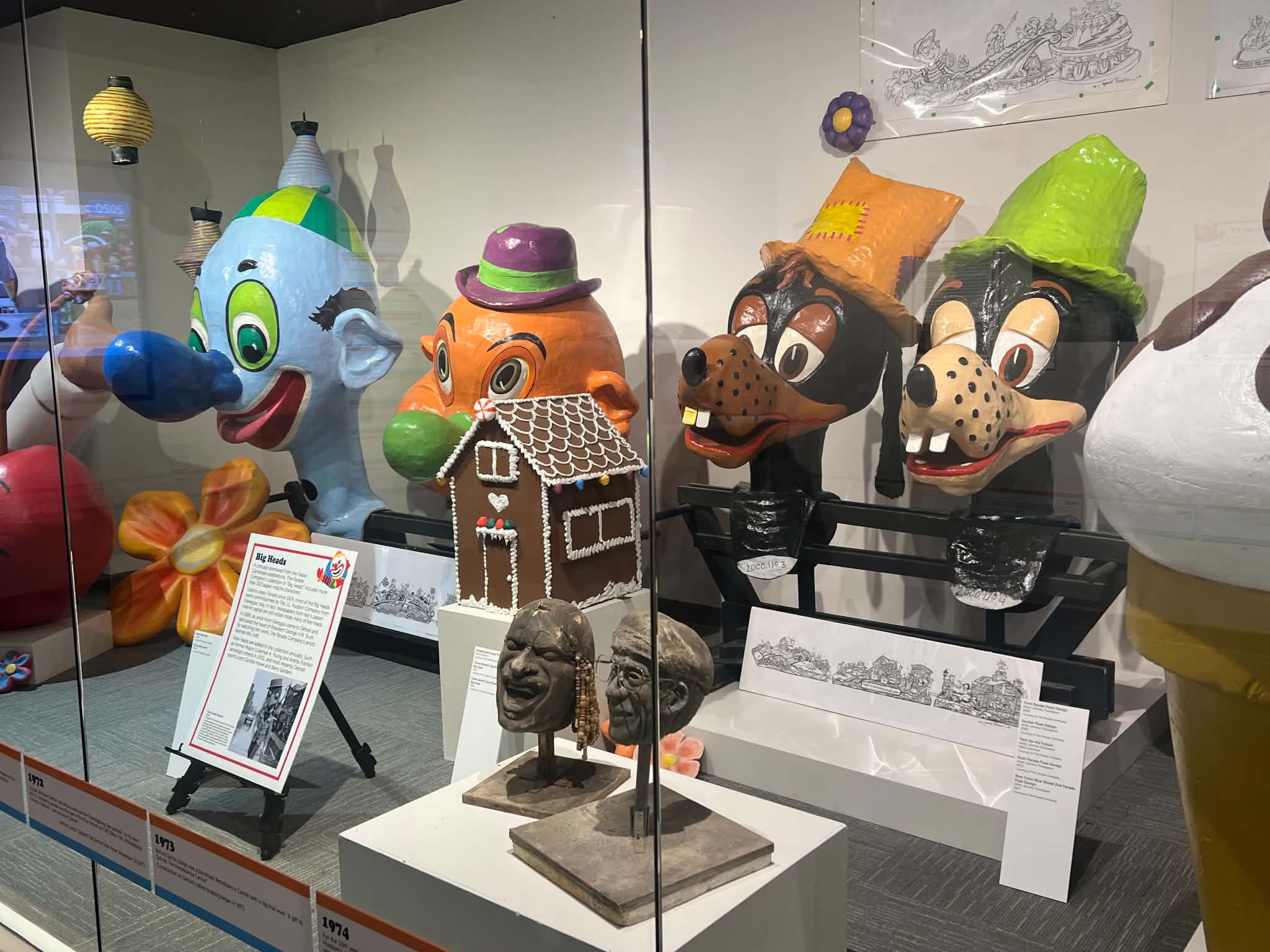
The signage around the room gives an overview of the parade’s most notable features and history: its 1924 origins as a marketing tool for Hudson’s department store, its two-year absence in 1943-44 during World War II (hence 2026 being the centennial), and the background of its most iconic balloons, floats, and figures. The back display case features colorful float components up close, including the parade’s signature larger-than-life papier-mâché heads, worn by its Big Head Corps. TVs playing videos of historic and recent parades hang on the walls. A dress-up section allows children to try on festive costumes, and the giant Santa throne offers fun photo opportunities.
But I found the humble little timeline that went around the room to be one of the exhibit’s most interesting components, revealing some of the parade’s most culturally poignant moments that remind you it doesn’t exist in a vacuum. The timeline is made up of small horizontal signs that highlight the most notable feature of each year of the parade, succinctly captured in one or two sentences.
There are the matter-of-fact moments: 1934, the year of the Lions’ first Thanksgiving Day game; 1947, the parade’s first local television broadcast; 1956, the first year it took place entirely along Woodward Avenue; 1966, the first year the parade was broadcast in color.
But other signage offers more insight into the larger city, state, and national issues and interests at the time. In 1959, the parade featured floats that honored the addition of Alaska and Hawaii to the United States. Lassie the TV dog was grand marshal in 1964. A Detroit Free Press quote in 1985 said, “Santa buckled up in his sleigh because of Michigan’s new seat belt law.”
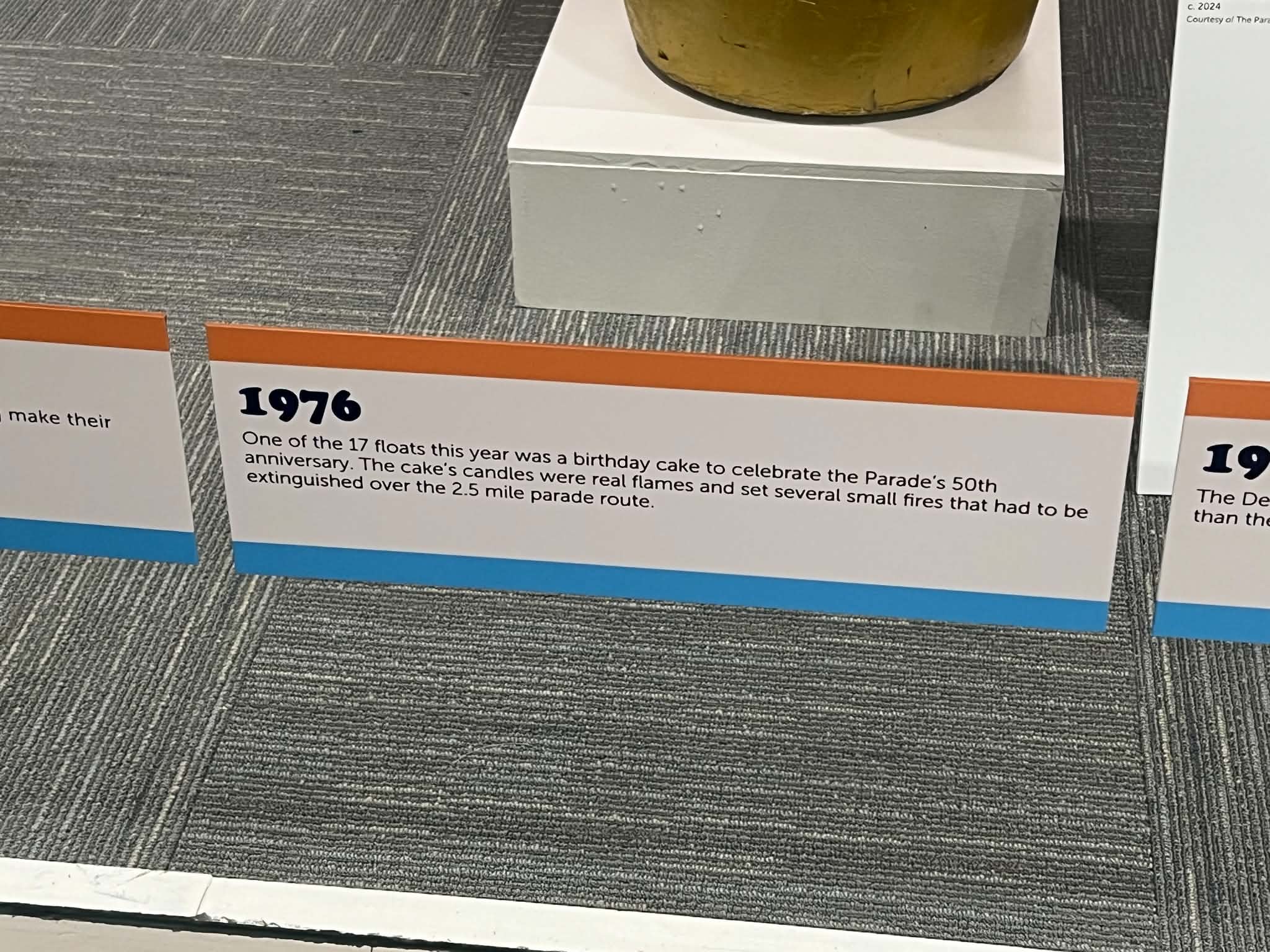
Some floats marked significant developments in Detroit, like models of the Renaissance Center and Comerica Park in years when they were under construction, 1973 and 1999, respectively. Some signs note the parade’s more trying history, like 1979, the last year the parade was completely sponsored by Hudson’s; 1981, when 18 companies had to rescue the parade from financial hardship; and 1990, when the parade had to be saved again, this time by Art Van Elslander of Art Van Furniture.
The first parade after the demolition of its iconic parent institution was held in 1998. The sign made no other note of what happened, but I imagine the November air felt a bit heavier that year as Santa rode by the pile of rubble that was once his Detroit home. Now the parade passes by a new building on the former Hudson’s site, one that looks different but shines brightly against the Detroit skyline — perhaps symbolic of the parade’s own resilience and a sign of another 100 years to come.
Follow Midbrow Detroit on social media:
Bluesky, Facebook, Instagram, Threads, TikTok, X.


