
Fellowship Place Presents Stand Up for Mental Health
Lost in New Haven
New Haven
April 17, 2026
“If you had told me that when I was having a breakdown at work, and they were taking me out in an ambulance, that I’d end up being a stand-up comic because of it, I would have said, ‘What? You’re crazy,’” Dana Canevari said with a giggle.
“I was crazy, and now I’m a comic. You can be crazy and be a comic. Why not? Miracles do happen. It sort of is a miracle when you think about it.”
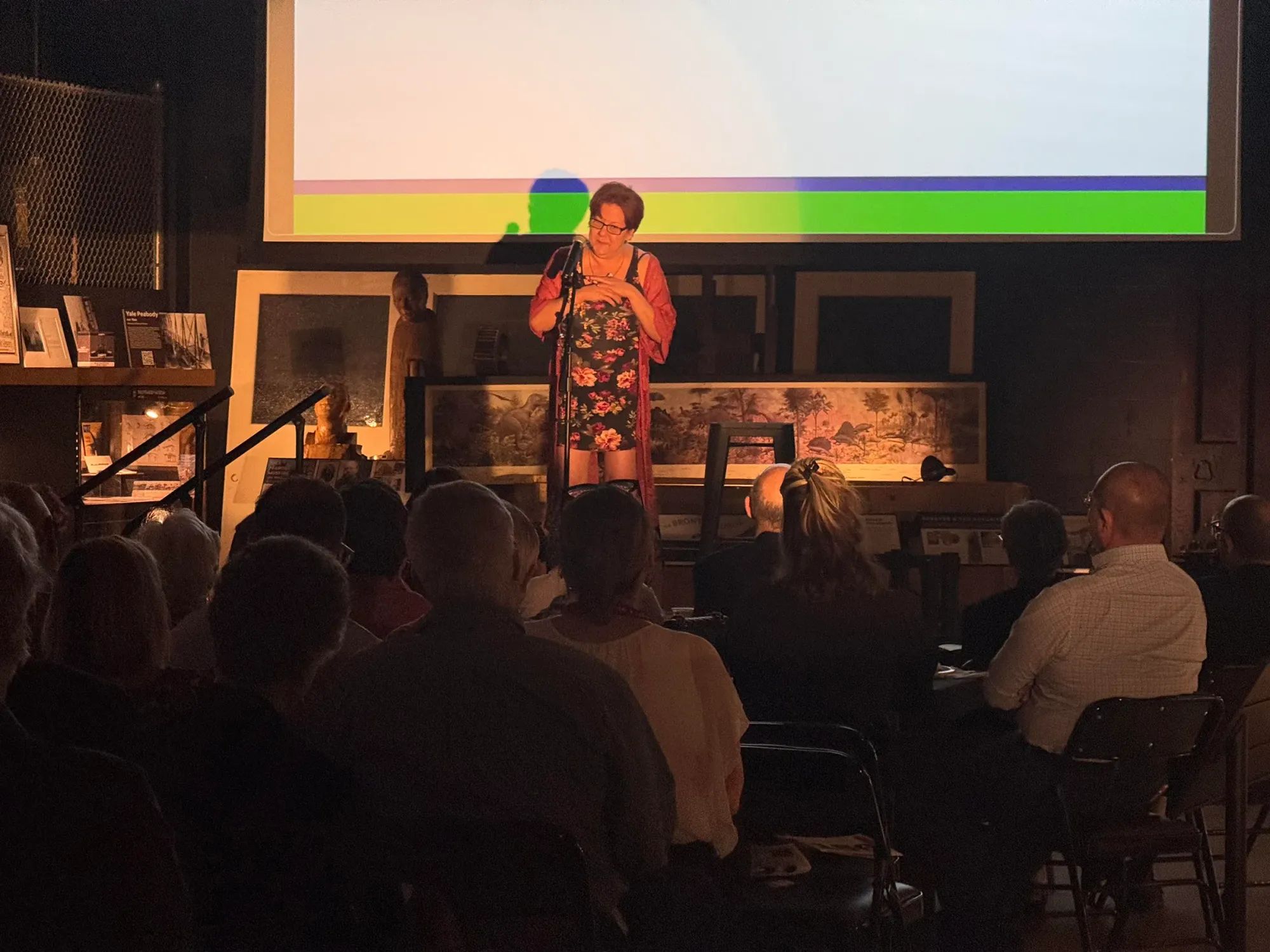
Canevari was one of eight comedians performing at Fellowship Place’s “Stand Up for Mental Health” benefit on Friday evening at Lost in New Haven. The eight comics are all clients of Fellowship Place, which has been providing therapeutic support and rehabilitation services for adults living with mental illness for over 60 years. All the participants enumerated the ways in which the organization has positively impacted their lives and shared how much it means to belong to the “Fellowship family.”
This year, Fellowship Place wanted to try something different with their annual fundraiser, which helps bridge the gap of what government funding cannot cover.
“We’ve never done anything like this before, including clients from our community in the fundraiser. I know a lot of board people wanted to have more direct contact and hear from our clients,” said Fellowship social worker Tori Wallace.
Fellowship partnered with Stand Up for Mental Health, an organization that teaches stand-up comedy to people living with mental health problems. Stand Up for Mental Health was founded in 2004 by award-winning counselor, stand-up comic and author David Granirer who is all about ending stigma. When he introduced himself, he proudly stated, “I am a counselor. I’m a stand-up comic. And I have bipolar.” He has run Stand Up for Mental Health in over 50 cities in Canada, the US and Australia, in partnership with agencies like Fellowship Place.
“I’m just so impressed by their dedication, their humor and what they have to say,” Granirer said of the Fellowship Place clients that he trained for six weeks in intensive comedic courses. After his training, the comics were able to write their own jokes, which they performed on Friday night. They displayed Olympian-like ability to translate their suffering into comedy.
“How many pills does it take to get high?” queried comedian Muriel Susino.
“None, because the doctor won’t give you any.”
Lost in New Haven erupted in laughter.
On the docket were also jokes about racing thoughts (“exercise”), the perils of purchasing medical marijuana (“you’re better off buying from a dealer”), a psychiatrist billing a patient extra for bringing along his imaginary friends, and grippy socks – the notorious psychiatric ward staple. The clients were true professionals, all with an admirable command of the stage. If anyone ever messed up, they got right back into their groove, and it was barely noticeable.
As event host, Granirer had wisdom to share. He waxed poetic about a world in which it was no big deal to talk about mental health. In Granirer’s world, you could tell a colleague the voices in your head are too loud as easily as you could complain about a headache.
Fellowship client Dana Canevari was already practicing such transparency, eliciting laughter without even trying, as she shared her story ahead of her comedy debut.
“When I had my breakdown, I thought it was completely unfair. I mean, I already have cerebral palsy. I figured that life was dumping on me. But then I found my Fellowship family and all that I went through is now an act,” she shared. “Looking back on all of it, it is funny. The fact that I can find humor in what was sorrow has made me a better person and helped me heal.”
Canevari was incandescent as she shared stories of adaptive water skiing, camping and rock climbing – a very full life. “Now that I have all these disabilities, nothing bothers me anymore,” she laughed.
As he closed the show, Granirer encouraged the audience. “This is proof that recovery is possible. “If these folks can do it, so can you.”
To donate to Fellowship Place, click here.


