
The Thread That Binds: Three Generations Of The Rembert Family Legacy
Artists in the Community Exhibition
Whitney Center
Hamden
Through Sept. 12
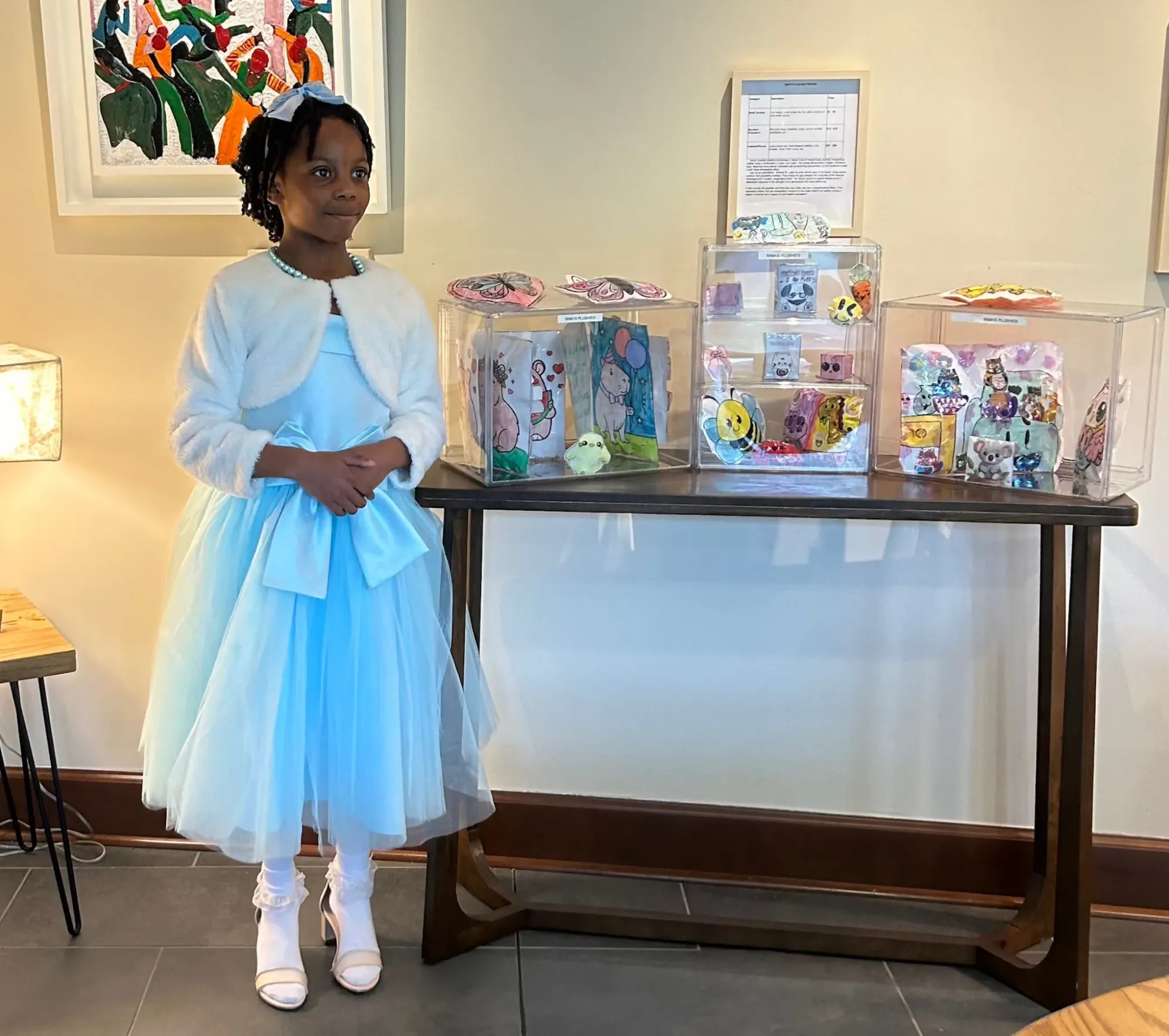
When the Remberts found out their youngest daughter Nima was gutting her dolls, they did what most parents wouldn’t do – they nurtured her talent.
“I’m like, ‘Honey, we’re gonna have to talk,’” Winfred Rembert Jr., reminisced about his confusion at constantly finding dolls split at the seams. When he finally saw Nima’s vision, the synchronicity was striking. She was surgically removing the cotton from her dolls to make repurposed toy creations — as her late grandfather, the celebrated leather artist Winfred Rembert Sr. used to do in his old neighborhood.
Nima’s “plushies” are vibrant cotton-stuffed paper creations that the 8-year-old artist draws and colors beautifully. She has been creating such objects since she was 5 years old, from hearts to teddy bears. The ideas just pop in her head, she said. She said her goal is simple – to make people around the world happy. Nima also has a healthy perspective for such a young artist: “It’s OK if other people say [my art] is bad, or other people say it’s good. I like it.”
The plushies are featured in the Rembert family’s first three-generational art exhibition, at the Whitney Center. Opening day was May 22; it closes Sept. 12.
The exhibition also features the leather artwork fashioned by the late Winfred Sr. and his eldest son Winfred Rembert Jr., father to Nima.
“This is an American story of having to make more of yourself than what you were born with,” Rembert, Jr. told the audience at the exhibition opening.
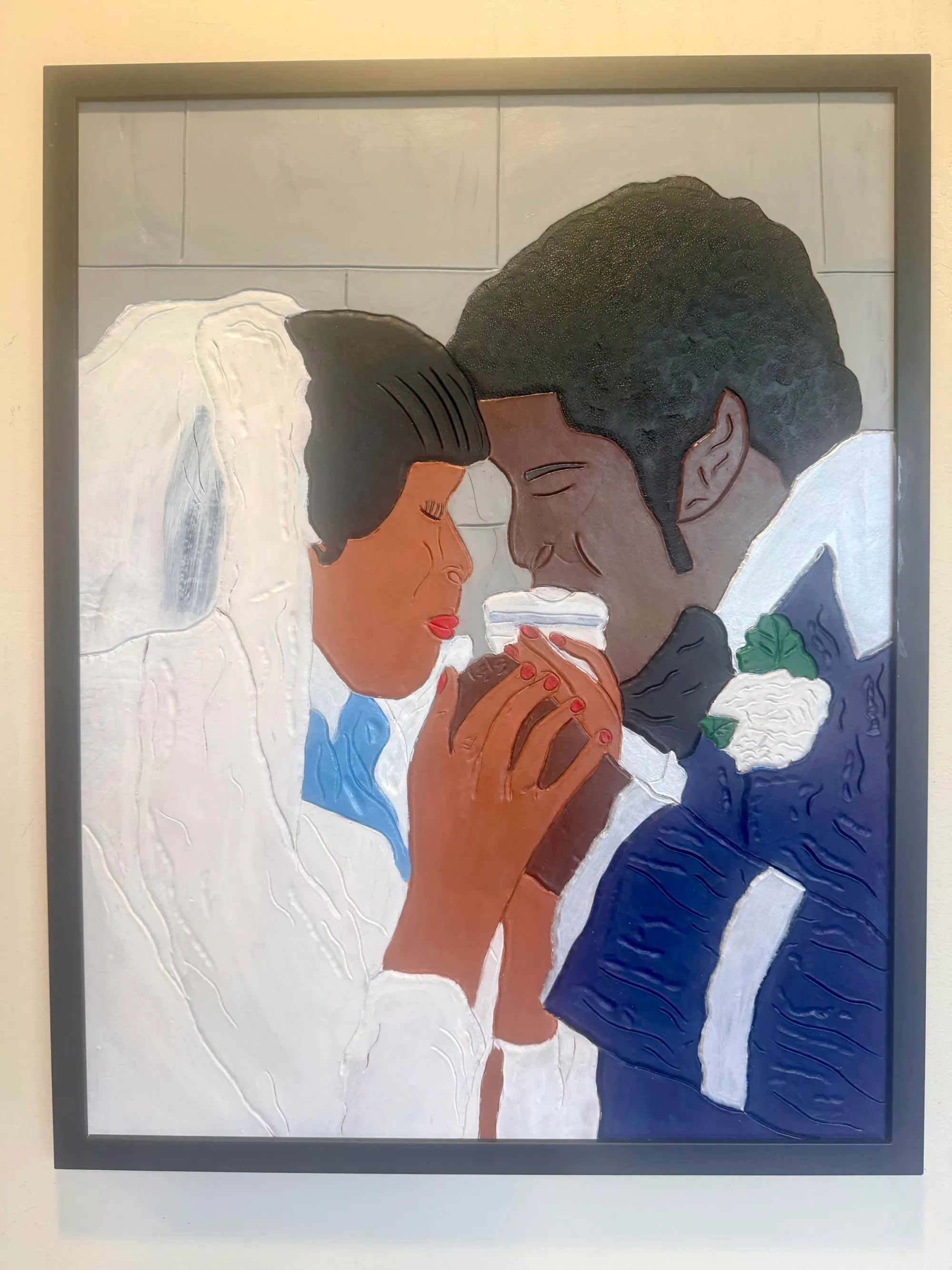
Rembert Sr. grew up an orphan in the Jim Crow South. His art depicts scenes from his life in Georgia – the everyday Black experience, juke joints, chain gangs and cotton fields. In fact, he actually picked cotton, a harsh reality that isn’t as far behind us as Americans would like to believe. Now, his granddaughter is taking that same material, charged with so much history, and transforming it into something joyous. His art ended up being exhibited around the country; he was posthumously awarded the Pulitzer Prize for his memoir.
The Remberts’ art is a testament to the power of alchemy. Rembert, Sr. learned to work with leather while toiling on a chain gang. He transmuted that agonizing experience into art pieces, using acrylic on leather. Originally, his artwork featured portraits of Black luminaries like Martin Luther King Jr., but his beloved wife Patsy convinced him to showcase his own life. He mined his personal history to produce vivid art that invites the viewer to live within it. Continuing his father’s legacy, Rembert Jr. also makes leather pieces that tell the story of Rembert Sr.’s life.
A piece of particular note in the exhibition is Winfred Jr.’s “Dirty Spoon Café,” a retooling of his father’s 2002 work of the same name. Like his father’s piece, the artwork spills over with a beautifully dressed crowd of Black entertainers and revelers in the café that Rembert Sr. remembered as a sanctuary for Black people in Cuthbert, Georgia, during the Jim Crow era. The piece thrums with so much life, it feels like it’s bursting out of the frame. It’s a startlingly, near identical piece to Rembert Sr.’s original.
Rembert Jr. became an artist not even two years ago. “After [my dad] passed, I had a lot of sleepless nights and kinetic energy, and I didn’t have any place to put it. Then I started doing this, practicing. And I made it a priority to get better,” he said.
Rembert Jr.’s only training was watching his father work. His father never got to see his work when he was alive. Rembert Jr. relies on his mother and on his wife Tamu to critique his work. His mother was the person who told him he was ready to sell his artwork.
Rembert Jr. said that at some point he’ll do more contemporary work telling the Black story in this country. He’s thinking about moving out of leather and doing sketches, working with pastels, or painting portraits and landscapes. He also wants to get into writing.
Preserving and pushing forward Winfred Rembert Sr.’s legacy is of utmost importance to the family. Tamu is the founder and CEO of Nimaz Fine Art, named after their daughters Nima and Nzinga; Nzinga is also an artist. To get started, Tamu studied the practices of Christie’s, Sotheby’s and other top galleries around the world. Nimaz sells fine art by contemporary artists who work with their hands and create from scratch, including Rembert, Jr.’s pieces.
In addition to selling fine art, through Nimaz they teach art on leather, host lectures, and collaborate to produce murals and other artistic works.
“[Winfred, Sr.] was trying to be international. When he passed, we did take him international. Now that’s my same vision for Winfred Jr. He’ll be international, as well,” said Tamu.
Both Winfreds started doing artwork around the age of 50. Rembert Jr. is blown away by the fact that his daughter started at 5 years old. They succeeded in passing down art instead of generational trauma.
“To see that same spirit in [Nima] means the absolute world to me, for her to be able to cultivate that at such a young age,” he exclaimed. “Every scar was worth it. Every blood, every tear shed makes it worth it because she didn’t need any of that to get through the door.”
To learn more about the Rembert family, visit their website.


