By Liam Grace-Flood
The state legislature did something unusual in last year’s session: It passed into law the Connecticut Community Makerspace Initiative, one of only two such state-level measures (the other is in Maryland). In doing so, the state planned to create a pilot program with up to $5 million for makerspaces.
MakeHaven, New Haven’s community makerspace, was part of the coalition that advocated for the bill. While the broader movement MakeHaven grew out of is in decline, this local makerspace continues to grow. New Haven residents can hope the recently passed law will help MakeHaven do even more.
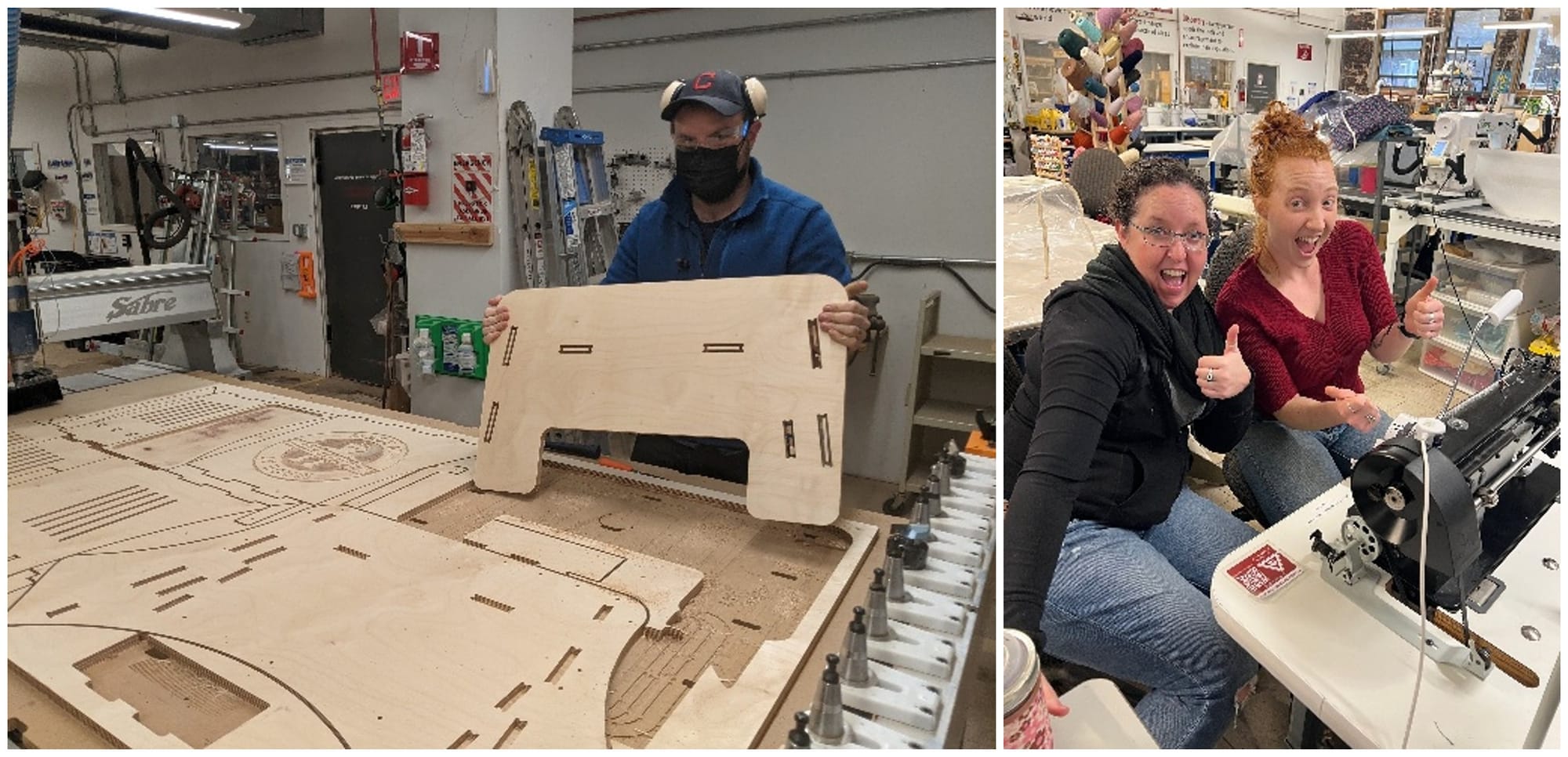
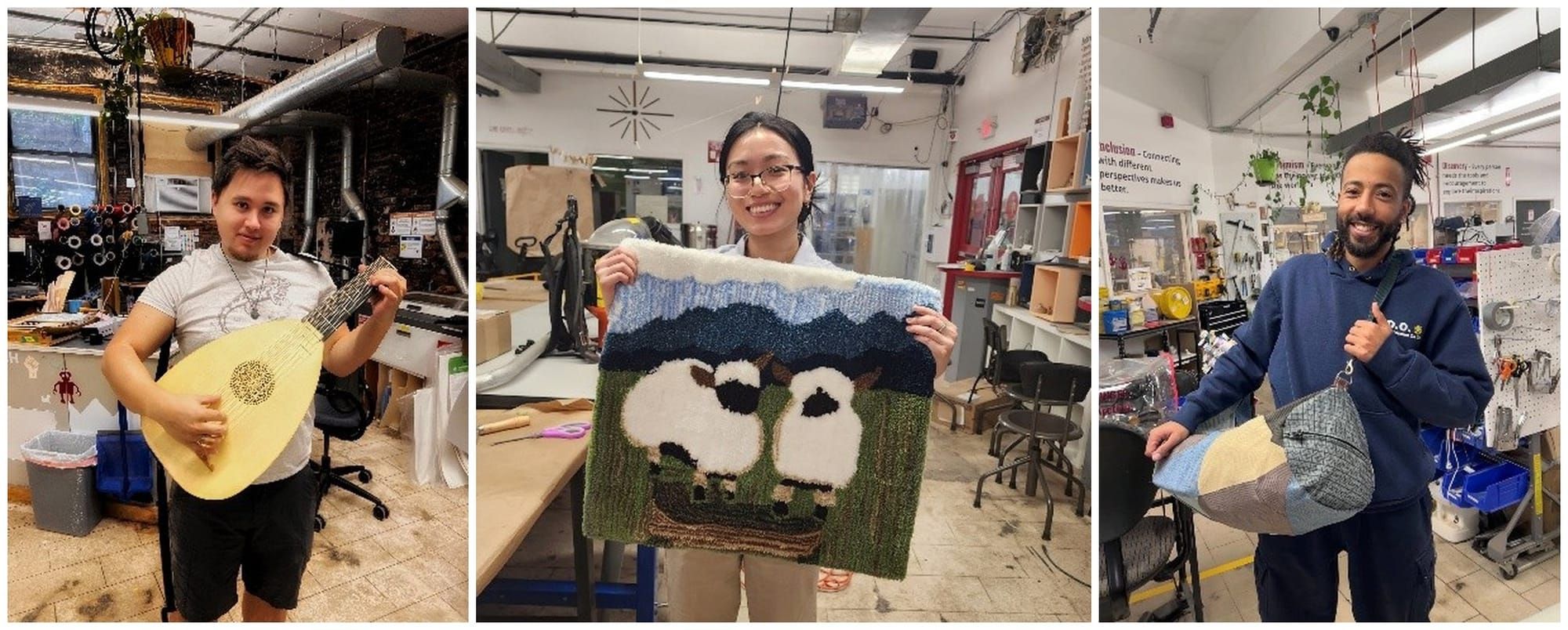
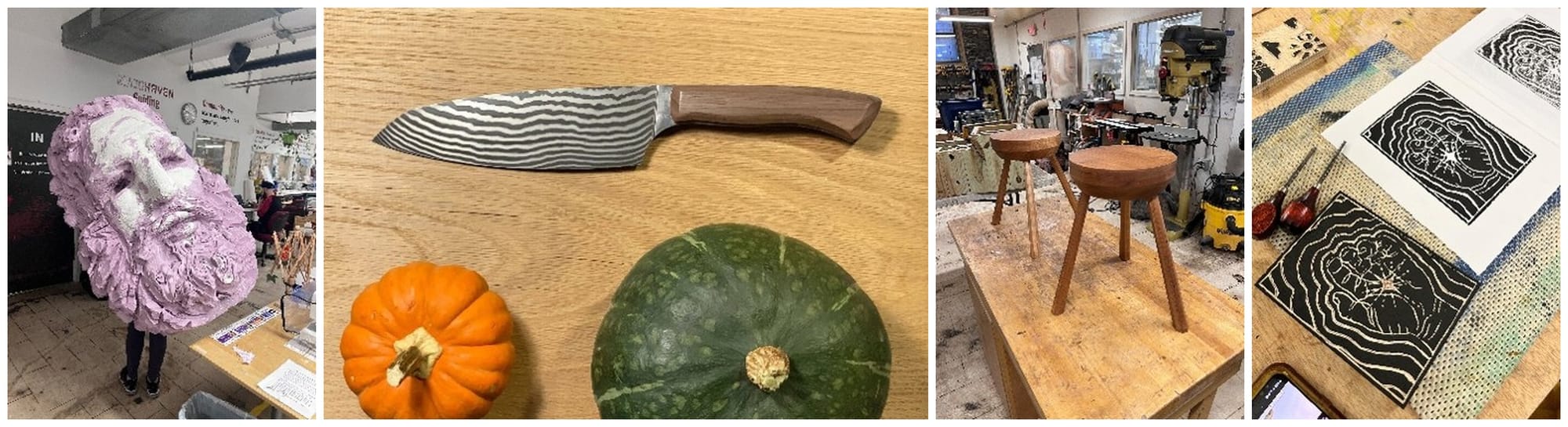
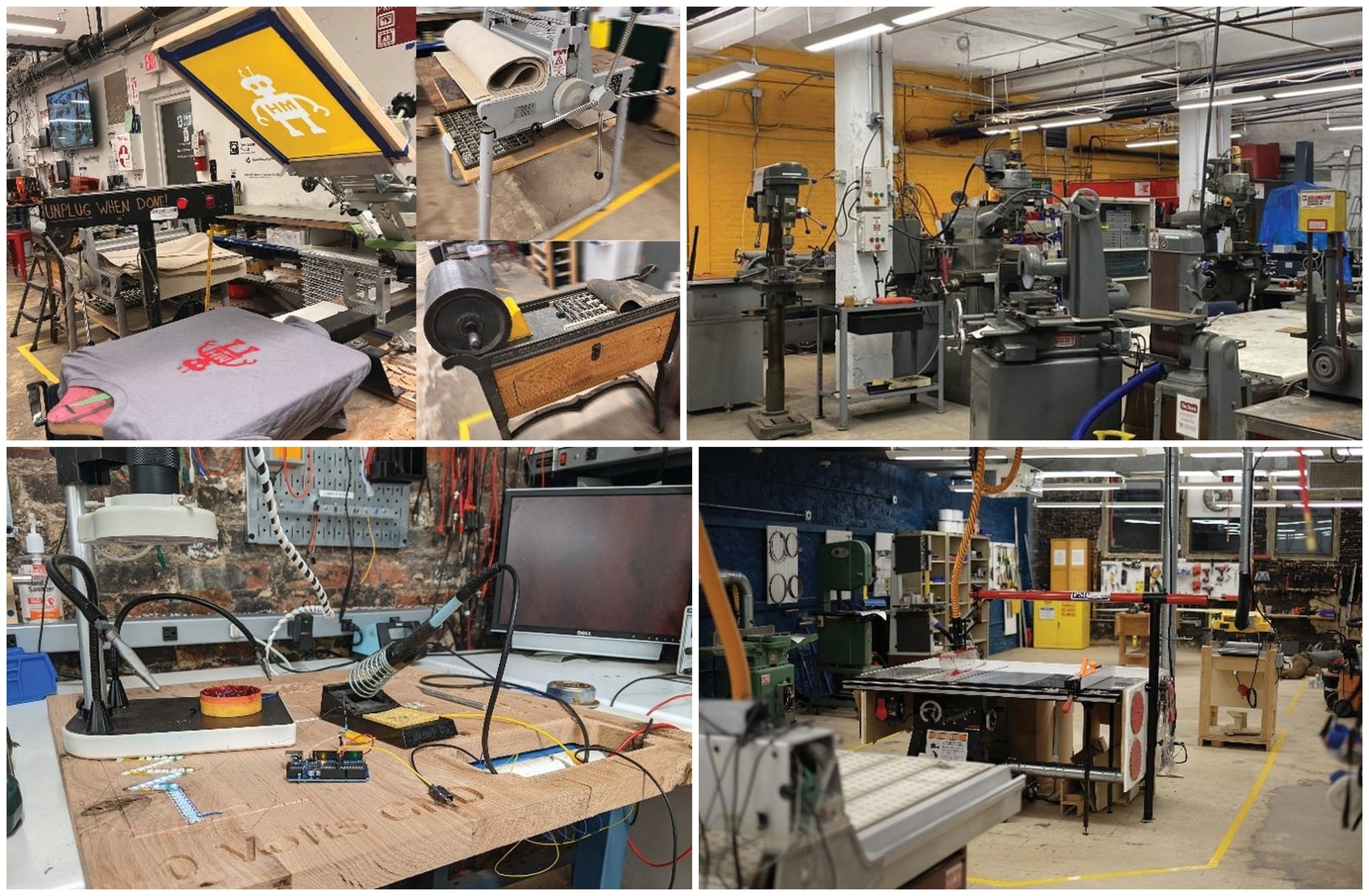
For uninitiated readers, MakeHaven offers a staggering array of tools in an approximately 12,000 square-foot space at 770 Chapel St, open 24/7 for anyone who wants to make or fix a thing. This news site, for example, has reported on people coming to MakeHaven to print temporary tattoos, establish a new school for personalized hands-on learning, launch a cidery, switch artistic medium, pickle, and simply repair their own stuff.
When MakeHaven moved into its current space, it had a $300,000 annual budget and hosted 200 members. Today they’ve doubled that budget and more than quadrupled their membership, with some people coming from as far away as Hartford and even New York City.
Some years ago, I wanted to do a small ceramics project but struggled to find an affordable place to use a pottery wheel and kiln. It was too expensive for me to buy my own equipment; even the classes I found at my level cost more than $350. Imagine my delight when MakeHaven set up their own ceramics space, available to me at just $60 a month. That fee granted access not just to those tools, but to hundreds of others.
MakeHaven is not just for hobbyists, nor are they limited to their own space. They enable entrepreneurship and workforce development with classes, community connections, their Pathway to Trades Program, startup desks and office space for small business tenants, and more. They also host a library of tools that members can check out like library books. For those who might balk at buying or renting a miter, table saw, concrete mixer, hedge trimmer, MIG welder, or engine hoist, the tool library enables a range of home improvement, car maintenance, and other projects.
Taking things apart and putting them back together —whether your car, the plumbing in your home, your bicycle, or even your favorite sweatshirt — gives you powers. It shows that the world around us was built by people, and that people (even you!) can rebuild it differently. It deepens your relationship to the world around you. It gives skills and confidence to save you money and improve your circumstances. But, as with my ceramics, the tools to do this can often be prohibitively expensive.
By making all of this publicly available, MakeHaven shows that we can do so much more together than we can on our own. Their shared offerings exceed any private garage workshop (with the exception of Tony Stark’s). Their many members will, if desired, give cheerful advice about how best to approach your project, and applaud your finished work. The makerspace is part of a broader network too. For example, their upstairs neighbor, Climate Haven, provides entrepreneurship support for climate start-ups that outgrow MakeHaven.
Waiting On State $
In MakeHaven’s advocacy to the state government, they made the case that this work and its broader societal impact is worth all of our support, like how we fund roads, schools, or parks.
Advocacy for the bill was itself a collective effort. Connecticut makerspaces all banded together to make the case for their work. MakeHaven Executive Director JR Logan, said “[t]he support in the written testimony was amazing.” Nearly 100 people wrote to the Commerce Committee in support of the initiative, saying that MakeHaven “is home to me,” “ has given me access to tools and equipment… to start a career in woodworking,” “[my company] regularly turns to MakeHaven’s large and talented membership base whenever we have a position available.” As one supporter wrote, “MakeHaven is just cool. You feel cool being there. You meet cool people doing cool things.”
While the bill’s passing is a singular achievement, its implementation has been slow. Originally meant to be launched Jan. 1 of this year, the initiative hasn’t yet come before the Bond Commission, where funds are officially allocated. Michelle Hall, director of the Office of Manufacturing at the state Department of Economic and Community Development, said makerspaces probably won’t be able to apply for the funds until next fiscal year, and representatives from the Bond Commission did not respond to a request for comment. Those eager to see the program launched may be dismayed by the delays.
At the same time, makerspaces have traveled a long road. What’s another fiscal year?
The Maker Movement
Movements throughout history have sought to empower people to make things. The Arts and Crafts movement in 19th-century Britain pushed back against industrialization to prioritize beautiful, hand-made goods. Gandhi’s Swadeshi movement advocated home-scale manufacturing to make Indian villages more self-reliant and less dependent on Britain. Around the world are different versions of hacker, folk-engineering culture, like Jugaad in India or Gambiarra in Brazil – what in the U.S. we might call MacGyvering.
The relatively recent development of makerspaces is just one variation on this theme, riding the tide of new 2000s and 2010s technologies like desktop 3D printers and laser cutters, which made increasingly complex projects possible at home.
MakeHaven’s name can be traced back to this “Maker Movement,” a term usually attributed to Dale Dougherty.
Dougherty founded Maker Media, a company that aspired to power a movement through its keystone publication, Make: Magazine and spectacular events called Maker Faires. Make: Magazine published mind-opening DIY projects and how-tos. Maker Faires did this in person, exhibiting mech battles and steel fire-breathing dragons the size of a house.
The movement was further bolstered by the rise of organizations like MIT’s Fab Foundation, which promised to teach anyone how to make almost anything, with a network of “fab labs” around the world and a common curriculum. Taken together, this was all loosely described as the “Maker Movement.”
The heart of the movement was always Dougherty’s company. That company had critics. Maker Media was named because it claimed to unite all “making” under one banner, espousing democratization and accessibility. But behind that broad banner was, at least originally, a narrow coalition. “Makers” were focused mostly on digital fabrication — tools like 3D printers — that let Silicon Valley software engineers make things in real life without having to learn any substantively new skills. Tthat meant that the “movement” also looked like software developers in the 2000s, mostly well-off white men.
The narrow coalition was also notably amateur. One could be forgiven for thinking the definition of a “maker” was someone who didn’t know what they were doing,. As soon as someone had skills, they would be a ceramicist, or a carpenter or, perhaps more realistically for those graduating from the “maker” label specifically, a 3D printing specialist. The emphasis on those newfangled tools often, paradoxically, limited people’s engagement with the real world and with our long-evolved craft traditions. In my own time visiting various makerspaces around the world, I saw people “rapid prototyping” with 3D printers things that could be made more quickly, easily, and less expensively with other tools. As a whole, the movement unfortunately reeked of white male mediocrity.
In 2019, Maker Media abruptly shuttered. A couple years earlier, TechShop, a large for-profit makerspace chain, closed. Things were not looking good for the Maker Movement even before the pandemic in 2020 sent many people home from their makerspaces. A recent study showed a decline in independent makerspaces (i.e. those unaffiliated with schools, libraries, or museums) starting in 2017, and then a leveling off. Early on, nonprofits, for-profits and informal clubs were all common; nonprofits now have the strongest survival rates.
In early 2025, Maker Media raised $312,000 to relaunch. Perhaps unsurprisingly, they continue to be structured as a for-profit company controlled by the same founder, and the money they raised from the public is not structured as donations to a nonprofit, but as speculative equity investments that go straight to Dougherty and may not generate returns for their investors.
MakeHaven: The Future Of Making
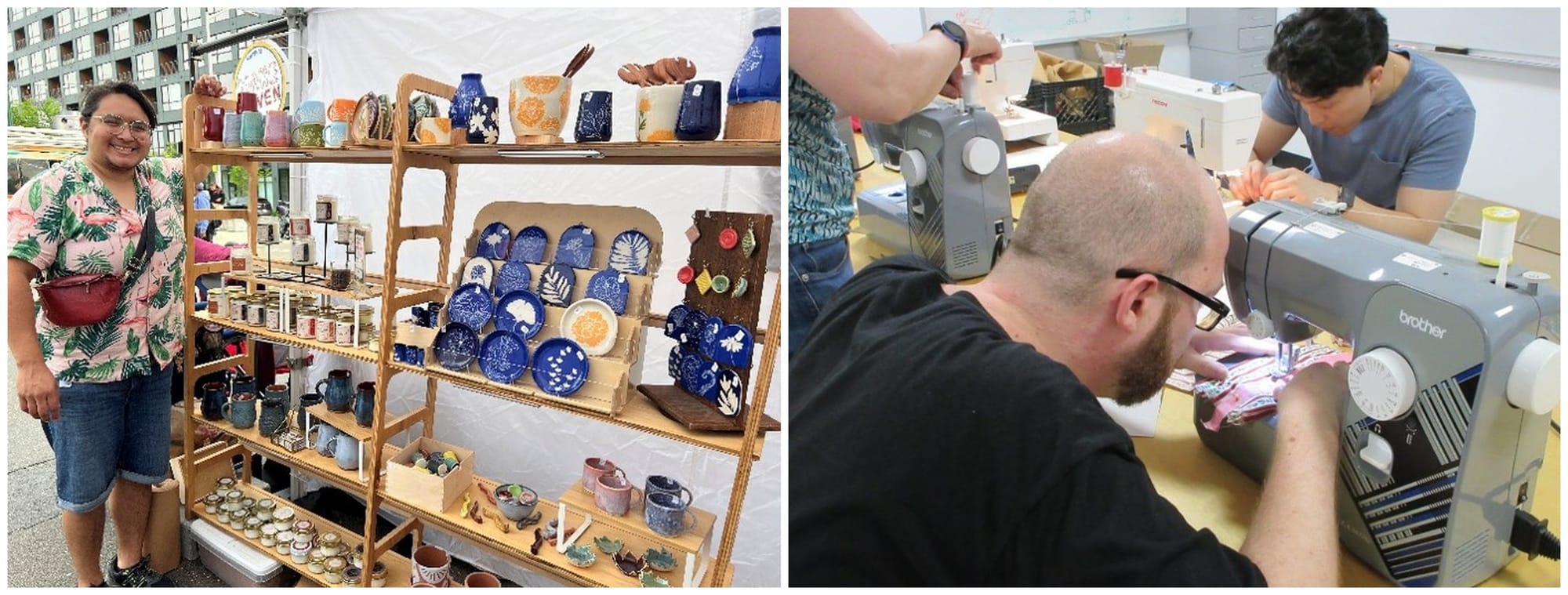

While most signs point to a “movement” in decline, that movement spawned community spaces and resources that are, hopefully, here to stay. The for-profit entities expecting to make money off making are dying away, and we’re left with mission-driven organizations that are tried and tested.
Among the best I’ve visited are:
- Vigyan Ashram, outside Pune, India, has pioneered a number of technologies benefitting the rural poor, and has educated more than 750 people and sponsored more than 150 entrepreneurs in the past three years.
- Habibi Works outside Ioannina, Greece, serves people in the Katsikas refugee camp, giving them ways to improve their homes in the camp, learn new skills, and start small businesses.
- Building Bloqs in London provides professional level tools and space for craftspeople, saving them money and giving them the option of taking a vacation without having to worry about making rent on their studio.
- Appropedia, an online wiki, has instructions for hundreds of low-tech projects like solar cookers and water catchment systems.
- Hackaday shares instructions for high tech DIY projects, including BYTE, a low-cost mouth interface for people with mobility disabilities, or FieldKit, an open source tool for monitoring water, air quality and other environmental data.
In all my travels and internet surfing, I believe MakeHaven to be one of the greatest community makerspaces on the planet.
JR Logan is unfazed by the movement’s challenges and now has new ways to connect with his colleagues across the country: a Connecticut makerspace meetup every quarter, and periodic check-ins with a national group for people leading big makerspaces. These groups seem purpose-built for this moment. The CT Makerspace law both demonstrates the efficacy of the CT group and will hopefully provide a further boost for those doing this work in our state.
MakeHaven is a community organization, with all the messiness that brings. Their Slack workspace, for example, occasionally boils over with conflict. Their store, where members can buy consumables like clay and, 3D printer filament, saw so much inventory shrinkage that it is now swipe-access only, and monitored by a security camera. Every now and then, a tool you want to use is broken and you need to fix it or wait for it to be fixed. It’s not a utopia. It’s better, because it’s real.
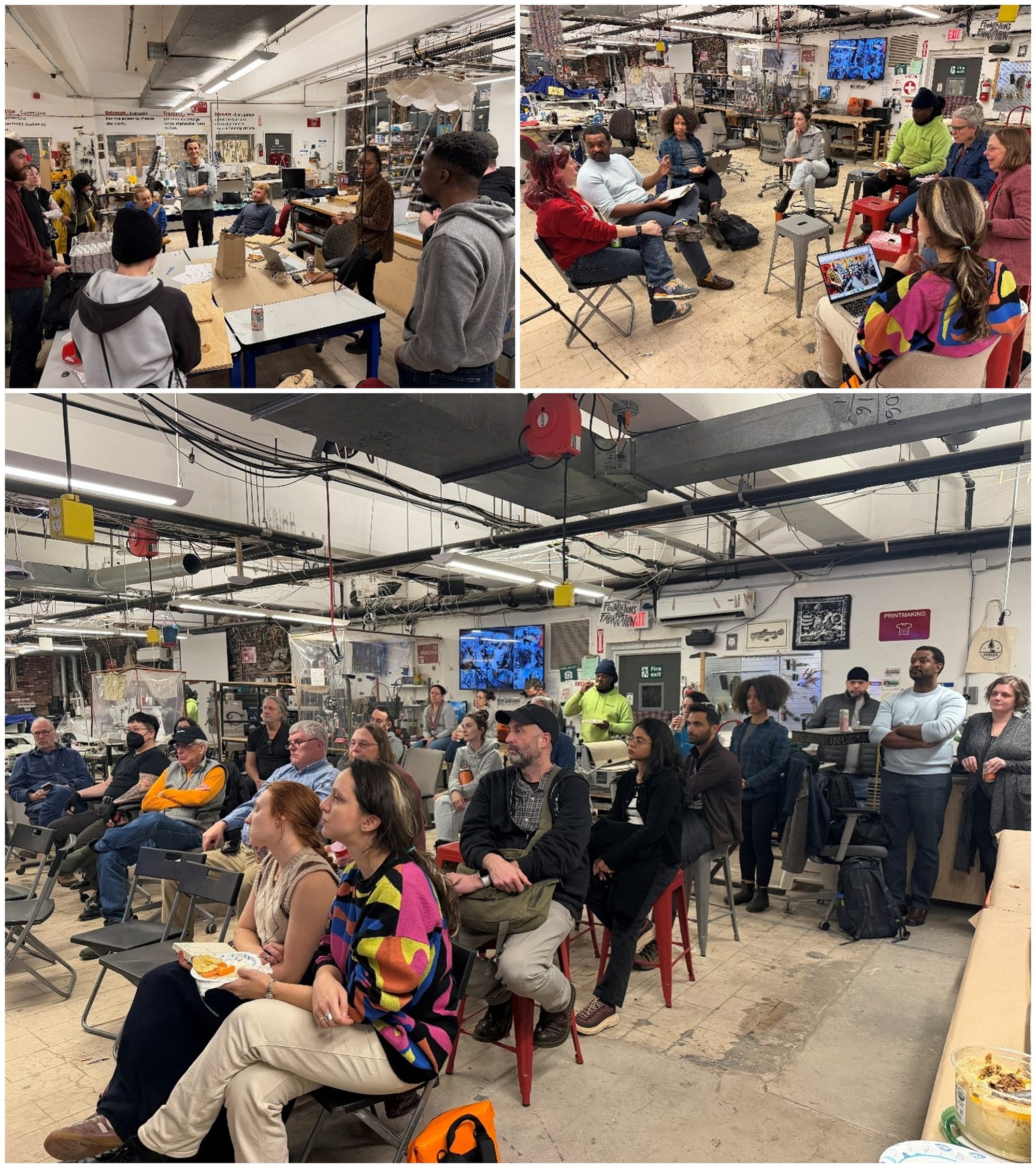
The space is truly run by its members. In addition to a handful of paid staff, much is accomplished by “facilitators,” members who earn a free membership by giving time to the space. They teach others how to use tools safely, ensure that each workspace is clean and in good working order, and help MakeHaven live out its values. Every year there is an annual meeting open to the full community, where finances and strategy are discussed openly. (Slides from this year’s meeting are publicly available here. A new dashboard of KPIs is also available here.)
The materials show that MakeHaven’s net income and cash on-hand slid dangerously downward over 2024. But once they asked their community to step up, the community did, and donations, membership, and financials are strong again. That story serves as a reminder that we cannot take these places for granted, and that community spaces exist because we as community members make it so.
Nearly a decade ago, Liz Corbin, at the time a makerspace researcher at University College London, said she hoped that someday we wouldn’t need a movement anymore, and that “making” would simply be embedded in our daily lives. It looks like her hopes have been realized in New Haven. The movement may be ebbing, but we have MakeHaven, Bradley Street Bike Coop, Eli Whitney Museum, East Street Arts, EcoWorks, spaces where we can learn about and make whatever we like, if we like. And some day, when the state Bond Commission gets to it, we’ll have public funding in support of makerspaces. So for New Haveners, maybe the movement was successful after all, at least as long as we keep showing up and lending our support.