“Fat Swim” Philly book launch
Philadelphia Ethical Society
1906 Rittenhouse Square
Philadelphia
April 30, 2026
Earlier this week, I learned what my current weight is. I had spent years proudly saying “no thanks” at the doctor’s office, only to be tricked at an appointment by a chair that weighed me when I sat on it. “265, but I’ll take a few pounds off for clothes and shoes,” the perfectly sweet medical assistant told me, completely unaware that I was inches from a spiral I had not been on in some time. I had survived the many social media iterations of How To Talk About Our Bodies, whether it be deeply cruel, overly kind, or totally neutral. But this moment in the evil chair stuck with me for several days, literally weighing me down.
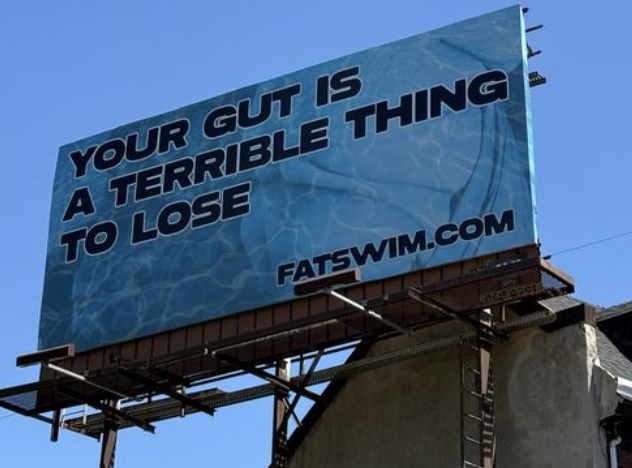
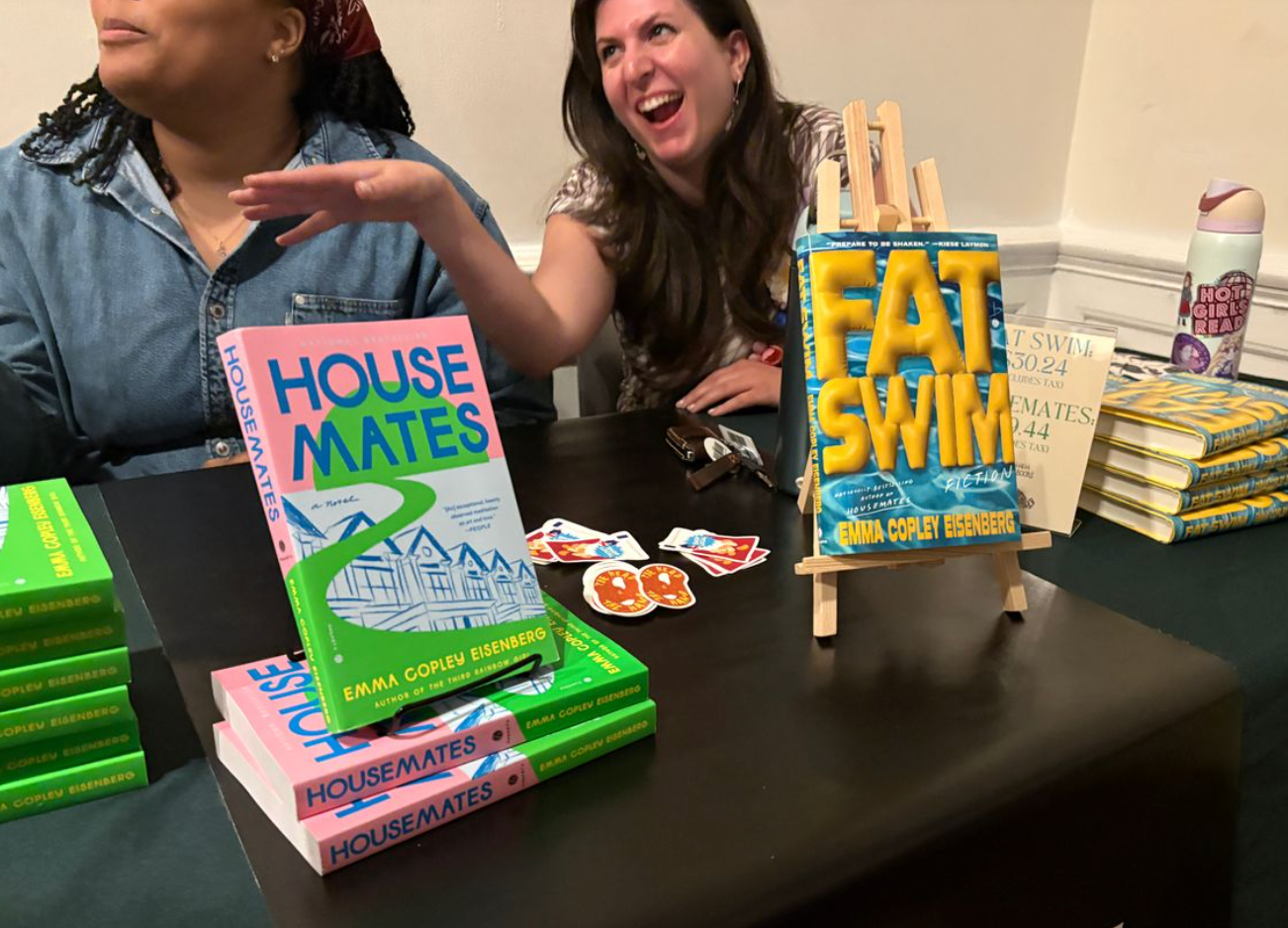
So when I walked into the book release for Fat Swim, a collection of short stories by Philly-based queer author Emma Copley Eisenberg, I walked in with some baggage. But having spoken to Eisenberg the day before the event about the book, the marketing around it (check out the billboard in Northern Liberties), and why Philly is a special type of backdrop for a fictional story, I knew it’d be a space that could help myself and other attendees become at a little more at ease with the absolute weirdness and mystery of — as Eisenberg puts it — being a person with a body.
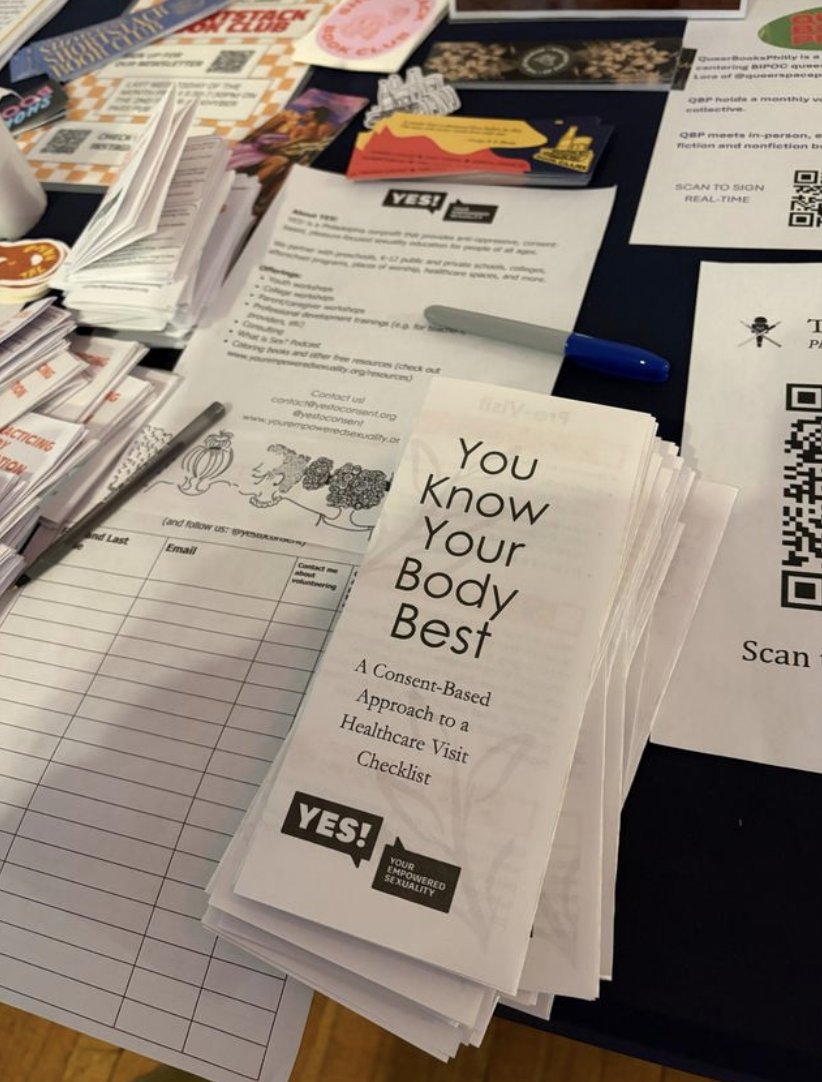
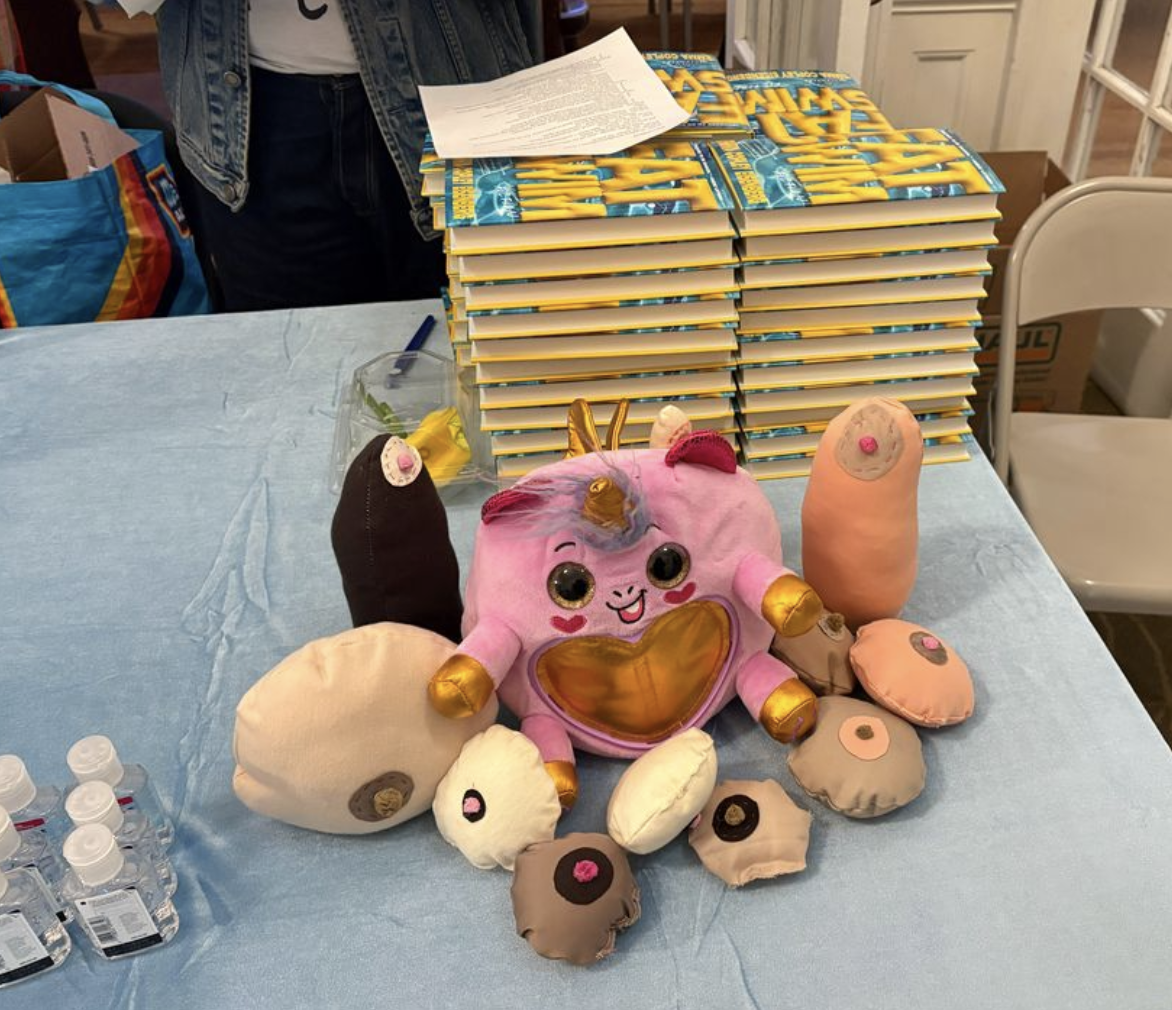
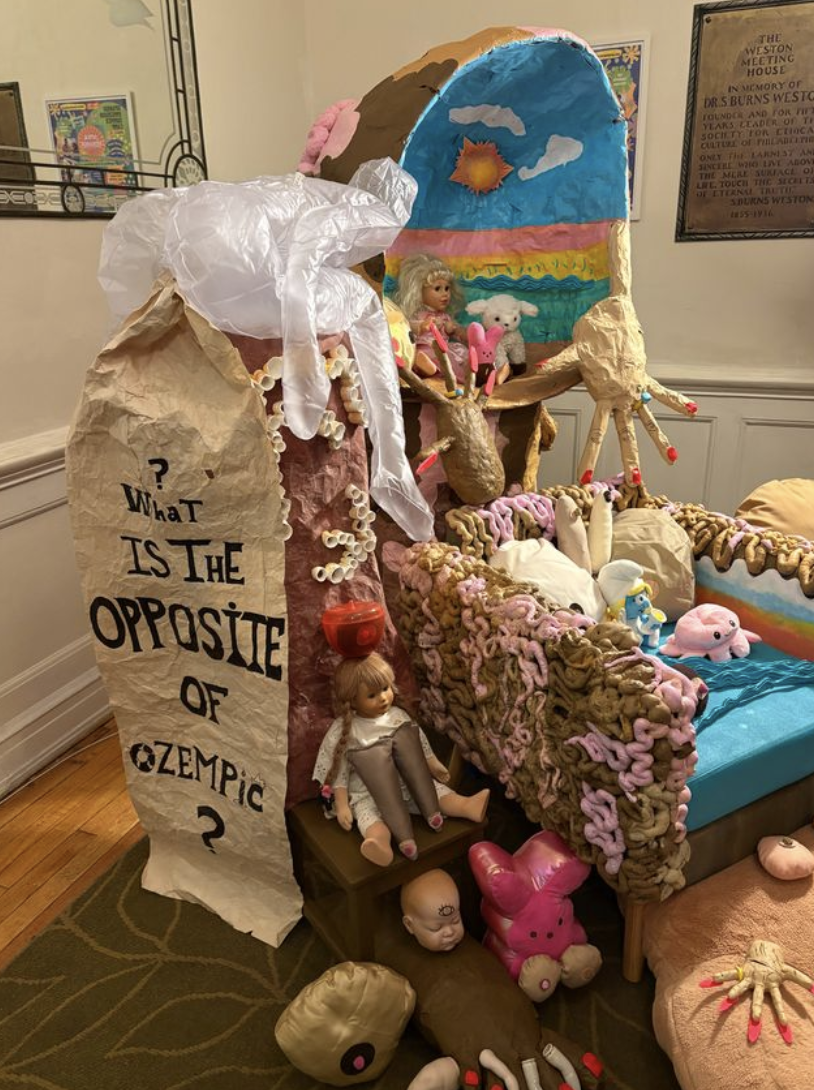
The event, held at Philadelphia Ethical Society in Rittenhouse, was packed to the absolute brim, with some folks sitting on the floor and a setup for local book clubs to welcome new members and share stickers or information. Stickers from BlueStoop read “I read better than I drive” and “ChatGPT ain’t got so soul.” Information available from YES! included booklets on practicing body liberation with kids and approaching healthcare visits. When folks walked into the event, they were greeted by “GUTS,” a sculpture by Rose Luardo, which asks its viewers the question “What is the opposite of Ozempic?”
The book tour has a theme: the five senses. Philly, of course, was all about hearing: “We’re a loud and boisterous city on a sonic level,” Eisenberg told me over the phone. Funny enough, throughout the event we were hearing the carrying on happening in the upstairs area of the venue, including stomping, singing, screaming, and lots of shaking.
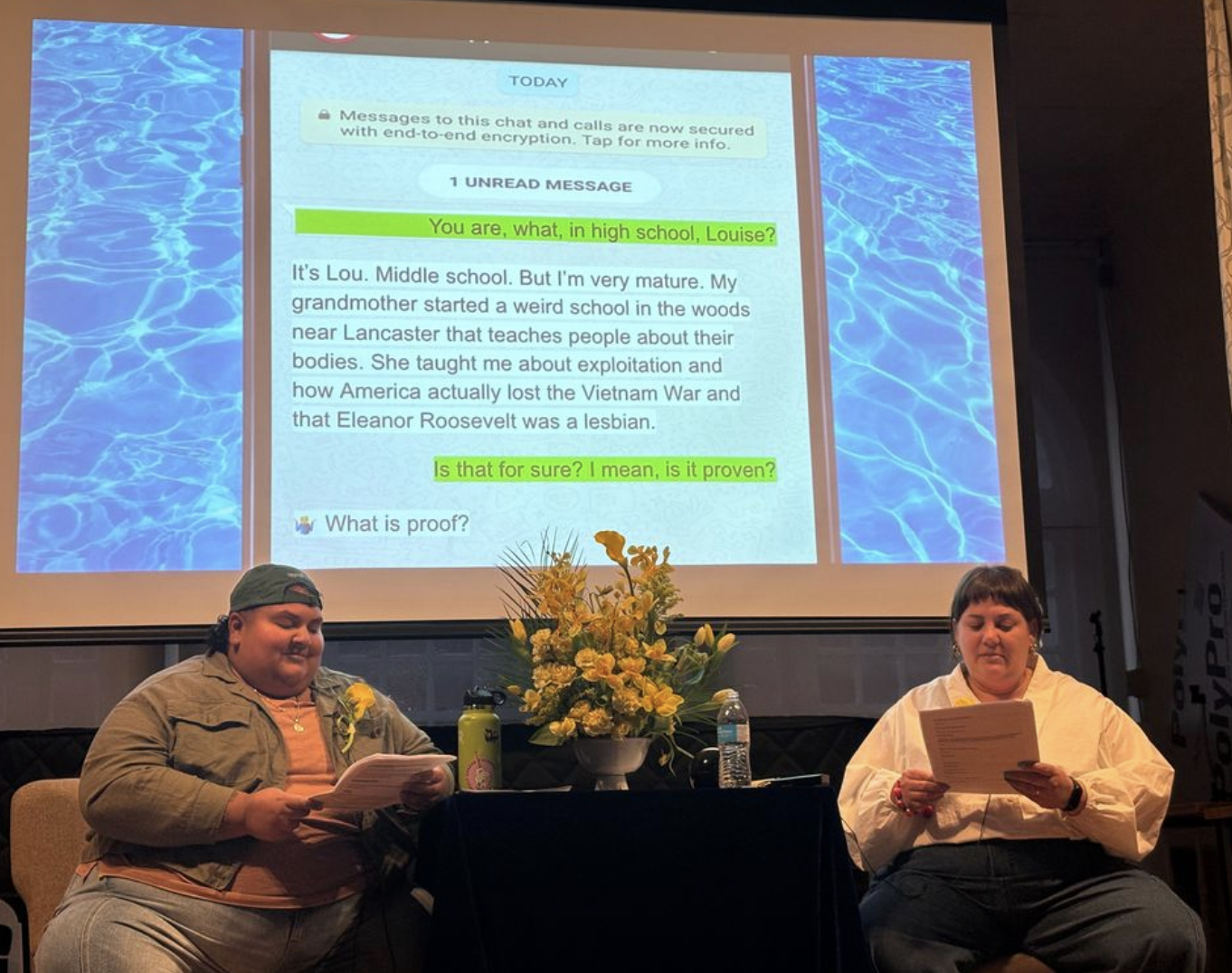
Around 7:30, Eisenberg took the stage with Sonalee Rashatwar, aka The Fat Sex Therapist. The two of them bantered a bit before getting into a reading of “Beauty,” one of the short stories from Fat Swim. In a theatrical style, the two went back and forth reading the conversational piece of the story, which focused on Marion — who is enjoying making playful videos about makeup and her fish, Terrence — and Lou, a middle schooler commenting on her videos and sending her money to make more. Importantly, they’re two fat people finding each other on the internet, relating to each other despite belonging to different generations.
This intergenerational aspect is important to Eisenberg, and it has come up in her previous book, Housemates. During the Q&A session of the event, which was hosted by the organizer of Philly Queer Book Club, Danny Maloney, the question of whether ageism is connected to anti-fatness was brought up (check out “Lanternfly” in Fat Swim for more on this). “The fear of becoming fatter is a fear of becoming disabled or having mobility affected,” Rashatwar said, explaining how fatness, disability, and aging often come into play together. When Maloney asks if Eisenberg or Rashatwar has seen progress or shifting in these narratives, their answers tend to differ based on their personal social media feeds.
“Are we familiar with the term ‘Almond Mom’?” Eisenberg asked the eagerly nodding audience. “I think there are a lot of really exciting folks doing work [around the] parenting process, so I think some of that is being healed, but is our generation less messed up about our bodies than the previous one? No… Maybe a little!”
Rashatwar, however, acknowledges the incessant and aggressive advertisements of GLP-1’s, but says he still sees some improvements in the fat liberation movement from 10 years ago. “I see way more straight-sized people making videos about how annoying it is to encounter these ads,” he says, adding later that he’s much more likely nowadays to see a doctor who doesn’t use the BMI scale (which, dear reader, is not just now known to be extremely flawed, but is also racist and sexist!)
Toward the end of the Q&A, Eisenberg opened it up to questions from the audience. One question was from a parent, who asked: “I have a prepubescent daughter, how do you wish someone had talked to you about your body when you were growing up? I don’t want to mess this up.” Once everyone composed themselves, the panelists recommended reading books about fatness written by fat people, treating their daughter with respect and honesty, and cutting out any negative self-talk or belittling of others based on their bodies.
Another member of the crowd asked: “Why do you think Philly is a good place to set a story?” Which is something I had asked Eisenberg myself, as it’s her second time setting a book here. “I didn’t set out to write another Philly book,” she said. “But it’s got its hooks in me.”
Eisenberg also described Philly as a very “embodied and sensory” city. “People are always outside on the street talking to each other, yelling at each other, bickering, commiserating, talking about sports,” she said. “As a dense East Coast city with a lot of history and the city abandoning a lot of the different neighborhoods, folks have learned to just do for themselves and do for their neighbors and I think that sense of interconnectedness and embodiedness birthed this book in particular.”
As the panel wrapped up and the space turned into more of a party, I looked around the room and realized everyone looked a lot more like me and a lot less like what Instagram force feeds me. I found that, throughout the course of the night, I had started to feel safe in my body again. My body, which has expanded and shrunk repeatedly in my 33 years, always finding a new groove. It’s empowering and important to bring community together in spaces like these, as both Eisenberg and Rashatwar noted. Walking to my car, I thought of the Fat Swim billboard, which is now imprinted on my brain. “Your gut is a terrible thing to lose,” it reads. I smiled, I let out the breath I’d been holding since that doctor’s appointment, and kept moving.