
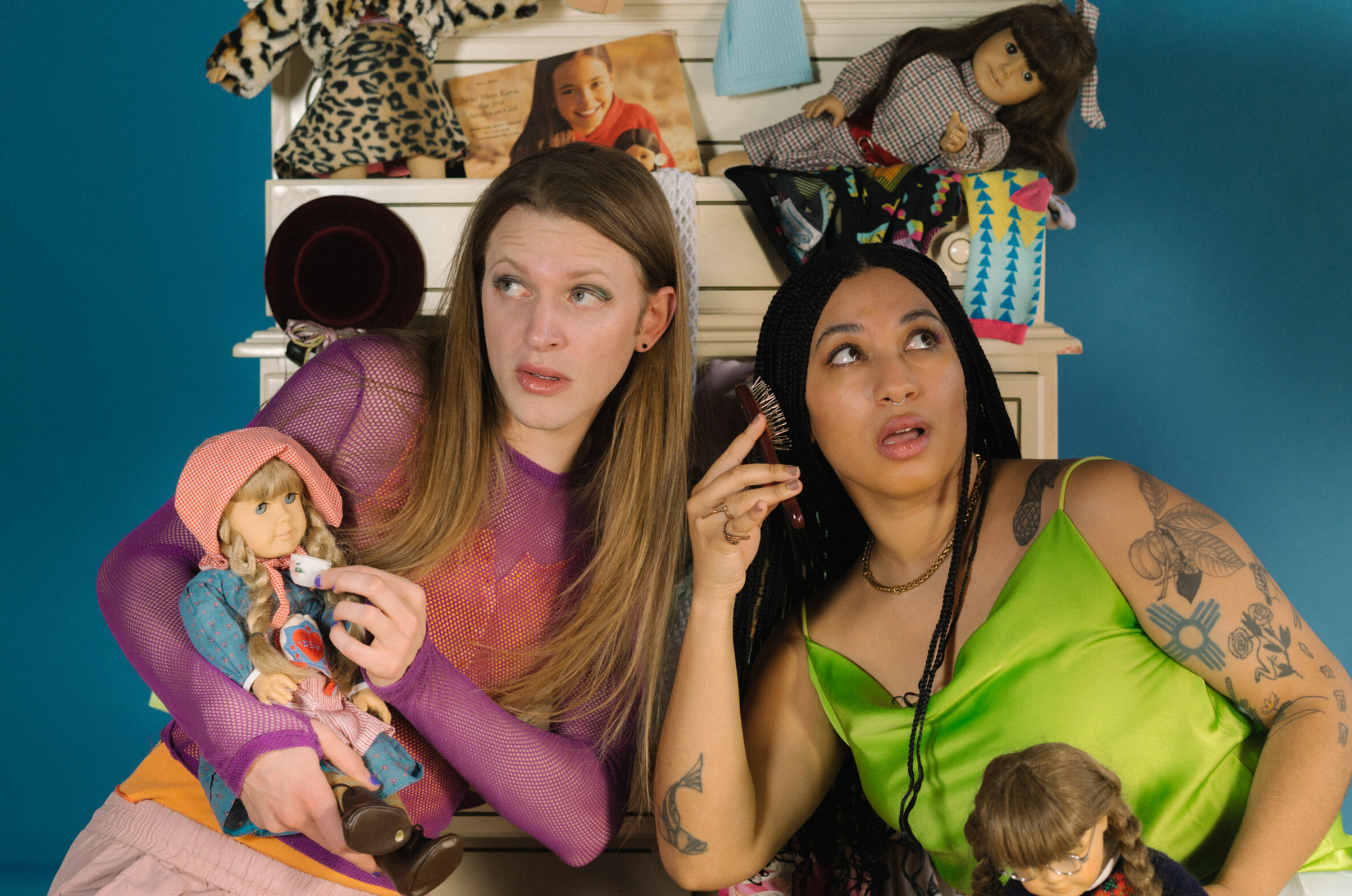
Girl Dolls: The American Musical
Fringe Arts
140 N Christopher Columbus Blvd.
Philadelphia
May 17, 2026
For those of us who grew up in the ‘90s or 2000s, The Care and Keeping of You was the guidebook to a time of unbridled change. It was a book about the truth of puberty and growing up published by the same company that cashed in on our desire to play pretend: American Girl.
American Girl dolls provided a mold for many of us during a time of painful transition. But what happens when we get older and the mold doesn't fit like it used to?
The people who loved their dolls unabashedly are all grown up now, and they’ve channeled the comforts of a childhood bedroom to face the forces of change at large: Girl Dolls: The American Musical, which just closed a week-long run at Fringe Arts, was written and conceived by Jackie Soro and Pax Ressler and produced by the Bearded Ladies Cabaret.
The dreamy bedroom set featured a sticker-laden CRV TV and costumes completed by platform jelly shoes and colorful hair clips. This attention to detail harnessed our collective nostalgia as a means of examining the intersections of the personal and political, with an American Girl doll leg as a linch pin holding the whole thing together.
Lines from the opening song were straightforward about the sense of belonging the dolls provided their young owners: “I didn’t know how to be a girl or an American, but with you and my doll, I swear I can.” The sets, costumes, and millennial inside jokes recalled just how coveted these dolls were in their heyday and communicated their lasting impact on popular culture.
As America approaches its 250th anniversary (or “sasquatch bisexual” as they say) and the naive and gangly visage of our country stares back at us, puberty seems an apt metaphor for our collective angst. The show recognized our infatuation with the American Girl doll as analogous to our obsession with historical myth making. The dolls proved to be a powerful conduit for feelings of hopelessness and despair.
After the show hosts introduced us to the smiling dolls of their childhood — and prompted the audience members who brought along their own dolls to hold them up for all to see — the painful contradictions of the dolls started to show themselves. Even between the most perfect, pink walls are meltdowns, nightmares and identity crises. Jackie Soro panicked out loud about the doll's psychological impact: “How is it possible that I learned about the facts of history through the suffering of little girls?” while Pax Ressler got existential about her personal culpability: “By taking care of the doll am I taking care of the American colonial project?”
Several songs highlighted the franchise's attempt to soften the blows of American history. The song that introduced us to the first African American American Girl Doll, Addy Walker, was live edited to be “more palatable” during the show by a pretend marketing executive. Soro initially presented Addy's story passionately with the line: “My mom and I escaped slavery, what have you done like that lately?” As her narrative was flattened by higher ups, Addy jumped octaves higher than before: “I’m caring, courageous, and positive! I’m an American girl!”
In another song that referenced the Kenneth Clark Doll Study, Soro confronted the consumer trends that shaped her relationship to her own dolls. Questions asked to young black children when given the choice between a white or a black doll in the psychological study were translated into heartbreaking lyrics: “Give me the doll that you want to play with / Give me the doll that is a nice doll.” With infamous images from the study and clips of blackface and minstrelsy as the backdrop, the musical number faced the wound of an American dream each doll aimed to sell.
Toys can function as mirrors for children as they attempt to see and shape themselves for a future where they might fit in. It's painful when the mold cracks; so many of us have felt that pain. That’s what made this show so emotionally resonant and cathartic in its conclusion. Its fond nostalgic haze allowed us to reflect honestly on the place propaganda holds in our hearts and to release the complicated hopes of childhood in order to make space for new dreams.
The show ended with the cast singing “make new friends but keep the old” in a looping round as they sat down for a tea party with their dolls, honoring the parts of themselves that at one time would not have been given a seat at the table.


