
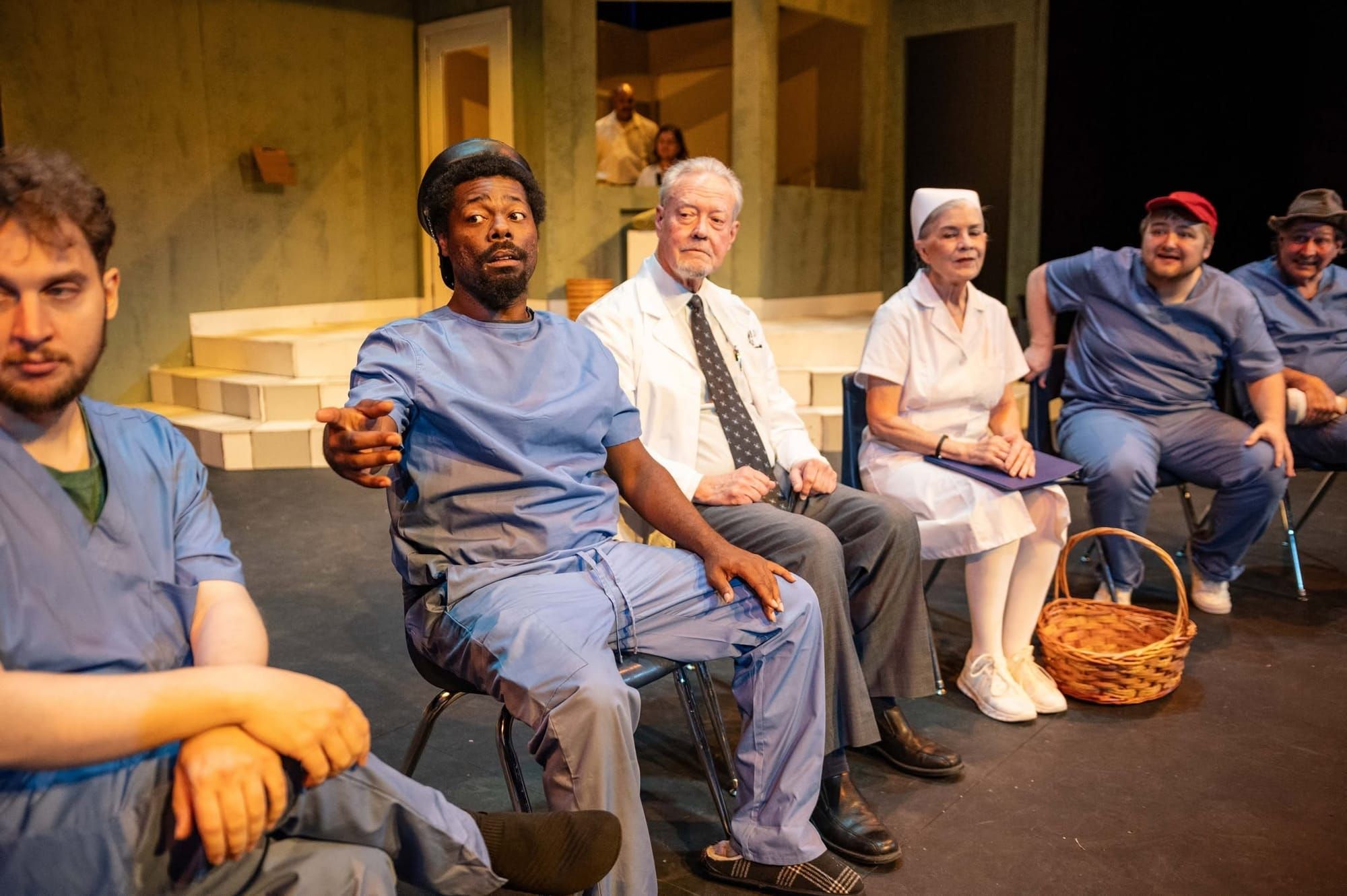
World Stage Theatre Company: One Flew Over the Cuckoo’s Nest
Tulsa Performing Arts Center, Liddy Doenges Theatre
September, 18, 2026 (performances run through September 27)
Last weekend, World Stage Theatre Company opened its ninth season, centered on “Stories of the Mind and Other Matters,” with the Tony Award-winning play One Flew Over the Cuckoo’s Nest. Dale Wasserman’s script adapts the 1962 novel by Ken Kesey, which gives an intimate look into the lives of patients at a mental health hospital and their power struggle with one of their main healthcare providers, Nurse Ratched.
Inspired by Kesey’s time working as an orderly at a mental health facility in the 1950s, the story reflects the growing support for deinstitutionalization across the country at that time, and takes a strong stance that the care available at a state institution causes more harm than good. In our current post-COVID world, where mental health matters are more openly discussed and science has vastly improved psychiatry practice and treatment, it’s an oddly detached world to visit.
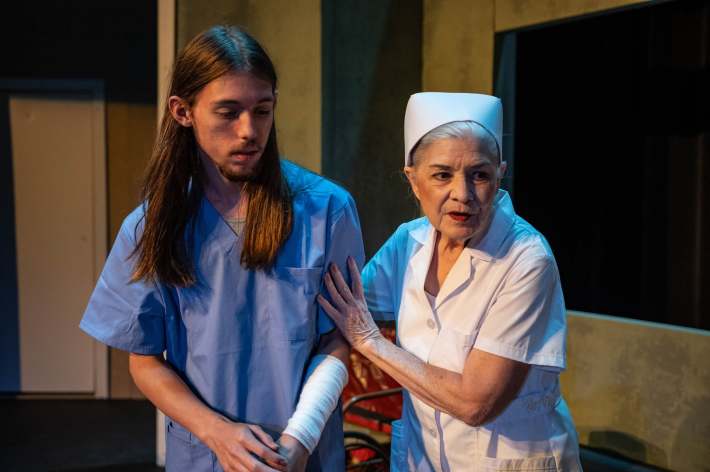
This tone is present as soon as you walk into the theater. A comprehensive set by Rich Goss and Silverwolf Productions transports you directly into the day room of the state mental hospital—not necessarily sterile but definitely devoid of individuality and warmth, pointing toward the central power struggle of the play.
Dionne Lambert’s direction works well with Wasserman’s text to settle the audience into this story. With hair tucked behind his ears and a tall posture, Chief Bromden (Chase Parker) opens the show with the first of his many obscure monologues. Then he retreats into himself as the orderlies (Brayson Pahukoa and Ibrahim Buyckes) threaten brute force, Nurse Flinn (Esme Davis) dodges potentially awkward situations, and Nurse Ratched (Kathryn Hartney) directs them all with a calm, controlled demeanor. It’s an opening that helps the audience quickly understand the kind of care provided here and the potential conflicts on the horizon.
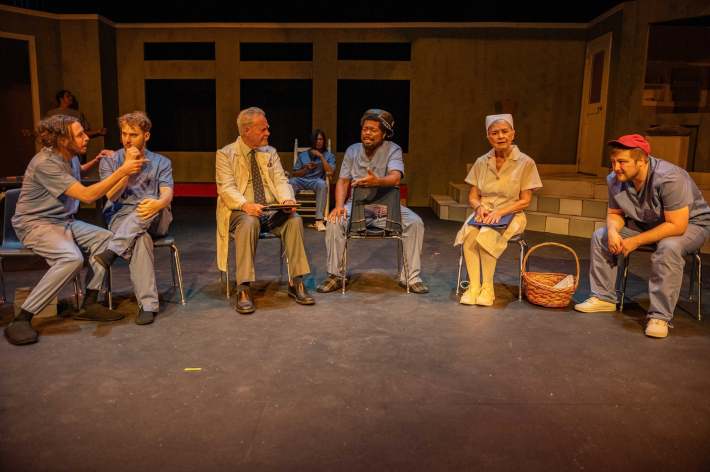
And then, we meet the Ward 6 patients and get thrust into this world with no turning back. Zero Steiert, Braydon Curtiss, Stephen Gehly, Matthew Gwinner, Gary Marshall, and Mauro Quiroga bring completely unique elements to this group dynamic—postures, gestures, tics, trauma, and terrors. With so many bold and specific personalities, you’d think they would clash and distract from the main action, but they all fit perfectly, ebbing and flowing together in a fantastic storytelling unit.
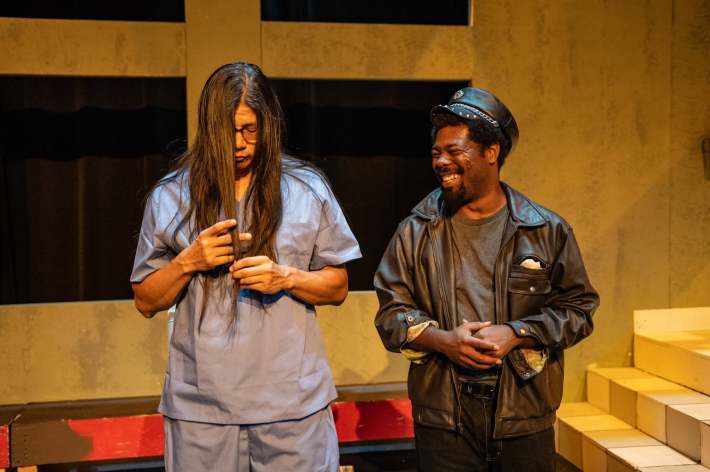
As the leads, Parker and Christian Stubblefiend ground this group. For almost all of act one, Parker practically blends into the background during the early scenes, hair in his face in an attempt to obfuscate himself from the prying eyes of the ward staff. While I struggled to follow his monologues, the way he navigates the character’s changing emotions and physicality as Bromden comes out of his shell is nothing short of triumphant; his booming war cry elicited a cheer from the audience on opening night.
Stubblefield’s McMurphy follows an opposite arc, starting the play with sleazy and confident charisma that slowly breaks under Nurse Ratched’s twisted logic. I didn’t like this character at the start, but Stubblefield’s performance won me over, especially in the group moments, when his generous camaraderie with his castmates brought out the character’s growing care for the other patients.
Balancing the chaos of personalities in the ward is Hartney’s Nurse Ratched, who toes the line of caring for the patients and believing in the work of the mental hospital while also subconsciously reveling in the emotional control she holds over the men. The ambiguity puts the audience in McMurphy’s position, and we don’t leave the play feeling like we completely cracked her.
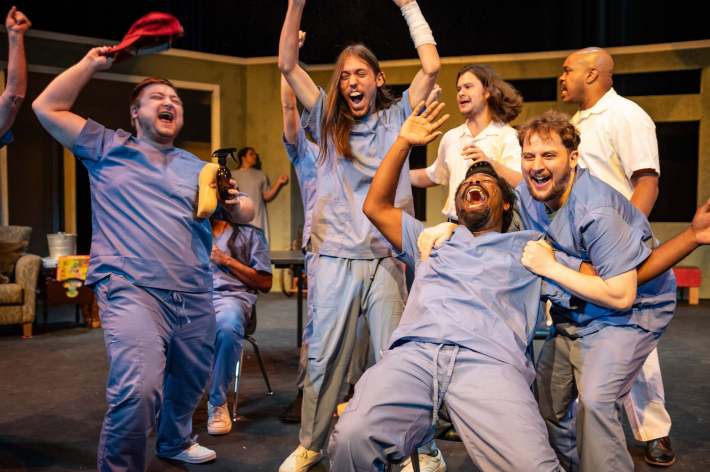
The strongest scenes in this production involved the eight patients, like an impromptu basketball game at the top of act two and early scenes where the group chats while sitting in the Day Room. The play’s most successful moment came at the end of act one, when a power struggle between McMurphy and Nurse Ratched over television time united the patients in a moment of joyful defiance. It’s the first time you can see past their illnesses. You just see men, excited, expressive, free. You go into intermission buzzing with glee.
In act two, scenes that should’ve tightened the tension lacked urgency. In particular, the illicit party scene seemed to lack the confidence of early parts of the show, bringing the pacing to a sluggish state that was hard to recover from. Even as the drama built and the technical elements (lighting by Celeste Vaughn, sound by Bebe Taylor) created an appropriately daunting environment, the final moments didn’t quite pull me back in emotionally.
Lambert posed a question to the audience at the start of the show that stuck with me: what happens when a system that’s supposed to support fails? What happens when we push back? While Kesey—and today’s purveyors of libertarian self-reliance like the manosphere—makes the case that human dignity is in the hands of the individual, my own sensibilities have me thinking more about the institutions. Mental health care in America may have changed through the decades, but this play is a sober reminder of the systemic challenges that remain as we seek better ways to serve the most vulnerable among us.


