
Tulsa Ballet: Swan Lake
Tulsa Performing Arts Center
October 25, 2026
A classical story ballet loves a reckless, restless, befuddled, conflicted man. Giselle’s Albrecht, La Sylphide’s James, Coppelia’s Franz: many of the dudes at the center of ballet’s greatest narratives wouldn’t be out of place in front of a podcast mic, breaking down how they found themselves lost in forests and in thrall to enchanted, ghostly, or otherwise otherworldly women.
Nineteenth-century ballet’s obsession with the puer archetype—the caddish, dreamy guy who gets wrecked after some form of trickery and either has to die or grow up—isn’t that surprising, given the influence of Romanticism on the art form. His folk-tale-adjacent story tends to be less of a hero’s journey and more of a cautionary tale: listen to your mom, stay away from rizzed-out older men, and tread carefully with the woman-shaped figure you see in the fog / on the balcony / in the window.
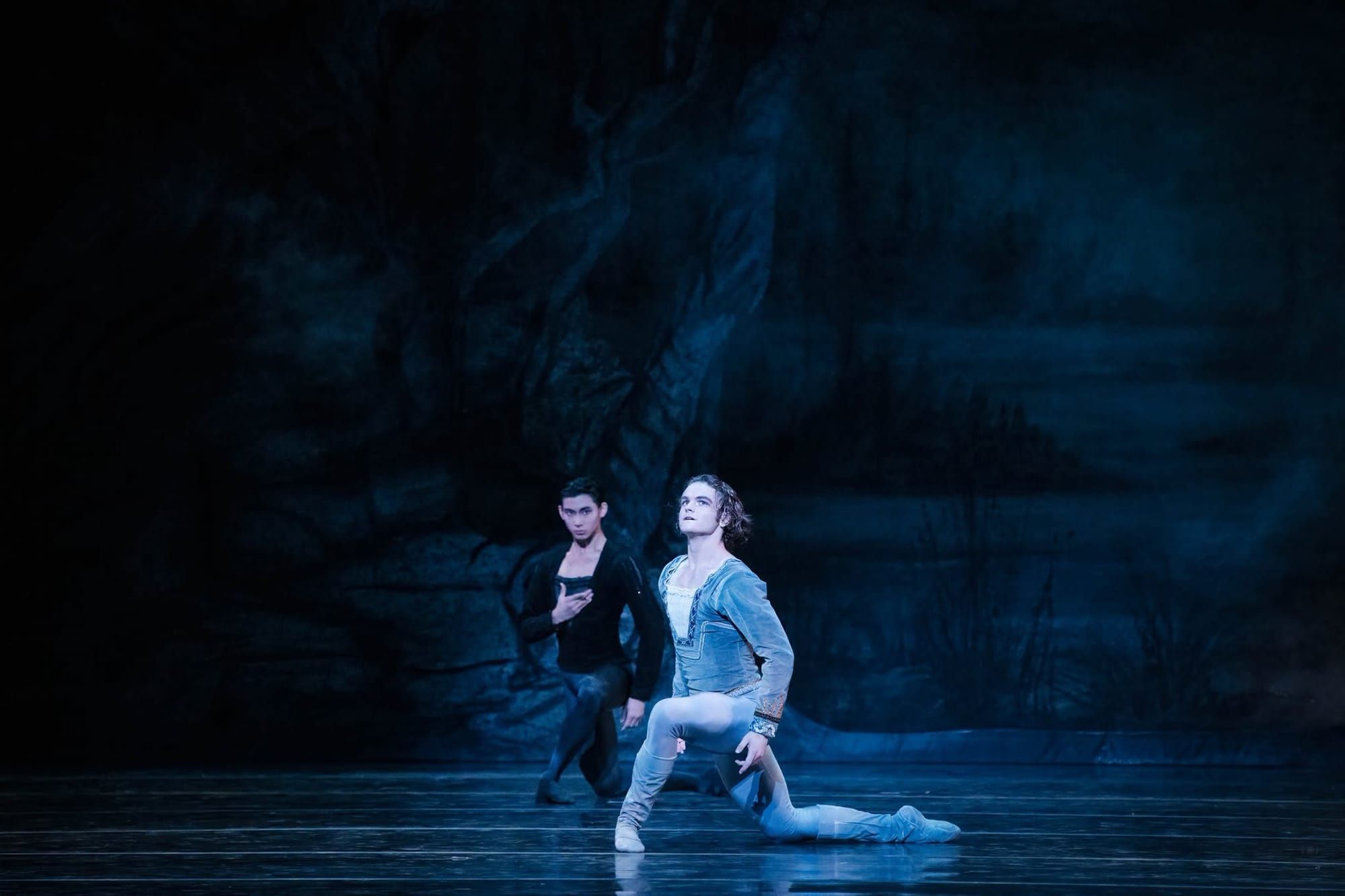
Arriving near the end of the Romantic era, Swan Lake’s Prince Siegfried is an extreme version of ballet’s bewildered man, bearing a melancholy that borders on emo. During Tulsa Ballet’s performance last weekend, I could almost imagine Edward Truelove as Siegfried in full black turtleneck with a patchouli-scented New Directions paperback in his pocket. A political marriage? They’re all dead to him. A suggestion that he might be drinking too much? Absurd. A hunting trip with his new 21st birthday crossbow in a dark, misty forest? Immediate yes.
Siegfried will always be That Boy, but every generation has its own version of how things go for him. There’ve been many Swan Lake interpretations since its Moscow premiere in 1877, including Matthew Bourne’s groundbreaking all-male fantasia and a 2013 Swedish techno version in which the heroin-addicted swans are prostitutes ruled by Rothbart, traditionally a sorcerer, now their pimp.
Tulsa Ballet’s version, created nearly 30 years ago, operates with radical efficiency, cutting the run time from four hours to two and a half. Tulsa Symphony Orchestra, sure-handedly conducted by Peter Stafford Wilson, rocketed through Tchaikovsky’s score last weekend to deliver the fastest rendition I’ve ever heard, without sacrificing either authority or detail.
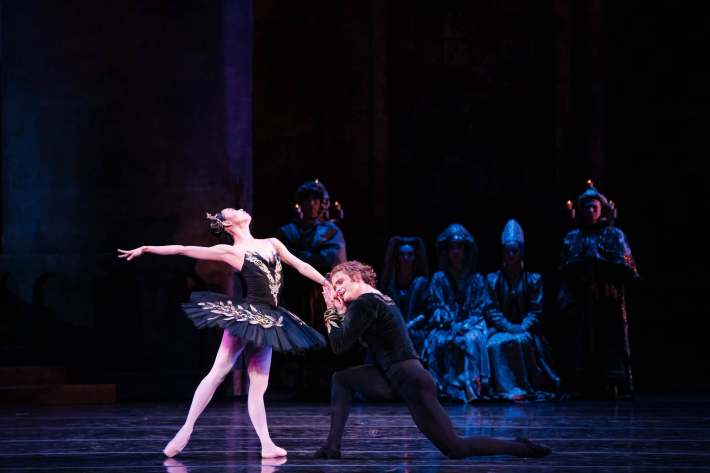
But this Swan Lake’s biggest difference is psychological. Here, the ballet’s villain, Rothbart, is an aspect of Siegfried himself—a tempting alter ego he must wrestle and ultimately reconcile with in order to find true love. Paralleling Odette/Odile (and calling to mind male protagonists from Jekyll and Hyde to Don Draper), this prince has a double nature; his bad behavior originates in his own conflicted identity.
Siegfried/Rothbart's inner-battle subplot is explored mainly in a dream prologue and a concluding breakthrough, episodes very different in style from the highly classical movement in between. They’re beautiful, yet not quite enough to develop this angle in a satisfying way. It would mean further edits to the ballet’s traditional structure, but I’d be curious to see a production where this explicitly psychotherapeutic interpretation was more robustly threaded in.
Many traditional Swan Lakes end with Siegfried and Odette leaping to their deaths: his betrayal of Odette with the black swan, Odile, is forgiven but not erased, and the sacrifice breaks Rothbart’s curse on all the women he’s enchanted. Tulsa Ballet’s happy ending isn’t unprecedented in the history of Swan Lake, but the way it gets there is notable: at the 11th hour, the Rothbart part gets healed and integrated, and Siegfried, having done his shadow work, gets to live and gets the girl. (What is this, a fantasy?)
Modernizing the allegory, like cutting the run time, is an understandable choice in terms of audience engagement, but part of me craves a version of this story where men literally pay. While I’m an advocate for Bro Healing, in 2026 my taste runs more toward actual consequences for dudes who cause harm because they’re either ultra-powerful or insufficiently self-aware.
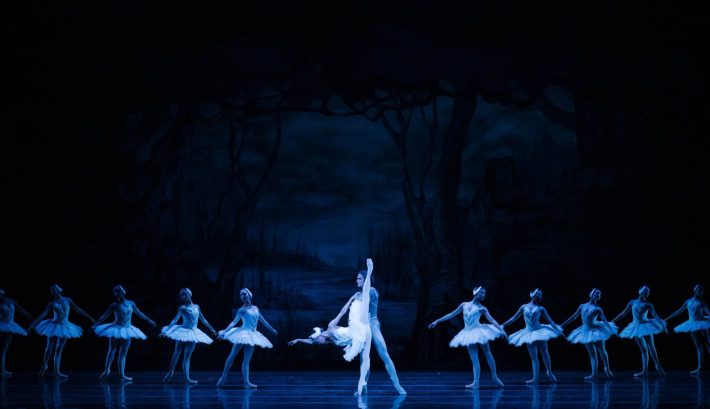
That said, Swan Lake is always Swan Lake, through hundreds of remixes through the years. It’s as culturally iconic and as massive in impact as Beethoven’s Fifth, and as much of a feat to perform. Tulsa Ballet’s dancers delivered a commanding rendition of this beast of a ballet, packed with every inch of swan-flocking and czardas-stomping and old-world romance the audience came for. Audience members around me hollered and clapped in rhythm during several famous episodes, and the company matched their energy.
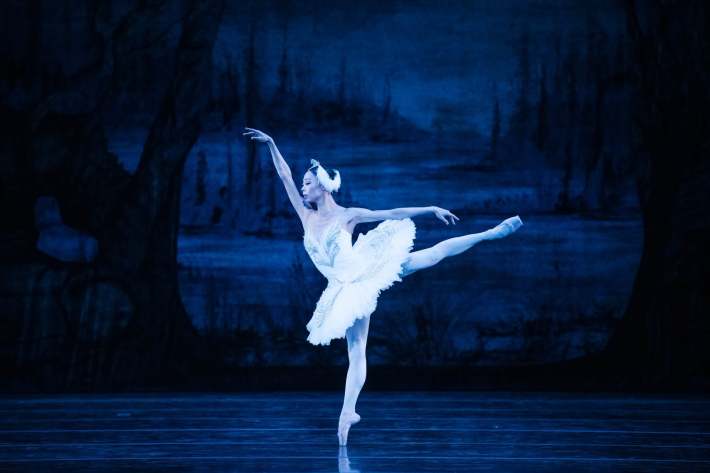
Truelove is on his way toward becoming a compelling leading man; a little more emotional risk and a little more upper-body authority and he’ll be there. As Siegfried, his jumps were cashmere-light, his partnering solid, his into-the-distance gaze convincing. Nao Ota’s Odette was believably other-than-human, melting out of time-stopping balances, floating across the stage: moonlight in a bottle. Her Odile, sharp as obsidian, amped up Act Three with ferocious energy, and the 32 fouette turns we were all waiting for shot through the theater like fireworks.
The most jaw-dropping lead performer had the least stage time: Shunsuke Nakamura, a corps dancer who stepped in as Rothbart at the last minute and is now at the top of my list of Tulsa Ballet dancers to watch. The smoky stage presence! The sleek malevolence! At one point, out of nowhere, he leaped straight up into the air and paused, many feet off the ground, in a crystalline shape that had me convinced he might actually practice sorcery.
Around them, surviving and thriving in the speed-run tempos, the supporting cast left it all on the floor. From Act One’s garden scene—where the male dancers in particular brought natural, easy smiles to the most punishing choreography—to Act Two’s swan murmurations to the courtly zing of Act Three’s Hungarian and Neapolitan dances, the company performed with vigor and commitment.

With the upcoming renovations to the TPAC, who knows when we’ll see Swan Lake again? I’m glad to have gotten a dose of its power this season—Tulsa’s Ballet’s 70th and Angelini’s last before he retires as artistic director. Who will Siegfried be next time we meet him? What does Swan Lake look like for the next generation? Tulsa Ballet’s determination to keep evolving assures me that this classic will continue its journey here in dramatic fashion.
“Ballet is woman,” choreographer George Balanchine famously said. This season—which brings us Romeo, Cinderella’s Prince Charming, Carmen’s Don José, and of course The Nutcracker’s Prince (extra shout-outs: Golden Driller and Rat King)—I’m newly curious about what the men are up to in this world.


