

Indigenous Day Native American Song Swap
Cain’s Ballroom
October 12, 2026
For a decade now, Tulsans representing our state’s 39 federally recognized tribes, along with a wide cross-section of others inspired to honor the day, have gathered to dance, parade, and hear visionary messages from city and tribal leaders on Native American Day on the second Monday in October. In Oklahoma there are many other significant dates on the annual calendar to participate in tribal homecomings, dances, and ceremonies, including intertribal powwows, but Native American Day is unique in its inclusion of Tulsa civic leaders and local dignitaries in the program along with its parade, and the festivities continue to grow in their scope and attendance.
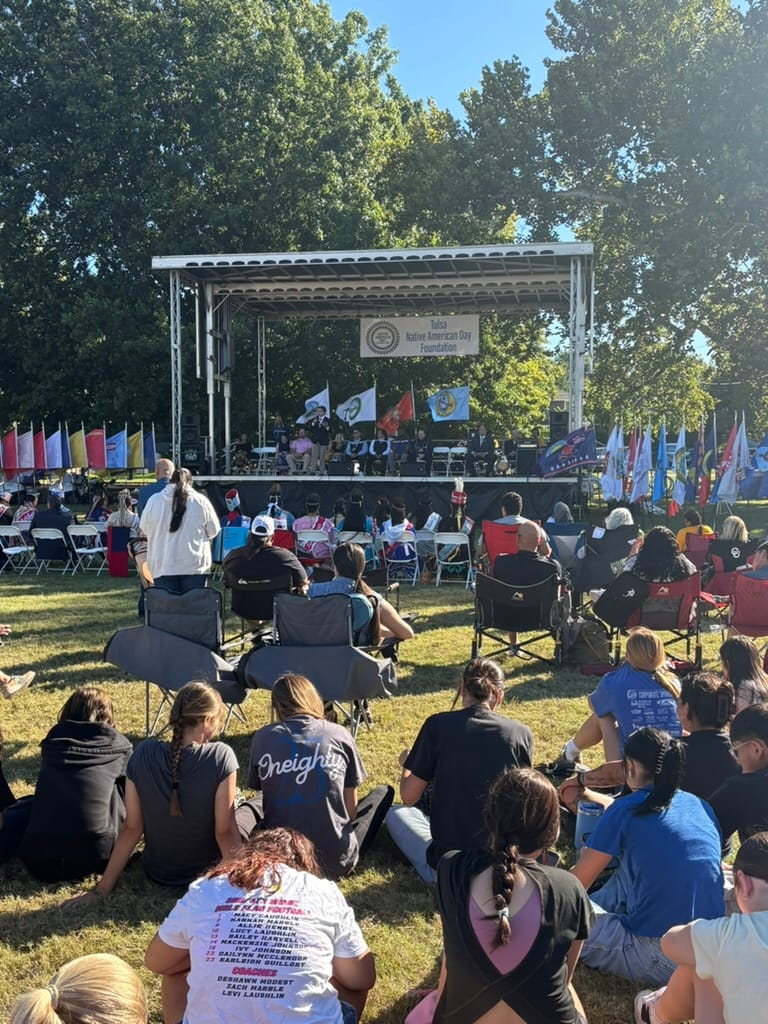
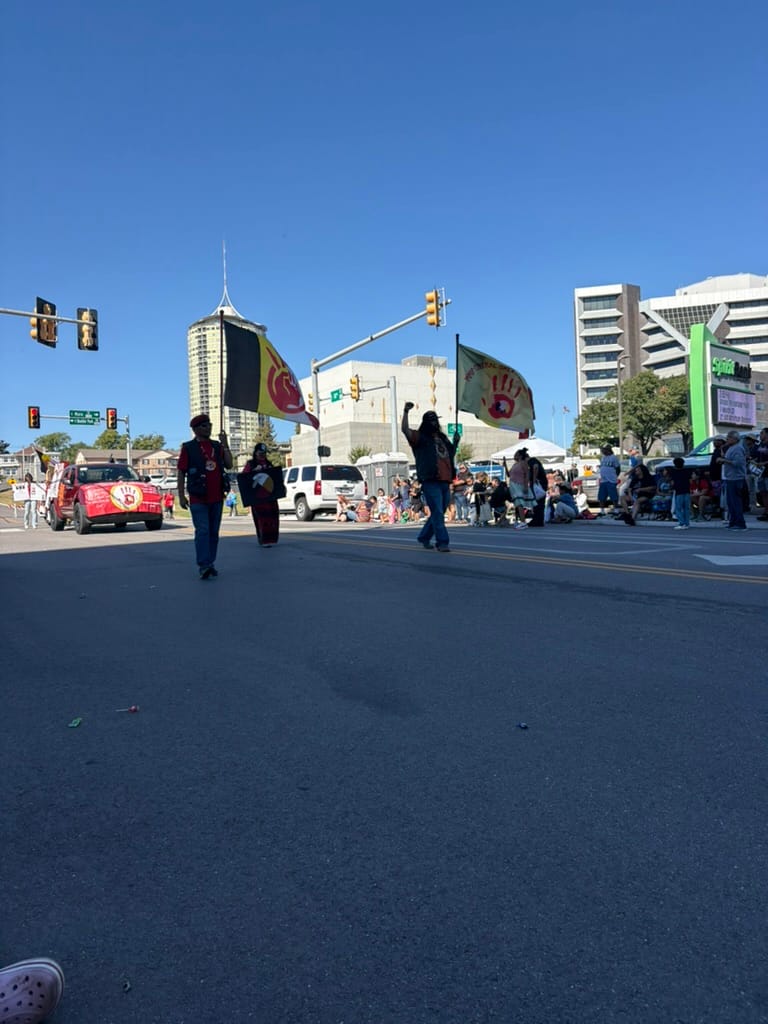
photo by Lindsey Smith
This year, a new addition capped off a full day of activities: a Native American song swap at Cain’s Ballroom. With space to mingle, enjoy an iteration of Native music different from the rest of the day’s expressions, and sit close (importantly, in air conditioning!), this event was a memorable bookend to the drumming and dancing that began the day at Dream Keeper’s Park.
Drumming and dancing kicked off an evening emceed by David Bible of Tulsa Indian Club, the event host. Dancers representing women’s Fancy Shawl and Jingle Dress (featuring current Tulsa Powwow Princess Katie Fields Alexander) and men’s Fancy Dance categories grounded this gathering in a continuity with typical powwow happenings.
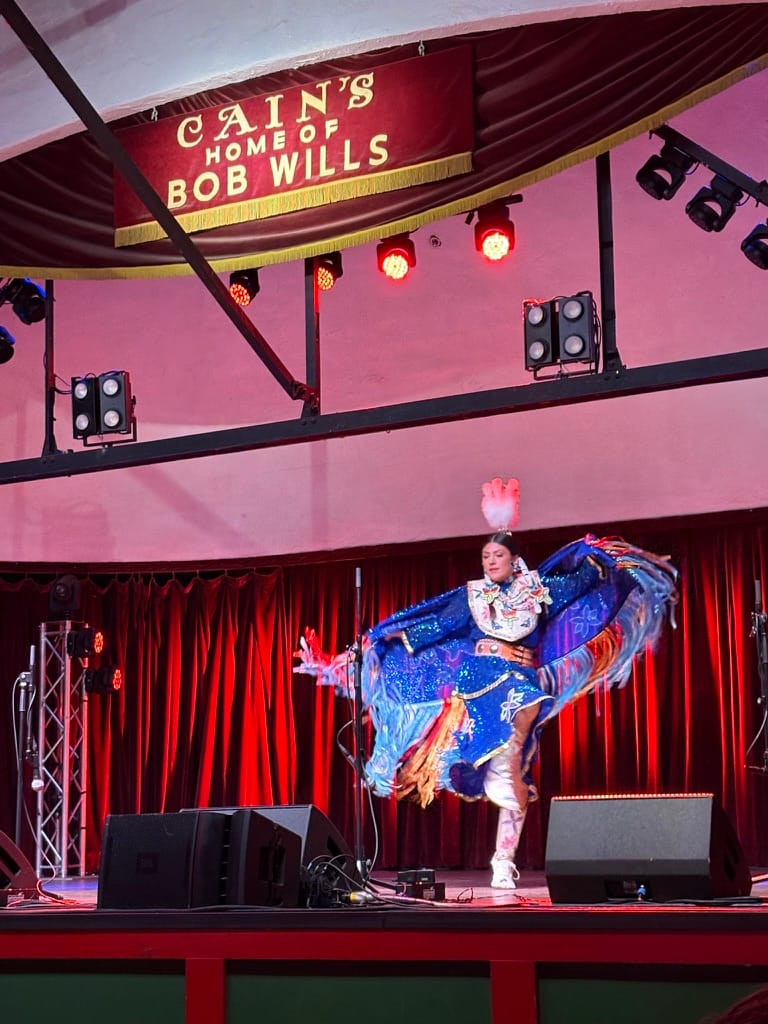
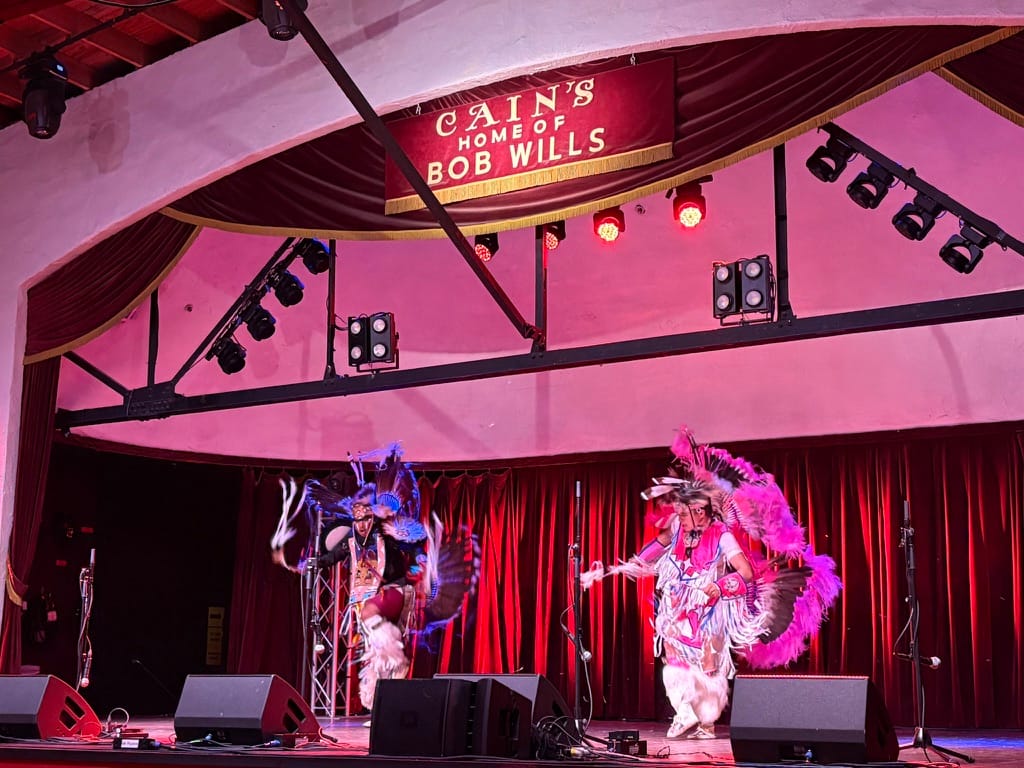
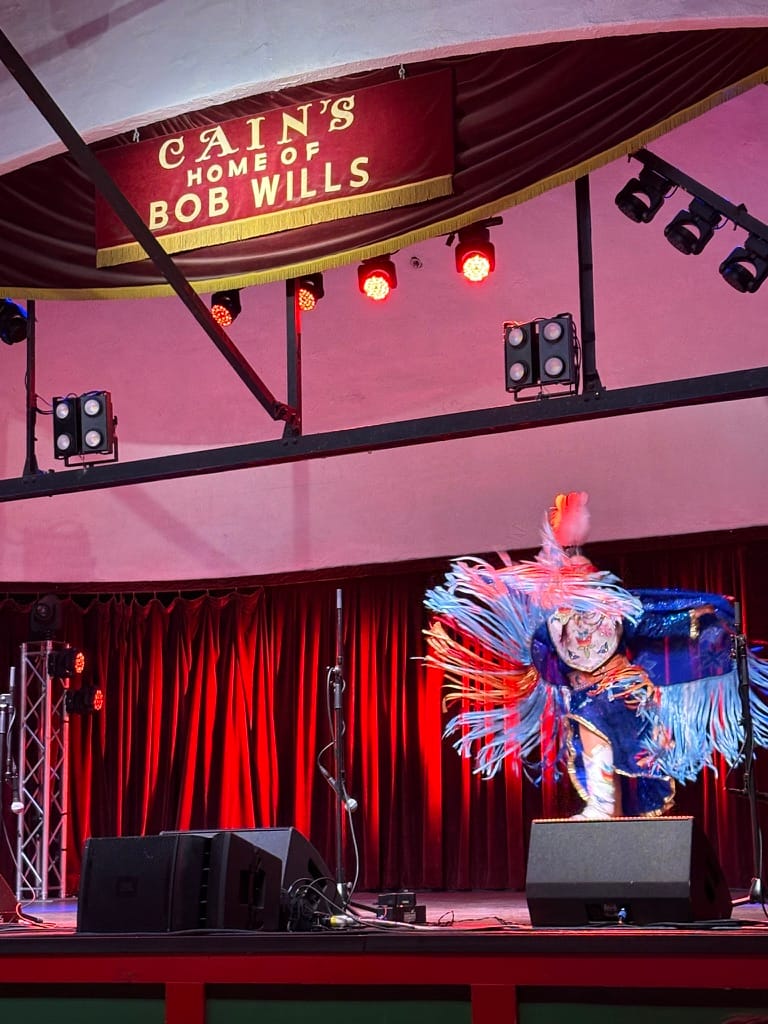
photos by Lindsey Smith
Experiencing this tribute to tradition in the legendary space of Cain’s Ballroom was powerful. So many Native musicians, including those featured in the song swap lineup, have played Cain’s, but placing this show within the context of a Native community gathering brought to the forefront in a striking way the significance of the culture here that has so profoundly shaped local music. Of course a fancy dance belongs on that stage.
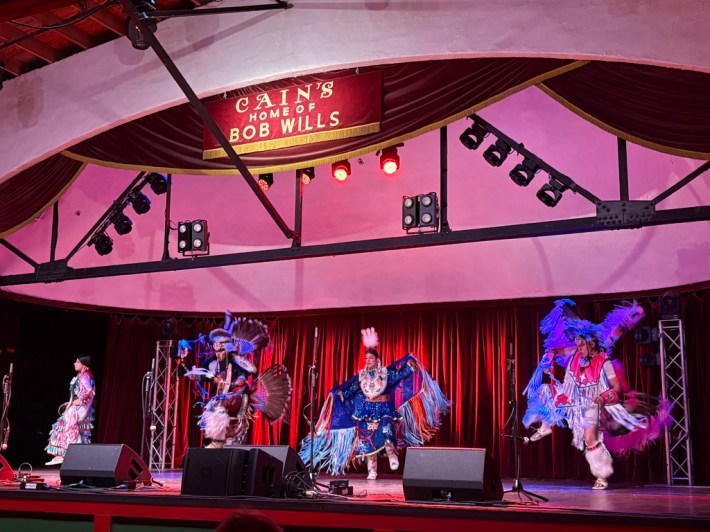
The song swap portion of the program featured R.C. Edwards of the Turnpike Troubadours, Blaine Bailey, Agalisiga “Chuj” Mackey, Samantha Crain, and Kalyn Fay, each of whom took a turn playing a song for several rounds. In a nod to our hallowed surroundings, Edwards played “Easton and Main,” singing, “Well, I left my heart in Tulsa, on the corner of Easton and Main / On the Cain's Ballroom floor soakin' up a bourbon stain.” Likewise, Mackey’s “Tsitsutsa Tsigesv (When I was a Boy),” with its yodeling cadences, seemed especially attuned to the stage at Cain’s. Bailey sang “Indian Country,” urging us on to gratitude for our presence in Indian Territory on Native American Day.

I couldn’t help but revel in the opportunity to see Samantha Crain and Kalyn Fay on stage together, with just their guitars and their striking voices. Crain’s “Dart,” with its line “I love you more all the time,” channeled the environment’s communitarian vibe, her voice filling the space with both resonance and familiarity. Fay’s “Alright in the End,” calling out the stars over Tulsa, likewise acknowledged the warmth of the occasion and the singularity of this place, not to be taken for granted. My favorite moment of the night was when Mackey took a guitar break to complement Fay’s singing, a dynamic exchange that I hope can be built upon in future years.
And let’s be clear: this event should be an annual thing. While every day in Tulsa is Native American Day, celebrating our city’s grounding on Native land, and in turn our rich tapestry of cultures, merits a full day—and night—of singing.


