

Dogstar
with The Backfires
Tulsa Theater
October 14, 2026
For all the catty particulars about the history of Dogstar, the SoCal rock band formed in Hollywood in 1991 by two young actors who met in a grocery store, read Alex Pappademas’ GQ piece, in which he calls bassist Keanu Reeves “old enough to know better” re: starting a band.
In 1991, Reeves was post-Bill and Ted, and this is also the year Point Break was released. As an eight-year-old in 1991, even I knew who Keanu Reeves was: the love interest in Paula Abdul’s “Rush, Rush” music video. He was teetering on the edge of inevitable megastardom, and thus, Pappademas feels right positing that the band’s origin story is, for Reeves, more of a distraction from his acting career than in any way remotely related to it.
“We’re terrible,” Pappademas quotes Reeves as saying in 1993. “We’ve played about ten times now and though we’re getting better, we play better in a garage.”
Opening gigs for David Bowie and Jon Bon Jovi ensued; you can guess why. There is no threshing Dogstar from Reeves’ fame here. Dogstar cannot escape its bassist, and nobody knows if the band would have ever reached anyone if they did. For comparison, Trivium, performing at the Tulsa Theater in December for tickets half the price of Dogstar’s, has 123 million streams on its top-performing song on Spotify. Dogstar has just over two million on theirs. The band went on hiatus in 2002 and announced its return 20 years later. Dogstar has released two albums since then.
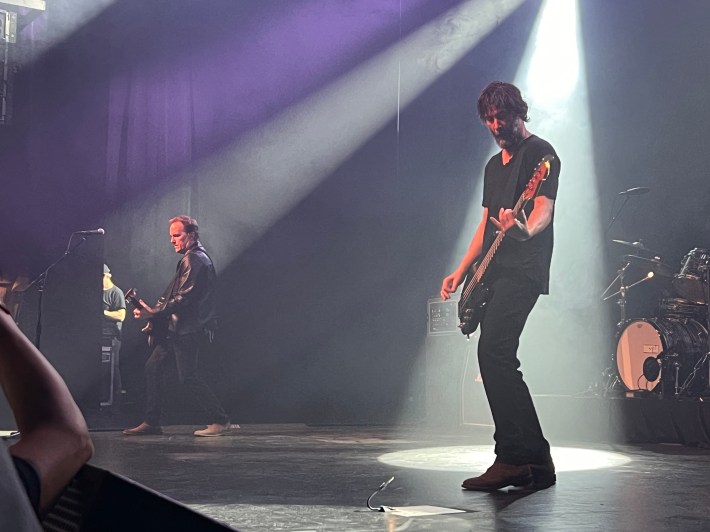
It’s not a small feat to corral the absurdity surrounding an A-list celebrity into something authentic to me, a person who gets angry when presented with unabashed sincerity when there is ample contrary evidence. I went into Wednesday night’s Dogstar concert at the Tulsa Theater with the preconceived-est of notions (dad rock vanity project and I wanna see what the famous guy is doing). For this to work, I needed it abashed just a little, please—give me a wink and nod to let me know we’re all in on the same thing. If you don’t do that, the whole thing kind of falls apart. This is why Chris Gaines didn’t work.
Tulsa Theater was maybe half full on the floor with the balcony curtained off when Brooklyn’s The Backfires played a brief opening set at 8 p.m. The band, whose three members ages’ added together barely top Reeves’ 62, did a respectable job cajoling some energy out of the largely Gen X-and-older crowd. By the time Dogstar took the stage at 9 p.m. sharp, the crowd had filled out to 75-80% full of people, almost all of them standing at their seats, who I would guess don’t typically go out on Wednesdays. (I saw one man sleep through a good chunk of the show while his friends jumped and clapped along.)
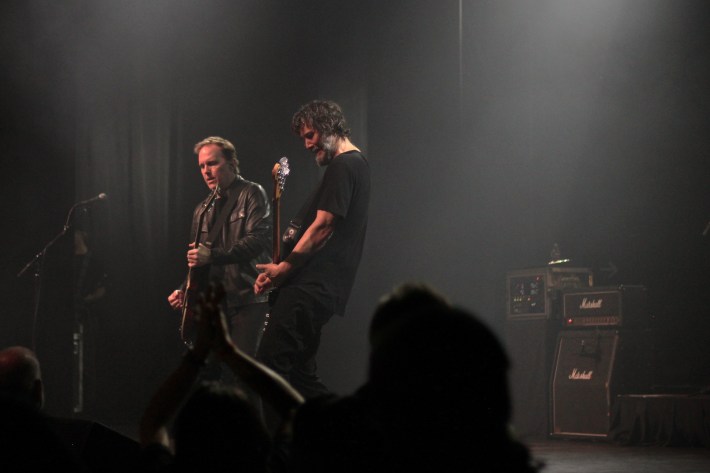
Dogstar’s music is reminiscent of likeminded coastal alternative rock bands like Failure (also from Los Angeles, also formed in the 1990s and reunited after a long hiatus), Interpol, etc., but with a distinct and vaguely British wail, vocally: think Muse, Radiohead. The entire show was productionless other than stage lights: no backdrops, no logos, no costumes. It was, in fact, just three old friends getting the band back together.
Guitarist Bret Domrose is a technically great rock singer and gave the band, which also includes founding member (and fellow sometimes actor) Robert Mailhouse on the drums, an auditory degree of polish it wouldn’t otherwise have had. Mailhouse has a bit of a punk rock drumming style with a lot of power and an errant beat or tempo change here or there that kept Domrose’s vocals tethered to the band’s garage origins.
A long lag due to guitar tech difficulties a few minutes into the set gave Reeves (who did not have a microphone) an opening to step up to the crowd and encourage them to cheer, making eye contact with and smiling at people in the first few rows, which abutted the stage. The frequent and sudden outbursts of cheers whenever he got close to the crowd throughout the night elicited half smiles and glances from Reeves, giving away his acknowledgment of why we were all there, even if it’s not why he was.
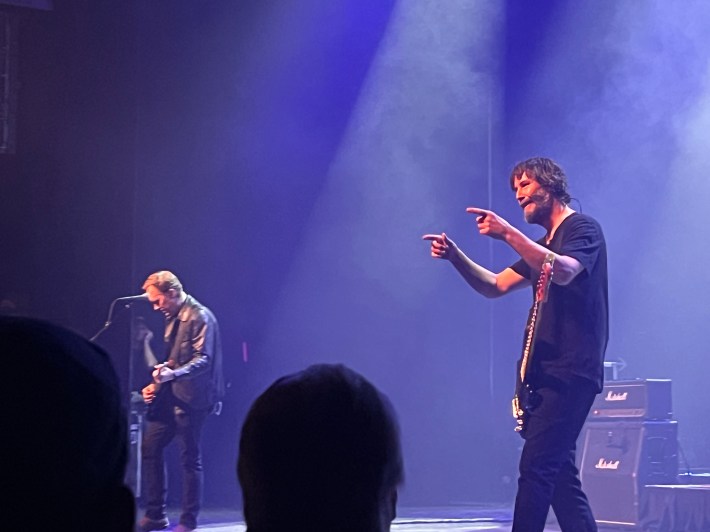
During a larger act’s concert, I might’ve rolled my eyes at these peeks behind the curtain, but here, it just eased what tension there may have been from having someone onstage we expect so much of. There are no tracks to mime along to, no dancers, no nothing, really. Dogstar is just a band of dudes who look really happy to be playing not-bad music together. They also just happen to have an unimaginable cheat code that allows them to do it in front of hundreds of people on a random Wednesday in Tulsa.
After a tight one hour, the band left the stage, and the crowd screamed for two solid minutes before they came back out for the encore noticeably looser and sillier, having read the room and found it deserving, I presume. Reeves playfully riffed on the opening bassline from Deee-Lite’s “Groove Is In the Heart,” and Domrose shared an anecdote about Atoka and being afraid of tornadoes, as well as a non sequitur about how Bruno Mars is so entertaining it makes him feel like he’s not doing enough on stage. “He’s very talented. Check him out,” he told a crowd full of people who definitely know who Bruno Mars is. They finished the night with a vampy cover of “Helter Skelter” and “Breach,” a single from their 2023 album Somewhere Between the Power Lines and Palm Trees.
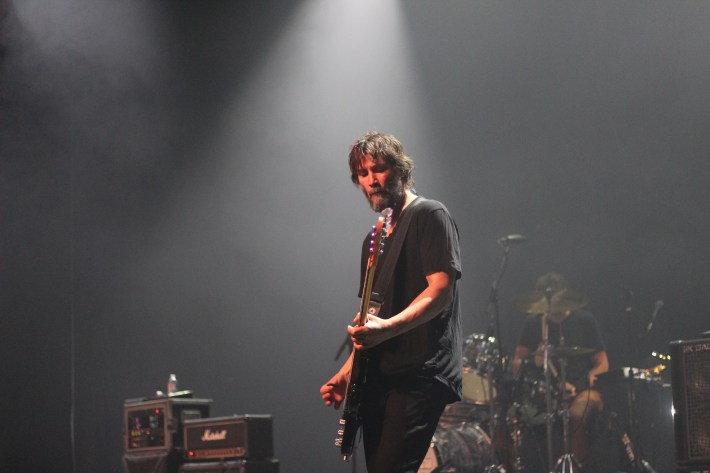
Before leaving, each member of the band stepped up to the microphone to talk to the crowd. Reeves, hand on his heart, thanked Tulsa, and even sweeter, Mailhouse said, simply: “I love you.”
I’m glad to know a very famous person who is also famously nice gets to do something he loves without a whiff of ego; without flinching at the drunk man somewhere in the Tulsa Theater yelling “Wyld Stallyns” (I bet there’s always one); and without really piercing the veil of his celebrity privacy at all except for the VIP meet-and-greet upgrade offered on this tour.
YouTube user @rsalbreiter said it best in the comments on Dogstar’s “All In Now” performance video: “Dogstar is the only band where the bass player wants less attention.” And if he was old enough to know better than to do this in 1991, in 2026 he’s old enough to know that, for himself, not doing it might be worse.


